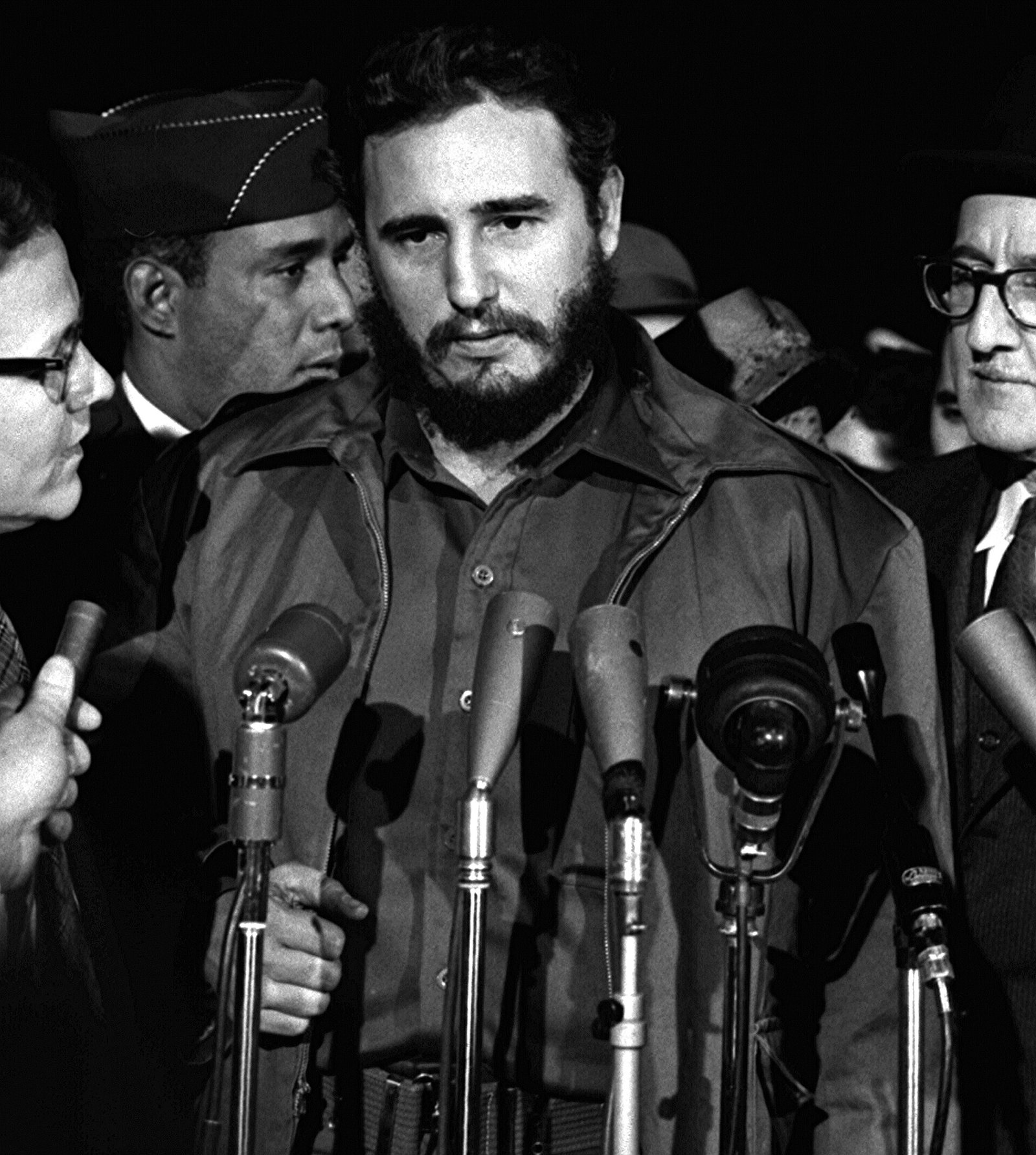
Who was Fidel Castro?
Fidel Alejandro Castro Ruz led the Cuban Revolution and turned Cuba into a socialist one-party state. He became prime minister in 1959 and later combined the leadership of the state and government. His formal period in government lasted until 2008, approximately 49 years.
If you want to understand how long Castro ruled, three dates matter: 2006, 2008 and 2011. He temporarily transferred his powers in 2006. His state presidency ended in 2008. His leadership of the Cuban Communist Party continued until 2011.
His legacy remains disputed. PBS describes supporters who saw a champion of social justice and opponents who saw a repressive dictator. Those opposing assessments concern the same revolutionary leader who held formal government power from 1959 to 2008.
Young Fidel Castro: where was he born?
Castro was born on 13 August 1926 in Birán, eastern Cuba. His father was a wealthy landowner and an immigrant from Spain. Birán now belongs to the municipality of Cueto in Holguín province.
He entered the University of Havana in 1945 and completed his legal studies in 1950. His early route into national politics involved an election campaign. In 1952, he stood as a parliamentary candidate.
That electoral route closed when Fulgencio Batista carried out a coup on 10 March 1952 and cancelled the elections. Castro’s planned attempt to enter parliament therefore preceded his armed campaign against Batista. His later rise cannot be understood solely through the guerrilla fighting that followed.
How did Fidel Castro come to power?
On 26 July 1953, Castro led an attack on the Moncada Barracks in Santiago de Cuba. The attack failed. He received a 15-year prison sentence, but an amnesty brought his release in 1955.
The failed attack supplied the name of his revolutionary organization: the 26th of July Movement. Its name preserved the date of Moncada. The military defeat thus remained central to the movement’s identity as Castro prepared another attempt against Batista.
On 25 November 1956, Castro and 81 companions sailed from Tuxpan, Mexico, aboard the yacht Granma. They landed in Cuba on 2 December. Castro then developed a guerrilla force in the Sierra Maestra.
The guerrillas fought alongside a broader struggle involving urban rebel groups. Together, these forces defeated Batista’s army after a campaign lasting a little more than two years. Mountain warfare was part of the victory; resistance in the cities also contributed.
Batista’s regime collapsed on 1 January 1959. Castro entered Havana on 8 January and became prime minister on 16 February. When you follow his rise, keep those events separate: the regime’s collapse, his arrival in the capital and his appointment happened on different dates.
Fidel Castro and Che Guevara
Castro met Ernesto “Che” Guevara during his Mexican exile in 1955. Guevara was an Argentine doctor. Castro’s brother Raúl had met him before Fidel brought him into the revolutionary struggle.
Their connection therefore began before the Granma expedition left Mexico in November 1956. Che entered Castro’s movement during the period between the Moncada defeat and the successful revolution.
How long did Fidel Castro rule Cuba?
Castro’s formal government leadership ran from 1959 to 2008, approximately 49 years. He first served as prime minister. On 2 December 1976, he assumed the presidencies of the Council of State and the Council of Ministers, combining state and government leadership.
His administration defeated the Bay of Pigs invasion in April 1961. The invading force consisted of Cuban exiles backed by the United States. The following year, Soviet nuclear missiles placed in Cuba brought the United States and the Soviet Union into confrontation during the Cuban Missile Crisis.
Party leadership followed a separate timetable. Castro served as first secretary of the Cuban Communist Party from 3 October 1965 to 19 April 2011. That position continued beyond the end of his state presidency.
Health problems prompted a temporary transfer of powers to Raúl on 31 July 2006. Castro’s presidency formally ended on 24 February 2008, when Raúl succeeded him. The distinction explains why accounts of his leadership can refer to different ending dates.
Timeline
- 13 August 1926: Born in Birán, eastern Cuba.
- 1945–1950: Studied law at the University of Havana.
- 10 March 1952: Batista’s coup ended the election Castro planned to contest.
- 26 July 1953: Led the failed Moncada Barracks attack.
- 1955: Released under an amnesty and went to Mexico.
- 25 November–2 December 1956: Sailed aboard Granma and landed in Cuba.
- 1956–1959: Conducted guerrilla warfare in the Sierra Maestra.
- 1 January 1959: Batista’s regime collapsed.
- 8 January 1959: Entered Havana.
- 16 February 1959: Became prime minister.
- April 1961: His government defeated the Bay of Pigs invasion.
- 1962: The Cuban Missile Crisis brought a confrontation over Soviet missiles.
- 3 October 1965: Became Communist Party first secretary.
- 2 December 1976: Assumed the Council of State and Council of Ministers presidencies.
- 31 July 2006: Temporarily transferred powers to Raúl because of health problems.
- 24 February 2008: His state presidency ended.
- 19 April 2011: His tenure as party first secretary ended.
- 25 November 2016: Died aged 90.
Fidel Castro’s brother and the Díaz-Balart family
Raúl Castro was Fidel’s brother, deputy and eventual successor. He also figured in the movement’s earlier history through his acquaintance with Che Guevara in Mexico. His role connected the revolutionary period with the later transfer of government power.
Fidel married Mirta Díaz-Balart in 1948. She was the daughter of a lawyer who worked for the United Fruit Company. Their son, Fidel Ángel “Fidelito” Castro Díaz-Balart, was born in September 1949.
The revolutionary leader’s full name was Fidel Alejandro Castro Ruz. The shared first name can obscure the distinction between father and son.
Fidel Castro’s height and quotes
The Guardian gave Castro’s height as 1.90 metres in a biographical comparison published on 8 December 2005. That figure should be attributed to the newspaper’s account.
His courtroom defence became known for the phrase “La historia me absolverá,” rendered in English as “History will absolve me.” It became associated with his defence of 16 October 1953 after the failed Moncada attack. The phrase belongs to his prosecution and defence, before his rise to government leadership.
Fidel Castro assassination attempts: what do the numbers mean?
The claim of 638 assassination plots or attempts comes from an estimate by Cuban intelligence officer Fabián Escalante. The Church Committee verified eight CIA-linked plots for the period from 1960 to 1965.
Those figures have different scopes and evidential status. The larger number is Escalante’s estimate of plots or attempts. The smaller number concerns CIA-linked plans verified by the committee within a specified period. They should retain those qualifications whenever they are repeated.
Fidel Castro’s net worth: a disputed estimate
Forbes attributed a personal fortune of $900 million to Castro in 2006. That was a disputed estimate. Castro rejected it and said he would resign if anyone proved that he held even one dollar abroad in his name.
The figure therefore belongs alongside both its attribution and his denial. Calling $900 million his established personal wealth would remove the dispute that accompanied the claim.
Details you won’t find in guidebooks
TIME reported on 17 February 1986 that Castro often wore two watches. It explained the habit through his wish to be punctual. If you check the time before an everyday appointment, that familiar concern offers a small connection to the reported habit.
Castro spoke for 269 minutes at the United Nations General Assembly on 26 September 1960. It was the longest General Assembly speech for which a duration was recorded.
Although closely associated with cigars, Castro stopped smoking them regularly in October 1985 following medical advice. His familiar cigar image therefore outlasted his regular smoking habit.
For readers interested in Türkiye, Cumhuriyet offers another detail. Its report dated 15 March 1997 quoted Yıldırım Aktuna recalling Castro’s praise for Atatürk’s reforms. According to Aktuna, Castro said he could not achieve the same successes. The statement is an attributed recollection.
Fidel Castro’s death and cause of death
Castro died on 25 November 2016, aged 90. Raúl announced his brother’s death that day. The announcement did not state a cause of death.
His earlier withdrawal from government duties had followed health problems in 2006. That transfer and the 2016 death announcement are separate events. The announcement itself supplied no medical explanation.
FAQ
How long did Fidel Castro rule Cuba?
His formal government leadership lasted approximately 49 years, from 1959 to 2008. He temporarily transferred his powers to Raúl Castro in 2006 and remained Communist Party first secretary until 2011.
How did Fidel Castro come to power?
His revolutionary movement combined guerrilla warfare in the Sierra Maestra with urban resistance against Batista. Batista’s regime collapsed on 1 January 1959, and Castro became prime minister on 16 February.
Who was Fidel Castro Díaz-Balart?
Fidel Ángel “Fidelito” Castro Díaz-Balart was the son of Fidel Castro and Mirta Díaz-Balart. He was born in September 1949.
When did Fidel Castro die?
Castro died on 25 November 2016, aged 90. Raúl Castro did not state a cause of death in his announcement.
Sources
- Wikipedia — Fidel Castro en.wikipedia.org
- Reuters / EconomyNext — Cuban revolutionary leader Fidel Castro dies aged 90 economynext.com
- Wikipedia — Birán en.wikipedia.org
- Vikipedi — Fidel Castro tr.wikipedia.org
- PBS American Experience — Fidel Castro (1926–2016) pbs.org
- The Guardian — Havana on the offensive as Castro lashes out at fat little brother Bush theguardian.com
- Wikipedia — CIA assassination attempts on Fidel Castro en.wikipedia.org
- El País — Castro anuncia que dimitirá si EE UU prueba la existencia de la fortuna que le adjudica Forbes elpais.com
- TIME — Cuba: Whipping the Troops into Shape time.com
- United Nations Dag Hammarskjöld Library — What is the longest speech given at the United Nations? ask.un.org
- Cumhuriyet archive — 15 March 1997, page 10 egazete.cumhuriyet.com.tr
Image: Fidel Castro – MATS Terminal Washington 1959.jpg — Wikimedia Commons, Public domain