Despina Khatun was a princess of Trebizond, born Theodora Megali Komnini, and the daughter of Emperor John IV. She married the Akkoyunlu ruler Uzun Hasan in 1458 as part of an alliance against Ottoman expansion. She remained an Orthodox Christian and later took part in diplomacy against the Ottomans.
Her marriage joined the Komnenos dynasty to the Akkoyunlu court, but its terms reached beyond military protection. They also protected her faith. If you follow her story from Trebizond to Harput, you encounter Christian clergy, letters to a Georgian king, Venetian diplomacy, and conflicting accounts of her burial.
Who was the princess behind the name Despina Khatun?
Theodora belonged to the Komnenos dynasty through her father, John IV of Trebizond. Her marriage to Uzun Hasan placed her within the Akkoyunlu ruling household. She is also known as Despina Hatun.
Her birth is estimated to have occurred after 1438. Her maternal ancestry is disputed. One identification makes her mother a daughter of Alexander I of Georgia. Another identifies her as John IV’s second wife, a daughter of a Turkish ruler. These competing identifications give different accounts of her family connections.
The name Despina Hatun itself combines two expressions of status. The Greek word despoina and the Turkish-Mongol title hatun both carry the meaning of “lady.” The name by which she became known therefore brings together terms from different languages.
Why did Despina Khatun marry Uzun Hasan?
The marriage took place in 1458, under the pressure of Ottoman expansion. An Ottoman attack in 1456 had already led John IV to accept the payment of tribute. Trebizond’s search for an alliance with the Akkoyunlu followed this direct military pressure.
The purpose of the marriage was political and military. Trebizond sought support against the Ottomans through an agreement with Uzun Hasan. One condition required him to protect the Trebizond ruler’s life, property, and lands. The agreement thus expressed protection in specific terms.
For the Akkoyunlu, the marriage also offered advantages beyond opposition to the Ottomans. Ayşe Atıcı Arayancan’s study identifies an interest in extending influence along their northwestern borders. It also connects the alliance with opportunities for maritime trade. Trebizond mattered to Uzun Hasan as more than his wife’s homeland.
You can connect these negotiations to an everyday experience: checking what an agreement actually promises. Here, the promises concerned a ruler’s security and a bride’s religious practice. The marriage’s practical meaning lay partly in those conditions, alongside the family relationship it created.
Did she keep her Orthodox Christian faith?
John IV made his daughter’s continued Orthodox Christianity a condition of the marriage. Uzun Hasan accepted that condition. Despina subsequently maintained her Christian faith within the Akkoyunlu court, where she was known by the titles Yüce Hatun and Shahbanu.
She also arrived with a Christian entourage from Trebizond. It included nuns, monks, and priests. Her move to her husband’s court therefore involved a religious household as well as the princess herself. The agreement over her faith had a concrete expression in the people who accompanied her.
This matters when you picture her position at court. Her Christian identity was protected within the marriage arrangement, and Christian clergy accompanied her. Her religious life and her position as Uzun Hasan’s wife existed together within the Akkoyunlu household.
What happened to the alliance against the Ottomans?
The marriage alliance did not prevent Mehmed II from ending the Empire of Trebizond in 1461. The protection sought through the 1458 marriage therefore failed to preserve the state ruled by Despina’s family. The agreement and its outcome need to be distinguished.
The consequences also reached her relatives. Her uncle, David Komnenos, was executed in Istanbul in 1463, after the conquest of Trebizond. His fate placed a further loss within the family history behind Despina’s marriage alliance.
Despina’s involvement in opposition to the Ottomans extended beyond the wedding agreement. She wrote personally to the king of Georgia, urging action against them. This letter gives a concrete example of her participation in diplomacy through her own correspondence.
The Venetian envoy Caterino Zeno also benefited from her support during his dealings at the Akkoyunlu court. Together, the letter and Zeno’s access show her participating in political relationships. Her role included helping an envoy and appealing directly to another ruler.
How was she connected to Shah Ismail?
Despina and Uzun Hasan had four children: one son and three daughters. Their daughter Alemşah Halime Begüm married Sheikh Haydar. She became the mother of Shah Ismail, the founder of the Safavid state.
Despina was therefore Shah Ismail’s maternal grandmother. Through this relationship, the family line of a Trebizond princess continued into the family of the Safavid founder. The connection runs through her daughter Alemşah Halime Begüm and her marriage to Sheikh Haydar.
Her family relationships connect three distinct settings in her story: the Komnenos dynasty of her birth, the Akkoyunlu household of her marriage, and the Safavid connection through her grandson. Each link rests on a specific parent, spouse, or child relationship.
Timeline
- After 1438 — estimated: The proposed period of Theodora Despina Khatun’s birth.
- 1458: She married Uzun Hasan with the aim of establishing a Trebizond–Akkoyunlu alliance against Ottoman expansion.
- 1461: Mehmed II brought the Empire of Trebizond to an end.
- 1463: Her uncle David Komnenos was executed in Istanbul.
- 1474–1478 — disputed estimate: Yahya Başkan’s proposed period for her death, placing it before Uzun Hasan’s death.
Details you won’t find in guidebooks
Josaphat Barbaro’s travel account places Despina in Harput. It also records that Greeks living in the city served her. This gives her story a location beyond Trebizond and the general setting of the Akkoyunlu court.
An older naming problem concerns “Catherine.” Charles Diehl attributed that name in some earlier works to Du Cange’s misunderstanding of the title Hatun. In Diehl’s explanation, a title had been mistaken for the personal name Catherine.
An anonymous Venetian merchant described a tomb attributed to Despina in Diyarbakır. He gave its dimensions as one pace high, one pace wide, and three paces long. The description is specific, but the location conflicts with Caterino Zeno’s account of a burial in Harput.
Where was Despina Khatun buried?
Two places appear in the burial accounts: Diyarbakır and Harput. Angiolello and the anonymous Venetian merchant identified Saint George Church in Diyarbakır. Caterino Zeno instead reported that she was buried at Saint George Church in Harput.
The shared church name can make these accounts easy to confuse. If you are following her story through these places, keep the city attached to each attribution. Saint George Church in Diyarbakır belongs to one burial tradition; Saint George Church in Harput belongs to the other.
Her final chronology is also disputed. Yahya Başkan argues for a death between 1474 and 1478, before Uzun Hasan. The English Wikipedia biography instead includes an account placing her after his death in 1478. Başkan’s proposed range should therefore be read as an interpretation rather than a settled date.
FAQ
Who was Despina Khatun?
Despina Khatun was Theodora Megali Komnini, daughter of Emperor John IV of Trebizond. She married the Akkoyunlu ruler Uzun Hasan in 1458.
Did Despina Khatun remain Christian after her marriage?
Yes. Her father made her continued Orthodox Christian faith a condition of the marriage, and Uzun Hasan accepted it.
How was Despina Khatun related to Shah Ismail?
Her daughter Alemşah Halime Begüm married Sheikh Haydar and became the mother of Shah Ismail, founder of the Safavid state.
Where was Despina Khatun buried?
Accounts disagree. Angiolello and an anonymous Venetian merchant identified Saint George Church in Diyarbakır, while Caterino Zeno named Saint George Church in Harput.
Sources
- Vikipedi — Despina Hatun tr.wikipedia.org
- Wikipedia — Despina Khatun en.wikipedia.org
- Ayşe Atıcı Arayancan — Akkoyunlu Sarayında Hristiyan Bir Şahbanu dergipark.org.tr
- Yahya Başkan — Despina Hatun’un Mezarı Meselesi dergipark.org.tr
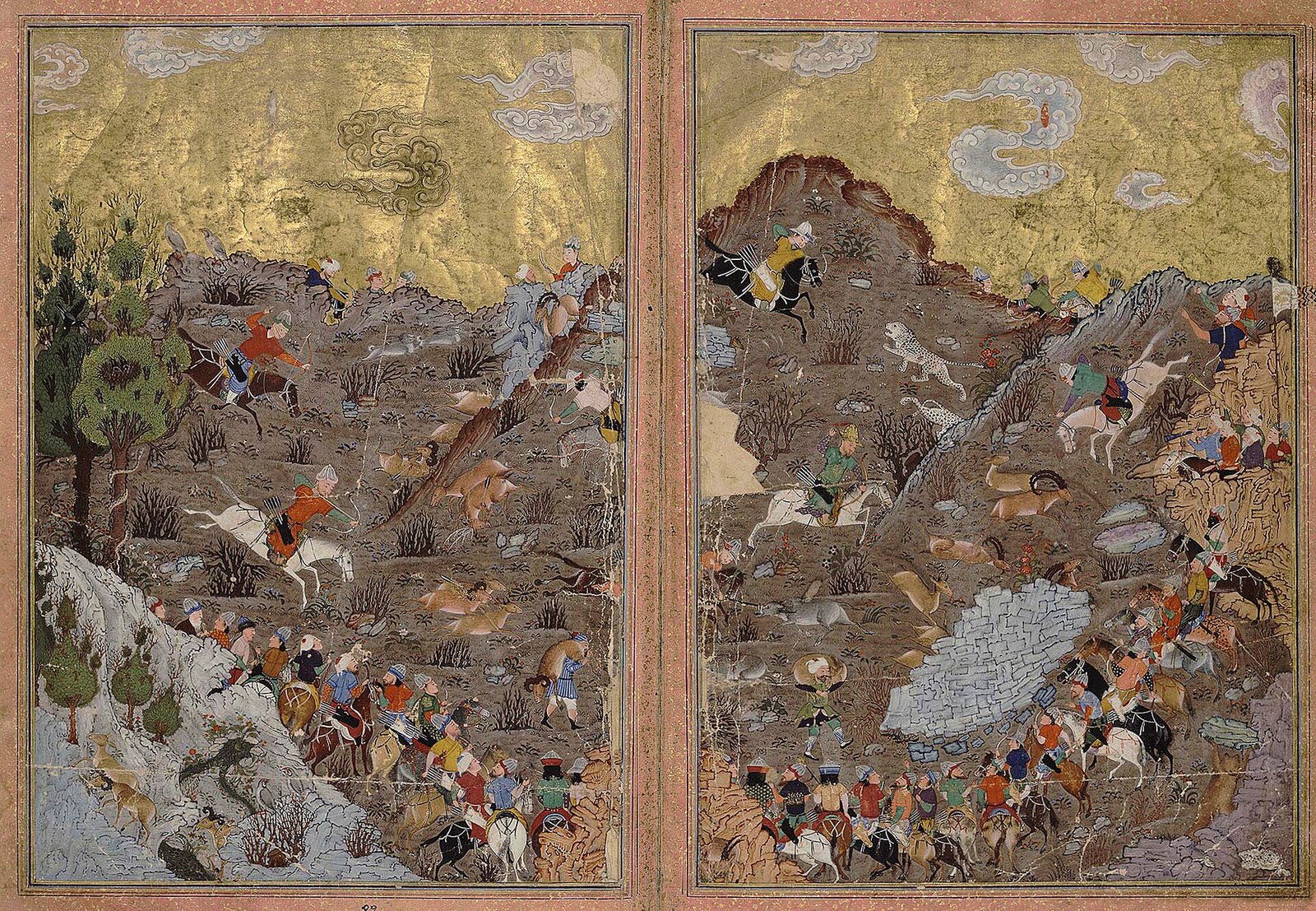
Image: Hunting Sultan Uzun Hasa diptych, 1467-1473, Aq Qoyunlu.jpg — 1460s-1470s artist, Public domain