Who was Averroes?
Averroes was a philosopher, jurist, judge, and physician born in Córdoba in 1126. Known in Arabic as Ibn Rushd, he became especially associated with commentaries on Aristotle. His work also addressed religious interpretation, legal disagreement, medicine, and political thought. He died in Marrakesh on 11 December 1198.
If you are meeting Averroes for the first time, begin with his several professions. The writer who defended philosophy also held judicial office and served as a ruler’s physician. His arguments about reason and religion belonged to a career that included interpreting law and practicing medicine.
His central position appears in Fasl al-maqal, an independent work about Islam and philosophy. He argued that philosophical inquiry could be a religious obligation for appropriately qualified people. Certain rational proof and revealed truth, in his account, could not ultimately contradict each other.
What does Averroes mean?
Averroes is the Latinized form of Ibn Rushd. His fuller name was Abu al-Walid Muhammad ibn Ahmad ibn Muhammad al-Qurtubi. The different forms refer to the same historical thinker.
He also carried the designation hafid, meaning grandson. This distinguished him from his grandfather, who shared his name. His Aristotle commentaries brought another designation: sharih in the Islamic world and Commentator in the Latin world. Both identify his role as an interpreter.
When you encounter Averroes and Ibn Rushd in different books, you are therefore following the same author. The name Averroes reflects Latin usage. The title Commentator points more specifically to the body of work that made his relationship with Aristotle so prominent.
How did Ibn Rushd become a judge and physician?
Ibn Rushd grew up in an Andalusian family of jurists. His early education included hadith, language, jurisprudence, and theology. These subjects placed religious texts and legal reasoning within his training before his later appointments as a judge and physician.
In 1169, he became a judge in Seville. In 1171, he was appointed chief judge in Córdoba. These offices matter when reading his philosophical writings: their author also held responsibility for legal judgment. Law was both a subject he studied and a profession he practiced.
In 1182, the Almohad ruler Abu Yaqub Yusuf summoned him to Marrakesh as his personal physician. Ibn Rushd succeeded Ibn Tufayl in that position. His medical career also produced al-Kulliyyat fi al-tibb, a book later translated into Latin as Colliget.
What did Averroes believe about reason and religion?
In Fasl al-maqal, Ibn Rushd grounded his defense of philosophy in the Quran’s call to reflect on created things. He treated philosophical study as a religious obligation for people with the necessary intellectual and moral qualifications. His claim therefore included conditions concerning who should undertake that study.
He distinguished three methods of approaching religious truth: demonstration, dialectic, and rhetoric. These were different forms of reasoning and persuasion. The distinction helps explain why his defense of philosophy also considered the methods through which people understand religious claims.
For Ibn Rushd, a conflict between certain rational proof and the apparent meaning of scripture required interpretation of the text. This interpretive process is known as tawil. His argument gave demonstrative reasoning a role in deciding how a scriptural passage should be understood.
Paragraph 12 of Fasl al-maqal expresses the governing principle: truth agrees with truth and bears witness to it. You can use that principle to follow his argument. A demonstrated conclusion and religious truth should be compatible, even when the apparent wording of a passage requires interpretation.
Which books explain his philosophy, law, and medicine?
Fasl al-maqal addresses the relationship between Islam and philosophy. Tahafut al-Tahafut answers the criticisms of philosophy made by al-Ghazali in Tahafut al-falasifa. These works connect Ibn Rushd’s defense of philosophical inquiry with specific disagreements about what philosophers could reasonably claim.
In al-Kashf an manahij al-adilla, he discussed God’s existence and attributes while criticizing Ashari theology. His religious writings therefore included both a defense of philosophical methods and criticism of theological arguments. The relationship between reason and religion took shape through these particular disputes.
His legal book, Bidayat al-mujtahid wa nihayat al-muqtasid, examined disagreements among Sunni schools of jurisprudence and their causes. There is an everyday-life connection here: when you compare conflicting explanations for a decision, asking why they differ matters. Ibn Rushd made the causes of legal disagreement a subject of study.
His medical writing reached readers through translation. Al-Kulliyyat fi al-tibb became Colliget in Latin and served as a medical textbook in Europe for centuries. Alongside his philosophical works, this book shows the reach of a career that included both medical authorship and service as a physician.
Why were his Aristotle commentaries important?
Ibn Rushd’s Aristotle commentaries are classified into three groups by length: short, middle, and long. His reputation as the Commentator rests on this sustained work of interpretation. The classification also gives you a useful way to distinguish writings that might otherwise appear under similar descriptions.
His interpretations did not remain fixed throughout his career. In the long commentary on De Anima, he argued that human beings participate in a single shared material intellect. In his earlier middle commentary, he had rejected that position. Reading the works together reveals a change in his thinking.
The Latin name Averroes and the title Commentator reflect his reception in the Latin world. His medical book circulated in Latin as Colliget, so that reception extended beyond the interpretation of Aristotle.
Which ideas made Averroes controversial?
Following Aristotle, Ibn Rushd defended the eternity of the universe. The opposing, widespread theological position held that God created the universe after it had not existed. The dispute concerned how the universe’s existence should be understood in relation to divine creation.
Divine knowledge produced another disagreement. Al-Ghazali accused philosophers of claiming that God did not know particulars. Ibn Rushd responded that divine knowledge could not be reduced to the human distinction between universal and particular knowledge. His answer challenged the terms in which the accusation was framed.
The shared intellect described in his long De Anima commentary was another contested theory. Its contrast with his earlier middle commentary makes the issue especially revealing. A statement about what Averroes believed about intellect needs to account for the different positions in those works.
Why was Averroes sent to Lucena?
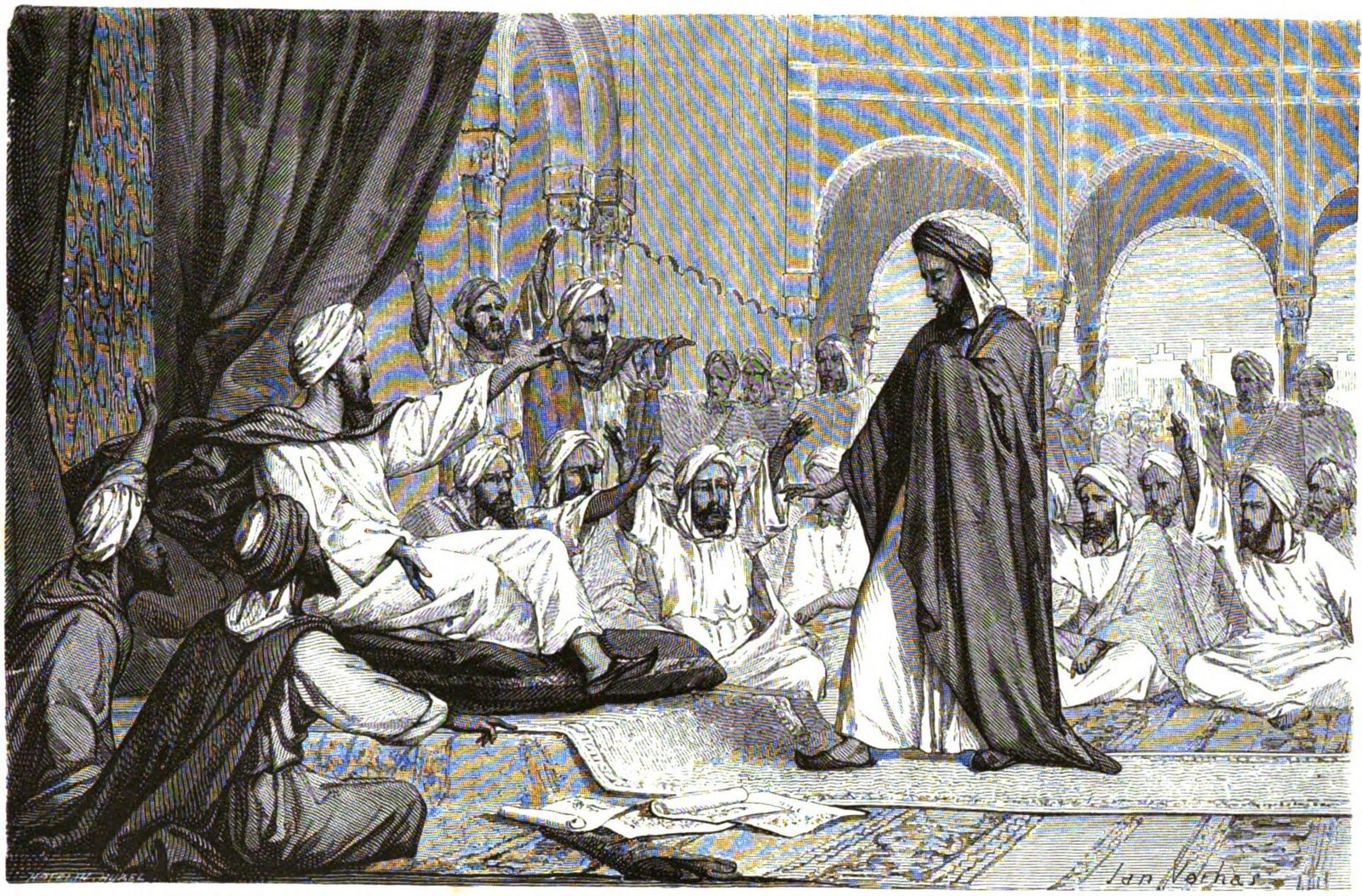
In 1195, Ibn Rushd was subjected to forced residence in Lucena. His exile has been linked to hostility toward philosophy. Other interpretations emphasize political relationships and wartime conditions. The event therefore carries competing explanations, rather than one settled account of its cause.
He died in Marrakesh on 11 December 1198 and was initially buried there. According to the TDV Islamic Encyclopedia, his remains were moved three months later to the family burial ground in Córdoba’s Ibn Abbas Cemetery.
Timeline
- 1126: Born in Córdoba in al-Andalus, in present-day Spain.
- 1153: Made astronomical observations in Marrakesh.
- 1169: Appointed a judge in Seville.
- 1171: Became chief judge in Córdoba.
- 1182: Summoned to Marrakesh as the ruler’s personal physician.
- 1195: Subjected to forced residence in Lucena.
- 11 December 1198: Died in Marrakesh.
- Three months after his initial burial in Marrakesh: His remains were transferred to Córdoba, according to TDV.
Details you won’t find in guidebooks
During his education, Ibn Rushd memorized Imam Malik’s al-Muwatta. This detail adds something concrete to the broad description of his legal training. His familiarity with jurisprudence included memorization of a named work as well as his later service in judicial office.
His scholarly work could be constrained by his official duties. In his 1169 commentary on animals, he complained about the demands of judging and the difficulty of finding sources away from Córdoba. The passage connects his writing to practical pressures on his time and access to books.
In Marrakesh in 1153, he observed Canopus, a star that could not be seen from the latitude of his homeland. His intellectual interests thus included direct astronomical observation alongside the textual work for which his Aristotle commentaries became known.
Unable to obtain Aristotle’s Politics, Ibn Rushd pursued political inquiry through a commentary on Plato’s Republic. In that commentary, he argued that women could become guardians, philosophers, and rulers. Both the choice of text and the argument belong to his political writing.
FAQ
Who was Averroes?
Averroes was Ibn Rushd, a philosopher, jurist, judge, and physician born in Córdoba in 1126. He became known for his commentaries on Aristotle and his writings on philosophy, religion, law, and medicine.
What does Averroes mean?
Averroes is the Latinized form of the name Ibn Rushd. He was also called hafid, meaning grandson, to distinguish him from his grandfather of the same name.
What did Averroes believe about reason and religion?
He argued that demonstrative reasoning and religious truth could agree. In Fasl al-maqal, he treated philosophical study as a religious obligation for people with the necessary intellectual and moral qualifications.
Why was Averroes exiled?
His forced residence in Lucena in 1195 has been linked to hostility toward philosophy. Other interpretations emphasize political relationships and wartime conditions.
Sources
- TDV İslâm Ansiklopedisi — İbn Rüşd islamansiklopedisi.org.tr
- Stanford Encyclopedia of Philosophy — Ibn Rushd plato.stanford.edu
- Internet Encyclopedia of Philosophy — Ibn Rushd (Averroes) iep.utm.edu
- Vikipedi — İbn Rüşd tr.wikipedia.org
- Wikipedia — Averroes en.wikipedia.org
Image: The Disgrace of Averroes – Vies Des Savants Illustrés.jpg — Louis Figuier (15 February 1819 – 8 November 1894), Public domain