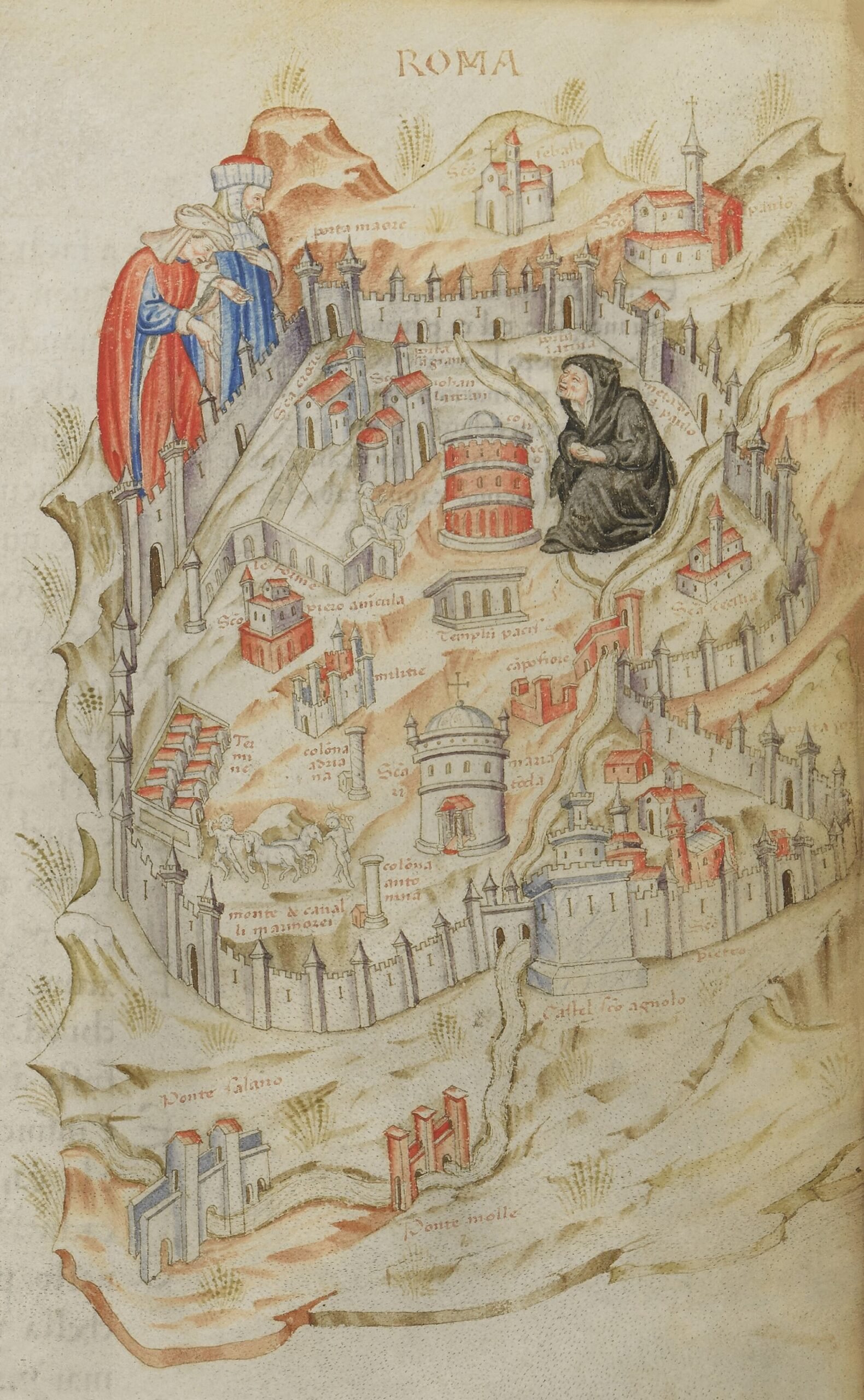
The Avignon Papacy was the period from 1309 to 1377 when seven successive popes, from Clement V to Gregory XI, governed from Avignon instead of Rome. Clement V remained north of the Alps because of insecurity in Italy, his political relationships, and Church business there. Avignon stood outside the French kingdom when the papal court arrived.
Why, then, does this episode seem so closely tied to French power? All seven popes were French in origin, yet French influence and royal control are different questions. If you follow the city’s ownership, the construction of its palace, and the return to Rome, you can see why the Avignon Papacy also needs to be distinguished from the Western Schism that began in 1378.
Why did Clement V settle in Avignon?
Bertrand de Got, archbishop of Bordeaux, became Pope Clement V in 1305. His decision to remain north of the Alps had several causes. Historian Zutshi identifies disorder in northern and central Italy, health problems, ties to Gascony, and close relations with Philip IV.
Church affairs also kept Clement occupied outside Italy. These included the Templar question, preparations for the Council of Vienne, and the rivalry between England and France. His residence therefore reflected a combination of personal circumstances, political relationships, and immediate responsibilities.
The arrival of the papal court in Avignon in 1309 did not mean Clement immediately occupied the great palace visible today. He stayed intermittently in the city and lodged in a Dominican convent. The monumental residence developed under his successors.
An extended absence from Rome also had precedents. According to a calculation reported by Zutshi, popes spent about 60 percent of their time outside Rome between 1198 and 1304. Avignon’s importance lay in becoming the governing centre for seven successive pontificates.
Who controlled Avignon politically at the time?
In 1309, Avignon lay within the Kingdom of Arles, part of the Holy Roman Empire. It was outside the Kingdom of France. Describing the papal move simply as a transfer into French royal territory therefore gives you the wrong political map.
Before its sale in 1348, the city belonged to Joanna I, queen of Naples, who also held the title of countess of Provence. Nearby Comtat Venaissin had been direct Church property since 1274. The neighbouring territories had different owners, even though both became closely connected with the papal presence.
Clement VI purchased Avignon from Joanna in 1348 for 80,000 florins. This changed the papacy’s relationship with its host city: the pope now owned Avignon itself. The purchase came decades after Clement V’s arrival, so papal residence and papal ownership began at different moments.
How much influence did French kings exercise over the papacy?
French influence was substantial. All seven popes of the Avignon period were French in origin. Within a few years, Clement V also changed the composition of the College of Cardinals by giving French cardinals a majority.
Those appointments help explain why the papacy appeared closely associated with France. Clement’s personal relationship with Philip IV added to that impression.
Whether this amounted to obedience to the French king remains a question of interpretation. Historian Jean Favier acknowledged the predominance of French people within the institution while arguing that its government was not subordinate to the king. His distinction separates influence over personnel from command over papal decisions.
The Avignon popes also attempted to end the Hundred Years’ War. Blake Beattie’s academic account notes these unsuccessful efforts alongside criticism of their dependence on the French crown. Their diplomacy belongs in the picture as well as their French connections.
How did the papal palace and central administration develop?
John XXII, pope from 1316 to 1334, adapted the bishop’s residence near the cathedral into the first papal palace housing Church government. This followed Clement V’s intermittent stays in the Dominican convent. The administrative residence grew through successive stages.
Under Clement V and John XXII, central government became stronger. The papacy expanded its direct control over appointments to Church offices that produced income. Avignon therefore mattered as a centre of decisions and revenue as well as a papal home.
One source of revenue was the annates. These were payments taken from the first year’s income of a newly filled Church office. For an everyday comparison, think of moving an office: its address matters, but so do the appointments and payments handled there. At Avignon, both residence and administrative authority developed together.
Benedict XII commissioned a new papal palace between 1335 and 1342. Pierre Poisson directed the work. This building campaign gave the papal government a residence beyond the earlier adaptation of the bishop’s accommodation.
Clement VI enlarged the palace during his pontificate of 1342–1352, with Jean de Louvres directing the additions. The Great Chapel was built above the Great Audience Hall. These successive campaigns explain why the palace should be read as the work of several pontificates.
Timeline
- 1274: Comtat Venaissin, near Avignon, became Church property.
- 1305: Bertrand de Got was elected pope and took the name Clement V.
- 1309: Clement V brought the papal court to Avignon.
- 1316–1334: John XXII adapted the bishop’s residence for papal government.
- 1335–1342: Benedict XII’s palace was built under Pierre Poisson.
- 1342–1352: Clement VI expanded the palace.
- 9 June 1348: The document recording Avignon’s sale to Clement VI was drawn up.
- 1367: Urban V returned to Rome.
- 1370: Urban V returned to Avignon.
- 13 September 1376: Gregory XI departed from Avignon.
- 17 January 1377: Gregory XI reached Rome.
- 1378: Rival claims by Urban VI and Clement VII began the Western Schism.
- 1417: Martin V’s election during the Council of Constance ended the schism.
Details you won’t find in guidebooks
Clement VI’s palace extensions employed an average of 600 people. Work proceeded despite the conditions of the Hundred Years’ War and the Black Death. That workforce gives a concrete sense of the scale behind the rooms and structures associated with his pontificate.
The palace’s Trouillas Tower rises 52 metres. If you are trying to understand the complex through individual features, that measurement offers a useful reference alongside the Great Chapel and Great Audience Hall. The palace combined substantial vertical structures with spaces for papal government.
The city’s purchase also survives through a specific documentary trace. France’s collective manuscript catalogue records a copy made in 1356 of the sale document dated 9 June 1348. The transaction can therefore be connected with a catalogued manuscript record as well as the purchase price.
Avignon’s historic centre entered the UNESCO World Heritage List in 1995. The listed ensemble includes the Papal Palace, episcopal buildings, and bridge. For you as a visitor or student, that grouping places the palace within a broader historic setting.
How did the Avignon Papacy differ from the Western Schism beginning in 1378?
The return to Rome took more than one attempt. Urban V went there in 1367 but came back to Avignon in 1370. Gregory XI later left Avignon on 13 September 1376 and arrived in Rome on 17 January 1377. His departure and arrival explain why the period’s endpoint appears as either 1376 or 1377.
The Western Schism began after this return. Some cardinals who elected Urban VI in April 1378 later rejected the election’s validity. In September, they elected Clement VII as a rival pope. The central issue was now competing claims to the papal office.
Catholic historiography recognizes all seven Avignon popes of 1309–1377 as legitimate. It treats Clement VII and Benedict XIII of the subsequent Avignon line as antipopes. Sharing Avignon as a residence did not give the two periods the same status.
During the Western Schism of 1378–1417, a Pisa line eventually joined the rival Roman and Avignon lines. There were then three competing papal claimants. The crisis ended with Martin V’s election in 1417 during the Council of Constance.
FAQ
Why did the popes reside in Avignon instead of Rome?
The move reflected disorder in northern and central Italy, Clement V’s health and Gascon connections, his relationship with Philip IV, and Church affairs north of the Alps.
Was Avignon part of the French kingdom in 1309?
No. Avignon lay within the Kingdom of Arles in the Holy Roman Empire. Clement VI bought the city from Joanna I in 1348.
When did the Avignon Papacy end?
Gregory XI left Avignon on 13 September 1376 and reached Rome on 17 January 1377. These departure and arrival dates explain the different end dates used for the period.
Were the seven Avignon popes considered antipopes?
No. Catholic historiography recognizes the seven popes of 1309–1377 as legitimate. It classifies Clement VII and Benedict XIII of the later Avignon line as antipopes.
Sources
- Cambridge — P. N. R. Zutshi, The Avignon Papacy cambridge.org
- Oxford Bibliographies — Joëlle Rollo-Koster, Avignon Papacy academic.oup.com
- Wikipedia — Avignon Papacy en.wikipedia.org
- Institut de France — Les Papes s’installent en Avignon podcasts.institutdefrance.fr
- Palais des Papes — 9 papes à Avignon palais-des-papes.com
- Bibliothèque nationale de France, Catalogue collectif de France — Avignon Sale Document ccfr.bnf.fr
- Cambridge — Blake Beattie, The Avignon Papacy and the Great Western Schism cambridge.org
- Palais des Papes — Le plus grand palais gothique palais-des-papes.com
- UNESCO — Historic Centre of Avignon whc.unesco.org
Image: Fazio degli Uberti, II Dittamondo, avec le commentaire d' Andrea Morena da Lodi. Ms. Ital. 81. Fol. 18r.jpg — Gennadii Saus i Segura, Public domain