The Montreux Convention gave Turkey back key powers over the Straits on 20 July 1936. Signed in Montreux, Switzerland, it allowed remilitarization and transferred an international commission’s duties to the Turkish government. It also preserved freedom of passage for merchant ships in peacetime. Turkey regained authority through a negotiated agreement that kept international navigation at its core.
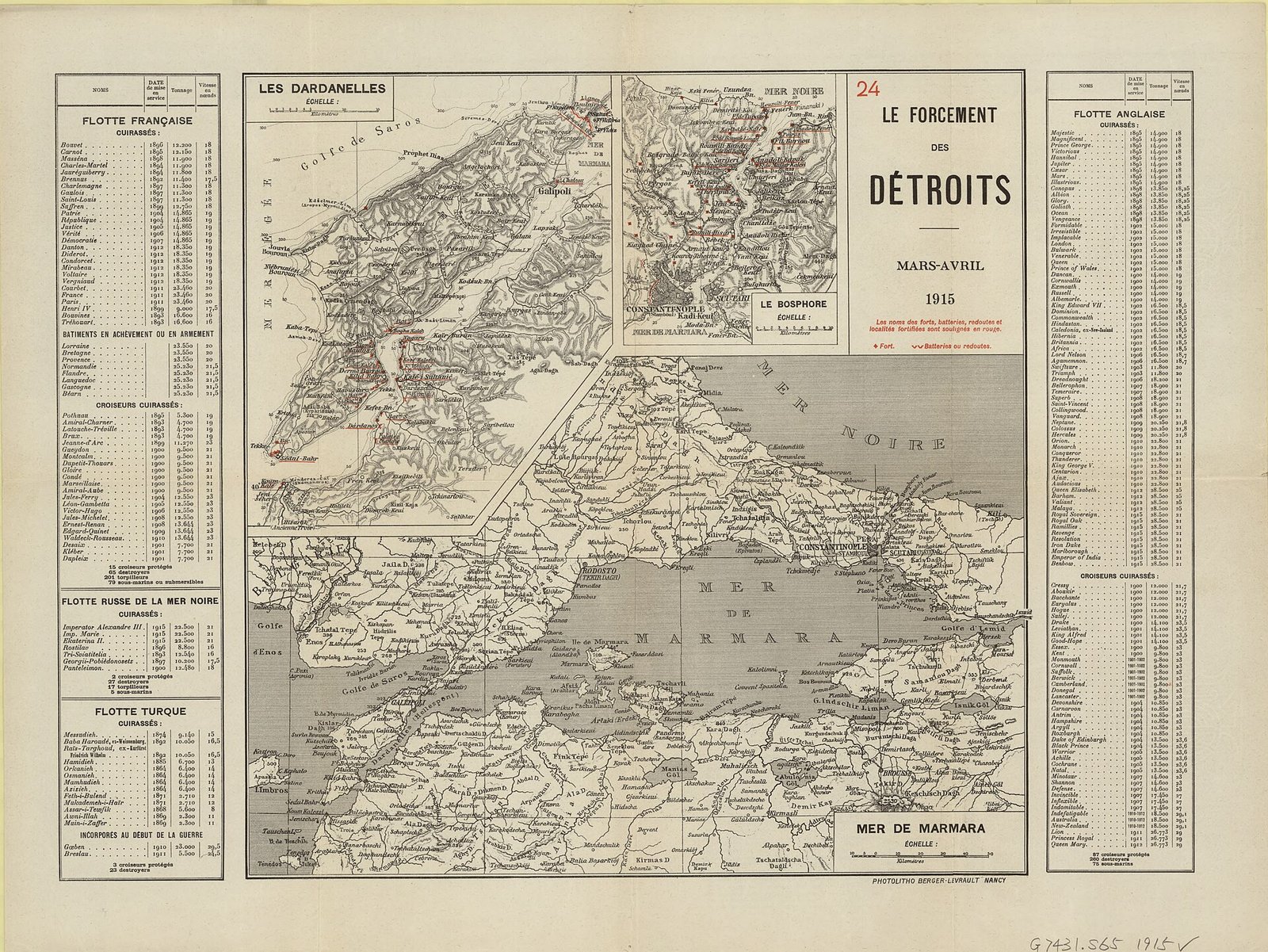
If you visit the Bosphorus, the convention helps explain the rules behind shipping through these waters. Its opening provisions define the Straits as the Bosphorus, the Sea of Marmara and the Dardanelles together. The agreement therefore concerns a connected passage, rather than the Bosphorus alone.
What is the Montreux Convention regarding the Regime of the Straits?
The Convention Regarding the Regime of the Straits contains 29 articles, four annexes and a protocol. Its provisions distinguish merchant ships from warships. They also distinguish peacetime from wartime and Black Sea coastal states from states without a Black Sea coast. These categories determine which passage rules apply.
The central exchange was concrete. Turkey recovered the right to militarize the Straits, while Article 24 transferred the duties of the International Straits Commission to its government. Article 2 protected merchant passage in peacetime. Regained control therefore came with agreed obligations toward shipping.
History of Montreux: why Turkey sought a new agreement
The starting point was the Lausanne Straits Convention of 1923. It demilitarized the areas around the Straits and the islands in the Sea of Marmara. It also established an international commission for passage. Under that arrangement, the Straits had a different security and administrative framework from the one introduced at Montreux.
Turkey raised the need for change at the London Disarmament Conference in May 1933. Its concern focused on the demilitarization provisions. Italy’s invasion of Abyssinia and Germany’s militarization of the Rhineland were among the reasons Turkey came to regard the collective security guarantee of 1923 as inadequate.
In April 1936, Turkey sent a note to the states involved at Lausanne. It requested a revised Straits regime on grounds of security, defence and sovereignty. The request led to negotiations at Montreux. The conference opened on 22 June 1936, with Foreign Minister Tevfik Rüştü Aras leading the Turkish delegation.
The Montreux Convention regarding the Regime of the Straits, 1936
The convention was signed on 20 July 1936. Its original signatories were Turkey, the United Kingdom, Australia, Bulgaria, France, Greece, Japan, Romania, the Soviet Union and Yugoslavia. Italy did not attend the conference. It joined the convention on 2 May 1938.
Signing and entry into force were separate stages. The United Nations treaty record gives 15 August 1936 as the date of provisional entry into force. Definitive entry into force followed on 9 November 1936. These dates explain why accounts of the agreement can refer to several different moments in the same year.
The attached protocol made an immediate difference to Turkish defence. It authorized Turkey to remilitarize the Straits region without waiting for definitive entry into force in November. Meanwhile, Article 24 placed the former commission’s duties with the Turkish government. Military authority and administrative responsibility changed through distinct provisions.
Timeline
- 1923: The Lausanne Straits Convention established demilitarization and an international commission.
- May 1933: Turkey raised revision of the Straits regime at the London Disarmament Conference.
- April 1936: Turkey sent a diplomatic note requesting changes to the regime.
- 22 June 1936: The Montreux Conference opened.
- 20 July 1936: The convention was signed. Its protocol authorized immediate Turkish remilitarization.
- 15 August 1936: The new passage regime entered into force provisionally.
- 10 September 1936: The end of the Straits Commission’s work was reported to the League of Nations.
- 9 November 1936: The convention entered into force definitively.
- 2 May 1938: Italy joined the convention.
- 20 July 2026: Turkey’s Foreign Ministry stated that implementation continued on the convention’s 90th anniversary.
What changed for merchant ships and warships?
Article 2 grants merchant ships freedom of passage in peacetime, by day and night, regardless of flag or cargo. For ships passing in transit without calling at a port, it permits only the taxes and charges authorized in Annex I. The convention thus combines passage rights with specified financial rules.
You can connect this to an everyday distinction: managing a route and setting the conditions for using it are related tasks. At Montreux, Turkey assumed the commission’s duties, while merchant ships retained defined passage rights. Watching a ship pass through the Bosphorus gives you a concrete way to understand that relationship.
Warships face additional requirements. Article 13 sets the normal advance notification period at eight days. For states without a Black Sea coast, it describes an increase to 15 days as desirable. That wording matters: the provision does not present both periods as identical requirements.
Article 14 generally limits foreign naval forces passing through the Straits at the same time to 15,000 tons and nine vessels, subject to specified exceptions. Article 18 addresses a different issue: the total warship tonnage of non-coastal states in the Black Sea. Its normal ceiling is 30,000 tons, with an increase to 45,000 tons permitted under certain conditions.
Article 18 also limits how long those ships may stay. Warships belonging to states without a Black Sea coast cannot remain in the Black Sea for more than 21 days, whatever their purpose. The transit limit, the collective tonnage ceiling and the duration limit therefore answer separate questions.
What happens during war or an imminent threat?
Article 19 applies when war occurs and Turkey is not a belligerent. It generally bars passage by warships belonging to belligerent states. Return to their bases and other exceptions specified in the article qualify that rule. The provision makes Turkey’s own position in the conflict central to the passage regime.
Article 20 gives the Turkish government full discretion over warship passage when Turkey is itself a belligerent. Article 21 permits Turkey to use that authority if it considers itself threatened by imminent war. The latter power comes with notification and review provisions. The agreement thus sets out different powers for different security circumstances.
Details you won’t find in guidebooks
In 1925, Vasıf Temel Paşa, president of the Straits Commission established after Lausanne, prevented the commission’s own flag from being raised at Tophane Kasrı. This episode belongs to the earlier commission system. It places a concrete dispute over a flag alongside the broader history of international administration.
The commission’s work also had a documented closing stage. Its president, Mehmet Ali Talay, informed the League of Nations Secretariat on 10 September 1936 that its activities had ended. That notification came after provisional entry into force and before definitive entry into force.
The convention regulates some movements with striking precision. Under Article 12, submarines of Black Sea coastal states that qualify for passage must travel through the Straits by day, on the surface and individually. Article 15 prohibits transiting warships from operating the aircraft they carry while in the Straits.
The original language of the convention is French. Its English text and annexes are available in the Turkish Foreign Ministry’s 2024 Straits Report. The language distinction is useful when you compare the agreement’s original wording with an English reading copy.
Does the Montreux Convention have an end date?
Article 28’s initial 20-year period did not mean automatic expiry. Without the required termination notice, the convention continues. Under its termination mechanism, it remains in force until two years after the relevant notice. A duration clause and an automatic end date are therefore different things in this agreement.
Article 28 separately declares that the principle of freedom of passage and navigation recognized in Article 1 has no time limit. On 20 July 2026, Turkey’s Foreign Ministry stated that the convention had been implemented for 90 years and would continue to be implemented.
Where can you find the Montreux Convention regarding the Regime of the Straits PDF?
The Turkish Foreign Ministry’s 2024 Straits Report contains the English convention text and annexes. For the transfer of authority, read Article 24 and the attached protocol together. For passage rules, Articles 2, 13, 14 and 18 cover different aspects of merchant and naval traffic. Article 28 addresses duration and termination.
FAQ
What is the Montreux Convention?
It is the agreement signed at Montreux, Switzerland, on 20 July 1936 to regulate passage through the Straits. It allowed Turkey to remilitarize the area and transferred the international commission’s duties to the Turkish government.
Does the Montreux Convention have an end date?
Its initial 20-year term did not create an automatic expiry date. Article 28 provides for termination through notice, with the convention remaining in force until two years after the relevant notice.
Where can I find the Montreux Convention PDF?
The English text and annexes appear in the Turkish Ministry of Foreign Affairs’ 2024 Straits Report: https://www.mfa.gov.tr/site_media/html/BOGAZLAR-RAPORU-2024-EN.pdf
How long can non-Black Sea states’ warships remain in the Black Sea?
Article 18 limits their stay to 21 days, regardless of their purpose. It also sets collective tonnage limits.
Sources
- Turkish Ministry of Foreign Affairs — 2024 Straits Report, convention text, annexes and protocol mfa.gov.tr
- TDV İslâm Ansiklopedisi — Montrö Boğazlar Sözleşmesi islamansiklopedisi.org.tr
- United Nations Treaty Collection — Convention regarding the Régime of Straits treaties.un.org
- Abdurrahman Bozkurt — Boğazlar Komisyonu’nun Kuruluşu ve Faaliyetleri (1924–1936) cdn.istanbul.edu.tr
- National University of Singapore, Centre for International Law — 1936 Convention Regarding the Regime of the Straits cil.nus.edu.sg
- Turkish Ministry of Foreign Affairs — Statement on the 90th anniversary of the Montreux Convention mfa.gov.tr
- Wikipedia — Montreux Convention Regarding the Regime of the Straits en.wikipedia.org
- Vikipedi — Montrö Boğazlar Sözleşmesi tr.wikipedia.org
Image: 1915 French map of the Turkish Straits and the Sea of Marmara.jpg — Nancy : Berger Levrault, 1915, Public domain