What is the Kuva-yi Milliye?
Kuva-yi Milliye is the name of the national resistance organization that rose against occupation and annexation during the Turkish War of Independence. It was not one army with one headquarters. It was a network of local armed units.
The name matters because it tells you who fought. Religious scholars, officials, officers and local leaders took up arms where they lived.
This article covers what the name means, how to write it, when it began, who led it, and where you can see traces of it today.
What does Kuva-yi Milliye mean?
In Turkish the name means “national forces” or “national troops”.
The phrase is older than the War of Independence. The Atatürk Encyclopedia notes that the name “Kuvâ-yı Milliye” was already used during the Balkan War period, before the national struggle began.
How do you write Kuva-yi Milliye?
Turkish encyclopedias write the name of this historical organization as “Kuvâ-yi Milliye”. The circumflex over the first “a” is part of the formal spelling.
In English you will often see “Kuva-yi Milliye” without the accent. Both refer to the same thing. The Atatürk Encyclopedia writes it as “Kuvâ-yı Milliye”.
When was the Kuva-yi Milliye founded?
There is no single founding date. Local units grew up separately in Dörtyol, in the Aegean region and in other areas. That is why the organization had no one central founding place.
The background was the Armistice of Mondros, signed on 30 October 1918. After it, much of the Ottoman army was demobilized and weapon depots came under inspection. Ordinary people had fewer ways to defend themselves.
The first armed resistance linked to the Kuva-yi Milliye took place on 19 December 1918 in Dörtyol, against French forces.
The next turning point came on 15 May 1919. Greek forces occupied İzmir. This event was decisive in spreading the Kuva-yi Milliye organization across Western Anatolia.
Timeline
- 30 October 1918: The Armistice of Mondros is signed. The demobilization of the army and the occupations prepare the ground for local resistance.
- 19 December 1918: The clash at Dörtyol against French forces takes place. It is remembered as the first armed resistance.
- 15 May 1919: Greek forces occupy İzmir. Resistance in Western Anatolia speeds up.
- 16 May 1919: In Balıkesir, local people decide on armed struggle.
- 23 May 1919: Colonel Şefik Bey proposes a Kuva-yi Milliye organization to the Ministry of War.
- Late May 1919: Fighters from Ödemiş take positions around Hacıilyas.
- 16 June 1919: Yörük Ali Efe and his comrades carry out the Malgaç Raid.
- 26–27 January 1920: Köprülü Hamdi Bey and Kuva-yi Milliye fighters cross to the Rumeli side to raid the Akbaş ammunition depot.
- 12 February 1920: Maraş is freed from French occupation.
- 10–11 April 1920: French forces leave Urfa.
- Late 1920–1921: Western Front units join the regular army. Some units on the Southern Front keep fighting.
Who joined the Kuva-yi Milliye?
The movement drew people from many parts of society. Religious scholars, bureaucrats, officers, efes, zeybeks and some of the local notables all took part.
Units were usually small. Detachments were generally organized in groups of 30, 40 or 50 people.
Some of the best-known local commanders were Yörük Ali Efe, Demirci Mehmet Efe and Şahin Bey.
How did the Kuva-yi Milliye fight in the west?
In Western Anatolia, Kuva-yi Milliye units used hit-and-run tactics against the Greek army. Their goal was to slow its advance until a regular army could be formed.
Numbers grew fast. Estimates for the Western Anatolian forces range from 6,500–7,500 people at the end of 1919 to about 15,000 by mid-1920.
Two local examples show how this looked on the ground.
Ödemiş. The Kuva-yi Milliye organization here was called the “Yiğit Ordusu” (Brave Army). At the end of May 1919, its fighters took positions around the village of Hacıilyas.
Malgaç. On 16 June 1919, Yörük Ali Efe and his comrades raided a Greek guard post. It stood beside the Malgaç railway bridge, between Sultanhisar and Atça. The raid succeeded.
Support also came from the public. The Nazilli Congress decided to collect money and goods from the people so that soldiers and supplies could be sent to the fronts.
Kuva-yi Milliye on the Southern Front
In the south the enemy was France. Kuva-yi Milliye units formed the main armed force on the Turkish side of the Southern Front.
Around Dörtyol, units led by Kara Hasan Paşa fought a guerrilla war against the occupying forces in the Amanos Mountains.
The results show up in the dates. Maraş was freed from French occupation on 12 February 1920. French forces left Urfa on 10–11 April 1920.
How did the Kuva-yi Milliye end?
Its job was to hold the line until a regular army existed.
In late 1920 the transfer of Western Front units into the regular army sped up. On the Southern Front, some units kept fighting in 1921.
The change was not smooth everywhere. During the move to a regular army, Çerkez Ethem’s Kuvâ-yi Seyyare units rose against the Ankara Government.
Visiting the Kuva-yi Milliye Museum in Balıkesir
If you travel in western Turkey, you can stand where one of these decisions was made. On 16 May 1919, the people of Balıkesir gathered in a building and decided to fight with arms. That building is now the Kuva-yi Milliye Museum.
The museum’s ground floor is 120 square metres. It displays written decisions, belongings and photographs of the 41 people who led the local organization.
Details you won’t find in guidebooks
- An older name. The phrase “Kuvâ-yı Milliye” was used in the Balkan War period too, before the War of Independence.
- A proposal on paper. On 23 May 1919, Colonel Şefik Bey, commander of the 57th Division, submitted a report to the Ministry of War. In it he proposed organizing the Kuva-yi Milliye.
- A field hospital. Dr. Mustafa Bengisu set up a field hospital east of Hacıilyas village. It served the Ödemiş fighters.
- A cross-river raid. On 26–27 January 1920, Köprülü Hamdi Bey and his men crossed to the Rumeli side. Their target was the Akbaş ammunition depot, guarded by the French.
- Names of a few dozen. The Balıkesir museum displays material on 41 people who led the local organization, not a faceless crowd.
FAQ
What does Kuva-yi Milliye mean?
It means “national forces” or “national troops” in Turkish. The name was used for the local resistance units that fought occupation during the Turkish War of Independence.
How do you write Kuva-yi Milliye?
Turkish encyclopedias write the name of the historical organization as “Kuvâ-yi Milliye”, with a circumflex on the first â. English texts often drop the accent and write “Kuva-yi Milliye”.
When was the Kuva-yi Milliye founded?
It had no single founding date. Local units formed separately in different regions. The clash at Dörtyol on 19 December 1918 is remembered as its first armed resistance, and the organization spread widely after the occupation of İzmir on 15 May 1919.
Who were famous Kuva-yi Milliye commanders?
Yörük Ali Efe, Demirci Mehmet Efe and Şahin Bey are among the best-known local commanders. Kara Hasan Paşa led the Dörtyol units.
Can you visit a Kuva-yi Milliye museum?
Yes. The Kuva-yi Milliye Museum in Balıkesir is in the building where local people met on 16 May 1919 and decided on armed struggle.
Sources
- TDV İslâm Ansiklopedisi — Kuvâ-yi Milliye islamansiklopedisi.org.tr
- TDV İslâm Ansiklopedisi — Millî Mücadele islamansiklopedisi.org.tr
- Vikipedi — Kuvâ-yi Milliye tr.wikipedia.org
- Wikipedia — Kuva-yi Milliye en.wikipedia.org
- Atatürk Ansiklopedisi — Kuvâ-yı Millîye ataturkansiklopedisi.gov.tr
- Kültür ve Turizm Bakanlığı — Kuva-Yi Milliye Müzesi muze.gov.tr
- Kültür ve Turizm Bakanlığı — 1920 Kronolojisi ktb.gov.tr
- Kültür Portalı — Türkiye Cumhuriyeti Kronoloji kulturportali.gov.tr
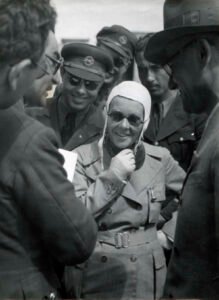
Image: Çerkez Ethem, Çerkez savaşçıları ve Mustafa Kemal Atatürk, 06-1920.jpg — Original photographer is unknown, Public domain