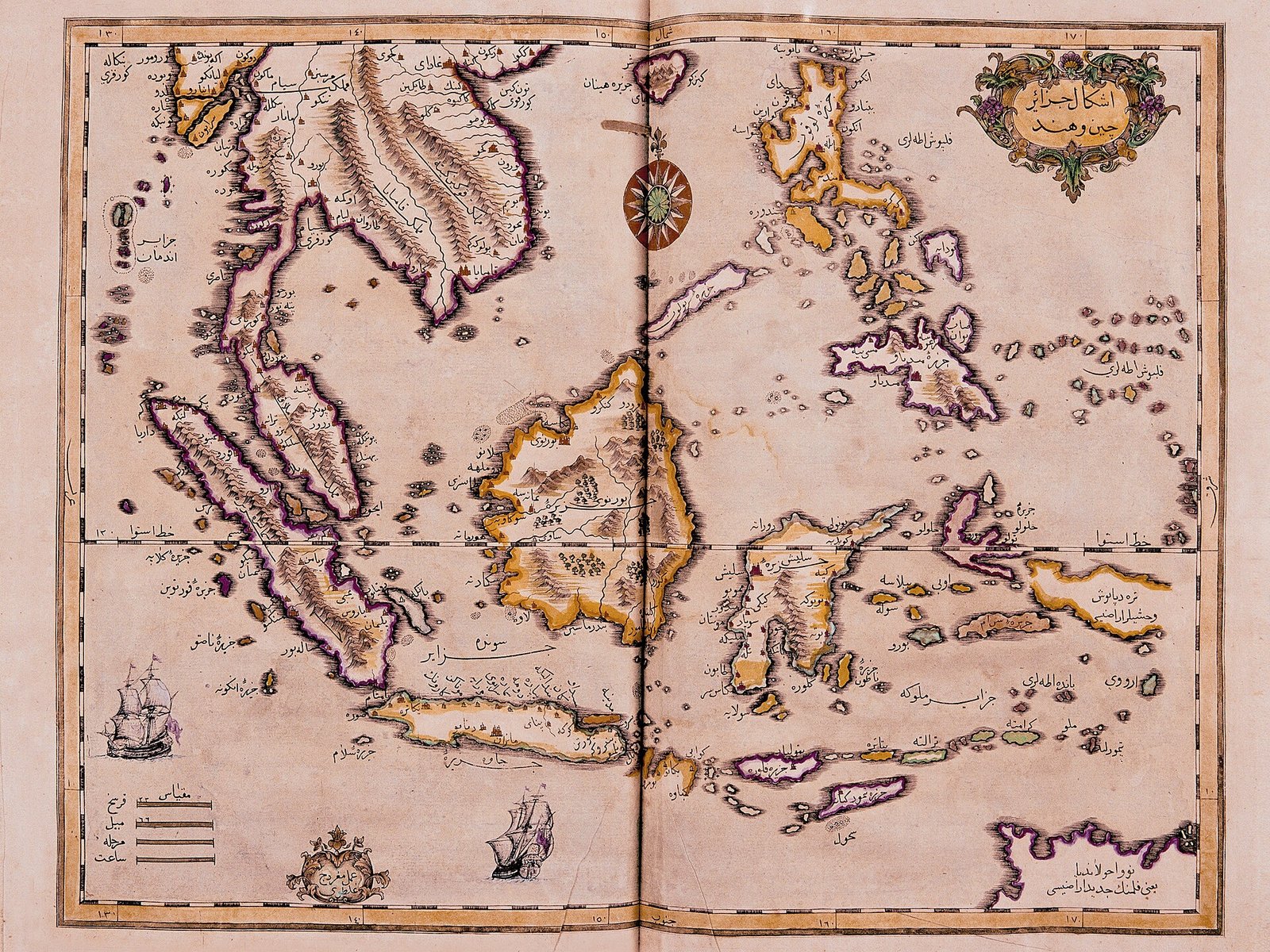
İbrahim Müteferrika established a printing press in Istanbul with Yirmisekizçelebizâde Mehmed Said Efendi in 1727. Its first book, the Arabic–Turkish dictionary known as Vankulu Lugatı, followed in early 1729. Yet the phrase “the first Ottoman printing press” needs care. Printing had already taken place in Istanbul in 1493.
If you are following Müteferrika’s story through Turkey, two places give it a geographical focus. His press began in his Istanbul home near Sultan Selim Mosque. His involvement in paper production leads to Yalova, where a museum bearing his name opened in 2013. Books and the material used to make them connect these locations.
Who was Ibrahim Muteferrika? İbrahim Müteferrika kimdir?
İbrahim Müteferrika worked as a printer, publisher, writer, translator and Ottoman official. He was born in Kolozsvár, the historical name of present-day Cluj-Napoca in Romania. His birth year is uncertain. The TDV İslâm Ansiklopedisi places it between 1670 and 1674.
Before becoming Muslim, Müteferrika was a Unitarian Hungarian. The circumstances of his conversion have prompted different interpretations. Niyazi Berkes challenged the claim that mistreatment in captivity caused his conversion. Drawing on Müteferrika’s Risâle-i İslâmiyye, Berkes presented a different account of his religious and intellectual background.
His Ottoman career included appointments beyond publishing. On 18 April 1716, İbrahim Efendi entered the service designated dergâh-ı âlî müteferrikalığı. In 1717, he became interpreter and escort to the Hungarian leader Ferenc Rákóczi II. Translation therefore formed part of his official work before the press received permission to operate.
Was his the first Ottoman printing press?
David and Samuel ben Nahmias had already printed Arba’ah Turim in Istanbul. That edition bears the date 13 December 1493. Their work establishes that Ottoman printing history began before Müteferrika’s enterprise. Calling his workshop the first printing press anywhere in the empire obscures this earlier publication.
Müteferrika’s pioneering position instead concerns his role as a Muslim entrepreneur printing with movable Arabic type. When you encounter the familiar “first Ottoman press” description, this distinction matters. The 1727 foundation belongs within an existing history of printing, while marking a particular development in Muslim participation in Arabic-script book production.
How did he establish the press? İbrahim Müteferrika matbaa
The press founded in 1727 had two founders: İbrahim Müteferrika and Yirmisekizçelebizâde Mehmed Said Efendi. Permission came in early July through a decree from Ahmed III and a fatwa from Şeyhülislâm Yenişehirli Abdullah Efendi. The foundation involved a partnership and formal authorization.
Müteferrika had outlined his intended publishing programme in a treatise dated 1726. He proposed dictionaries and works on history, medicine, physics, astronomy and geography. He excluded religious books from that programme. These named subjects show the range he envisaged before the first dictionary emerged from the press.
The programme should be distinguished from the books actually published. Vankulu Lugatı was completed in early 1729. Between 1729 and 1742, the press produced 17 works when the histories of Râşid and Çelebizâde are counted separately. That counting detail matters whenever you see a total attached to Müteferrika’s output.
Where were his house and press? İbrahim Müteferrika’nın evi nerede?
The press initially stood inside Müteferrika’s own house. Its location was the Mismârî Şücâ neighbourhood in Istanbul’s Yavuzselim district, near Sultan Selim Mosque. The answers to “Where was his house?” and “Where did he establish the press?” therefore begin at the same historical location.
For your Istanbul itinerary, Sultan Selim Mosque provides the geographical reference for this part of the story. The workshop’s setting was domestic: Müteferrika began the enterprise at home. Its equipment nevertheless included four presses for books and two for maps, giving that household location a substantial role in his publishing work.
What did he publish? İbrahim Müteferrika eserleri
Vankulu Lugatı, the first publication, was an Arabic–Turkish dictionary. Its printing was completed in early 1729, after the press’s authorization in 1727. A dictionary gives the story an everyday-life connection: when you look up an unfamiliar word, you perform the same basic task that this first publication supported.
Other publications included Cihannümâ in 1732 and Naîmâ Tarihi in 1734. Geography and history thus appeared among the press’s books. These works also give concrete examples of the subjects Müteferrika had included in his proposed publishing programme of 1726.
Müteferrika’s work with books extended to translation. In 1733, he translated Andreas Cellarius’s Atlas Coelestis into Turkish under the title Mecmûatü hey’eti’l-kadîme ve’l-cedîde. This astronomical translation belongs alongside his publishing activity, but it should be identified specifically as a work he translated.
Details you won’t find in guidebooks
The privilege document issued in 1727 named four scholars as proofreaders. It also contained commendations from 16 supporters of the press. These details place scholarly checking and written support within the enterprise’s formal foundation, alongside the authorization granted that year.
The equipment distinguished book production from map production. Müteferrika’s workshop had four presses for books and two for maps. Remembering both figures helps you picture the operation more precisely than imagining a single press producing every kind of printed material.
A probate record dated 1 April 1747 granted Müteferrika’s daughter Ayşe the right to sell the printed books. His publishing history therefore includes the handling of books after his death. The record identifies both the person who received that right and the stock to which it applied.
His memorial also changed location. In 1942, the headstone from his grave at Aynalıkavak was moved to the burial ground of the Galata Mevlevihanesi. Reşid Saffet Atabinen initiated the transfer. The object recorded as moving was the grave’s headstone.
Why does Yalova have an İbrahim Müteferrika Kâğıt Müzesi?
Müteferrika’s connection with paper production is documented in a report dated 22 August 1744. It shows him arranging to bring papermaking masters from Poland for the Yalova paper manufactory. The historical paper mill he operated stood in Elmalık village, within Yalova.
The İbrahim Müteferrika Paper Museum opened on 25 May 2013 inside Yalova’s Raif Dinçkök Cultural Centre. Its production workshop allows visitors to make their own paper. If you want a practical connection with this history, that activity brings the material side of Müteferrika’s work into your hands.
The two Yalova locations have different roles in the story. Elmalık was the site of the historical paper mill. The museum opened inside the Raif Dinçkök Cultural Centre. Keeping those locations distinct helps you connect Müteferrika’s eighteenth-century production work with the museum established in his name.
Timeline
- 1493: The Nahmias brothers printed Arba’ah Turim in Istanbul.
- 1670–1674: Müteferrika’s estimated birth range in Kolozsvár.
- 18 April 1716: He entered dergâh-ı âlî müteferrika service.
- 1717: He became interpreter and escort to Ferenc Rákóczi II.
- 1726: He outlined his intended publishing programme in a treatise.
- July 1727: He and Mehmed Said Efendi received official permission for the press.
- 1729: The press completed its first book, Vankulu Lugatı.
- 1732: The press published Cihannümâ.
- 1733: Müteferrika completed his translation of Atlas Coelestis.
- 1744: He worked to recruit papermakers from Poland for Yalova.
- 1747: The death year supported by the archival records cited by TDV.
- 1942: His headstone moved to the Galata Mevlevihanesi burial ground.
- 25 May 2013: The Yalova İbrahim Müteferrika Paper Museum opened.
When did Ibrahim Muteferrika die?
The TDV İslâm Ansiklopedisi adopts 1747 as Müteferrika’s death year, challenging the date of 1745. It cites a pay-register entry dated 6 February 1747. His death may have occurred a few days before that entry, so the register date should not be treated as an exact date of death.
FAQ
Who was Ibrahim Muteferrika?
İbrahim Müteferrika was a printer, publisher, writer, translator and Ottoman official. Born in Kolozsvár, now Cluj-Napoca in Romania, he founded a printing press with Mehmed Said Efendi in 1727.
Did Ibrahim Muteferrika establish the first Ottoman printing press?
Printing existed in the Ottoman Empire before Müteferrika. David and Samuel ben Nahmias printed Arba’ah Turim in Istanbul in 1493. Müteferrika’s pioneering role concerns printing with movable Arabic type as a Muslim entrepreneur.
Where did Ibrahim Muteferrika establish his press?
The press initially operated in Müteferrika’s home in the Mismârî Şücâ neighbourhood of Istanbul’s Yavuzselim district, near Sultan Selim Mosque.
What was the first book printed by his press?
Its first book was Vankulu Lugatı, an Arabic–Turkish dictionary whose printing was completed in early 1729.
Where is the Ibrahim Muteferrika Paper Museum?
The museum opened inside the Raif Dinçkök Cultural Centre in Yalova on 25 May 2013. Its production workshop allows visitors to make their own paper.
Sources
- TDV İslâm Ansiklopedisi — İbrâhim Müteferrika islamansiklopedisi.org.tr
- TDV İslâm Ansiklopedisi — Müteferrika Matbaası islamansiklopedisi.org.tr
- DergiPark — Matbaa Teknolojisinin Osmanlı Devletine Girişi dergipark.org.tr
- English Wikipedia — Ibrahim Muteferrika en.wikipedia.org
- Türkçe Vikipedi — İbrahim Müteferrika tr.wikipedia.org
- Türk Maarif Ansiklopedisi — İbrâhim Mütteferrika turkmaarifansiklopedisi.org.tr
- Yalova Valiliği — İbrahim Müteferrika Kâğıt Müzesi yalova.gov.tr
- Kültür ve Turizm Bakanlığı Kültür Portalı — Canlandırılan Unsur: İbrahim Mütefferika Kağıt Müzesi kulturportali.gov.tr
Image: Map of the Indian Ocean and the China Sea was engraved in 1728 by Ibrahim Müteferrika.jpg — Ibrahim Müteferrika, Public domain