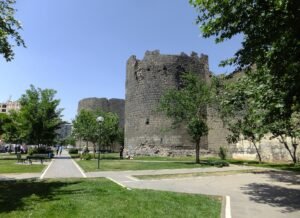
Samsun sits on the Black Sea coast, and its past is much older than most visitors expect. Archaeologists have found settlement layers there from more than 5,000 years ago. Later came an ancient port, a medieval pair of cities, an Ottoman provincial centre and, in 1919, a turning point for modern Türkiye.
This guide follows that story in order. It also explains the question most people ask first: where does the name “Samsun” come from?
Where does the name Samsun come from?
The name is tied to the ancient settlement of Amisos. The TDV Encyclopedia of Islam describes Amisos as a settlement founded by Milesians in the 6th century BCE. Over the centuries, Amisos became Samsun.
The harder question is where the word Amisos itself came from. Scholars have two main views. One says it is a Greek word. The other says it rests on an older Anatolian name that existed before Greek reached the coast. The language of the word has not been settled, and you will see both views in the literature.
The written forms are easier to follow. In the 12th and 13th centuries, Turkish sources recorded the city as Samsun. Western sources recorded it as Sampson. So the name you use today was already in circulation about 800 years ago.
You may also hear colourful explanations. Some link the name to Sam, the son of Noah. Others link it to Samson in the Torah, or to a word for “dog”. The TDV Encyclopedia of Islam treats all of these as later attributions, not as historical etymology. If a local guide offers one of them, you can enjoy it as folklore, but it is not the documented answer.
Before Amisos: İkiztepe
The oldest layers are not in the city centre. They lie at İkiztepe, a mound near Bafra. Excavations there have identified Late Chalcolithic settlement layers dated to 4300–3200 BCE.
Systematic digging began in 1974 on behalf of the Turkish Historical Society, led by Uluğ Bahadır Alkım. After a break in 2012, the excavations restarted in 2021 under Aslıhan Beyazıt. So the work is still going on, and the picture of the region’s prehistory is still being filled in.
Amisos: the ancient core
Amisos is the ancient heart of Samsun. Its story is not only in books. It comes out of the ground, often by accident.
In 1995, road-widening work in the Cedit neighbourhood uncovered a rock-cut tomb. Inside were gold, glass, marble and terracotta objects. Think about that the next time roadworks block your street in any old city. Under the asphalt, there may be a chamber that nobody has opened for centuries.
Some finds come from planned work. Two graves under the Baruthane Tumuli on Amisos Hill were uncovered in rescue excavations that began in 2004. These were joint work by the Samsun Museum and Istanbul University.
Two cities side by side in the Middle Ages
In the Middle Ages, a Turkish settlement grew next to ancient Amisos. For a time there were two separate cities in the area. The part where Christians lived was also called Kara Samsun.
The written trace of the name also survives on coins. The historical spelling of Samsun appears on coins struck in the names of Sultan II. Gıyâseddin Mesud and of the Ilkhanid ruler Olcaytu.
Ottoman Samsun and the Canik sanjak
The Muslim town of Samsun came under Ottoman rule in 1398, during the reign of Bayezid I (Yıldırım Bayezid).
In Ottoman administration, two names were used side by side. The city was called Samsun. The sanjak it belonged to was called Canik. If you read Ottoman-era texts and see Canik, that is the wider district, not a rival name for the city.
Buildings that carry the story
Samsun’s old buildings are spread across the province, not packed into one old quarter. Here are the ones with the clearest dates.
Göğceli Mosque, Çarşamba. Tests on its wooden elements date the building to 1206. The porch in front was added or repaired in 1335.
Vezirköprü Bedesten and Arasta. The covered market is mentioned in the endowment deed of Ayşe Hanım, dated April–May 1696. So it must have been built before that date.
Şifa Hamam, Saathane Square. The inventory dates it to the 15th century, but it has no construction inscription. Its existence is documented by the 1813 endowment deed of Süleyman Pasha. A restoration by the Regional Directorate of Foundations began in 2017 and was completed in 2021.
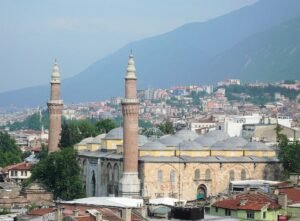
Great Mosque (Büyük Cami), İlkadım. Its wooden predecessor burned in the great fire of 1869. The present building was commissioned in 1884 by Hacı Ali of Batum.
The Çarşamba bridges. The first wooden bridge joining the two banks of the Yeşilırmak at Çarşamba was built in 1890. The historic Yeşilırmak Bridge was completed in 1931. Since 2007 it has been open to pedestrians only, so today you can simply walk across it.
The 1869 fire and the lost walls
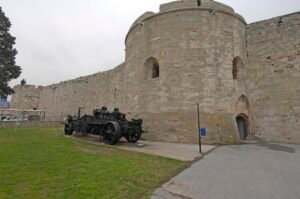
The fire of 1869 changed the look of the city. After it, a new city plan was put into effect. During that process the walls of Samsun Castle were pulled down. They were largely removed from the urban fabric. This is why a visitor who expects a walled old town finds almost nothing of the kind.
19 May 1919 and the years after
Mustafa Kemal Pasha landed at Samsun on 19 May 1919. The date became the symbol of the start of the National Struggle. He stayed six days in the Mıntıka Palas building, which is now the Gazi Museum.
Samsun was not only a place of symbols. It was an important transport and export centre during the National Struggle. On 7 June 1922, the Greek navy bombed the city.
Samsun’s natural heritage
History here is not only about stones and walls. The Kızılırmak Delta Wetland and Bird Sanctuary stretches across the Bafra, Alaçam and Ondokuzmayıs districts of Samsun. It was submitted to the UNESCO World Heritage Tentative List on 13 April 2016.
Timeline
- 4300–3200 BCE: Late Chalcolithic settlement layers form at İkiztepe.
- 6th century BCE: Milesians found Amisos, according to the TDV Encyclopedia of Islam.
- 12th–13th centuries: Turkish sources write Samsun; Western sources write Sampson.
- 1206: The Göğceli Mosque is built, according to analysis of its wood.
- 1335: The porch of the Göğceli Mosque is added or repaired.
- 1398: Muslim Samsun enters Ottoman rule under Bayezid I.
- 1696: The Vezirköprü Bedesten and Arasta is recorded in the endowment deed of Ayşe Hanım.
- 1813: The Şifa Hamam is mentioned in the endowment deed of Süleyman Pasha.
- 1869: The great fire destroys the wooden predecessor of the Great Mosque.
- 1884: The present Great Mosque in İlkadım is built.
- 1890: A wooden bridge is built over the Yeşilırmak at Çarşamba.
- 19 May 1919: Mustafa Kemal Pasha lands at Samsun.
- 7 June 1922: The Greek navy bombs Samsun.
- 1924: The Mıntıka Palas building is presented to Mustafa Kemal.
- 1931: The historic Yeşilırmak Bridge at Çarşamba is completed.
- 1974: Systematic excavations begin at İkiztepe.
- 1995: A rock-cut tomb is found during road work in Cedit.
- 2004: Rescue excavations begin at the Baruthane Tumuli.
- 2016: The Kızılırmak Delta is submitted to the UNESCO Tentative List.
- 2021: The Şifa Hamam restoration is completed and the İkiztepe excavations resume.
Details you won’t find in guidebooks
- İkiztepe means “twin mound”, but there are four. The archaeological settlement consists of two large and two small mounds.
- Old coins carry the name. The historical spelling of Samsun appears on coins struck in the names of II. Gıyâseddin Mesud and the Ilkhanid ruler Olcaytu.
- A palace given as a gift. The Mıntıka Palas building was presented to Mustafa Kemal by the people of Samsun during his visit of 20–24 September 1924.
- Nails in a “nail-free” mosque. The walls of the Göğceli Mosque are joined with interlocking notches. Even so, wrought-iron nails were used in the beam joints of the post heads and in some rafter joints.
- Two names for one market. The Vezirköprü Bedesten is popularly called Fazıl Ahmet Pasha. Evliya Çelebi, however, records it as a charity of Hacı Yusuf Ağa.
Planning your own route
You can read Samsun’s history in layers. Start with the Gazi Museum for 1919. Walk the Great Mosque area in İlkadım to see what rose after the 1869 fire. Then head to Çarşamba for the Göğceli Mosque and the pedestrian bridge over the Yeşilırmak. If you have more time, Vezirköprü has its bedesten, and Bafra has the İkiztepe mounds.
FAQ
Where does the name Samsun come from?
The name is linked to the ancient settlement of Amisos. Whether Amisos itself is a Greek word or comes from a pre-Greek Anatolian name has not been settled. Stories that tie Samsun to Noah’s son Sam, to the biblical Samson or to a word for dog are treated by the TDV Encyclopedia of Islam as later attributions, not etymology.
Who founded Amisos?
The TDV Encyclopedia of Islam describes Amisos as a settlement founded by Milesians in the 6th century BCE.
What was Canik?
Canik was the name of the Ottoman sanjak (province) to which Samsun belonged. The city kept the name Samsun, while the district was called Canik.
When did Samsun become Ottoman?
The Muslim town of Samsun came under Ottoman rule in 1398, in the time of Sultan Bayezid I (Yıldırım Bayezid).
Why is 19 May 1919 important for Samsun?
Mustafa Kemal Pasha landed at Samsun on that day. The date symbolizes the start of the National Struggle. He stayed six days in the Mıntıka Palas building, which is now the Gazi Museum.
Sources
- TDV İslâm Ansiklopedisi — Samsun islamansiklopedisi.org.tr
- Türkçe Vikipedi — Samsun tr.wikipedia.org
- Bafra Belediyesi — İkiztepe Höyüğü ve Kazıları bafra.bel.tr
- Anadolu Ajansı — İkiztepe kazıları Karadeniz tarihine ışık tutuyor aa.com.tr
- Belleten — Samsun (Amisos) Bölgesi’nin Kültürel Gelişimi Projesi belleten.gov.tr
- Samsun İl Kültür ve Turizm Müdürlüğü — Amisos Tepesi samsun.ktb.gov.tr
- Türkiye Kültür Portalı — Samsun kulturportali.gov.tr
- Ali Yılmaz ve Seyfullah Gül — Samsun Şehrinde Tarihî Yapı Mirası ve Şehirsel Koruma osmanlimirasi.net
- Türkiye Kültür Portalı — Göğceli Camii kulturportali.gov.tr
- Samsun Büyükşehir Belediyesi — Büyük Cami samsun.bel.tr
- Samsun Büyükşehir Belediyesi — Bedesten ve Arasta samsun.bel.tr
- Samsun İl Kültür ve Turizm Müdürlüğü — Tarihi Şifa Hamamı samsun.ktb.gov.tr
- Samsun İl Kültür ve Turizm Müdürlüğü — Tarihi Çarşamba Köprüsü samsun.ktb.gov.tr
- İngilizce Vikipedi — Samsun Province en.wikipedia.org
- Kültür ve Turizm Bakanlığı — Samsun Gazi Müzesi ktb.gov.tr
- Türkiye Bilimler Akademisi — Samsun During the National Struggle tuba.gov.tr
- UNESCO Dünya Mirası Merkezi — Kızılırmak Delta Wetland and Bird Sanctuary whc.unesco.org