Where is Hasankeyf?
Hasankeyf is a district of Batman province in Türkiye’s Southeastern Anatolia Region. It stands on the Tigris, called the Dicle in Turkish. If you look at a road map, it sits on the Batman–Midyat highway. The Ministry of Culture and Tourism’s visitor page puts it 37 km from Batman and 44 km from Midyat.
The town was not always part of Batman. It was attached to Batman in 1990, when Batman became a province.
The name carries a clue about the place. It comes from Hısn Kayfa. Hısn is the Arabic word for fortress. Kefa is a Syriac word meaning rock. Put together, the name means “rock fortress”.
How old is Hasankeyf?
You will often read that Hasankeyf is 12,000 years old. That figure needs care.
It comes from Hasankeyf Mound. A 2019 academic article by Mevlüt Eliüşük dates the Pre-Pottery Neolithic settlement there to 9500–8500 BCE. That is real, very early settled life on the Tigris.
But the same research treats the mound and the town centre separately. The mound was used in the Neolithic phase. The excavation data for the town centre reach the 4th century CE. So the 12,000 years describe a site with a very old beginning. They do not prove an unbroken city across all that time.
Hasankeyf castle and the road to the Middle Ages
The castle is linked to the defence system the Roman emperor Constantius II built against the Sasanian frontier during his reign, 337–361 CE. Hasankeyf was a border post before it was a famous town.
A small find from the dig shows how long these frontier ties lasted. In 2018, excavations around the İmam Abdullah Mosque produced a Sasanian seal that shows a mountain goat. Its context dates it to the early 7th century CE.
The town’s peak came later. According to Turkish Wikipedia, Hasankeyf was the capital of the Artuqid principality from 1102 to 1232.
Two later monuments matter for the dam story:
- The Er-Rızk Mosque was built on the Tigris bank in 1409 by the Ayyubid sultan Süleyman.
- The Zeynel Bey Tomb was built in memory of Zeynel Bey, son of the Akkoyunlu ruler Uzun Hasan. Zeynel Bey died in the Battle of Otlukbeli in 1473.
Timeline
- 9500–8500 BCE: Pre-Pottery Neolithic settlement on Hasankeyf Mound.
- 4th century CE: The excavated record of the town centre reaches this century; the castle is linked to Constantius II’s Roman–Sasanian frontier defence (337–361).
- 1102–1232: Hasankeyf is the Artuqid capital, by Turkish Wikipedia’s dating.
- 1409: Sultan Süleyman builds the Er-Rızk Mosque.
- 1473: Zeynel Bey dies at Otlukbeli.
- 1981: Türkiye declares Hasankeyf a natural protected area.
- 1990: Hasankeyf is attached to the new province of Batman.
- 12 May 2017: The Zeynel Bey Tomb is moved to the new archaeopark.
- 2017–2019: Selected monuments are relocated to the New Cultural Park Area.
- From 2019: Many Hasankeyf archaeological sites go under the Ilısu reservoir; part of the old settlement stays above the waterline.
- 19 May 2020: The Ilısu power plant starts producing electricity.
- 25 December 2020: The plant reaches full capacity.
- 27 August 2026: Anadolu Agency reports on boat tours past the castle, caves and canyons.
Hasankeyf dam: what the Ilısu Dam changed
The dam is the Ilısu Dam and hydroelectric plant. According to the State Hydraulic Works (DSİ), it began producing electricity on 19 May 2020. It reached full capacity on 25 December 2020.
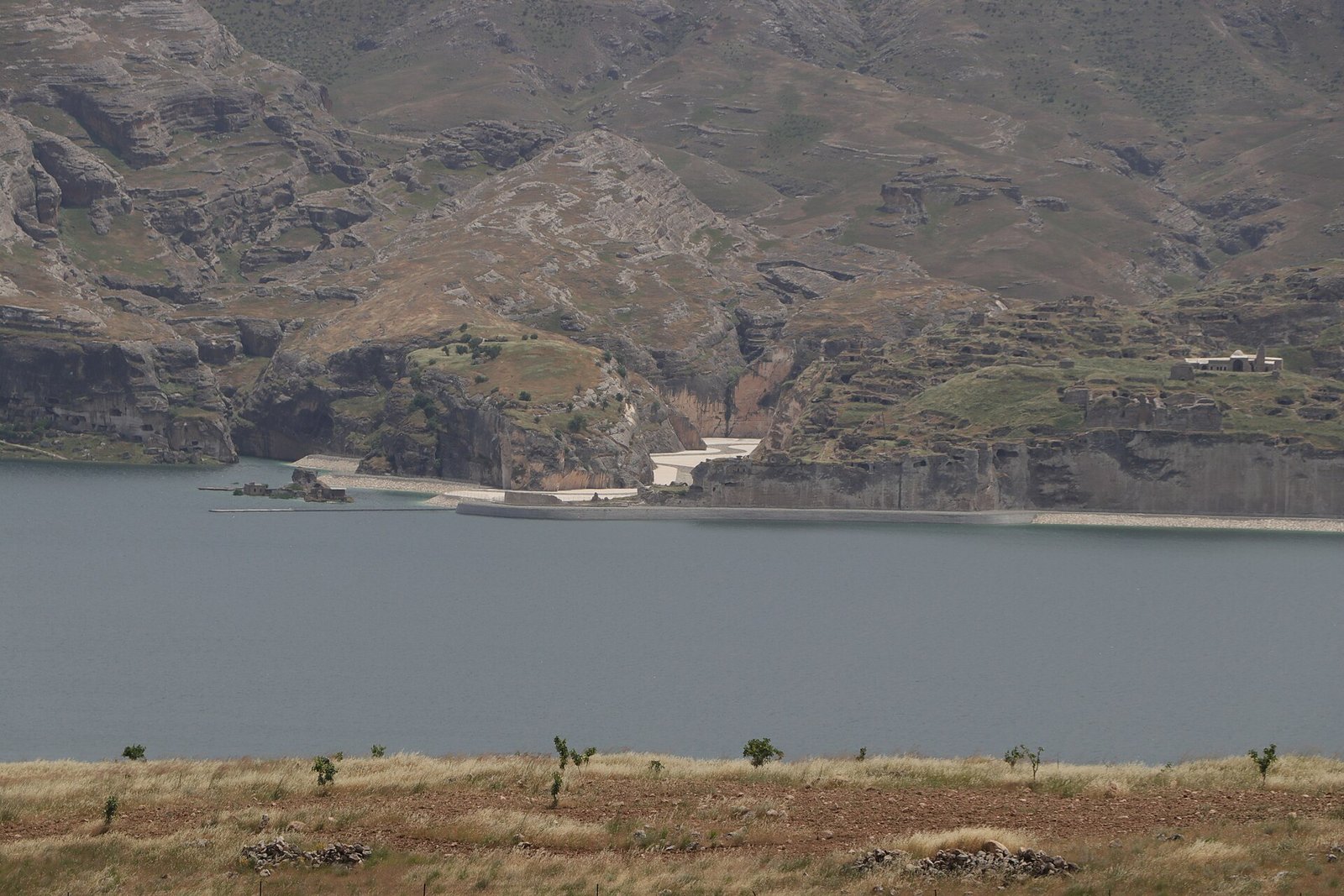
The water rose before that. USGS says many Hasankeyf archaeological sites went under water starting in 2019. Part of the old settlement stayed above the waterline.
The Ministry of Culture and Tourism says plainly that the Neolithic Hasankeyf Mound lies under the waters of Ilısu Reservoir. The oldest layer of the “12,000 years” is therefore no longer reachable on foot.
Hasankeyf before and after
The change happened in stages. Here is what the sources record.
Protection that did not become World Heritage. Türkiye declared Hasankeyf a natural protected area in 1981. The UNESCO question was a separate matter. On 4 February 2016, a DHA report quoted the mayor, Abdulvahap Kusen, who said an application had been made to UNESCO. The same report quoted Mechtild Rössler, director of the UNESCO World Heritage Centre. She said Türkiye had not sent an official application, not even for the tentative list. Without an application and review, she said, UNESCO could not judge whether Hasankeyf met its criteria.
Moving monuments. Between 2017 and 2019, several monuments were moved to the New Cultural Park Area. The Ministry lists them:
- the Zeynel Bey Tomb
- the Artuqid Bath
- the İmam Abdullah Tomb and Lodge
- the Ayyubid Girls’ Mosque
- the Middle Gate
- the Süleyman Han Mosque
- the Er-Rızk Mosque
Moving people. By 29 January 2018, a DHA report said 710 houses built by the housing agency TOKİ were nearing completion in New Hasankeyf, at the foot of Raman Mountain. Public institutions were already moving in. USGS adds that residents moved to the new town on high ground north of the Tigris before the old settlement went under water.
Clearing the old bazaar. Shopkeepers in the old market were given a deadline of 3 November 2019, tied to the move of the Er-Rızk Mosque. After it passed, demolition with heavy machinery began in the old bazaar, according to bianet.
Think of it like moving house. You carry the furniture first, then the family, and only then do the movers empty the rooms. In Hasankeyf, the order was monuments, then people, then the shops. Then the water came.
Hasankeyf eski hali: seeing the old town from space
If you want to compare the old town with the new one, USGS has done the work. Its Hasankeyf archive pairs a declassified Hexagon spy-satellite image from 13 July 1972 with Landsat images from 2009, 2019 and 2022. You can scroll through them much as you would flip through a map app’s history, and watch the Tigris valley change over fifty years.
The tomb that moved on a suspension system
The Zeynel Bey Tomb is circular on the outside and octagonal inside. It is covered by a double-shell dome.
It weighs about 1,100 tons. On 12 May 2017 it was carried to the archaeopark on a special suspension system, according to DHA.
Details you won’t find in guidebooks
- The name says “rock”. Hısn Kayfa joins an Arabic word for fortress with a Syriac word for rock.
- A mountain goat on a seal. The Sasanian seal found in 2018 near the İmam Abdullah Mosque shows a mountain goat. It is dated to the early 7th century CE from its historical context.
- A dome inside a dome. The Zeynel Bey Tomb has two shells, and a plan that changes from a circle outside to an octagon inside.
- Spy-satellite photos. The USGS archive includes a Hexagon image from 1972, long before the dam existed.
- Finds from four provinces. The Hasankeyf Museum shows objects from rescue excavations run for the Ilısu Project in Batman, Diyarbakır, Siirt and Mardin.
What you can visit now
The Upper City. DSİ stated on 25 June 2021 that the Upper City area, which the reservoir did not affect, had been landscaped and turned into an open-air museum.
The museum. The Hasankeyf Museum shows finds from the rescue excavations. Its Neolithic collection includes stone and bone objects from Hasankeyf Mound, Hallan Çemi and Sumaki Mound. If you want to see what the water covered, this is where the objects are.
The relocated monuments. The buildings listed above now stand in the New Cultural Park Area.
Hasankeyf boat tour on Ilısu Reservoir
The lake is now part of the visit. Anadolu Agency reported on 27 August 2026 that tours last about an hour. From the water, you see the castle, the caves and the canyons.
Captain Şehmus Batıhan, a member of the boat cooperative, told the agency that the cooperative runs eight boats. In about eight months, around 52,000 people took the tours.
Hasankeyf today
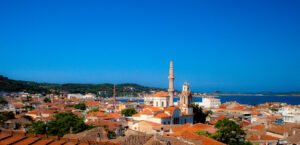
Life in Hasankeyf continues in the new district centre. The historic town is visited in pieces: the museum, the moved monuments, the Upper City above the water, and the lake routes.
So what happened to the “12,000-year-old city”? Its oldest mound is underwater. Its castle and Upper City remain above the water. Its chosen monuments stand in a new park. Its people live in a new town on higher ground.
FAQ
Where is Hasankeyf?
Hasankeyf is a district of Batman province in Türkiye’s Southeastern Anatolia Region, on the Tigris. It lies on the Batman–Midyat road, 37 km from Batman and 44 km from Midyat.
How old is Hasankeyf?
A 2019 academic article dates the Pre-Pottery Neolithic settlement on Hasankeyf Mound to 9500–8500 BCE. The excavation data for the town centre reach the 4th century CE, so “12,000 years” should not be read as continuous city life.
Is the old city of Hasankeyf underwater?
Partly. According to USGS, many Hasankeyf archaeological sites went under water from 2019 because of the Ilısu Dam, while part of the old settlement stayed above the waterline. The Ministry of Culture and Tourism states that the Neolithic mound is under the reservoir.
Can you take a boat tour in Hasankeyf?
Yes. According to an Anadolu Agency report from 27 August 2026, tours on Ilısu Reservoir last about an hour and show the castle, caves and canyons from the water.
Was Hasankeyf a UNESCO World Heritage Site?
No. In February 2016 the director of the UNESCO World Heritage Centre said Türkiye had not sent even a tentative-list application, so UNESCO could not judge whether the site met its criteria.
Sources
- Türkçe Vikipedi — Hasankeyf tr.wikipedia.org
- Kültür ve Turizm Bakanlığı — Hasankeyf Örenyeri kulturportali.gov.tr
- Kültür ve Turizm Bakanlığı — Batman Hasankeyf Müze ve Örenyeri muze.gov.tr
- TÜBA-KED — Hasankeyf’te Arkeolojik Kazılarda Ele Geçen Bir Mühür ve Düşündürdükleri dergipark.org.tr
- DHA — Hasankeyf’te 552 yıllık Zeynel Bey Türbesi dha.com.tr
- Hürriyet Daily News / DHA — Hasankeyf not submitted to UNESCO hurriyetdailynews.com
- DHA — Yeni Hasankeyf, drone ile görüntülendi dha.com.tr
- bianet — Tarihi Hasankeyf Çarşısında Yıkım da Sürüyor Direniş de bianet.org
- USGS EROS — Relocating Hasankeyf, Turkey eros.usgs.gov
- Anadolu Ajansı — Ilısu Baraj Gölü’ndeki tekne turları aa.com.tr
Image: Bajarê Heskîfê.jpg — VOA, Public domain