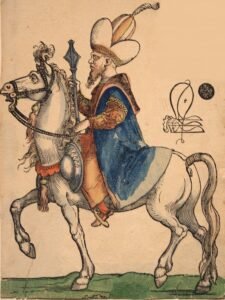
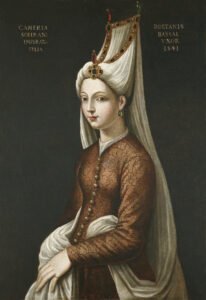
On 6 October 1553, in a royal tent pitched near Ereğli in today’s Konya province, Şehzade Mustafa was strangled on the orders of his own father, Suleiman the Magnificent. Mustafa was Suleiman’s son by Mahidevran, born in Manisa in 1515. If you have searched for why Suleiman killed his son, you have probably met two very different answers: a palace plot, and a sultan protecting his own power. This article lays out both, sticking to what the sources record, and then takes you to the tomb in Bursa and the elegies that mourned him.
Who Was Şehzade Mustafa?
Mustafa was born in Manisa in 1515. His mother was Mahidevran. When Suleiman came to the throne in 1520, Mustafa left Manisa for Istanbul. In 1530 he was circumcised together with his brothers Mehmed and Selim.
Ottoman princes learned statecraft by governing a province. The Turkish Literature Names Dictionary (TEİS) of Ahmet Yesevi University dates Mustafa’s appointment as governor of the Saruhan district, based in Manisa, to 1534. On 16 June 1541 he was transferred from Manisa to the governorship of Amasya.
That transfer is the first clue to what followed. After Mustafa left, Manisa went to Şehzade Mehmed, who died in 1543. In 1544 the same post went to Selim, the son of Hürrem Sultan. Mustafa had been moved to Amasya, and the seat he vacated passed to Hürrem’s son.
Why Was Şehzade Mustafa Executed? Two Explanations
The plot explanation
This is the version most people know. Hürrem Sultan and the grand vizier Rüstem Pasha are said to have worked to discredit Mustafa so that the throne would open for Hürrem’s sons. TEİS relays one specific story: Rüstem Pasha sent a forged letter to Shah Tahmasp I of Iran in Mustafa’s name. The TDV Encyclopaedia of Islam records that during preparations for the Iranian campaign, Rüstem Pasha informed Suleiman that Mustafa was preparing to seize the throne.
The authority explanation
Historian Zahit Atçıl, writing in the journal Osmanlı Araştırmaları in 2016, finds the plot story insufficient as an explanation. His argument is that Suleiman’s own authority had been eroding in Mustafa’s favour, and the sultan ordered the execution to rebuild it. In this reading the decision came from the top, not from whispers below.
Think of a family business where the founder still holds the title but staff have quietly started treating one of the children as the real boss. The founder’s problem is not only what that child intends. It is that people have stopped looking to the founder. Atçıl’s Suleiman faces that problem on an imperial scale.
You do not have to choose one version. A report from Rüstem Pasha and a calculation by Suleiman can both be part of the same decision. What the sources agree on is the trigger: Rüstem Pasha’s report during the preparations for the Iranian campaign.
How Did Şehzade Mustafa Die? 6 October 1553
The execution took place on 6 October 1553, during the Nakhchivan campaign, on Suleiman’s order. The setting was the sultan’s own tent, pitched at a spot known as Aktepe or Akhöyük near Ereğli in Konya.
The TDV Encyclopaedia of Islam relays the account of the killing. Seven mute executioners attacked Mustafa. He was strangled with the cord of Mahmud Ağa. Some sources add that Suleiman watched from behind a curtain. The TDV entry treats that detail as doubtful, so you should too.
Mustafa’s funeral prayer was performed in Ereğli, and his body was sent to Bursa. After the execution Rüstem Pasha was removed from the grand vizierate, and Kara Ahmed Pasha took his place.
What Happened to Şehzade Mustafa’s Son Mehmed?
The killing did not end with Mustafa. According to the TDV Encyclopaedia of Islam, his young son Mehmed was also strangled after his father’s death. The sources used here record the fact without explaining the reasoning, and this article will not guess at it.
Şehzade Mustafa Türbesi: Visiting the Tomb in Bursa
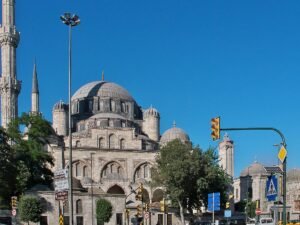
Mustafa’s grave is in Bursa, in the Osmangazi district, inside the Muradiye Complex. The building is the Şehzade Mustafa Türbesi. His mother Mahidevran is buried in the same tomb.
Here is the detail that changes how you see the building. Suleiman did not build it. According to the inscriptions catalogued by Bursa Museum, the tomb was commissioned in 1573, twenty years after the execution, by Mustafa’s brother Selim II. The Bursa Site Management office notes that the octagonal tomb is also known as Mustafa-i Cedid. Inside, the Ministry of Culture and Tourism’s Culture Portal describes walls covered up to three metres high with sixteenth-century tiles in carnation and lily motifs.
Şehzade Mustafa Mersiyesi: The Poems That Blamed a Sultan
The best-known elegy for Mustafa was written by Taşlıcalı Yahya, a poet who was also a soldier. He was not alone. A study published by Amasya University, titled Criticism of Suleiman the Magnificent in the Şehzade Mustafa Elegies, identifies 15 elegies written on the prince’s death. The title of the study points to a theme running through them: criticism of the sultan himself.
Details you won’t find in guidebooks
- Mustafa was a divan poet. He wrote under the pen name Muhlisî.
- The Venetian Michele Membré reports that Mustafa addressed the public on Fridays at the Sultaniye Mosque in Manisa.
- The tomb in Bursa was built by Selim II in 1573, not by Suleiman.
- Bursa Site Management records a second name for the tomb: Mustafa-i Cedid.
- The tomb’s interior tiles, with carnation and lily motifs, rise to three metres.
Which Episode of the Series Covers Şehzade Mustafa’s Death?
In Muhteşem Yüzyıl, Mustafa’s execution is the subject of episode 123, broadcast on 12 February 2014.
Timeline
- 1515 Mustafa is born in Manisa.
- 1520 He moves to Istanbul after Suleiman’s accession.
- 1530 He is circumcised together with Mehmed and Selim.
- 1534 He is sent to Manisa as governor of Saruhan (TEİS dating).
- 16 June 1541 He is transferred to the governorship of Amasya.
- 1543 Şehzade Mehmed, governor of Manisa, dies.
- 1544 Şehzade Selim is sent to Manisa.
- 6 October 1553 Mustafa is strangled in the camp near Ereğli, Konya, on Suleiman’s order.
- After 1553 His son Mehmed is also strangled.
- 1573 The Şehzade Mustafa Türbesi is built by Selim II.
FAQ
Why was Şehzade Mustafa executed?
The recorded trigger was a report by Grand Vizier Rüstem Pasha, during preparations for the Iranian campaign, that Mustafa was preparing to seize the throne. The popular explanation blames a plot by Hürrem Sultan and Rüstem Pasha; historian Zahit Atçıl argues in a 2016 study that Suleiman ordered the execution to rebuild his own eroding authority.
Where and how did Şehzade Mustafa die?
He was strangled on 6 October 1553, during the Nakhchivan campaign, in the sultan’s tent at a place called Aktepe or Akhöyük near Ereğli in Konya. The TDV Encyclopaedia of Islam relays that seven mute executioners attacked him and he was strangled with the cord of Mahmud Ağa.
Where is Şehzade Mustafa’s tomb?
In Bursa, Osmangazi district, inside the Muradiye Complex. His mother Mahidevran is buried there too. The octagonal tomb was commissioned in 1573 by his brother Selim II, not by Suleiman.
Sources
- Ahmet Yesevi Üniversitesi, Türk Edebiyatı İsimler Sözlüğü (TEİS), Muhlisî, Şehzade Mustafa teis.yesevi.edu.tr
- TDV İslâm Ansiklopedisi, Mustafa Çelebi islamansiklopedisi.org.tr
- TDV İslâm Ansiklopedisi, Taşlıcalı Yahyâ islamansiklopedisi.org.tr
- Zahit Atçıl, Osmanlı Araştırmaları, 2016 dergipark.org.tr
- Türkçe Vikipedi, Şehzade Mustafa tr.wikipedia.org
- English Wikipedia, Şehzade Mustafa (son of Suleiman the Magnificent) en.wikipedia.org
- Kültür ve Turizm Bakanlığı, Kültür Portalı, Şehzade Mustafa Türbesi kulturportali.gov.tr
- Bursa Müze, Bursa Kitabeleri (PDF) bursamuze.com
- Bursa Alan Başkanlığı, Şehzade Mustafa Türbesi alanbaskanligi.bursa.bel.tr
- Amasya Üniversitesi, Şehzade Mustafa Mersiyelerinde Kanuni Sultan Süleyman Eleştirisi ilahiyat.amasya.edu.tr
- Habertürk, Şehzade Mustafa infaza gidiyor haberturk.com
Image: Mahidevran Turbesi1.jpg — Retrieverlove, CC BY-SA 4.0