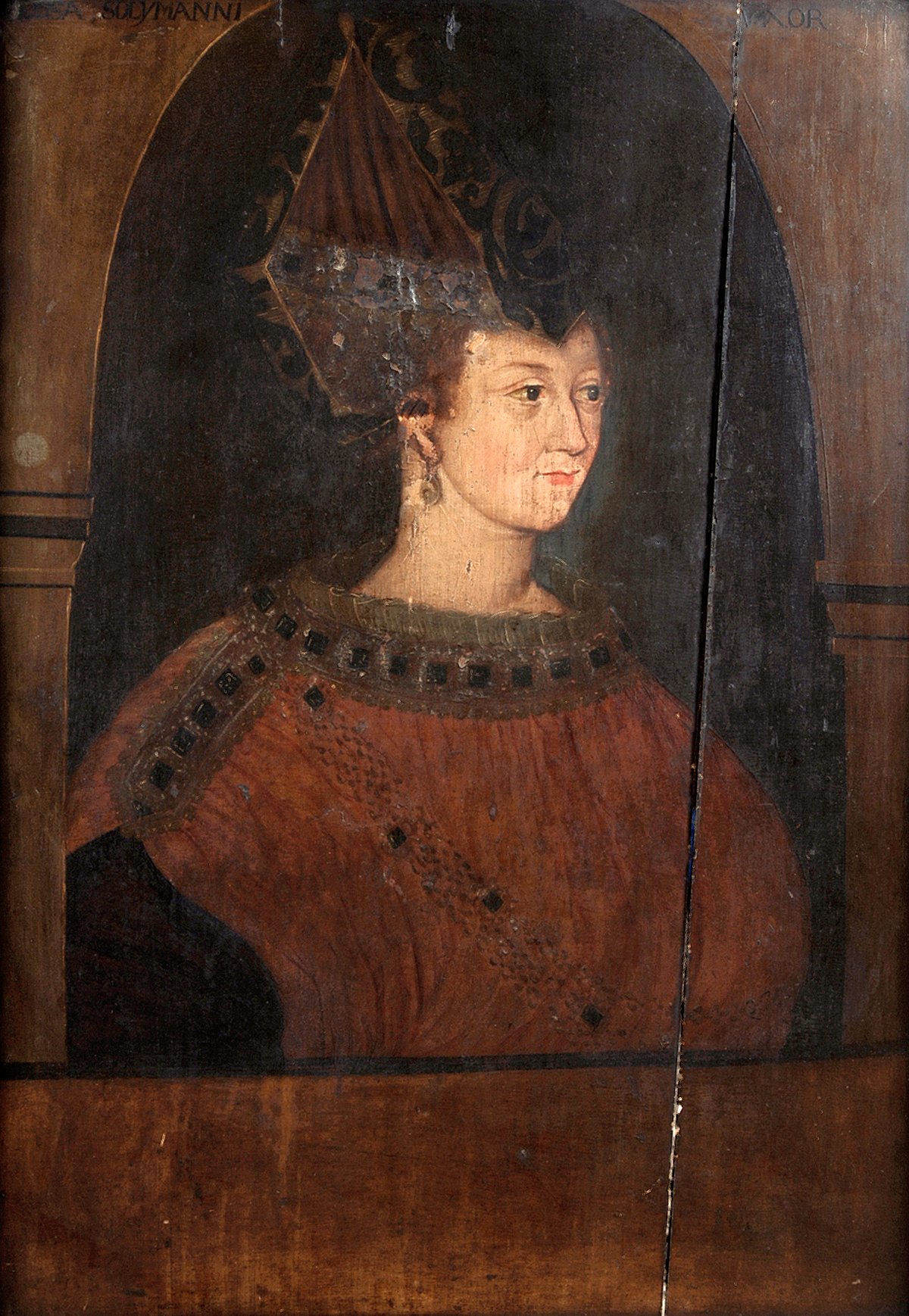
Hürrem Sultan arrived in Istanbul as a captive. She died there in 1558 as the freed, legal wife of Sultan Suleiman and the mother of six of his children. This article follows that path with dated facts. It also tells you what you can still see of her in Istanbul today.
Hurrem Sultan: where is she from?
The town accepted as her birthplace is Rohatyn. Around 1505, when she was born, Rohatyn lay inside the borders of Poland. Today it is in Ukraine.
Her birth name is less certain. The names Aleksandra or Anastasia Lisowska are often repeated. The English Wikipedia entry notes that no contemporary document confirms either of them. So if you see a confident claim about her ‘real name’, treat it with care.
She was captured during a Crimean Tatar slave raid and brought to Istanbul. There she entered the Ottoman palace as a concubine. According to the TDV Encyclopedia of Islam, she was given the name Hürrem, or Hürremşah, because of her cheerful face.
From concubine to legal wife
The exact year Hürrem entered the harem is not known. She is accepted to have been Suleiman’s favourite by the time he came to the throne in 1520. Children followed quickly. Her first son, Şehzade Mehmed, was born in 1521. Her daughter Mihrimah was born in 1522.
Around 1534 Suleiman freed Hürrem and made her his legal wife. A concubine becoming the sultan’s wedded spouse was the step that made her famous. Her six known children were Mehmed, Mihrimah, Abdullah, Selim, Bayezid and Cihangir.
On 25 January 1541 a fire broke out at the Old Palace. According to the TDV Encyclopedia of Islam, Hürrem then moved the harem to Topkapı Palace. That move put the sultan’s household inside the same palace where he governed.
The accusations against her
Hürrem is often blamed for the execution of Şehzade Mustafa in 1553. Popular accounts present Hürrem as the decisive force behind his death. The English Wikipedia section on her as a controversial figure gives the counter-view. It stresses that these charges rest largely on palace rumour rather than direct testimony. You will meet both versions in Istanbul. Only one of them is backed by evidence.
Death, burial and the tomb at Süleymaniye
Hürrem Sultan died in Istanbul on 15 April 1558. The illness that killed her is not known. English Wikipedia links her death to an unnamed disease.
Her age at death is also uncertain, because her birth year is uncertain. Turkish Wikipedia gives a birth range of 1502 to 1506. That puts her age at death at roughly 52 to 56.
Even the place of death is disputed. English Wikipedia names Topkapı Palace. The TDV Encyclopedia of Islam entry on the harem states that she died in the Old Palace in 1558.
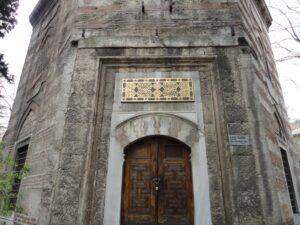
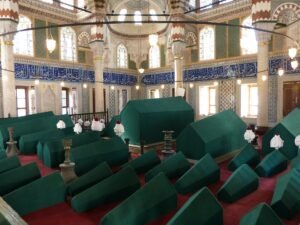
She was buried in the graveyard of the Süleymaniye Mosque in the Fatih district. Suleiman had a tomb built over her grave. The architect was Mimar Sinan. The building is of cut küfeki limestone, octagonal on the outside and sixteen-sided on the inside. You can stand in front of it today in the mosque’s graveyard.
Hurrem Sultan hamam (hammam) near Hagia Sophia
The Haseki Hürrem Sultan Hamamı stands close to Hagia Sophia. Mimar Sinan built it at Hürrem’s request in 1556–1557. It is 75 metres long. It has two sections placed back to back, one for women and one for men, designed at the same size.
Think of a modern sports centre with identical men’s and women’s changing wings. That is the layout, built in stone four and a half centuries ago.
The building did not always serve bathers. It lost its function as a hamam in 1910. It was later used as a prison and as a warehouse. After restoration it reopened as a hamam in 2011.
The Haseki complex in Fatih
Hürrem’s largest foundation in Istanbul is the Haseki Külliyesi in the Fatih district. The complex consists of a mosque, a medrese, a primary school, a fountain, a public kitchen and a hospital. The mosque was built in 1538–1539. The medrese followed in 1539–1540.
Hurrem Sultan real picture or real photo
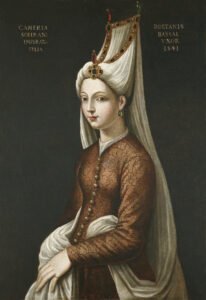
There is no real photograph of Hürrem Sultan, and there cannot be one. She died in 1558. The daguerreotype, the first practical photographic process, was introduced to the public only in 1839.
What about painted portraits? The best known is La Sultana Rossa, dated to around 1550. It is often presented as her likeness. Funda Güven’s research reports that the painter, Titian, never met Hürrem, and that the face is imagined. So the picture you see on postcards shows an idea of her, not her.
Timeline
- Around 1505 Born in Rohatyn, in today’s Ukraine, according to the accepted account.
- Around 1520 Rose to the position of favourite at the start of Suleiman’s reign.
- 1521 Her first son, Şehzade Mehmed, was born.
- 1522 Her daughter Mihrimah Sultan was born.
- Around 1534 Freed and married to Suleiman.
- 1538–1539 The mosque of the Haseki complex was built.
- 1539–1540 The Haseki medrese was built.
- 1541 After the Old Palace fire, she played a role in moving the harem to Topkapı, according to TDV.
- 1556–1557 The Hürrem Sultan hamam near Hagia Sophia was built.
- 15 April 1558 Died in Istanbul and was buried in the Süleymaniye Mosque graveyard.
Details you won’t find in guidebooks
- The Haseki Mosque you see today is twice its original size. In 1612 Sedefkâr Mehmed Ağa added a second domed section of equal size to its east side.
- Two tile panels from the Haseki medrese, dated 1539–1540, are no longer in the building. They were removed for protection while the structure was in ruins and taken to the Çinili Köşk.
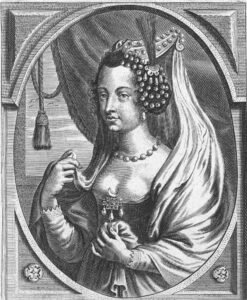
- The British Museum holds a 1644 print by Stefano della Bella titled Roxelane. It is a playing card. Her name was being dealt across European tables less than a century after her death.
- The hamam near Hagia Sophia spent part of the twentieth century as a prison and a warehouse before its 2011 reopening.
FAQ
Where was Hürrem Sultan from?
The town accepted as her birthplace is Rohatyn. Around 1505, when she was born, it lay inside Poland. Today it is in Ukraine.
Is there a real photo of Hürrem Sultan?
No. She died on 15 April 1558. The daguerreotype, the first practical photographic process, was only introduced to the public in 1839. Every image of her is a painting or a print made without a sitting.
Can you visit the Hürrem Sultan hamam?
Yes. The bath near Hagia Sophia was built by Mimar Sinan in 1556–1557. It stopped working as a bath in 1910, served as a prison and a warehouse, and reopened as a hamam in 2011 after restoration.
Where is Hürrem Sultan buried?
In the graveyard of the Süleymaniye Mosque in Istanbul’s Fatih district. Suleiman had a tomb built over her grave, designed by Mimar Sinan.
Sources
- British Museum, Roxelana (biographical record and related works) britishmuseum.org
- Wikipedia, Hurrem Sultan en.wikipedia.org
- Vikipedi, Hürrem Sultan tr.wikipedia.org
- TDV İslâm Ansiklopedisi, Hürrem Sultan islamansiklopedisi.org.tr
- TDV İslâm Ansiklopedisi, Harem islamansiklopedisi.org.tr
- TDV İslâm Ansiklopedisi, Haseki Külliyesi islamansiklopedisi.org.tr
- Kültür ve Turizm Bakanlığı, İstanbul Türbeler Müze Müdürlüğü kvmgm.ktb.gov.tr
- Baha Tanman, İstanbul Haseki Camii’ne İlişkin Bazı Gözlemler (2021) dergipark.org.tr
- İBB Kültürel Miras, Haseki Hürrem Sultan Hamamı kulturelmiras.ibb.istanbul
- National Science and Media Museum, daguerreotypes and World Photography Day scienceandmediamuseum.org.uk
- Funda Güven, The Images of Hürrem Sultan the Beloved acta.bibl.u-szeged.hu
Image: Rossa, Wife of Suleiman the Magnificent.jpg — anonymous, Public domain