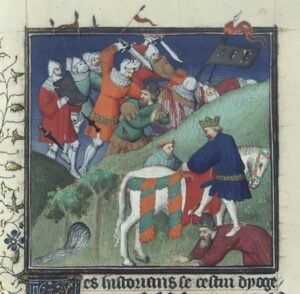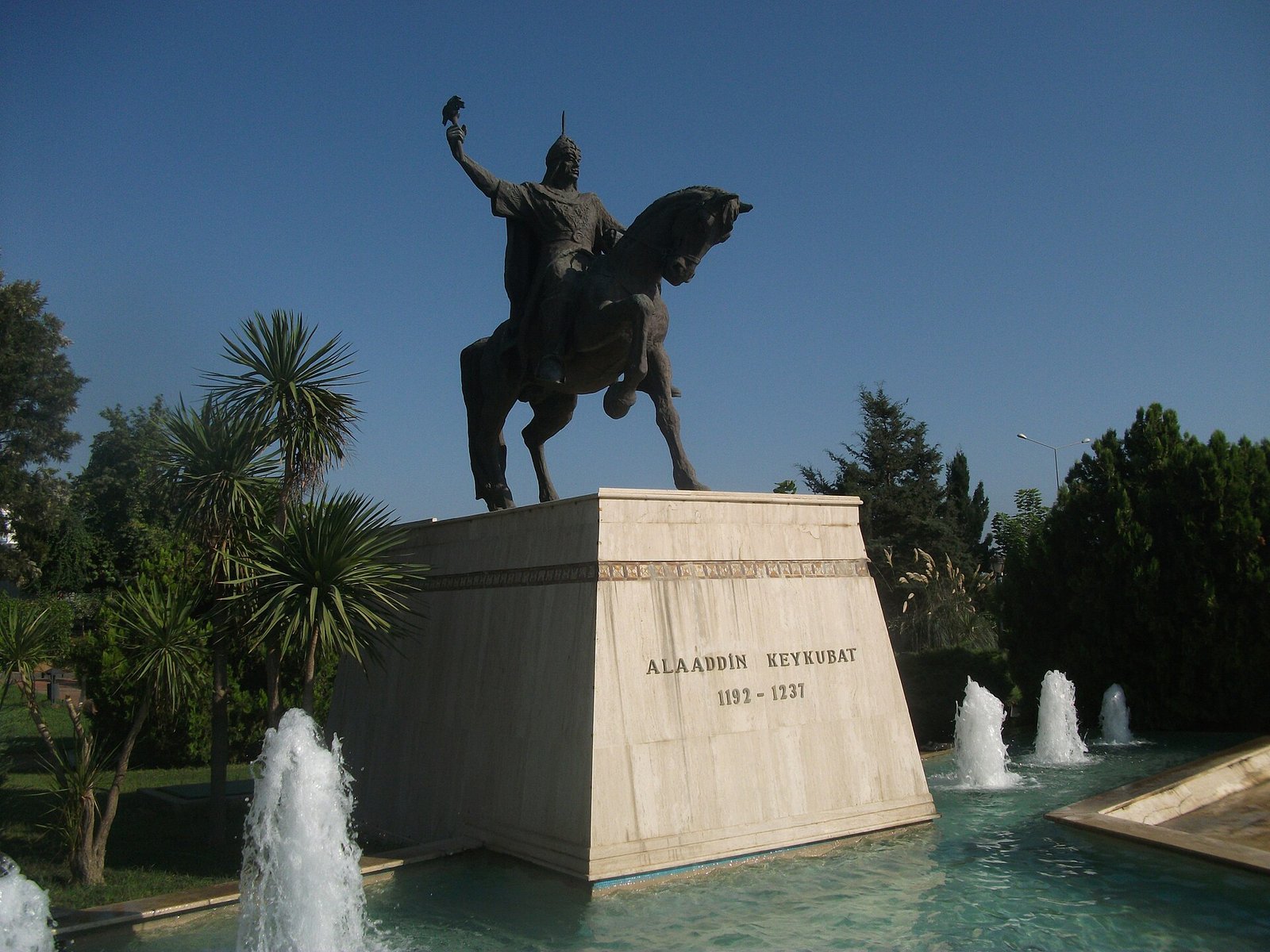
If you have walked the walls of Alanya Castle or stood on Alaeddin Hill in Konya, you have already met Kayqubad I. He ruled the Seljuk Sultanate of Rum from 1220 to 1237. Those seventeen years are widely treated as the high point of Seljuk power in Anatolia. This article follows his life from a prison cell to the throne, and shows where the sources still disagree about his birth, his conquests and his death.
Who was Sultan Alaeddin Kayqubad I?
Kayqubad I is the English form of the name Alaeddin Keykubad I. He was the middle of the three sons of Sultan Giyaseddin Keyhusrev I. His older brother was Izzeddin Keykavus I. His younger brother, Celaleddin Keyferidun, held the small principality of Koyluhisar.
His birth date was never recorded. Alanya Alaaddin Keykubat University estimates around 1190. Turkish and English Wikipedia give around 1192. No surviving source settles the gap, so you will see both years in print.
From prince of Tokat to prisoner at Minşar
When his father returned to the throne in 1205, Kayqubad was appointed prince, or melik, of Tokat. He held the post for about six years, until 1211.
His father died in 1211. Kayqubad refused to accept his older brother Izzeddin Keykavus as sultan. He won the backing of his uncle Tugrul Shah and of Leon, the Armenian ruler of Cilicia, and laid siege to Kayseri. The siege failed. After holding out in Ankara, he surrendered.
Anyone who has watched siblings fall out over an inheritance will recognize the pattern. Here the inheritance was a sultanate, and the loser went to prison. From 1212 to 1220 Kayqubad was held in Minşar Castle in the Malatya region. He spent about eight years in confinement.
Taking the throne in 1220
Izzeddin Keykavus died in 1220. Kayqubad was brought out of prison. He was first proclaimed ruler at Sivas, then enthroned in Konya. He would reign for the next seventeen years.
He did not forget the men who had run the state while he was locked away. In 1223 he had several leading emirs executed, among them Seyfeddin Ayaba, Mübarizüddin Behram Şah, Zeynüddin Beşare and Bahaeddin Kutluca. From that point the court answered to one man.
Kayqubad I’s wives: who was his spouse?
A search for “Kayqubad I wife” usually returns one name. The sources list three.
Mahperi Huand Hatun was the daughter of Kir Fard, the ruler of Alanya before the Seljuk conquest. She became the mother of the next sultan, Giyaseddin Keyhusrev II.
Melike Adile, also recorded as Gaziye Hatun, was the daughter of the Ayyubid ruler al-Malik al-Adil. The wedding was held in Malatya in 1227. The marriage bound the Seljuks to the Ayyubid dynasty, and Ayyubid allies fought beside Kayqubad three years later.
Melike Ismetü’d-Dünya ve’d-Din was the daughter of Kayqubad’s uncle, Mugiseddin Tugrul Shah. Both Turkish and English Wikipedia list her among his wives.
Kayqubad had three sons. Giyaseddin Keyhusrev II was born to Mahperi Hatun. Rükneddin and Izzeddin Kılıçarslan were born to Melike Adile. That split between two mothers would decide the succession.
Alanya: a conquest, a tower and a shipyard
The port then called Kalonoros fell to Kayqubad early in his reign. The Antalya Provincial Directorate of Culture and Tourism dates the conquest to 1221. The TDV Encyclopedia of Islam gives 1222. Either way, the city was renamed Alaiye, a name that refers to the sultan. Modern Alanya still carries a form of it.
Then he built. In 1226 the Kızılkule, the Red Tower, rose on the harbor. In 1228 a shipyard followed. The Alanya shipyard has five vaulted bays, measures 56.5 meters in length and 44 meters in depth.
Sea power came with the harbor. During Kayqubad’s reign the Seljuk fleet crossed the Black Sea and captured Sugdak, a trading center in Crimea. A dynasty based in inland Konya now held a port on the far shore of the Black Sea.
Wars on three fronts
Kayqubad also expanded by land. In 1228 he ended the Erzincan branch of the Mengücek dynasty and annexed their territory, with the single exception of Divriği.
The largest test came from the east. In 1230 Kayqubad and his Ayyubid allies defeated Celaleddin Harizmşah at Yassıçemen, near Erzincan. The victory removed the most dangerous rival on the eastern frontier.
A bigger danger was forming beyond it. Kayqubad strengthened the walls of Konya, Sivas and Kayseri against the approaching Mongol threat. The walls were an investment in a war he did not live to fight.
Mevlana comes to Konya
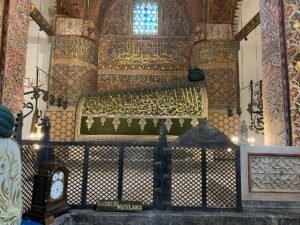
Konya’s most famous resident arrived during this reign. According to the biography published by the Turkish Ministry of Culture and Tourism, Mevlana, the poet English readers know as Rumi, reached Konya from Karaman on 3 May 1228. He traveled with his father Bahaeddin Veled and their relatives. They came at Kayqubad’s invitation.
The family settled in the Altunaba Medrese, also known as the İplikçi Medrese. If you travel to Konya for Mevlana, you are visiting a city that Kayqubad opened to him.
Death in Kayseri and the poisoning question
In 1237 Kayqubad named Izzeddin Kılıçarslan, his son by Melike Adile, as heir. He died the same year in Kayseri, after a banquet he gave for visiting envoys. His body was carried to Konya and placed in the dynastic tomb on Alaeddin Hill.
Even the date is contested. Turkish Wikipedia and the TDV Encyclopedia give 31 May 1237. Alanya Alaaddin Keykubat University gives 1 June 1237.
His wishes were set aside. The throne went to his eldest son, Giyaseddin Keyhusrev II, not to the named heir. That outcome fed a rumor that Keyhusrev had his father poisoned. The historian Faruk Sümer rejects the charge in his TDV article. His reason is practical: the prince was probably in Erzincan at the time, far from the banquet in Kayseri.
Timeline
- Around 1190 to 1192 estimated birth range; the exact date is unknown.
- 1205 appointed prince of Tokat.
- 1211 after his father’s death, fought his brother Izzeddin Keykavus for the throne.
- 1212 surrendered and was imprisoned at Minşar Castle.
- 1220 released from prison and enthroned as sultan of the Seljuks of Rum.
- 1221 or 1222 conquered Kalonoros, renamed Alaiye.
- 1223 had leading Seljuk emirs executed.
- 1226 built the Red Tower in Alanya.
- 1227 married the Ayyubid princess Melike Adile Hatun in Malatya.
- 3 May 1228 per the Ministry biography, Mevlana and his family arrived in Konya at his invitation.
- 1228 ended the Erzincan Mengücek line; built the Alanya shipyard.
- 1230 defeated Celaleddin Harizmşah at Yassıçemen.
- 1237 named Izzeddin Kılıçarslan heir.
- 31 May 1237 died in Kayseri according to TDV and Turkish Wikipedia; the university page gives 1 June.
- 1237 buried in Konya; succeeded by Giyaseddin Keyhusrev II.
Details you won’t find in guidebooks
- The Red Tower names its builder. Its inscription records the master as Ebu Ali of Aleppo.
- The tower was built to hurt. Its faces hold 56 arrow-slit windows and 22 openings for pouring hot liquids onto attackers.
- Kayqubad hired his former enemies. He ordered 4,000 Khwarazmians living in the Ahlat region to be taken into Seljuk service.
- He sketched his own palace. The Culture Portal, citing the chronicler Ibn Bibi, says Kubadabad Palace was built to a plan drawn by Kayqubad himself, under the supervision of Sadeddin Köpek.
FAQ
Who was Kayqubad I’s wife?
The sources list three wives. Mahperi Huand Hatun, daughter of Kir Fard of Alanya, was the mother of Giyaseddin Keyhusrev II. Melike Adile, also called Gaziye Hatun, was an Ayyubid princess married in Malatya in 1227. Melike Ismetü’d-Dünya ve’d-Din was the daughter of his uncle Tugrul Shah.
Why is Kayqubad I’s reign called the golden age of the Seljuks of Rum?
Between 1220 and 1237 he took Alanya, sent a fleet across the Black Sea to capture Sugdak, absorbed the Erzincan Mengücek lands and defeated Celaleddin Harizmşah at Yassıçemen in 1230. He also built the Red Tower, the Alanya shipyard and Kubadabad Palace, and invited Mevlana’s family to Konya.
When and where did Kayqubad I die?
He died in Kayseri in 1237 after a banquet for envoys. The TDV Encyclopedia of Islam and Turkish Wikipedia give 31 May 1237. Alanya Alaaddin Keykubat University gives 1 June 1237.
Was Kayqubad I poisoned by his son?
A rumor blamed Giyaseddin Keyhusrev II, who took the throne even though Izzeddin Kılıçarslan had been named heir. Historian Faruk Sümer rejects the charge in the TDV Encyclopedia of Islam, noting the prince was probably in Erzincan at the time.
Where is Kayqubad I buried?
His body was carried from Kayseri to Konya and placed in the Seljuk dynastic tomb on Alaeddin Hill.
Sources
- Wikipedia — Kayqubad I en.wikipedia.org
- Alanya Alaaddin Keykubat University — Who is Alaaddin Keykubat? alanya.edu.tr
- Salim Koca — Sultan I. İzzeddin Keykâvus ile Melik Alâeddin Keykubad Arasında Geçen Otorite Mücadelesi, Belleten belleten.gov.tr
- Faruk Sümer — KEYKUBAD I, TDV İslâm Ansiklopedisi islamansiklopedisi.org.tr
- Vikipedi — I. Alâeddin Keykubad tr.wikipedia.org
- Nermin Şaman Doğan — Kayseri’deki Selçuklu Dönemi Kadın Türbeleri, Vakıflar Dergisi 39 acikerisim.fsm.edu.tr
- Kültür ve Turizm Bakanlığı — Hz. Mevlâna’nın Hayatı ve Şahsiyeti sebiarus.ktb.gov.tr
- Antalya İl Kültür ve Turizm Müdürlüğü — Alanya Kalesi antalya.ktb.gov.tr
- Kültür Portalı — Alanya Tersanesi ve Kızıl Kule kulturportali.gov.tr
- Alanya Belediyesi — Kızılkule alanya.bel.tr
- Kültür ve Turizm Bakanlığı — Gezilecek Yerler tanitma.ktb.gov.tr
- Kültür Portalı — Beyşehir Kubadâbâd Sarayı kulturportali.gov.tr
Image: Kayqubad I1.jpg — Vasilii Martynov, CC BY-SA 4.0