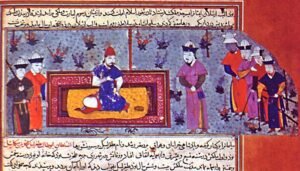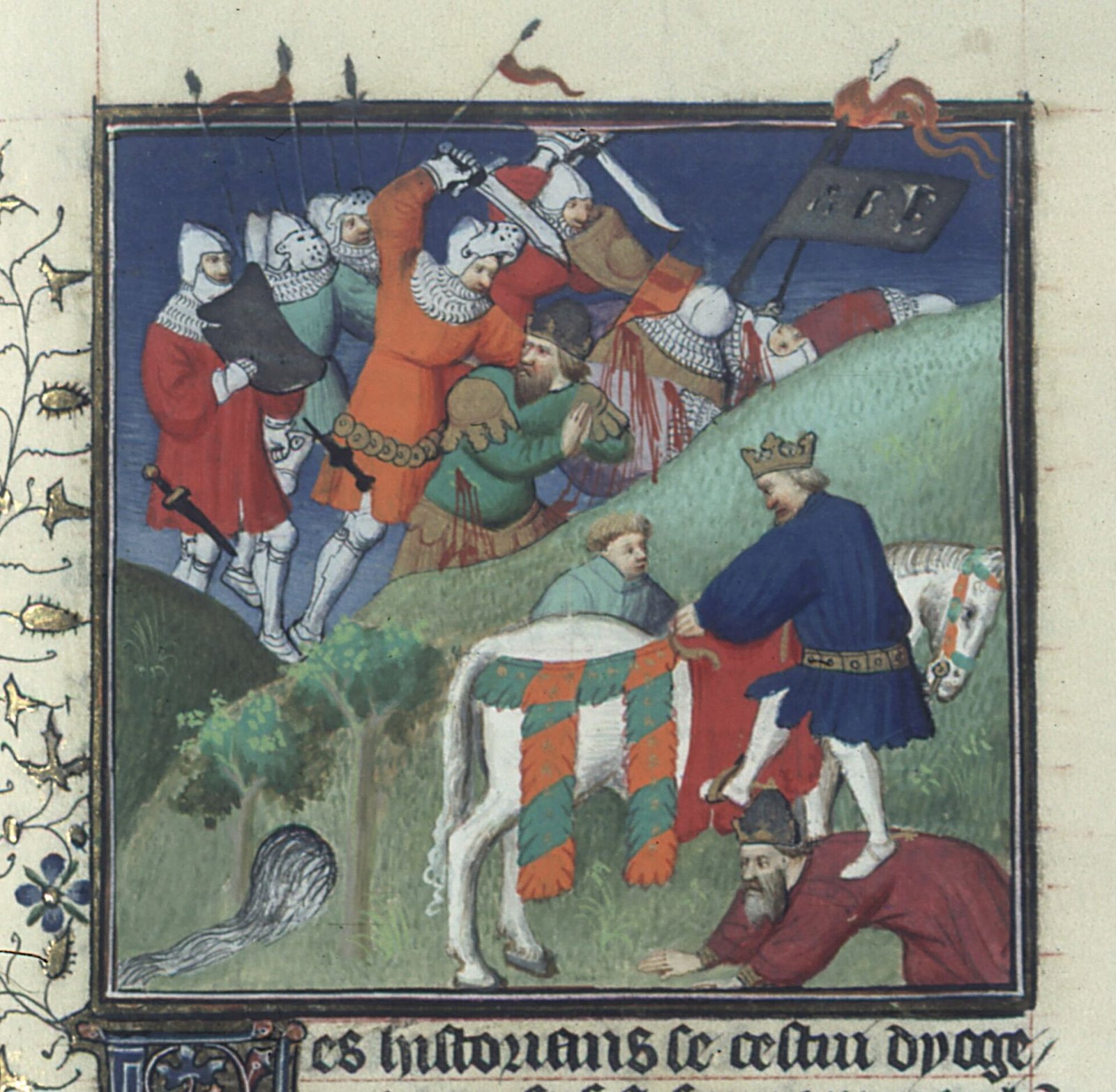
On Friday, 26 August 1071, two armies met near Malazgirt, known in English as Manzikert. The Great Seljuk State faced the Byzantine Empire. Sultan Alparslan led one side. Emperor Romanos IV Diogenes led the other. The Seljuks won, and the emperor was captured.
That is the short answer. The longer one is more interesting, and some of it is still being dug out of the ground.
What was the Battle of Manzikert in 1071?
It was a field battle between the Seljuk Turks and the Byzantines. The date is 26 August 1071. It ended in a Seljuk victory. Romanos IV Diogenes was taken prisoner.
The phrase “gate of Anatolia” is a way of describing what came after. As you will see below, the gate did not open in a single afternoon.
Why did the two armies meet?
Romanos IV was not new to this region. Before 1071, he had already marched east in 1068 and 1069. His goal was to stop Turkish raids into Anatolia.
In 1071, Alparslan was busy elsewhere. He was running a campaign against the Fatimids. When the Byzantine army advanced, he left that campaign aside and turned north.
So one side was trying to stop raids. The other dropped its own plans to answer the advance.
Where was the Battle of Manzikert fought?
The fighting took place around Malazgirt, which today belongs to Muş province, in the region north of Lake Van.
You can still go there. The Malazgirt Battle Historical National Park sits in the Danişmentgazi neighbourhood of Malazgirt district. The Ministry of Agriculture and Forestry lists it at 238.54 hectares. It was declared a park on 17 March 2018.
Here is the catch. A national park is not the same as a proven battlefield. More on that below.
What does the Battle of Manzikert map look like?
There is no single agreed map.
- The battle was in the area north of Lake Van.
- Romanos split his army before the fight. He sent a force under Joseph Tarchaniotes toward Ahlat.
- Malazgirt’s inner fortress is a landmark. Ballista arrowheads, which the research team ties to the Byzantines, were found about 450 metres southeast of it, at a place called Taşbaşı.
The Ahlat detail is disputed. Islamic sources say the force sent toward Ahlat was defeated by the Seljuks. Byzantine sources do not confirm any such clash. Attaleiates, in that account, stresses a withdrawal.
So even the basic movements of the two armies depend on which source you trust.
What was the army size at Manzikert?
This is the question where honesty matters most. The numbers vary wildly.
- Turkish Wikipedia gives 200,000 for the Byzantine army.
- English Wikipedia reports a modern estimate of about 40,000 for the same army.
- English Wikipedia’s Seljuk estimates range between 35,000 and 50,000.
A gap of 160,000 between two estimates for one army tells you something. These are not headcounts. Treat any single figure you read, including the dramatic ones, as an estimate.
How did the Seljuks win?
Seljuk horse archers pulled back from the centre as the Byzantines advanced. While they retreated, they built an encirclement from the flanks.
The Byzantines kept moving forward. The Seljuks gave ground in the middle and closed in at the sides. By the end, Romanos was a prisoner.
What happened after the battle?
Alparslan did not keep Romanos. He released the emperor. The peace terms reported by the TDV Islamic Encyclopedia include 1.5 million gold pieces as ransom for the emperor. They also include 360,000 gold pieces paid by Byzantium every year.
But Romanos came home to a changed capital. Michael VII Doukas had already been proclaimed emperor in his place. The Timeline below shows how that deepened the struggle for power.
Timeline
- 1068–1069: Romanos IV campaigns in the east against Turkish raids into Anatolia.
- 1071: Alparslan leaves his campaign against the Fatimids and turns north.
- 26 August 1071: The Seljuks win at Malazgirt. Romanos is captured.
- 1071: Romanos is released. Michael VII has taken his place in the capital, and the struggle for power deepens.
- 17 March 2018: The Malazgirt Battle Historical National Park is declared.
- 2020: A project begins to locate the battlefield through historical and archaeological survey.
- 2025: Digital 3D documentation of the finds begins.
- 25 August 2026: Researchers announce about 380 arrowheads, among nearly 1,000 metal objects, from the seventh season.
What was the significance of Manzikert?
The traditional story calls Manzikert a huge military catastrophe for Byzantium. That is the version many people learn first.
Oxford Bibliographies puts the weight somewhere else. It stresses the long-term effect of the civil war that followed the defeat, together with the Turkish advance. In that reading, the gate was not kicked in by one battle. The battle started a process. Internal fighting weakened defence, and the Turks moved forward.
What is being found at the site today?
The field is still under study. A project to determine the battlefield, using historical and archaeological survey, began in 2020. By 2026, work was in its seventh season.
The 2026 numbers, from an announcement dated 25 August 2026:
- Nearly 1,000 metal objects were recovered.
- About 380 of them were arrowheads.
- Research that season covered an area of roughly 150 square kilometres.
That last number is telling. Research is still being carried out across an area of about 150 square kilometres, which shows the battlefield’s borders have not been settled scientifically.
Digging is not the only tool. A 2023 study by Dölek and Çevik describes how the project links historical documents, terrain models, photographs and discipline reports in a Geographic Information Systems base. Think of the layers in the map app on your phone. One screen shows roads, photos and reviews for the same spot. Here, the same idea holds the evidence for one landscape.
Details you won’t find in guidebooks
- Silver coins. In 2026, the seventh season of the project, Seljuk-era silver coins were reported for the first time.
- Siege weapons. Ballista arrowheads at Taşbaşı were linked by the research team to Romanos’s siege of 22–23 August 1071. The Muş Alparslan University statement presents this as a preliminary typological assessment, not a final verdict.
- 3D scans. In 2025, the university began documenting finds and gravestones with 3D scanning at its Battlefield Archaeology Unit.
- A Norman poem. A 2022 article in Belleten says the Norman epic Gesta Roberti Wiscardi, written between 1088 and 1111, holds information about Manzikert found in no other source.
- The ransom and the tribute. The 1.5 million and 360,000 gold figures come from the peace terms reported by the TDV Islamic Encyclopedia.
Are the graves and finds proven to be from 1071?
Not yet, and the reports say so. Graves opened earlier in the Afşin cemetery date to the 11th–12th centuries. Samples from graves opened in 2026 were sent to TÜBİTAK for radiocarbon analysis. Until those results arrive, tying all of them to the 1071 battle is not a settled conclusion.
There is also a warning about loss. Hasan Sayılan’s study of the battlefield says natural effects, together with human neglect and misuse, endanger the traces of the battle. It does not list which 1071 objects have already vanished. So the scale of the loss is unknown.
Can you visit the battlefield today?
If you want to see the subject yourself, the national park is the place. Go with the right expectations. It is a protected area where research is still going on.
FAQ
When was the Battle of Manzikert fought?
It was fought on Friday, 26 August 1071, between the Great Seljuk State and the Byzantine Empire.
Who commanded the two armies?
Sultan Alparslan led the Seljuks. Emperor Romanos IV Diogenes led the Byzantines.
How big were the armies?
Nobody knows exactly. Turkish Wikipedia gives 200,000 for the Byzantines, while English Wikipedia reports a modern estimate of about 40,000. English Wikipedia’s Seljuk estimates range from 35,000 to 50,000. None of these is a precise count.
Where can you visit the battlefield?
The Malazgirt Battle Historical National Park is in the Danişmentgazi neighbourhood of Malazgirt district, Muş province, north of Lake Van.
Did the battle alone open Anatolia to the Turks?
Not by itself. Oxford Bibliographies stresses the long-term effect of the civil war that followed the defeat and of the Turkish advance.
Sources
- Oxford Bibliographies — Battle of Manzikert academic.oup.com
- Wikipedia — Battle of Manzikert en.wikipedia.org
- Vikipedi — Malazgirt Meydan Muharebesi tr.wikipedia.org
- TDV İslâm Ansiklopedisi — Malazgirt Muharebesi islamansiklopedisi.org.tr
- Tarım ve Orman Bakanlığı — Doğa Turizmi Web Uygulaması ekotaban.tarimorman.gov.tr
- Anadolu Ajansı — Malazgirt kazı buluntularının kaydı, 25 Ağustos 2026 aa.com.tr
- Muş Alparslan Üniversitesi — Romanos Diogenes’in kuşatma silahlarına ilişkin bulgular alparslan.edu.tr
- Muş Alparslan Üniversitesi — Malazgirt Araştırmalarında Yeni Dönem: 3 Boyutlu Belgeleme alparslan.edu.tr
- Türkiye Coğrafi Bilgi Sistemleri Dergisi — Dölek ve Çevik, 2023 dergipark.org.tr
- IV. Lisansüstü Turizm Öğrencileri Araştırma Kongresi — Hasan Sayılan, Malazgirt Savaş Alanı anatoliajournal.com
- Belleten — İhanetten İmparatorluğa: IV. Romanos Diogenes belleten.gov.tr
Image: 131 Bataille de Malazgirt.jpg — Rohan Master, Public domain