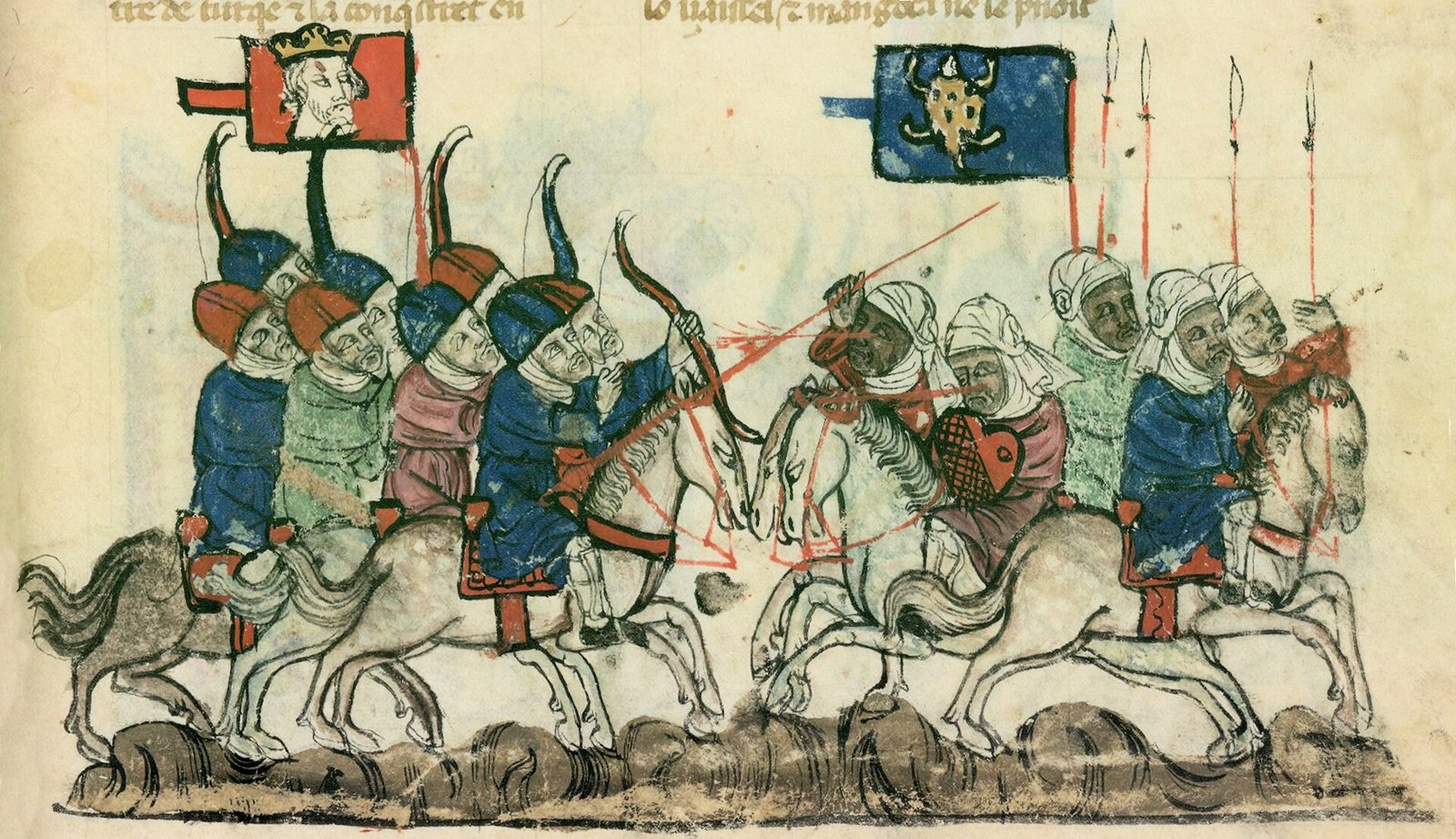
What was the Battle of Köse Dağ in 1243?
The Battle of Köse Dağ was fought in 1243 between two armies. One was led by Sultan Kaykhusraw II (Gıyâseddin Keyhusrev II) of the Anatolian Seljuks. The other was led by the Mongol commander Baiju Noyan (Baycu Noyan). The Mongols won.
The defeat did not wipe out the Seljuk state. Instead, it turned the Seljuks from an independent power into a state that answered to the Mongols. That change shaped Anatolia for the rest of the century.
If you are searching for the battle, you will find both Turkish and English spellings. “Köse Dağ” and “Kösedağ” mean the same place.
Where is Köse Dağ?
The TDV Islamic Encyclopedia puts the Köse Dağ heights about 80 kilometres northeast of Sivas. If you are travelling through central Anatolia, Sivas is the city to use as your reference point. The sultan’s own advisers also saw Sivas as the place to stand and defend. We return to that below.
How did the road to Köse Dağ begin?
The story starts three years earlier. In 1240 the Seljuks had to put down the Babai Revolt. To do that, they called back their eastern army from Erzurum. According to the TDV Islamic Encyclopedia, this showed the Mongols how weak the Seljuk defence was.
The Mongols used the opening. In 1242 Baiju Noyan captured Erzurum and plundered it. In 1243 he launched a new campaign into Seljuk lands. English Wikipedia says his force had 30,000 Mongol soldiers, with Georgian and Armenian auxiliaries alongside them.
Think of a shop that sends its guards home early. Thieves notice within days. The Seljuk eastern frontier worked the same way.
The Seljuk army and its choice
The Seljuk army gathered at Kayseri in the spring of 1243. On the way it picked up help. A force of 2,000 men sent by the Ayyubid principality of Aleppo joined the army at Sivas. Few general histories mention this detail.
Sources do not agree on how big the armies were. Turkish Wikipedia lists estimates of 60,000 to 80,000 for the Seljuks. For the Mongols it lists 30,000 or 40,000. Treat all these numbers as estimates, not counts.
Then came the key decision. Experienced statesmen advised the sultan to rely on Sivas and fight a defensive war. Kaykhusraw II chose to march on Köse Dağ instead.
How did the Mongols win?
The battle was decided early. It was not a long fight between two full armies.
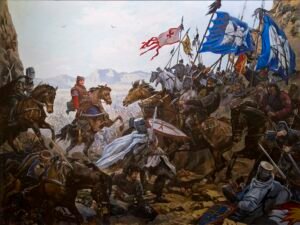
Researcher Mazlum Şahin Demir (2017) points to a feigned retreat, a tactic the Seljuks met at Derbend, as an important reason for the defeat. Turkish Wikipedia describes how it worked. The Mongol vanguard pulled back. The Seljuk vanguard took this for a real flight and chased it. During the chase, troops lying in ambush shot arrows into the pursuers.
Salim Koca’s research adds what happened next. After the Seljuk vanguard was beaten, the sultan, the commanders and the main army left the battlefield. They did so without entering the fight.
Here is the everyday version. Imagine you chase a rival who seems to be running away, only to find his friends waiting around the corner. Then you see your own team walk off the pitch. That is roughly what the Seljuk front line experienced.
The date problem
We know the year. We do not know the day. The sources give three dates:
- 26 June 1243: the date given by English Wikipedia.
- 1 July 1243: Ibn Bibi dates the battle to 11 Muharram 641, which TDV converts to 1 July.
- 3 July 1243: Ibn al-Adim dates it to 13 Muharram, which TDV converts to 3 July.
Turkish Wikipedia’s information box lists 1 or 3 July. When you read about the battle, expect to see any of these dates. None of them changes the outcome.
Timeline
- 1240: The Seljuk eastern army at Erzurum is recalled to suppress the Babai Revolt.
- 1242: Baiju Noyan captures and plunders Erzurum.
- Spring 1243: The Seljuk army gathers at Kayseri and advances toward Köse Dağ by way of Sivas.
- 1243 (day disputed): The Seljuks are defeated at Köse Dağ. Sources give 26 June, 1 July or 3 July.
- After the battle, 1243: The Mongols advance on Sivas, Kayseri and Erzincan. Peace follows through the talks of Mühezzibüddin Ali, with yearly payments.
- After 1256: Mongol supremacy in Anatolia continues as Ilkhanate rule.
- Late 13th century: Turkmen beys begin to declare independence.
Details you won’t find in guidebooks
A trap that wasn’t. Baiju Noyan waited two days before entering the abandoned Seljuk camp. He suspected a trap.
The spoils. TDV lists what the Mongols took. It included the sultan’s tent and his treasury. It also included wild animals.
A set of symbolic gifts. Batu Khan sent Kaykhusraw II an arrow, a bow, a sword and a börk. These items symbolised the sultan’s status as a vassal.
The Aleppo contingent. The 2,000 men from Aleppo had joined the army at Sivas.
What happened after the battle?
The Mongol army moved on to Sivas and Kayseri. On the way back it also targeted Erzincan.
The vizier Mühezzibüddin Ali then negotiated. After the Mongol army returned to its base on the Mugan Plain, he made a peace treaty with Baiju Noyan. The Seljuks had to provide every year:
- 3.6 million dirhams,
- 10,000 sheep,
- 1,000 cattle,
- 1,000 camels,
- and valuable gifts.
That is the practical meaning of “vassal”. The state survived, but it paid.
Why did the defeat matter?
The Seljuk state did not disappear in 1243. It became a Mongol vassal. Ayşegül Bekmez’s research notes that Mongol rule, which began in 1243, continued after 1256 as Ilkhanate rule.
The long-term damage was to central authority. According to the TDV Islamic Encyclopedia, after 1243 the Seljuk centre never regained its former strength. In the late 13th century, Turkmen beys began to declare independence.
The pattern of where these beyliks appeared is useful. Most were founded in the frontier zones facing Byzantium and along the coasts. Fewer appeared in central Anatolia, where Seljuk and Mongol control was strong.
So Köse Dağ is not the end of the Seljuk story. It is the point where the story changes direction.
FAQ
When was the Battle of Köse Dağ?
It took place in 1243, but the exact day is disputed. English Wikipedia gives 26 June 1243. The chronicler Ibn Bibi is reported to give 1 July, and Ibn al-Adim 3 July.
Who fought at Köse Dağ?
The Anatolian Seljuk sultan Kaykhusraw II (Gıyâseddin Keyhusrev II) faced the Mongol commander Baiju Noyan (Baycu Noyan).
Where is Köse Dağ?
The TDV Islamic Encyclopedia places the Köse Dağ heights about 80 kilometres northeast of Sivas.
Did the battle end the Anatolian Seljuk state?
No. The state survived, but it stopped being independent and became a vassal of the Mongols.
What did the Seljuks have to pay after the defeat?
The peace terms required 3.6 million dirhams a year, 10,000 sheep, 1,000 cattle, 1,000 camels and valuable gifts.
Sources
- English Wikipedia — Battle of Köse Dağ en.wikipedia.org
- Türkçe Vikipedi — Kösedağ Muharebesi tr.wikipedia.org
- Faruk Sümer — TDV İslâm Ansiklopedisi, Kösedağ Savaşı islamansiklopedisi.org.tr
- Mazlum Şahin Demir — Akademik Tarih ve Düşünce Dergisi dergipark.org.tr
- Salim Koca — Selçuk Üniversitesi Türkiyat Araştırmaları Dergisi dergipark.org.tr
- Ayşegül Bekmez — Anadolu Mimarisinde İlhanlı Hükümdarlarının İzleri dergipark.org.tr
- Erdoğan Merçil — TDV İslâm Ansiklopedisi, Anadolu Beylikleri islamansiklopedisi.org.tr
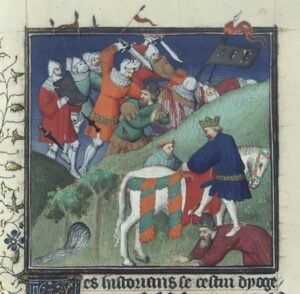
Image: Bataille de Közä Dagh (1243).jpeg — Unknown. Catalonia., Public domain