Who ruled Anatolia after the Seljuks?
No single state did. That is the short answer.
The Anatolian Seljuks lost the Battle of Kösedağ to the Mongols in 1243. They became a dependent power. The leading political force in Anatolia passed to Mongol rule. The Ministry of Culture and Tourism’s Seljuk chronology dates the formal end of the Anatolian Seljuk State to 1308.
In the gap, Turkmen lords took charge of their own regions. Each ruled as a bey, and each territory is called a beylik. You will see the plural “Anatolian beyliks” in every guide, because there were many of them and they sat side by side.
What are the Anatolian beyliks?
The Anatolian beyliks were Turkish political entities governed by beys. They appeared in two waves.
- The first wave came in the late 11th century.
- The second wave came in the second half of the 13th century.
This article focuses mostly on the second wave. It is the one that filled the space left by the Seljuks.
The first Anatolian beyliks
The first beyliks formed after the Battle of Manzikert in 1071. Three stand out:
- The Saltukids, centered on Erzurum.
- The Mengujekids, around Erzincan and Divriği.
- The Danishmendids, centered on Sivas.
If you travel central and eastern Turkey today, these are the cities that carry that early story. Erzurum, Erzincan and Sivas are still major stops on the road east.
Where did the second wave appear?
The second wave began as Turkmen lords broke away from Seljuk rule in the late 13th century. Most of these beyliks arose on the Byzantine frontier and along the coasts. Fewer arose in Central Anatolia, where Seljuk and Mongol control stayed strong.
That pattern explains the shape of the map. The new states were mostly at the edges.
Anatolian beyliks map: the main centers
You can sketch a rough map from a handful of capitals. In western Anatolia, the main centers were:
- Karesioğulları: Balıkesir.
- Saruhanoğulları: Manisa.
- Menteşeoğulları: Milas and Muğla.
- İnançoğulları: Denizli.
Others filled in the picture:
- Aydınoğulları held Aydın-ili. Mehmed Bey settled at Birgi.
- Germiyanoğulları were centered on Kütahya.
- Karamanoğulları first centered on Ermenek.
- Candaroğulları held Kastamonu and Sinop.
- Dulkadıroğulları ruled around Maraş and Elbistan from 1337.
- Ramazanoğulları ruled around Adana from 1352.
In the east, the Akkoyunlu dynasty was formed by Turkmen of the Bayındır tribe. It ruled in Eastern Anatolia, Azerbaijan and Iraq.
If you trace this list on a road map, you will notice something practical. Many of these capitals are provincial cities you can reach by bus today.
List of Anatolian beyliks
Here is the list of beyliks named in this article:
- Saltukids (Erzurum)
- Mengujekids (Erzincan, Divriği)
- Danishmendids (Sivas)
- Karamanids (Ermenek)
- Germiyanids (Kütahya)
- Ottomans
- Aydınids (Aydın-ili, Birgi)
- Candarids (Kastamonu, Sinop)
- Karesids (Balıkesir)
- Saruhanids (Manisa)
- Menteşeids (Milas, Muğla)
- İnançids (Denizli)
- Dulkadirids (Maraş, Elbistan)
- Ramazanids (Adana)
- Akkoyunlu and Karakoyunlu in the east
This is not the full roll of every beylik. It is the set you can trace through the sources below.
Timeline
- After 1071: After Manzikert, the first Anatolian Turkish beyliks formed.
- 1243: The defeat at Kösedağ made the Anatolian Seljuks dependent on Mongol power.
- About 1256: The Karamanids appeared, centered on Ermenek.
- About 1300-1340: Yâkub Bey I reigned as the first independent ruler of the Germiyanids.
- 1302: Osman Bey beat a Byzantine army. The Ottoman Beylik gained standing among its neighbors.
- 1308: The Anatolian Seljuk State ended. Aydınoğlu Mehmed Bey took control of Aydın-ili.
- 1335: After the death of the Ilkhanid ruler Abu Said, Candaroğlu Süleyman Bey declared independence.
- 1337: The Dulkadirids appeared around Maraş and Elbistan.
- 1352: The Ramazanids began ruling around Adana.
- 1366: The Mahmut Bey Mosque was built under the Candarids.
- 1375: Aydınoğlu İsa Bey’s mosque was built in Selçuk.
- 1402: After the Battle of Ankara, Timur returned lands to several dynasties.
- 1429: On the death of Yâkub Bey II, the Germiyan lands passed to Ottoman rule.
- 1461: The Candarid Beylik was annexed to the Ottoman lands.
- 1473: The Ottomans beat the Akkoyunlu ruler Uzun Hasan at Otlukbeli.
- 2023: Five wooden-column mosques, including those at Beyşehir and Kastamonu, joined the UNESCO World Heritage List.
The Ottomans were one beylik among many
It is easy to read history backward. In 1302, the Ottomans were a neighbor, not an empire. That year Osman Bey won a victory over a Byzantine army. The win lifted the Ottoman Beylik above the other Turkmen beyliks around it.
The Karamanids were the rival. They emerged around 1256, first centered on Ermenek. They fought the Ottomans for supremacy in Anatolia.
The process of gathering the beyliks under Ottoman rule took centuries. Candar lands were annexed for good by Mehmed the Conqueror in 1461. Germiyan lands passed to the Ottomans in 1429. In the east, Uzun Hasan of the Akkoyunlu lost to the Conqueror at Otlukbeli in 1473.
Aydınoğulları: a beylik with a navy
The founder of the Aydınids was Mübârizüddin Gazi Mehmed Bey. He had been a subaşı in the Germiyan army. In 1308 he took control of Aydın-ili.
He settled at Birgi and built a fleet at Ayasuluk. In 1319 that fleet raided Chios.
He also built the Birgi Great Mosque in 1312. If you visit the Aegean hinterland, this is a stop worth planning around.
After the Battle of Ankara in 1402, Timur returned lands to several dynasties, and the Aydınids were among them.
Germiyan: the beylik that was willed away
The Germiyanids were centered on Kütahya. Their first independent ruler was Yâkub Bey I, who reigned from about 1300 to 1340.
The ending is unusual. In 1428, Yâkub Bey II went to Edirne and told Murad II that he was leaving his country to him after his death. He died in 1429. Kütahya then passed into Ottoman sancak administration.
Candaroğulları: from a land grant to independence
The name comes from Şemseddin Yaman Candar. The Ilkhanid ruler Geyhatu gave him Eflani and the area around it as an iqta, a revenue grant.
Later, Candaroğlu Süleyman Bey I added Kastamonu and Sinop to his rule. In 1335 the Ilkhanid ruler Abu Said died. Süleyman Bey used the disorder that followed and declared independence.
The beylik lasted until 1461. That year Mehmed the Conqueror annexed it to the Ottoman lands for good.
Dulkadirids and Ramazanids: between two powers
The Dulkadirids ruled around Maraş and Elbistan from 1337. The Ramazanids ruled around Adana from 1352.
Both accepted Mamluk supremacy first. Later they accepted Ottoman supremacy.
The east: Akkoyunlu and Karakoyunlu
Some powers grew beyond Anatolia itself. The Akkoyunlu were Turkmen of the Bayındır tribe. They ruled in Eastern Anatolia, Azerbaijan and Iraq.
The Karakoyunlu began with Bayram Hoca. In 1351 he killed Akçasakal Hüseyin Bey, the ruler of the Sutay, and gained independence. He took Mosul.
Anatolian beyliks flag: what the evidence shows
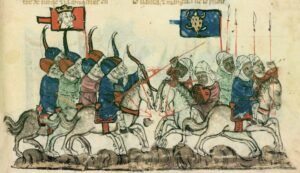
People often search for a flag of the beyliks. A single flag does not exist. What survives is a map.
The Catalan Atlas, traditionally dated to 1375, shows Anatolia under the name Turqhia. It marks the Turkish beyliks of the region with different flag depictions. So the best evidence is a map showing a patchwork of banners.
That fits the political reality. There were many rulers and no single state.
Anatolian beylik government reform
The sources here do not describe a set of formal government reforms. What they do show is how the beys governed in practice. They took land grants, as Candar did. They built fleets, as Mehmed Bey did. They signed trade treaties.
The next section gives one example.
Details you won’t find in guidebooks
A 6 percent tax on grain and captives. In 1353 the Aydınids signed a treaty with Venice. It set a 6 percent tax on grain, dried vegetables, farm animals and captives. Merchants paid 2 percent on imports and exports. Think of it as a customs duty, like the one you may pay on goods at a border today.
Columns from Ephesus. The columns in the İsa Bey Mosque in Selçuk were brought from the ruins of Ephesus. Aydınoğlu İsa Bey had the mosque built in 1375 by the architect Ali of Damascus.
A roof without nails. The wooden roof of the Mahmut Bey Mosque in Kastamonu was built with an overlapping technique. It used no metal parts and no nails.
The original door is in a museum. The mosque’s door was made by Mahmutoğlu Abdullah, a decorative artist from Ankara. The original is kept in the Kastamonu Ethnography Museum. A copy by Hikmet Değirmencioğlu was placed in the mosque.
Beylik buildings you can visit
Here are the places named in the sources:
- Birgi Great Mosque, built in 1312 by Aydınoğlu Mehmed Bey.
- İsa Bey Mosque, Selçuk, built in 1375.
- Eşrefoğlu Mosque, Beyşehir. The inscription over its crown gate is dated 1296. The tiled entrance inscription is dated 1299. Together they document the building and its patron, Seyfeddin Süleyman Bey.
- Mahmut Bey Mosque, Kasaba village, Kastamonu, built in 1366 under the Candarids.
The Eşrefoğlu and Mahmut Bey mosques are two of the five parts of the UNESCO site Wooden Hypostyle Mosques of Medieval Anatolia. The site was inscribed in 2023.
If you plan a trip, you can build a route around these four stops. Each one shows the work of a different bey.
FAQ
What were the Anatolian beyliks?
They were Turkish political entities ruled by beys. The first wave appeared in the late 11th century. The second wave appeared in the second half of the 13th century.
What were the first Anatolian beyliks?
After the Battle of Manzikert in 1071, the Saltukids of Erzurum, the Mengujekids around Erzincan and Divriği, and the Danishmendids of Sivas emerged.
Which beyliks lasted longest in the notes above?
The Karamanids, who appeared around 1256, competed with the Ottomans for supremacy in Anatolia. The Candarids were annexed for good in 1461.
Can I visit buildings from the beylik era?
Yes. You can visit the Birgi Great Mosque (1312), the Isa Bey Mosque in Selçuk (1375), the Eşrefoğlu Mosque in Beyşehir and the Mahmut Bey Mosque in Kastamonu.
Sources
- Wikipedia, Anatolian beyliks en.wikipedia.org
- TDV İslâm Ansiklopedisi, Anadolu Beylikleri islamansiklopedisi.org.tr
- Kültür Portalı, Selçuklu Devri Kronoloji kulturportali.gov.tr
- TDV İslâm Ansiklopedisi, Aydınoğulları islamansiklopedisi.org.tr
- TDV İslâm Ansiklopedisi, Germiyanoğulları islamansiklopedisi.org.tr
- TDV İslâm Ansiklopedisi, Candaroğulları islamansiklopedisi.org.tr
- TDV İslâm Ansiklopedisi, Osmanlılar islamansiklopedisi.org.tr
- TDV İslâm Ansiklopedisi, Akkoyunlular islamansiklopedisi.org.tr
- TDV İslâm Ansiklopedisi, Karakoyunlular islamansiklopedisi.org.tr
- Kültür Portalı, İsa Bey Camisi kulturportali.gov.tr
- UNESCO, Ahşap Direkli Anadolu Camileri Adaylık Dosyası whc.unesco.org
- Kültür Portalı, Mahmut Bey Camisi kulturportali.gov.tr
- UNESCO, Dünya Mirası Komitesi 45 COM 8B.46 Kararı whc.unesco.org
Image: Anatolian Beyliks in the Catalan Atlas (1375).jpg — Cresques Abraham, Public domain