Gianni Marchesi’s 2026 study proposes that Astiru II commissioned Carchemish’s lost cuneiform inscription. Astiru II was the city’s penultimate king and ruled before 738 BCE. This attribution replaces an earlier identification with Astuwalamanza, a king placed around 950 BCE.
The change rests on a possible royal name, a royal title and a disputed connection between monuments. If you follow those clues, you can see why the inscription’s attribution has shifted. Its ten basalt fragments also have a history of discovery, disappearance and partial recovery that explains the limits of the new interpretation.
What changed in the attribution?
Marchesi published his new examination on pages 44–45 of the 2026 book Karkemish of the Hittites on the Euphrates. His proposal moves the inscription from the reign of Astuwalamanza to that of Astiru II. These are different kings, separated substantially in the chronology used for Carchemish.
The older attribution used a royal name formerly read as Asatuwatemais. That name is now read as Astuwalamanza. This change in reading should be distinguished from Marchesi’s argument: updating the reading of one king’s name does not turn that king into Astiru II.
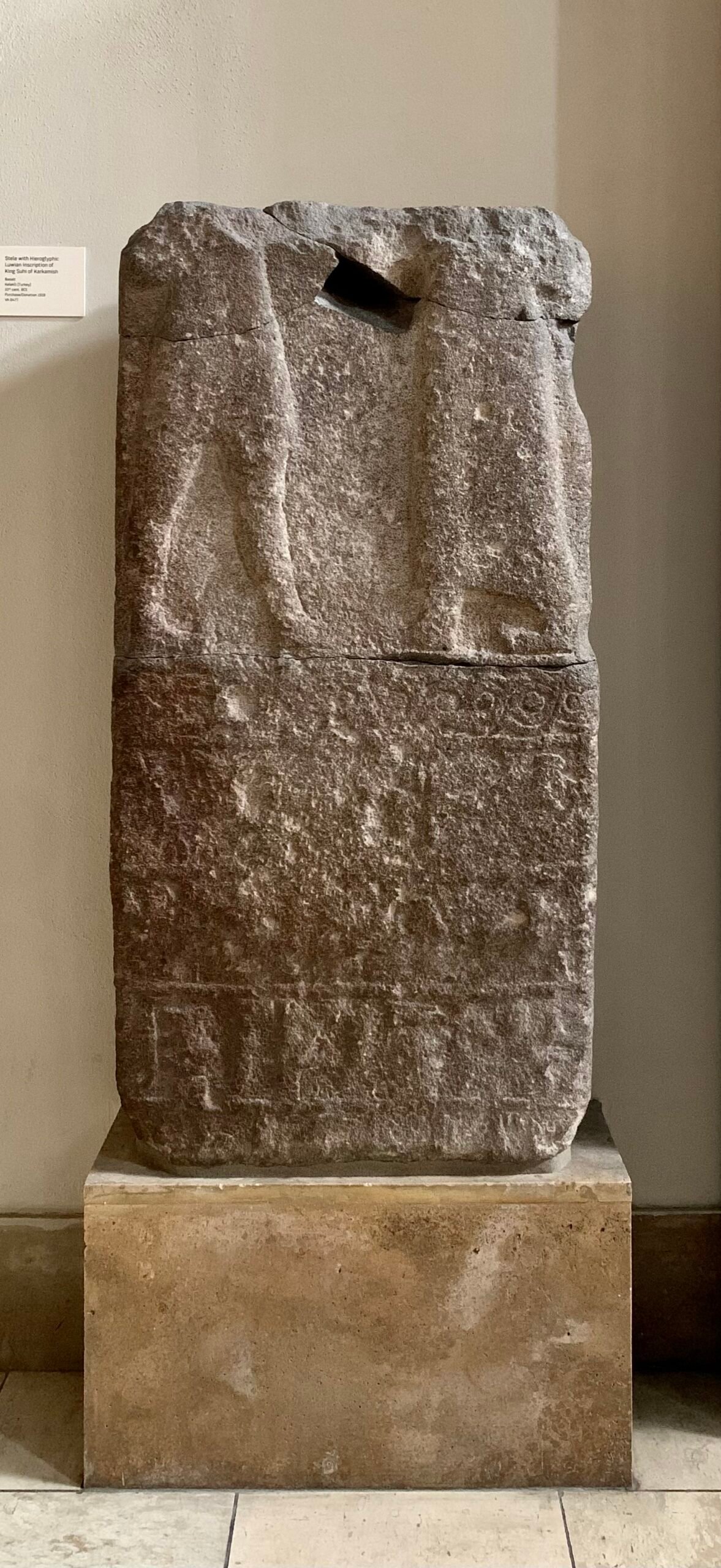
Marchesi also challenges the earlier reconstruction of the monument. The older interpretation connected the cuneiform fragments with a base on a lion bearing Luwian hieroglyphs. Marchesi argues that the cuneiform pieces and the hieroglyphic material belonged to different monuments. His reassessment therefore changes both the proposed commissioner and the relationship between the objects.
What evidence points to Astiru II?
The first fragment contains what Marchesi interprets as a possible royal name: ás-t[i-ru]. It is evidence for an attribution, rather than a fully preserved name that settles the question by itself.
A second clue comes from the fourth fragment. It contains the title “king of Carchemish.” Marchesi’s attribution brings this royal title together with the possible name on the first fragment. The argument depends on reading these surviving elements within the same fragmentary inscription.
Astiru II was the penultimate king of Carchemish and ruled before 738 BCE. Identifying him as the commissioner places the inscription within the city’s later royal history. The older association with Astuwalamanza instead placed it around the period assigned to that king, approximately 950 BCE.
You should therefore read “Astiru II commissioned it” as the conclusion proposed by Marchesi’s study. The possible name and the royal title provide its stated foundations. The missing fragments still prevent a continuous reconstruction that might make the inscription’s wording easier to assess.
Why does separating the monuments matter?
The earlier interpretation joined two kinds of writing through an assumed physical relationship. Cuneiform fragments were associated with a base on a lion carrying Luwian hieroglyphs.
Marchesi rejects that combination and assigns the material to separate monuments. Under his interpretation, the hieroglyphic lion cannot supply the cuneiform fragments with their royal identity through the old association. The cuneiform inscription must instead be assessed through its own surviving signs and titles.
Think of matching loose pages to a document in everyday life. If the pages belong to different documents, information on one cannot automatically identify the author of the other. Marchesi’s separation of the cuneiform fragments from the hieroglyphic monument has a comparable consequence for the attribution to Astuwalamanza.
How were the fragments found and lost?
A British Museum team discovered ten basalt fragments around Carchemish’s Water Gate in 1911–1912. These pieces form the material basis of the inscription under discussion. Their discovery location is part of the evidence for their connection with the ancient city.
Nine of the ten fragments remain missing. One was identified again in 2012 in a storeroom at the Museum of Anatolian Civilizations in Ankara. Calling the inscription “lost” therefore describes most of its known pieces, rather than the disappearance of every fragment.
The distinction matters when you picture the evidence. The surviving Ankara object is a small basalt fragment, while the broader inscription is known through a much more incomplete material record. Its recovery did not restore the ten-piece group or make a complete reading possible.
Details you won’t find in guidebooks
The Ankara fragment measures only 15.5 × 12 centimetres. That modest size gives a concrete sense of the surviving object. A discussion involving kings, writing traditions and monumental attribution now includes a piece of basalt small enough to describe with those two measurements.
Two preserved signs, GAŠAN and GAR, are read as the beginning of Kubaba’s title, “queen of Carchemish.” They preserve a different kind of information from the proposed royal name. Here the surviving signs concern Kubaba’s title and the city, rather than directly naming the commissioning king.
The writing also preserves evidence of different scribal traditions. The spelling of the city’s name reflects Assyrian practice. The form of the GAŠAN sign reflects Hittite scribal tradition. Both observations belong to the same small surviving fragment.
The publication history adds another detail. In 1952, the missing pieces could be documented only through photographs of paper impressions. Those photographs are records of impressions of the stones, rather than photographs of the missing stones themselves. This distinction helps explain the importance of the fragment identified in Ankara.
Why would Astiru II choose cuneiform?
Marchesi proposes that Assyrian cultural influence in the eighth century BCE explains Astiru II’s choice of cuneiform. This is an interpretation of the ruler’s possible choice of script. It accompanies the proposed attribution, rather than constituting a preserved statement by the king about his intentions.
The Ankara fragment’s writing offers a useful comparison with that proposal. Its city-name spelling reflects Assyrian practice, while its GAŠAN sign reflects Hittite tradition. These details show why the inscription’s script deserves attention alongside the question of which ruler commissioned it.
According to Marchesi, no other known example exists of a cuneiform monument commissioned by a Late Hittite ruler. That assessment gives the fragments particular significance. Their interpretation concerns both the identity of a king and the use of cuneiform in a Late Hittite royal monument.
Where does Carchemish fit into this history?
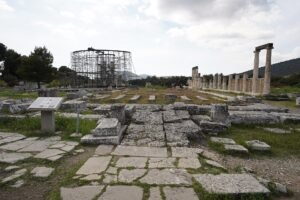
Carchemish stands on the western bank of the Euphrates at the Turkey–Syria border. The archaeological site covers approximately 90 hectares. About 55 hectares lie in Turkey and 35 in Syria, so the ancient city extends across the modern border.
The city’s final king was Pisiri. The Assyrian king Sargon II conquered Carchemish in 717 BCE during Pisiri’s rule. Astiru II’s position as the penultimate king places the proposed commissioner before this final reign and conquest.
Modern excavation provides another part of the site’s chronology. Mine clearance was completed in February 2011. Excavations resumed in September 2011 under Nicolò Marchetti. The identification of the inscription’s surviving fragment in Ankara followed in 2012.
Timeline
- Around 950 BCE: The period assigned to Astuwalamanza, the king associated with the older attribution.
- Before 738 BCE: Astiru II’s reign, to which Marchesi proposes assigning the inscription.
- 717 BCE: Sargon II conquers Carchemish during the reign of its final king, Pisiri.
- 1911–1912: A British Museum team discovers ten cuneiform fragments near the Water Gate.
- 1952: Photographs of paper impressions document the missing pieces in publication.
- 2012: One basalt fragment is identified again in an Ankara museum storeroom.
- 2026: Marchesi publishes his new interpretation and attribution.
FAQ
Which king commissioned Carchemish’s lost inscription?
Gianni Marchesi’s 2026 study proposes Astiru II, the penultimate king of Carchemish, who ruled before 738 BCE. The attribution rests on a possible reading of his name and the title “king of Carchemish.”
Who was previously associated with the inscription?
The inscription was previously attributed to Astuwalamanza, whose name was formerly read as Asatuwatemais. He is placed around 950 BCE in the Carchemish king list.
Why is the inscription described as lost?
A British Museum team found ten basalt fragments in 1911–1912. One was identified again in an Ankara museum storeroom in 2012, but nine remain missing.
Can the complete inscription be read?
The missing fragments prevent reconstruction of a continuous text. Individual signs, a possible royal name and a royal title nevertheless support interpretation of the surviving evidence.
Sources
- University of Bologna, Gianni Marchesi, Late Hittite Cuneiform Inscription from Karkemish, research record and abstract cris.unibo.it
- Gianni Marchesi, 2026 study and related catalogue entry in Karkemish of the Hittites on the Euphrates cris.unibo.it
- Wikipedia, “Carchemish,” geography, royal chronology and excavation history en.wikipedia.org
Image: Stele with hieroglyphic Luwian inscription of King Suhi of Karkamish, 10th century BC, basalt, from Kelekli (Turkey), purchase or donation 1918, VA 8477, Vorderasiatisches Museum Berlin.jpg — Neoclassicism Enthusiast, CC BY-SA 4.0