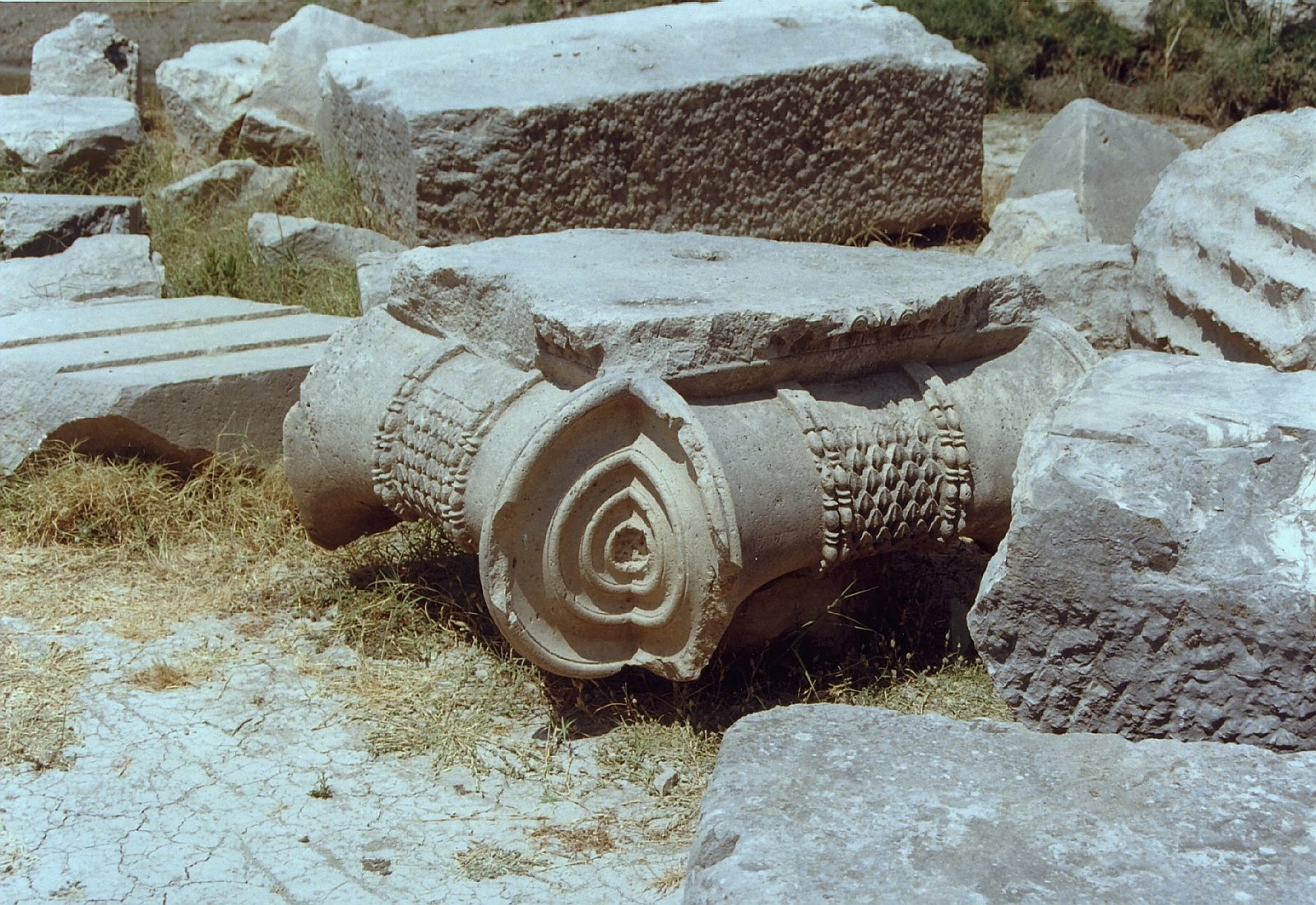
Letoon was sacred because it brought together worship at a sacred water source and temples dedicated to Leto and her children, Artemis and Apollo. It was also the cult centre of Xanthos and the shared sanctuary of the Lycian League. Inscriptions show that religious and political decisions were publicly announced there.
Yet the three temples tell only part of the story. Earlier water cults, traces of a wooden temple and an inscription in three languages reveal different layers of the sanctuary. If you follow those details, you can understand how a place of worship also became a setting for public authority.
Where is Letoon in Turkey?
Letoon is an ancient sanctuary near Kumluova, in the Seydikemer district of Muğla. It lies approximately four kilometres south of ancient Xanthos. That short distance helps place the two sites in context: UNESCO identifies Letoon as the cult centre of Xanthos.
The familiar description “Letoon ancient city” can obscure its central role. Its three temples and sacred spring belonged to a sanctuary shared by the Lycian League. When you picture Letoon, begin with those religious functions and its relationship with Xanthos.
Excavated finds place the earliest settlement traces in the seventh century BCE, according to Türkiye’s Culture Portal. This gives the site a history extending well before the later Ionic temple of Leto. The visible temple arrangement belongs within that longer sequence of occupation and worship.
Why did water make Letoon sacred?
During the Archaic and Classical periods, Letoon had cults associated with an Anatolian goddess and water nymphs. The Muğla Provincial Directorate of Culture and Tourism identifies these earlier traditions. Water therefore belongs at the beginning of an explanation of the sanctuary’s sacred character.
The foundation legend attributed to Ovid connects Leto directly with a spring. Local people prevent her from washing her children in its water. She responds by turning them into frogs. This is a foundation story, and its central conflict concerns access to water.
The spring also had a place in the sanctuary’s architecture. UNESCO states that the monumental fountain from Hadrian’s reign was built over a water source considered sacred. Its construction placed a substantial building directly over the feature that carried religious significance.
A fountain dedicated to the nymph cult and an early Christian church also appear in the site’s history. The church stands along the fountain’s eastern side. Together, these remains make the water area relevant to more than one period of Letoon’s use.
What do Letoon’s three temples reveal?
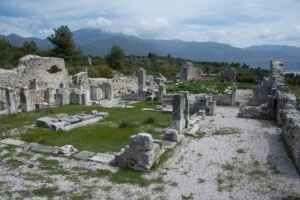
The three temples were dedicated to Leto, Artemis and Apollo. Leto’s temple stood to the west, Artemis’s occupied the middle, and Apollo’s stood to the east. All three façades faced south. You can use that arrangement to keep the divine family and the buildings connected as you read the site.
Leto’s temple: the largest building
The western temple measures 30.25 by 15.75 metres, making it the largest of the three. It was built in the Ionic order. Columns surrounded it in an arrangement of six by eleven, giving the temple a defined architectural frame.
The ministry’s cultural publication records an earlier Leto temple commissioned by King Arbinas toward the end of the fifth century BCE. It also places the construction of a replacement Ionic temple at approximately 150 BCE. Leto’s temple thus had a building history involving an earlier structure and a later replacement.
The standing temple also reflects modern conservation work. Between 2000 and 2007, it was re-erected in its original position using original architectural pieces recovered during excavation. What you see standing includes ancient material assembled again through that project.
Artemis’s temple: the central building
Artemis’s temple measures 18.20 by 8.70 metres. It is the smallest of the three and occupies the central position. These dimensions distinguish it from the larger temples on either side without changing its place within the sanctuary’s dedication to Leto and her children.
Artemis also appears through imagery associated with Apollo’s temple. The mosaic from its sacred chamber depicts her bow and quiver alongside Apollo’s lyre. Her presence at Letoon can therefore be traced through both a dedicated building and the imagery of the neighbouring temple.
Apollo’s temple: architecture and symbols
The eastern temple of Apollo was built in the Doric order and measures 27.90 by 15.07 metres. Its architectural order differs from the Ionic design of Leto’s temple. The buildings honoured members of the same divine family through different architectural forms.
The mosaic’s lyre, bow and quiver give that family connection a visual form. Apollo’s musical instrument appears beside Artemis’s equipment. These are specific identifying symbols within the sacred chamber, linking the temple’s dedication with the imagery inside it.
How did religion and Lycian public life meet here?
UNESCO describes Letoon as the shared sanctuary of the Lycian League. Its role extended beyond the cult centre of nearby Xanthos. The inscriptions show that rulers’ religious and political decisions were announced publicly within this sacred setting.
An everyday comparison is a public noticeboard: decisions become visible in a place people recognise. At Letoon, inscriptions performed that public function within a sanctuary. The connection between worship and government is therefore supported by written announcements, as well as by the temples.
The Trilingual Inscription makes the relationship especially clear. Discovered in 1973, it contains texts in Lycian, Greek and Aramaic. Its content concerns arrangements for establishing a cult, bringing religious organisation into a surviving written document.
The inscription is preserved in Fethiye Museum. Unlike most Lycian texts, it is not a funerary inscription. That distinction matters because it directs your attention toward the organisation of worship rather than the commemoration of a burial.
Its precise date is presented differently by two official sources. UNESCO gives 337 BCE, while Türkiye’s official museum page gives 358 BCE. Both place it in the fourth century BCE, but their stated years disagree. That disagreement should remain visible when discussing its chronology.
Details you won’t find in guidebooks
Inside Apollo’s temple, sockets survive from an older temple built with wooden posts on a stone foundation. These small architectural traces preserve evidence of an earlier building within the later temple. They add a layer of construction history that the outer dimensions alone cannot explain.
The three temple façades all face south. This shared orientation is another detail that links buildings of different sizes and architectural orders. Leto’s Ionic temple and Apollo’s Doric temple belong to an arrangement with a common direction.
The Apollo mosaic was moved to Fethiye Archaeology Museum to protect it from natural deterioration at the excavation site. Its ancient setting was the temple’s sacred chamber. Its removal for protection is part of the modern history of preserving Letoon’s material remains.
The Trilingual Inscription was found in a Hellenistic refuse area near Apollo’s temple. Its discovery location differs from the public religious function described by its text. Both details matter: one concerns the object’s archaeological findspot, and the other concerns its content.
Timeline
- Seventh century BCE: Excavated finds indicate the earliest settlement traces, according to the Culture Portal.
- Late fifth century BCE: King Arbinas commissions a temple of Leto, according to the ministry’s cultural publication.
- Fourth century BCE: The Trilingual Inscription belongs to this century. UNESCO dates it to 337 BCE; the official museum page gives 358 BCE.
- Around 150 BCE: A new Ionic temple replaces the earlier Leto temple.
- Hadrian’s reign: A monumental fountain is built over the sacred water source.
- Seventh century CE: Letoon is abandoned.
- 1962: Systematic excavations begin under Henri Metzger.
- 1973: The Trilingual Inscription is discovered.
- 1988: Xanthos–Letoon enters the UNESCO World Heritage List.
- 2000–2007: Leto’s temple is re-erected using original architectural pieces.
FAQ
Why was Letoon sacred?
Letoon combined worship associated with a sacred spring with temples dedicated to Leto, Artemis and Apollo. It also served as the cult centre of Xanthos and the shared sanctuary of the Lycian League.
Where is Letoon in Turkey?
Letoon is near Kumluova in the Seydikemer district of Muğla, approximately four kilometres south of ancient Xanthos.
Which gods were worshipped at Letoon?
The three temples honoured Leto and her children Artemis and Apollo. Earlier cults included an Anatolian goddess and water nymphs.
What is the Letoon Trilingual Inscription?
Discovered in 1973, it contains Lycian, Greek and Aramaic texts concerning the establishment of a cult. It is preserved in Fethiye Museum.
Sources
- Culture Portal — Letoon Antik Kenti kulturportali.gov.tr
- Muğla Provincial Directorate of Culture and Tourism — Letoon mugla.ktb.gov.tr
- UNESCO World Heritage Centre — Xanthos-Letoon whc.unesco.org
- Directorate General of Museums — Fethiye Letoon Archaeological Site muze.gov.tr
- Ministry of Culture and Tourism — Likya’nın Kutsal Merkezi: Letoon ekitap.ktb.gov.tr
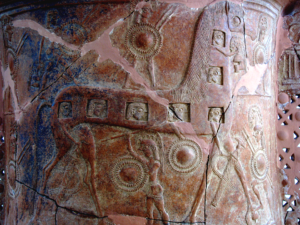
Image: Letoon fragment of decoration, 2053.jpg — Zde, CC BY-SA 4.0