Simón Bolívar was a Venezuelan soldier and politician. He was one of the leaders who guided the independence struggles of today’s Venezuela, Colombia, Ecuador, Peru, Bolivia and Panama against Spain. People call him El Libertador, “the Liberator”. This guide answers the questions readers ask most: where he was born, what country carries his name, what happened to his sword and how he died.
Where was Simón Bolívar born?
Bolívar was born on 24 July 1783 in Caracas. Today it is the capital of Venezuela. In 1783 it was part of the Spanish Empire.
His full name is recorded as Simón José Antonio de la Santísima Trinidad Bolívar Palacios Ponte y Blanco. That is a mouthful. Most people simply say Bolívar.
So if you ask “where is Simón Bolívar from?”, the answer is Venezuela. He was a criollo. That word describes the Spanish-descended elite born in the Americas rather than in Spain.
A rich family and an early loss
His family was wealthy. Its fortune included mines, cacao plantations and hundreds of enslaved people. That wealth did not protect him from loss. He lost his father in 1786 and his mother in 1792. He was a child both times.
His teachers included Simón Rodríguez. Andrés Bello taught him history and geography. Francisco Andújar taught him mathematics.
In 1802 he married María Teresa Rodríguez del Toro in Madrid. She died of yellow fever in 1803.
How did he become El Libertador?
On 14 October 1813, the Caracas city council gave him the title El Libertador. He carried it for the rest of his life.
That same year he issued the Decree of War to the Death. It ordered the killing of Spaniards who did not actively support the independence army. It is one of the harshest documents of his career, and any honest account of him has to include it.
On 6 September 1815 he was in Kingston. There he dictated the Jamaica Letter to his secretary, Pedro Briceño Méndez. It was addressed to Henry Cullen.
Help also came from Haiti. Its leader, Alexandre Pétion, gave Bolívar military support. In return Bolívar promised to abolish slavery in Spanish America.
The campaigns: Boyacá, Carabobo, Junín and Ayacucho
The wars ran for years. Four dates matter most.
- 7 August 1819, Boyacá. Bolívar’s forces crossed the Andes in 1819. At Boyacá they defeated the royalists.
- 24 June 1821, Carabobo. Bolívar and José Antonio Páez dealt Miguel de la Torre’s forces a decisive defeat.
- 6 August 1824, Junín. In Peru, Bolívar defeated royalist forces.
- 9 December 1824, Ayacucho. This was the decisive victory. Antonio José de Sucre, Bolívar’s commander, led the independence army.
Notice the pattern. Bolívar did not win every battle himself. Sucre commanded at Ayacucho, and Páez fought beside him at Carabobo. Independence was a team effort.
Which country is named after Simón Bolívar?
Bolivia. In Upper Peru, a congress declared independence on 6 August 1825. It elected Bolívar president and asked him to draft a constitution. That year the country was founded as República Bolívar, in his honor. Today we call it Bolivia.
Bolívar also headed Great Colombia. It was a republic uniting the territory of today’s Colombia, Venezuela, Ecuador and Panama.
He wanted cooperation beyond one state. On 22 June 1826, the Panama Congress, which he supported, met with eight delegates. They came from Colombia, Peru, Mexico and Central America.
Timeline
- 24 July 1783: Born in Caracas.
- 1786: His father died.
- 1792: His mother died.
- 1802: Married María Teresa Rodríguez del Toro in Madrid.
- 1803: His wife died of yellow fever.
- 14 October 1813: Honored with the title El Libertador by the Caracas city council.
- 6 September 1815: Dictated the Jamaica Letter in Kingston.
- 7 August 1819: Royalist forces defeated at Boyacá.
- 24 June 1821: Carabobo won.
- 6 August 1824: Junín won.
- 9 December 1824: Independence army under Sucre won at Ayacucho.
- 6 August 1825: Upper Peru declared independence and elected Bolívar president.
- 22 June 1826: The Panama Congress he supported met.
- 27 August 1828: Took supreme powers in Colombia.
- 25 September 1828: Survived an assassination attempt in Bogotá.
- 17 December 1830: Died in Santa Marta.
The last years: power and a narrow escape
On 27 August 1828, Bolívar assumed supreme powers in Colombia. He abolished the office of vice president.
A month later, on 25 September 1828, there was an assassination attempt in Bogotá. Manuela Sáenz bought him time. That let Bolívar escape.
How did Simón Bolívar die?
He died on 17 December 1830 in Santa Marta, at the age of 47.
The traditional explanation is tuberculosis. In 2010, however, Paul Auwaerter, a Johns Hopkins specialist, proposed another theory: chronic arsenic poisoning.
That does not mean murder. Auwaerter answered claims by Hugo Chávez that Bolívar had been killed. He said arsenic exposure could have come from the medicines of the period or from water. So the cause of death is still debated. Historians have not settled it.
Details you won’t find in guidebooks
The Peru Sword. In 1825 the city council of Lima gave Bolívar a sword as a gift. It is known as the Peru Sword. The goldsmith Chungapoma made it from 18-carat gold, steel and diamonds.
The sword in every portrait. The National Museum of Colombia notes that portraits made from life models between 1819 and 1830 repeat the same items. You see the sword, three decorations and a belt buckle with his initials. The pose was part of the message.
An archivist on the road. From 1813 he copied and sorted his letters. He carried the archive with him on his travels. Think of it as a traveling backup, like saving your phone photos to a cloud drive before a long trip. That habit is why so many of his writings survive. The archive was added to UNESCO’s Memory of the World International Register in 1997. In 2011 it was added to the Latin America and Caribbean Regional Register.
A manuscript found in a bank. The Spanish manuscript of the Jamaica Letter was identified in 1996 by historian Amílcar Varela. It was in the Historical Archive of the Central Bank of Ecuador.
FAQ
Where was Simón Bolívar born?
He was born on 24 July 1783 in Caracas, today the capital of Venezuela. At the time, the city belonged to the Spanish Empire.
How did Simón Bolívar die?
He died on 17 December 1830 in Santa Marta, aged 47. The traditional explanation is tuberculosis. In 2010 Johns Hopkins specialist Paul Auwaerter proposed chronic arsenic poisoning as an alternative theory.
Which country is named after Simón Bolívar?
Bolivia. When it was founded in 1825, it was called República Bolívar in his honor.
Why is he called El Libertador?
The city council of Caracas gave him the title El Libertador, ‘the Liberator’, on 14 October 1813.
What was Great Colombia?
It was a republic that united the lands of today’s Colombia, Venezuela, Ecuador and Panama. Bolívar served as its president.
Sources
- Banco de la República – Simón Bolívar enciclopedia.banrepcultural.org
- Wikipedia EN – Simón Bolívar en.wikipedia.org
- Vikipedi TR – Simón Bolívar tr.wikipedia.org
- UNESCO – The Jamaica Letter unesco.org
- UNESCO – Writings of the Liberator Simón Bolívar, 1813–1830 unesco.org
- Johns Hopkins Magazine – What killed Bolivar? magazine.jhu.edu
- Museo Nacional de Colombia – Simón Bolívar museonacional.gov.co
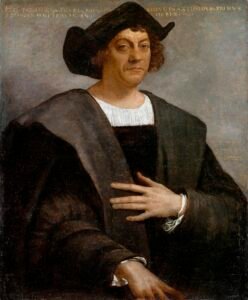
Image: Portrait of Simón Bolívar by Arturo Michelena.jpg — Arturo Michelena, Public domain