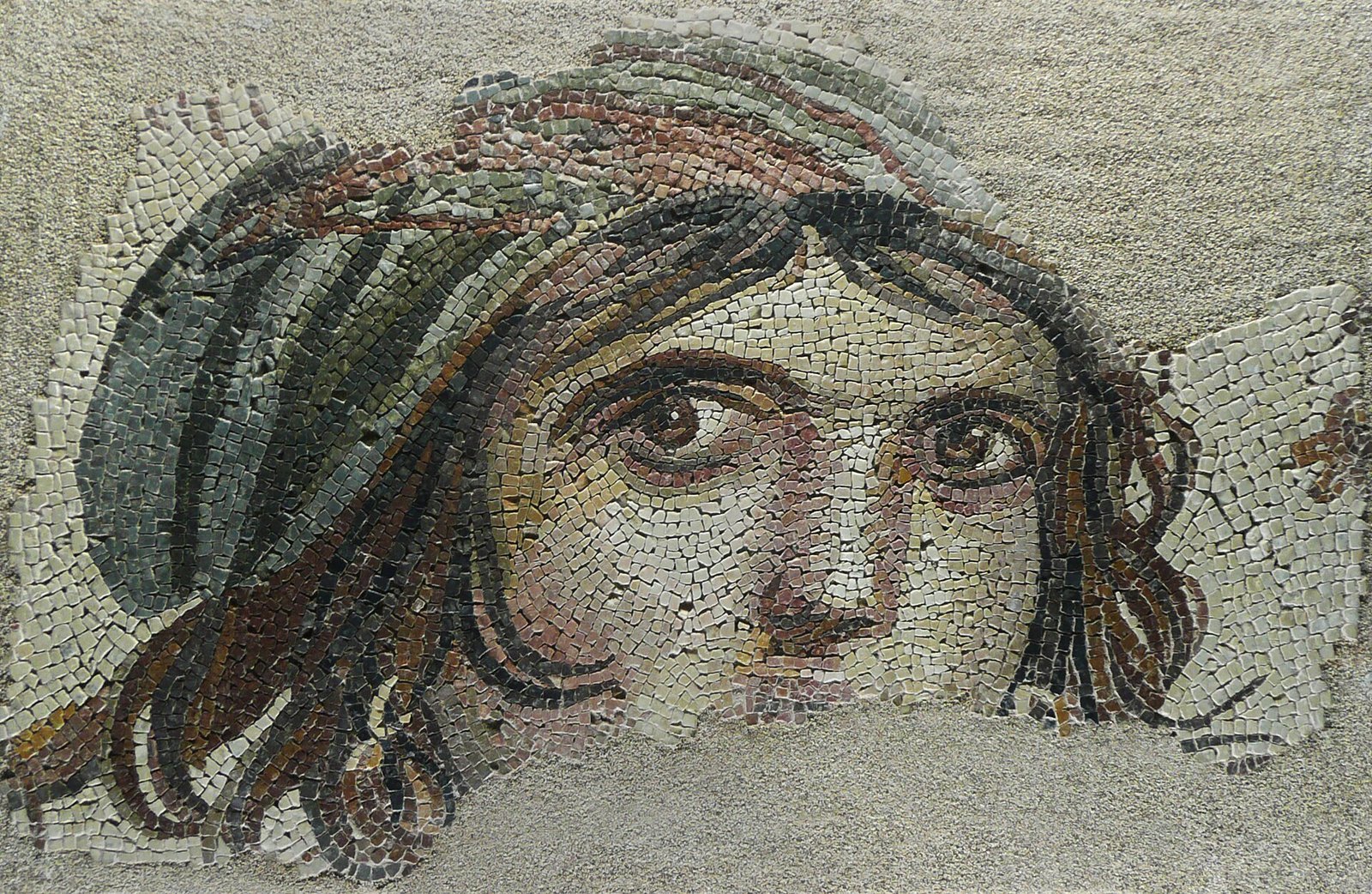
You may know Zeugma from one face. A young woman with large eyes stares out of a Roman mosaic. She is called the Gypsy Girl. But the city around her is the bigger story. It sat at a crossing on the Euphrates, served as a Roman frontier town, and was partly drowned by a dam in 2000.
This guide explains where Zeugma is, who built it, what happened to it, and how you can see its mosaics today.
Where is Zeugma?
Zeugma Ancient City stands on the bank of the Euphrates at Belkıs. Belkıs belongs to Nizip district in Gaziantep province. The excavation site is about 10 kilometres from the centre of Nizip.
The Zeugma mosaics are displayed in a museum in the city of Gaziantep. If you plan a trip, treat these as two stops: the river site and the museum.
What does the name Zeugma mean?
In Ancient Greek, Zeugma means bridge or crossing. The name points to the crossing point on the Euphrates.
Think of the last bridge you crossed on your way to work or school. A town grows around a place like that, because everyone passes through it. Zeugma was that kind of place, on a river instead of a motorway.
Two cities on two banks
Seleucus I Nicator founded Zeugma around 300 BC. In fact he founded two Hellenistic settlements, one on each side of the Euphrates. Together they formed Zeugma.
The western settlement was Seleukeia. It carried the name of its founder, Seleucus. The eastern settlement was Apameia. It was named after Apama, his Persian wife.
This detail matters later. The eastern city, Apameia, is the one the dam water covered completely.
Zeugma and Commagene
Many visitors search “Zeugma Commagene” and wonder how the two fit together. The clearest evidence is religious. Two sanctuaries at Zeugma date to the Commagene period. They reflect a blending of Hellenistic and local religious traditions.
That means worship at Zeugma did not follow a single Greek pattern. Greek and local practices were mixed.
A Roman city on the eastern frontier
From AD 72, Zeugma was one of the main cities on the eastern border of the Roman Empire. A border town needs people, trade and officials.
Most of Zeugma’s Roman houses with mosaic decoration date to the 2nd and 3rd centuries AD. The floors you see in the museum come from this period.
The good years ended in AD 253. The Sasanian king Shapur sacked the city. Zeugma did not vanish, though. English Wikipedia records that it was a bishopric centre in late antiquity.
The Gypsy Girl: how she was found
The Gypsy Girl mosaic came out of the ground in 1998. Rifat Ergeç and his team found it during rescue excavations in the Kelekağzı area of Zeugma.
The discovery was almost accidental. The team was working on a destroyed floor mosaic of about 15 square metres. A broken column lay on top of it. When workers lifted the column, the face appeared.
The ministry dates the mosaic to the 2nd century AD. It notes that the portrait uses a three-quarter view. The face is turned slightly, not shown flat to the viewer. That small turn gives her gaze its force.
Why is she called the Gypsy Girl?
The name is not ancient. Archaeologists gave it after the excavation. It comes from what the figure wears and how she looks: earrings, large eyes and a band tied around her head.
So the name describes her appearance. It tells you nothing about who she was. If you want the Turkish name, search for Çingene Kızı.
Who is she really?
Nobody can answer this for certain. One reading uses the vine tendrils beside her head. Vines belong to Dionysos, so the figure may be a maenad, one of his followers. Other readings suggest Gaia or Alexander the Great.
None of these has settled the question. When a label in the museum names her, treat it as a best reading.
When the Birecik Dam water rose
In 2000 the reservoir of the Birecik Dam covered about 30 percent of Zeugma. It covered all of Apameia on the opposite bank.
The water did not arrive all at once. It first affected Area A in May and June. By the end of October it had affected Area B. Area C stayed above the flood limit of the dam.
Picture a flood that rises 20 centimetres every day outside your own front door. You would have to empty the house at the pace of the water. The archaeologists faced exactly that clock, with a whole city to empty.
The rescue project
A rescue project backed by the Packard Humanities Institute began in 2000. Oxford Archaeology coordinated the excavations. The Centro di Conservazione Archeologica, based in Rome, coordinated the conservation work.
The pace was fast. Less than two weeks after the project began, 120 archaeologists and 20 conservators were ready to work on the site.
Later, Kutalmış Görkay led the Zeugma excavations on behalf of the Ministry of Culture and Tourism, from 2005.
Mosaics that travelled abroad
Some Zeugma pieces left Turkey long before the dam. In 1965, Bowling Green State University in the United States bought 12 mosaic fragments from the art dealer Peter Marks for about 35,000 dollars. Their Zeugma origin was identified only later.
In 2012 the researchers Stephanie Langin-Hooper and Rebecca Molholt showed that the pieces may have come from Zeugma, not from Antioch as people had believed.
In 2018 the 12 fragments came back from the United States. They belong to the border of the mosaic where the Gypsy Girl was found. They are now displayed in the Gaziantep Zeugma Mosaic Museum.
Visiting the Zeugma Mosaic Museum
The museum is in the city of Gaziantep, at Hacıbaba Quarter, Sani Konukoğlu Boulevard No:81. Construction began in 2008. The museum opened to visitors on 9 September 2011.
The layout is simple. Block A shows the Zeugma mosaics. Block B shows floor mosaics from Eastern Roman churches in Gaziantep and its surroundings.
The collection also includes a bronze statue of Ares, the god of war, from the Roman period.
Timeline
- About 300 BC: Seleucus I Nicator founds Seleukeia and Apameia on the two banks of the Euphrates.
- AD 72: Zeugma becomes one of the main cities on the eastern border of the Roman Empire.
- 2nd–3rd centuries AD: Most of Zeugma’s mosaic-decorated Roman houses date to this period.
- AD 253: The Sasanian king Shapur sacks Zeugma.
- 1965: Bowling Green State University buys 12 mosaic fragments, later identified as coming from Zeugma.
- 1998: Rifat Ergeç and his team find the Gypsy Girl mosaic.
- 2000: The Birecik Dam waters cover about 30 percent of Zeugma and all of Apameia.
- 2005: Kutalmış Görkay begins leading the Zeugma excavations.
- 9 September 2011: The Zeugma Mosaic Museum opens in Gaziantep.
- 13 April 2012: The Archaeological Site of Zeugma is submitted to the UNESCO World Heritage Tentative List.
- 2018: The 12 fragments are returned from the United States.
- 3 June 2022: Replicas of the returned pieces are presented at Bowling Green.
Details you won’t find in guidebooks
- A column hid her face. The Gypsy Girl came to light only when workers lifted a broken column from a ruined floor of about 15 square metres.
- The water rose about 20 centimetres a day. That was the pace of the reservoir during the 2000 rescue work.
- The team was large within two weeks. Fewer than 14 days after the Packard-backed project began, 120 archaeologists and 20 conservators were ready on site.
- The fragments cost about 35,000 dollars. Bowling Green State University paid that to Peter Marks for 12 pieces in 1965.
- Replicas stayed behind. Turkey had 12 replicas made under the return agreement. They were presented at a ceremony at Bowling Green on 3 June 2022.
FAQ
Where is Zeugma?
Zeugma lies on the bank of the Euphrates at Belkıs, in Nizip district of Gaziantep province. The site is about 10 kilometres from the centre of Nizip.
Where can I see the Gypsy Girl mosaic today?
It is displayed in the Zeugma Mosaic Museum in the city of Gaziantep, at Sani Konukoğlu Boulevard No:81, Hacıbaba Quarter. The museum opened on 9 September 2011.
How much of Zeugma went under water?
The Birecik Dam reservoir covered about 30 percent of Zeugma in 2000. It also covered all of Apameia, the settlement on the opposite bank.
Who is the Gypsy Girl?
Nobody knows for certain. Vine tendrils beside the head support a reading as a maenad, a follower of Dionysos. Other readings suggest Gaia or Alexander the Great. The popular name comes from the earrings, large eyes and head band.
Is Zeugma a UNESCO World Heritage Site?
Not yet. The Archaeological Site of Zeugma was submitted to the UNESCO World Heritage Tentative List on 13 April 2012.
Sources
- UNESCO World Heritage Centre, Archeological Site of Zeugma whc.unesco.org
- Turkish Wikipedia, Zeugma tr.wikipedia.org
- English Wikipedia, Zeugma (Commagene) en.wikipedia.org
- Roberto Nardi and Kristian Schneider, Site Conservation during the Rescue Excavations zeugma.packhum.org
- Bilkent University, Bilkent Takes Over Research and Conservation at Ancient Zeugma w3.bilkent.edu.tr
- TRT Haber / Anadolu Agency, Çingene Kızı’nın gizemli hikayesi trthaber.com
- GAP Regional Development Administration, Çingene Kızı Mozaiği (Gaia) gap.gov.tr
- Ministry of Culture and Tourism, Zeugma ktb.gov.tr
- Ministry of Culture and Tourism DÖSİMM, Gaziantep dosim.ktb.gov.tr
- Bowling Green State University, BGSU to return ancient mosaics to the Republic of Turkey bgsu.edu
- Ministry of Culture and Tourism, Çingene Kızı’nın ailesi görücüye çıktı basin.ktb.gov.tr
- Bowling Green State University, Back at BGSU: Ancient mosaic tiles return, as replicas bgsu.edu
Image: Antep 1250575b.jpg — Antep_1250575.jpg: Nevit Dilmen (talk)
derivative work: Duro, CC BY-SA 3.0