The Bay of Pigs invasion failed because Cuban aircraft survived the opening attacks, supply ships were disabled, and the expected uprising against Fidel Castro never happened. Poorly chosen terrain and limits on air support compounded those failures, allowing Castro’s forces to defeat the CIA-backed Cuban exile force within about three days in April 1961.
The operation also contained a central tension: Kennedy wanted Castro removed while concealing American involvement. If you follow the decisions from the training camps in Guatemala to the beaches at Playa Girón and Playa Larga, you can see how secrecy, geography and military setbacks combined. The argument over which failure mattered most began almost immediately.
Bay of Pigs invasion summary: what was the plan?
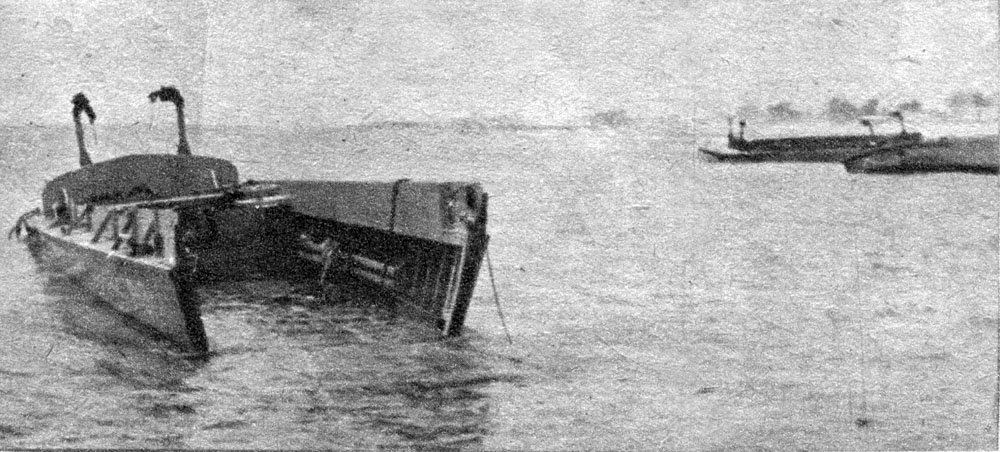
The operation aimed to overthrow Fidel Castro’s government in Cuba. Its core was Brigade 2506, approximately 1,400 Cuban exiles trained and financed by the CIA. This was a US-backed invasion carried out principally by an exile force.
President Dwight D. Eisenhower approved the CIA’s covert action program against Castro on 17 March 1960. That year, the agency established camps in Guatemala to prepare Cuban exiles for a landing and guerrilla warfare. John F. Kennedy inherited the invasion plan and authorized its execution during his presidency.
The political expectations were as important as the military preparations. Washington seriously underestimated Castro’s popular support, according to the congressional report held by the US National Archives. The anticipated internal uprising did not occur. The landing force therefore received none of the mass support on which those expectations depended.
When did the Bay of Pigs invasion happen?
The invasion began on 17 April 1961, and its main fighting lasted through 19 April. Air attacks against Cuban airfields had already taken place on 15 April. Separating those dates helps you understand the failure: the struggle for control of the air began before the troops reached the beaches.
Timeline
- 17 March 1960: Eisenhower approved the CIA’s covert action program against Castro.
- 1960: The CIA trained Cuban exiles in camps in Guatemala.
- 15 April 1961: B-26 aircraft carrying Cuban markings attacked Cuban airfields.
- 16 April 1961: Kennedy postponed the airfield attacks planned for the following morning.
- 17 April 1961: Brigade 2506 landed at Playa Girón and Playa Larga.
- 19 April 1961: The main invasion resistance collapsed, and Cuban forces won.
- 24 April 1961: The White House announced that Kennedy accepted sole responsibility.
- November 1961: Kennedy’s administration turned to the Mongoose program.
- July 1962: Castro and Nikita Khrushchev agreed to place Soviet nuclear missiles in Cuba.
- December 1962: A total of 1,113 invasion prisoners were released in exchange for food and medical supplies.
Where did the Bay of Pigs invasion happen?
The Bay of Pigs lies on Cuba’s southern coast. It is a Caribbean inlet in what is now Matanzas province. The principal landing points were Playa Girón, code-named Blue Beach, and Playa Larga, code-named Red Beach. In Cuba, one name for the fighting is Batalla de Playa Girón.
If you are locating the invasion on a map, those two beaches are the essential reference points. The surrounding swamps and distance from major settlements mattered directly to the operation. They made it harder to encourage a popular uprising or retreat toward areas suitable for guerrilla warfare after a defeat.
The landing site had changed from Trinidad to the Bay of Pigs about a month before the operation. According to the CIA’s account, Kennedy’s concern about concealing the American connection drove that decision. The revised location brought geographical disadvantages to a plan that still depended on political support and the possibility of continued resistance.
Why did the Bay of Pigs invasion fail in the air?
On 15 April, B-26 bombers attacked Cuban airfields while carrying Cuban Air Force markings. The disguise was intended to conceal the operation’s origin. The attack neither destroyed all Cuban air power nor preserved the surprise needed for the approaching landing.
On 16 April, Kennedy decided to postpone the next morning’s planned airfield attacks until the airfield in the landing area had been captured. This left surviving Cuban aircraft available when the invasion force came ashore. The consequences quickly reached beyond the airfields and into the brigade’s supply system.
On 17 April, Cuban aircraft disabled the transport ships Houston and Río Escondido. The brigade lost a substantial share of its ammunition and supplies. Aircraft that had survived the preliminary attacks could therefore strike resources the landing force needed to keep fighting.
There was another failure of coordination on 19 April. According to the CIA, a planned hour of fighter protection from USS Essex proved ineffective because its timing differed by an hour from that of the bombers. Air support depended on aircraft arriving together, and that protection did not work as intended.
Why did the expected uprising never happen?
Washington’s assessment of Castro’s support was seriously wrong. The anticipated internal uprising failed to materialize, leaving the exile force without the political breakthrough expected from its arrival. Training approximately 1,400 men could prepare an armed force; it could not make the forecast of popular rebellion come true.
The location compounded that error. The Bay of Pigs was surrounded by swamps and distant from major settlements. Those conditions made it difficult to turn a beach landing into a wider uprising. They also restricted the option of falling back into guerrilla warfare if the landing failed.
Surprise had already been weakened before April. Castro learned about the training camps in Guatemala through Cuban intelligence as early as October 1960. The 15 April air raids then further reduced the surprise surrounding the approaching invasion. Concealment did not prevent the Cuban government from receiving warning.
How did lost supplies turn setbacks into defeat?
The attacks on Houston and Río Escondido connected the air battle directly to the fighting ashore. The brigade lost much of its ammunition and supply material because Cuban aircraft remained operational. Air power and logistics were therefore linked parts of the same failure.
You can connect this to an everyday problem: a delivery that never arrives leaves the person waiting without the goods they planned to use. At the Bay of Pigs, the missing goods included ammunition and military supplies. Their loss affected a force already facing difficult terrain and an uprising that had not happened.
Castro’s forces defeated the landing force within approximately three days. By 19 April, the main resistance had collapsed. The attempt to overthrow his government ended at the beaches rather than developing into the wider revolt its backers had expected.
Details you won’t find in guidebooks
José Miró Cardona, considered for the provisional presidency if the invasion succeeded, had previously served in Castro’s government. His proposed role shows that the operation included plans for a political replacement as well as a military landing.
The effort to disguise American involvement extended to a staged defection. According to the CIA, an aircraft sent to Miami with a false defector pilot had been given bullet holes to suggest it had escaped from Cuba under fire.
Physical reconnaissance also failed. Coral reefs damaged boats during the landing, although the CIA had initially mistaken the reefs for seaweed. That misidentification added a practical obstacle at the point where men and supplies needed to reach shore.
The CIA’s account records the deaths of four American contract aviators: Pete Ray, Leo Baker, Riley Shamburger and Wade Gray. In December 1962, 1,113 invasion prisoners were released in exchange for food and medical supplies valued at $53 million.
Was Kennedy’s air strike decision the decisive mistake?
The Taylor inquiry identified cancellation of the 17 April air attack as the most serious cause of defeat. Yet CIA official Richard Bissell later acknowledged in his memoirs that the beachhead might have been impossible to hold even if air attacks and resupply had continued. Those assessments assign different weight to the air decision.
The initial Taylor Committee assessment, dated 11 May 1961, reached a broader institutional conclusion. Operation Zapata had exceeded the CIA’s organizational capacity. It should have been transferred to the Defense Department or canceled. That finding placed the problem beyond any single missed attack.
On 24 April, the White House announced that Kennedy accepted sole responsibility. His administration nevertheless continued efforts to remove Castro, turning to a new covert program, Mongoose, in November 1961.
How was the Bay of Pigs connected to Soviet missile deployment in Cuba?
The failed invasion and Mongoose formed part of the background to Cuba’s subsequent security agreement with the Soviet Union. In July 1962, Castro and Nikita Khrushchev secretly agreed to deploy Soviet nuclear missiles in Cuba to deter another invasion.
The Bay of Pigs belongs in that sequence because the attempted overthrow was followed by further covert action and an agreement intended to protect Cuba against another attack.
FAQ
When did the Bay of Pigs invasion happen?
The landing began on 17 April 1961. The main fighting lasted from 17 to 19 April, following air attacks against Cuban airfields on 15 April.
Where did the Bay of Pigs invasion happen?
It happened on Cuba’s southern coast, principally at Playa Girón and Playa Larga. The Bay of Pigs is a Caribbean inlet in what is now Matanzas province.
Sources
- US Department of State — The Bay of Pigs Invasion and its Aftermath history.state.gov
- John F. Kennedy Presidential Library and Museum — The Bay of Pigs jfklibrary.org
- Central Intelligence Agency — The Bay of Pigs Invasion cia.gov
- US Department of State — Foreign Relations of the United States, Cuba 1961–1962: Summary history.state.gov
- National Security Archive, George Washington University — Bay of Pigs Chronology nsarchive2.gwu.edu
- US National Archives — House Select Committee on Assassinations: Findings archives.gov
- University of Houston, Digital History — Cuba and the Bay of Pigs Invasion digitalhistory.uh.edu
- Wikipedia — Bay of Pigs Invasion en.wikipedia.org
- Wikipedia — Bay of Pigs en.wikipedia.org
Image: 2506-landing (1).jpg — Unknown authorUnknown author, Public domain