Who were the Assyrians?
The Assyrians were a Semitic people whose early centre was Aššur. The city stood beside the Tigris in northern Mesopotamia, in present-day northern Iraq. From this homeland, Assyrian rulers built states and, in later periods, an empire extending far beyond their original territory.
Assyrian state history is generally placed between approximately 2025 and 609 BCE. Those dates do not describe one uninterrupted imperial period. The Neo-Assyrian period, traditionally dated to 911–609 BCE, belongs within that longer history. The merchants who traded with Anatolia lived much earlier than the royal libraries associated with Nineveh.
Assyria map: where was it, and where is it today?
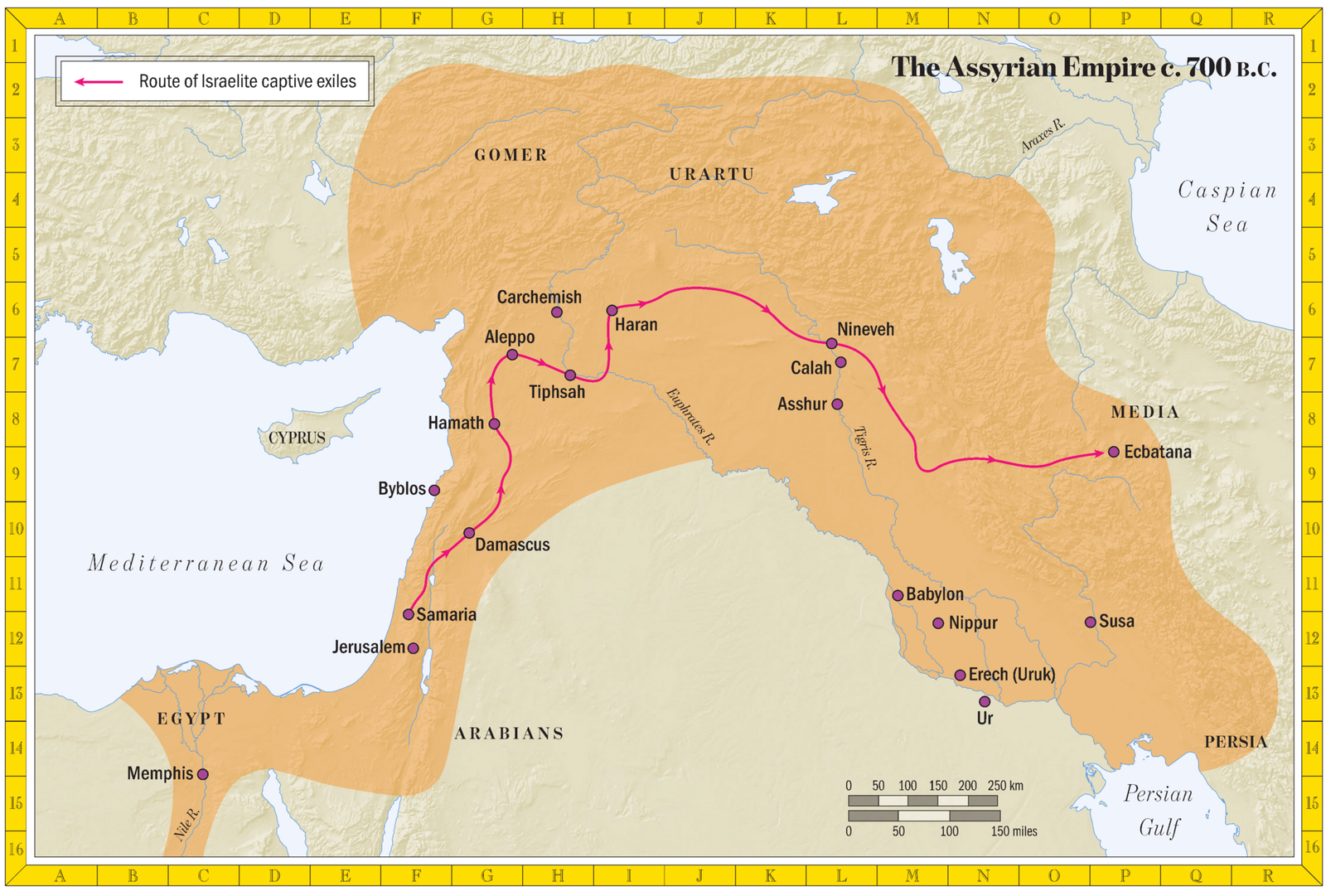
If you look for Assyria on a modern map, start with northern Iraq and the Tigris. That was its core country. At its greatest extent, however, the Neo-Assyrian Empire stretched from parts of present-day Iran to Egypt. Its imperial reach was much larger than its northern Mesopotamian homeland.
Nineveh’s ruins lie in Mosul, on the eastern bank of the Tigris. A different point connects Assyrian history with a journey through Turkey: Kültepe, about 20 kilometres northeast of Kayseri. This was ancient Kanesh, the centre of the Assyrian merchants’ trading network in Anatolia.
Assyria meaning and pronunciation
The name Assyria derives from Aššur. At Aššur, the country, city and chief god shared the same name. The city’s history reaches back into the third millennium BCE. It remained the sacred centre of the god Aššur even after political power moved elsewhere.
Cambridge Dictionary gives the British and American English pronunciation of Assyria as /əˈsɪr.i.ə/. The connection between Assyria and Aššur also helps explain why the city matters throughout the story. Assyrian kings underwent coronation and burial ceremonies there, alongside its continuing religious role.
Assyria’s capitals: from Aššur to Nineveh
Assyria had several political capitals. They included Aššur, Kalhu/Nimrud, Dur-Sharrukin and Nineveh. Aššur retained its sacred importance through these changes. Political capital and religious centre therefore did not always occupy the same city.
Sargon II moved the capital to Dur-Sharrukin in 706 BCE. His son Sennacherib made Nineveh the capital in 705 BCE. When you read about Nineveh as Assyria’s capital, you are looking at one stage in a longer sequence of royal centres. Its later libraries belong to that city’s history as a seat of power.
Trade in Anatolia: merchants, donkeys and clay tablets
During the first quarter of the second millennium BCE, a wide trading network linked Aššur with Anatolia. Private individuals ran this trade through family businesses. Kanesh was its Anatolian centre. The language used by the Assyrian merchants in the Kültepe documents was the Old Assyrian dialect of Akkadian.
Merchants carried tin and textiles into Anatolia with donkey caravans. They received gold and silver in exchange. They also participated in the copper trade within Anatolia. These transactions connected the movement of goods with the family businesses operating between Aššur and Kanesh.
The merchants brought Mesopotamian cuneiform writing into Anatolia. Their surviving documents record debts, commercial agreements, lawsuits and correspondence with relatives in Aššur. The Kültepe submission presented to UNESCO in 2014 recorded 23,500 clay tablets and envelopes recovered from private house archives.
If you keep bills, contracts or family messages, Kültepe offers an everyday connection with this distant world. Its tablets preserve obligations, agreements and correspondence in clay. These archives document the business and family concerns of private merchants, alongside the history more often told through Assyrian kings and capitals.
Nineveh and Ashurbanipal’s libraries
In the seventh century BCE, Ashurbanipal established several royal libraries at Nineveh. Their scope covered almost every field of knowledge. The familiar name “Library of Ashurbanipal” therefore refers to collections associated with more than one royal library in the city.
Excavations at Kuyunjik, the mound containing Nineveh’s principal palaces and temples, recovered approximately 31,000 tablets and tablet fragments. The distinction matters: this figure counts both tablets and fragments. It should not be read as a total of complete works or intact clay tablets.
Some tablets brought from different parts of Mesopotamia were copied again for Ashurbanipal’s collections. Closing notes identified the king’s ownership. The surviving texts include the Epic of Gilgamesh and the Babylonian creation account Enūma Eliš. Royal collecting preserved these works alongside the libraries’ wider range of knowledge.
Kültepe and Nineveh reveal different settings for written records. At Kültepe, private household archives held commercial and family documents. At Nineveh, royal collections gathered texts from across Mesopotamia. Both settings form part of Assyrian history, but their purposes and periods differed.
Details you won’t find in guidebooks
At Kültepe, merchants organised their tablets in clay containers, wooden chests, reed baskets or sacks. The documents belonged to household archives with practical storage arrangements. Clay tablets were therefore part of the equipment of a working business, alongside the containers used to keep them together.
The fire at Kültepe caught some letters inside their clay envelopes. Some had not been sent. Others had not been opened by their recipients. The surviving archive includes correspondence interrupted before its journey or reading was complete.
One caravan account tablet at the Metropolitan Museum of Art records a total debt of 1 mina 50 shekels. Its individual entries actually add up to 1 mina 48⅚ shekels. The discrepancy survives within a document concerned with the practical accounting of caravan trade.
While male merchants handled transport and sales at Kanesh, wives remaining in Aššur could manage textile production, purchases and the business there. The family enterprise operated across both locations. Its work included producing and buying goods as well as arranging their transport and sale.
Libraries also existed in private homes. At Aššur, the library found in the house of the Baba-šumu-ibni family contained 1,242 tablets. Nineveh’s royal collections were thus one setting for keeping texts, while this substantial household collection provides another.
Assyria in the Bible: what country is it today?
For the Assyria described in the Bible, the geographical starting point is northern Iraq. Its imperial territory extended much farther at its height. The ancient core country should therefore be distinguished from the broader areas reached by Assyrian rulers and armies.
The Sennacherib Prism in the Israel Museum dates to 691 BCE. It records the campaign in Judah of 701 BCE. That campaign also appears in the Old Testament in 2 Kings 18–19, Isaiah 36–37 and 2 Chronicles 32. The prism provides an Assyrian royal account of a campaign also described in those biblical passages.
Timeline
- Third millennium BCE: Early history of Aššur beside the Tigris.
- Approximately 2025 BCE: Conventional approximate beginning of Assyrian state history.
- First quarter of the second millennium BCE: Development of the trading network linking Aššur and Anatolia through Kanesh.
- 911 BCE: Traditional beginning of the Neo-Assyrian period.
- 706 BCE: Sargon II moves the capital to Dur-Sharrukin.
- 705 BCE: Sennacherib makes Nineveh the capital.
- 701 BCE: Sennacherib campaigns in Judah.
- Seventh century BCE: Ashurbanipal establishes several royal libraries at Nineveh.
- 612 BCE: Nineveh falls.
- 609 BCE: The resistance of the last Assyrian ruler, Ashur-uballit II, is defeated around Harran, ending the Assyrian state.
Assyria vs Syria, modern communities and the Assyrian flag
Assyria and Syria both derive their names from Aššur. Ancient Assyria’s core territory in northern Iraq was nevertheless a different geographical unit from the modern Syrian state. The relationship between the names does not make their territories identical.
Communities known today as Assyrians or Syriacs have a historical homeland across parts of Iraq, Turkey, Syria and Iran in northern Mesopotamia. They speak varieties of Neo-Aramaic. This modern linguistic setting differs from the Old Assyrian Akkadian documented among the merchants at Kültepe.
The Assyrian flag used today is a modern ethnic flag. George Bit Atanous designed it in 1968. Its date places it within modern Assyrian identity, well after the ancient state whose final resistance ended in 609 BCE.
FAQ
Where is Assyria today?
Ancient Assyria’s core territory lay in what is now northern Iraq. At its greatest extent, the Neo-Assyrian Empire reached from parts of present-day Iran to Egypt.
What was the capital of Assyria?
Assyria had several political capitals, including Aššur, Kalhu/Nimrud, Dur-Sharrukin and Nineveh. Sennacherib made Nineveh the capital in 705 BCE.
What connects the Assyrians with Turkey?
Assyrian merchants operated an Anatolian trading network centred on Kanesh, now Kültepe near Kayseri. They brought cuneiform writing into Anatolia and left extensive private archives.
What was in Ashurbanipal’s library?
Ashurbanipal established several royal libraries at Nineveh with texts covering almost every field of knowledge. Works preserved in the collections include the Epic of Gilgamesh and Enūma Eliš.
Sources
- Vikipedi — Asurlular tr.wikipedia.org
- UNESCO — Archaeological Site of Kültepe-Kanesh whc.unesco.org
- Wikipedia — Assyria en.wikipedia.org
- UNESCO — Ashur (Qal’at Sherqat) whc.unesco.org
- Wikipedia — Nineveh en.wikipedia.org
- The Metropolitan Museum of Art — Cuneiform tablet: caravan account metmuseum.org
- Yale School of Management — Finance Practices in Mesopotamia som.yale.edu
- Yale University — Cities and Libraries ccp.yale.edu
- The Israel Museum — The Assyrian Campaign in Judah imj.org.il
- Cambridge Dictionary — Assyria pronunciation dictionary.cambridge.org
Image: Biblica Open Bible Map 09 The Assyrian Empire c700BC.png — Biblica, Inc, and Biblica Open Study Bible Resources, CC BY-SA 4.0