Who was Selim III, and when did he reign?
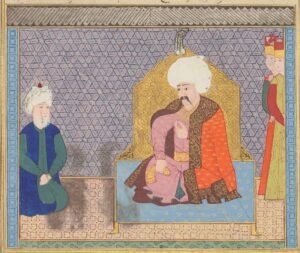
Selim III was the 28th Ottoman sultan. He ruled from 7 April 1789 until his overthrow on 29 May 1807. His reign is closely associated with Nizam-i Cedid, a reform program that covered military organization and civilian institutions. Its measures included a new army, a separate treasury, technical education, and permanent diplomatic representation.
He was born at Topkapı Palace in Istanbul on 24 December 1761. His father was Mustafa III, and his mother was Mihrişah Sultan. Yet he did not inherit the throne directly from his father. He became sultan after the death of his uncle, Abdülhamid I, in 1789.
If you visit Topkapı Palace, Selim’s life connects the site with both birth and confinement. He was born there and was held there after losing his throne. His burial place lies elsewhere in Istanbul, in the tomb at Laleli Mosque beside his father.
What condition was the Ottoman Empire in when Selim III became sultan?
The Ottoman Empire was already at war with Russia and Austria when Selim took power. His early reign therefore involved both military conflict and peace settlements. The Treaty of Ziştovi, signed with Austria on 4 August 1791, was followed by a treaty with Russia the next year.
The Treaty of Yaş was signed on 9 January 1792. It reaffirmed recognition of Crimea as Russian territory and established the Dniester River as the border. These settlements belong to the opening years of Selim’s reign, before the creation of his new military organization in 1793.
What were Selim III’s Nizam-i Cedid reforms?
Nizam-i Cedid names the renewal period of 1792–1807. Its scope extended beyond the new troops most often associated with it. The program also covered the reorganization of civilian institutions. To prepare reforms, Selim requested written proposals from statesmen on how institutions could be improved.
These proposals were called lâyiha. Their role gives you a concrete starting point for understanding his approach: institutional change involved written recommendations as well as military drill. The army, treasury, and technical school were distinct parts of the broader reform period.
Established in 1793, the Nizam-i Cedid army used European-style training and drill. Its soldiers began their first regular exercises at Levend Çiftliği in Istanbul under the designation Bostancı Tüfenkçisi. The reform therefore had a specific training ground and an identifiable military organization.
A separate financial structure accompanied the troops. In March 1793, the İrad-i Cedid Treasury and a separate treasury administration were created to cover the new army’s expenses. The army’s training arrangements and its funding were both addressed within the reform program.
The everyday-life connection is budgeting. If you set aside money for a recurring expense, you can recognize the basic idea behind a dedicated fund. Selim’s İrad-i Cedid Treasury had a defined purpose: paying for the new army. Here, military reform also meant organizing how its costs would be met.
Technical education received attention too. The Mühendishâne-i Berrî-i Hümâyun opened in 1795, expanding technical training for the land army. A printing press began operating within the engineering school in 1797. Selim personally took an interest in the books to be printed there.
How did Selim III change Ottoman diplomacy?
The first permanent Ottoman embassy opened in London in 1793. Yusuf Agâh Efendi received the appointment. This diplomatic initiative took place in the same year as the creation of the Nizam-i Cedid army and its dedicated treasury.
Permanent representation abroad was thus part of the institutional changes made during Selim’s reign. The London embassy provides a useful counterpart to Levend Çiftliği and the engineering school. Together, these institutions show the range of changes pursued in diplomacy, military training, and technical education.
What happened between Selim III and Napoleon?
In 1798, Napoleon invaded Egypt, which was under Ottoman rule. Selim’s government responded by declaring war on France. The direct connection between Selim and Napoleon therefore involves an invasion of Ottoman territory and the resulting Ottoman-French war.
If you associate Selim chiefly with European-style military training, the Egyptian invasion adds another part of his reign. His government pursued that training while also responding to French military action. Reform and foreign conflict both belonged to his years on the throne.
Why was Selim III overthrown?
Resistance became visible when the government tried to extend the Nizam-i Cedid organization into Rumelia. During the Edirne Incident of 1806, local notables, known as âyân, mounted armed opposition. The effort to expand the organization encountered resistance before the uprising that ended Selim’s reign.
The Kabakçı Mustafa uprising began on 25 May 1807 with a revolt by the Bosphorus yamak troops. Janissaries and opponents of reform supported the movement. On 29 May, Selim was deposed, and Nizam-i Cedid was abolished.
The sequence matters: armed resistance to expansion appeared in 1806, followed by the uprising and deposition in 1807. The outcome affected both the ruler and his program. Selim lost the throne on the same date that the reform organization was abolished.
Who was Selim III’s successor?
Mustafa IV became sultan on 29 May 1807. He was the son of Abdülhamid I, the uncle whom Selim had succeeded in 1789. Selim’s immediate successor therefore came from his uncle’s branch of the family.
Deposition did not immediately bring Selim’s death. He remained confined at Topkapı Palace for approximately 14 months. His reign ended in May 1807, while his killing occurred in July 1808. Keeping those dates separate makes the final events of his life easier to follow.
What was Selim III’s cause of death?
Selim was killed on Mustafa IV’s orders on 28 July 1808. That day, Alemdar Mustafa Paşa intervened at the palace in an attempt to restore him to the throne. The attempt at restoration and Selim’s killing belong to the same palace crisis.
Accounts differ over the precise manner of his death. One tradition describes strangulation with a cord. The description in Cevdet Tarihi records a bloodied body bearing marks of blows, indicating a violent struggle.
Selim was buried on 29 July 1808 in the tomb at Laleli Mosque in Istanbul. His grave was placed beside that of his father, Mustafa III. For a traveler following his life through the city, Laleli is the burial site connected with his death.
Details you won’t find in guidebooks
Selim’s birth in 1761 prompted a week of celebrations in Istanbul. Long before his accession in 1789, his arrival had been marked by festivities in the city where he would later rule.
He wrote poetry under the pen name İlhâmî. He also studied the tambur with Tanbûrî İzak. Poetry and musical instruction form part of his biography alongside the written reform proposals and military institutions associated with his reign.
Selim composed a sûzidilârâ Mevlevi ayin. It was performed in his presence at the reopening of the Galata Mevlevîhânesi, whose repair he had supported. This connects a named composition with a specific institution and an occasion attended by the sultan.
His personal attention also extended to printing. He took an interest in the books intended for the press established within the engineering school in 1797. Technical education and book production therefore meet in a concrete detail of his reform activity.
Timeline
- 24 December 1761: Selim was born in Istanbul.
- 7 April 1789: He succeeded Abdülhamid I as Ottoman sultan.
- 4 August 1791: The Treaty of Ziştovi was signed with Austria.
- 9 January 1792: The Treaty of Yaş was signed with Russia.
- 1793: The Nizam-i Cedid army and İrad-i Cedid Treasury were established. The first permanent Ottoman embassy opened in London.
- 1795: The Mühendishâne-i Berrî-i Hümâyun opened.
- 1797: The engineering school’s printing press began operating.
- 1798: Napoleon’s invasion of Egypt led to war with France.
- 1806: Expansion into Rumelia encountered armed resistance during the Edirne Incident.
- 25 May 1807: The Kabakçı Mustafa uprising began.
- 29 May 1807: Selim was deposed. Mustafa IV succeeded him.
- 28 July 1808: Selim was killed at the palace.
- 29 July 1808: He was buried beside his father at Laleli Mosque.
FAQ
Who succeeded Selim III?
Mustafa IV succeeded Selim III on 29 May 1807. He was the son of Selim’s uncle, Abdülhamid I.
What was Selim III’s cause of death?
Selim III was killed on Mustafa IV’s orders on 28 July 1808. Accounts differ over the exact method, with one describing strangulation and another recording injuries consistent with a violent struggle.
Did Selim III have children?
Selim III had no children.
Who were Selim III’s consorts?
His consorts included Nefizar Kadın and Afitab Kadın. Afitab became chief consort after Nefizar died in 1792.
Sources
- Vikipedi — III. Selim tr.wikipedia.org
- Wikipedia — Selim III en.wikipedia.org
- TDV İslâm Ansiklopedisi — Selim III islamansiklopedisi.org.tr
- TDV İslâm Ansiklopedisi — Nizâm-ı Cedîd islamansiklopedisi.org.tr
- Türk Dünyası Ansiklopedisi — III. Selim turkdunyasiansiklopedisi.gov.tr
- Republic of Türkiye Ministry of Foreign Affairs — Ministry History mfa.gov.tr
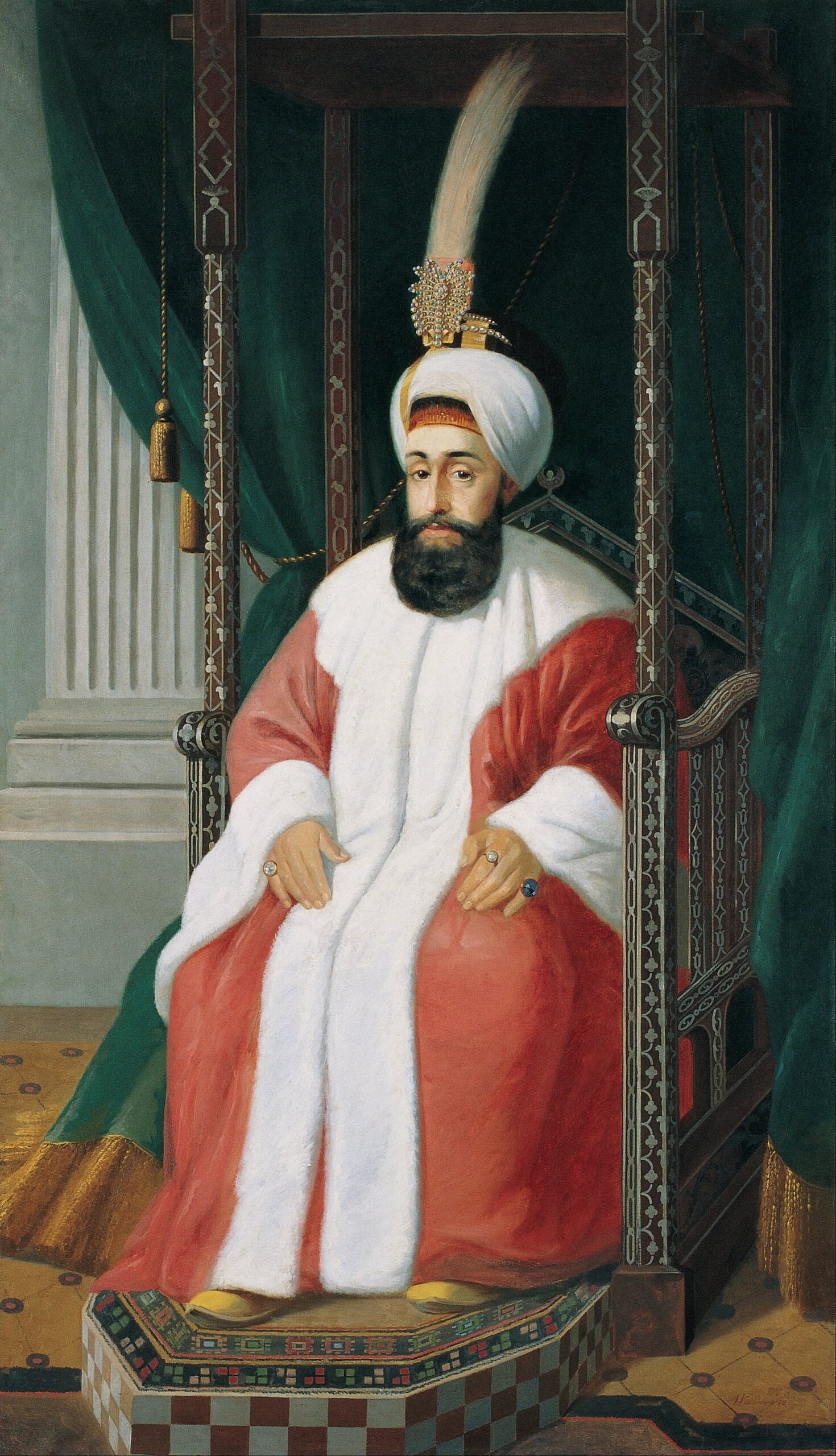
Image: Joseph Warnia-Zarzecki – Sultan Selim III – Google Art Project.jpg — Joseph Warnia-Zarzecki 1850 (French) Born in Nantes, France, Public domain