Shah means “king” in Persian and comes from the Old Persian word xšāyaθiya. Shahanshah means “king of kings,” corresponding to Old Persian xšāyaθiya xšāyaθiyānām and Middle Persian šāhān šāh. Both titles belong to the Iranian tradition of kingship.
How did a word meaning “king” connect royal inscriptions, changing coin legends, and court poetry? If you follow shah from Darius I to Sasanian rulers and later Islamic courts, you can trace both the title and the ideas attached to it. Its related forms also lead to Armenian kings, Afghan rulers, and Ottoman and Mughal princes.
What is the Old Persian origin of the word shah?
The origin of shah is Old Persian xšāyaθiya, meaning “king.” Its root is the verb xšāy-, meaning “to rule” or “to reign.” The word therefore connects the ruler’s title directly with the act of ruling.
The Old Persian equivalents of shah and shahanshah are documented in Achaemenid royal tradition under Darius I. Their history reaches back to that setting, long before their later appearance in Islamic court poetry or the titles of Afghan rulers.
Darius also provides a concrete place to connect with this vocabulary: Persepolis. According to UNESCO’s dating, he founded Persepolis in 518 BCE and began building the Achaemenid royal palace complex there. The site places the early history of these titles within an identifiable royal building project.
The linguistic distinction matters when you read about different periods. Xšāyaθiya is the Old Persian word behind shah. The longer Old Persian expression, xšāyaθiya xšāyaθiyānām, corresponds to the Middle Persian title šāhān šāh. These forms connect the familiar titles with earlier Iranian royal language.
How do the titles shah and shahanshah differ?
Shah means “king.” Shahanshah means “king of kings.” The second title expresses a relationship between the ruler and other kings. Translating both simply as “king” loses that distinction.
The Sasanian formula makes the difference especially clear. Between approximately 224 and 439 CE, the core royal title was šāhān šāh Ērān, meaning “king of kings of the Iranians.” Here, “of the Iranians” specifies the community named in the title.
Shapur I expanded the wording used by Ardashir I. He added ud An-ērān, extending the title to “king of kings of the Iranians and non-Iranians.” A short addition therefore changed the stated scope of royal authority.
You can use the translations as a practical reading aid: shah is “king,” and shahanshah is “king of kings.” Keep the additional words when a full title appears. “Of the Iranians” and “of the Iranians and non-Iranians” convey different claims.
How were Sasanian royal titles expressed on coins?
Early Sasanian coins and inscriptions used an extended formula: mazdēsn bay [the ruler’s name] šāhān šāh Ērān kē čihr az yazdān. It combined Mazda worship, the king-of-kings title, and the ruler’s claim to divine descent. The royal name formed part of a larger statement about kingship.
The title on a coin could therefore communicate more than the identity of its issuer. The early formula expressed religious allegiance and divine origin alongside royal rank. Reading only the ruler’s name leaves out much of what the inscription says.
Sasanian coin wording also changed. Under Yazdegerd II, šāhān šāh Ērān disappeared from coin titles and kay took its place. That title evoked legendary and heroic kingship. The royal vocabulary had shifted even though the objects remained royal coins.
Later inscriptions placed different expressions beside the ruler’s name. From Khosrow I’s sixth regnal year, his coins used abzōn, meaning “increase.” Under Khosrow II, the name was followed by xwarrah abzūd, meaning “royal glory has increased.” These expressions made increase and royal glory explicit parts of the coin text.
How did Iranian traditions of kingship continue under Islam?
Iranian royal traditions continued through translation, poetry, political language, and coins. In the eighth century, Ibn al-Muqaffa adapted the Middle Persian Xwadāy-nāmag into Arabic. The work concerned Sasanian rulers. His Arabic adaptation has not survived.
Ferdowsi gave pre-Islamic Iranian royal narratives another literary form in the Shahnameh. He reworked oral and written accounts into verse. Royal memory thus continued through stories about earlier Iranian kings as well as through the use of royal titles.
In the eleventh century, the Seljuk vizier Nizam al-Mulk used the older Iranian concept of farr in the expression farr-e elāhi, meaning “divine gift.” This carried an established idea of royal legitimacy into Islamic political language.
Court poetry also preserved shahanshah. Poets at the Ghaznavid court praised Sultan Mahmud, who ruled from 998 to 1030, with that title. In this setting, “king of kings” was part of the language used to celebrate a ruler.
Coins offer another example. During the rule of the Buyid ruler Rukn al-Dawla Hasan, from 947 to 977, their reverses carried a Middle Persian wish that the shahanshah’s glory should increase. Iranian royal language therefore appeared on coins as well as in literary works.
Which political traditions outside Iran used the title shah?
Afghan rulers used shah until Afghanistan’s monarchy was abolished in 1973. Armenian Bagratuni rulers used shahanshah, meaning “king of kings,” beginning with Ashot II. These examples show the titles in royal traditions beyond Iran.
Ottoman and Mughal courts used the related title shahzade for princes. It derives from Persian šāhzāda, meaning “descendant of the shah.” For a traveler reading about an Ottoman prince, the everyday act of decoding an unfamiliar word becomes easier once shah is recognizable inside şehzade.
Eastern Iranian royal traditions also used “king of kings” in different languages. First-century CE Saka coins carried the Greek form ΒΑΣΙΛΕΩΣ ΒΑΣΙΛΕΩΝ. Under the Kushans, Bactrian written in the Greek alphabet replaced Greek in coin inscriptions. The Kushan title Šaonano Šao likewise meant “king of kings.”
Kushanshah belonged to rulers in parts of eastern Iran, Afghanistan, and Gandhara between the third-century Sasanian conquests and the Hunnic invasions of the fourth and fifth centuries. Its history requires care: accounts of Ardashir I’s campaigns may indicate formal submission in Bactria rather than establish a definitive annexation.
Details you won’t find in guidebooks
The earliest securely dated example of Kushanshah appears in the Paikuli inscription of the Sasanian ruler Narseh, around 293 CE. The original Kushan dynasty used “Kushan” and “king of kings,” but did not combine them into the single title Kushanshah. Similar-looking vocabulary can therefore belong to different title practices.
Khosrow I’s coin inscriptions offer another easily missed detail. From his sixth regnal year, his name appeared with abzōn, “increase,” rather than with shahanshah or kay. Recognizing this small word helps you follow a change that a list of royal names would conceal.
The language on Rukn al-Dawla Hasan’s coins is also significant. Their wish for the shahanshah’s increasing glory appeared in Middle Persian during his 947–977 rule. The continuity involved the wording and language of kingship, alongside the continued use of a royal title.
Timeline
- 518 BCE: Darius I founded Persepolis and began construction of the Achaemenid royal palace complex there.
- Approximately 224–439 CE: “King of kings of the Iranians” formed the core of Sasanian royal titulature.
- Around 293 CE: Kushanshah was documented in Narseh’s Paikuli inscription.
- Under Yazdegerd II: Kay replaced šāhān šāh Ērān in Sasanian coin titles.
- Eighth century: Ibn al-Muqaffa carried Sasanian royal narratives into Arabic.
- 947–977: Rukn al-Dawla Hasan’s coins used a Middle Persian wish for the shahanshah’s glory.
- 998–1030: Court poets praised Mahmud of Ghazni as shahanshah.
- 1973: Afghanistan abolished its monarchy.
- 1979: Iran’s monarchy ended with the Revolution. Mohammad Reza Pahlavi was its last shah.
FAQ
What does shah mean in English?
Shah means king in Persian. It comes from Old Persian xšāyaθiya, whose root verb xšāy- means to rule or reign.
What is the difference between shah and shahanshah?
Shah means king, while shahanshah means king of kings. The Middle Persian form šāhān šāh corresponds to Old Persian xšāyaθiya xšāyaθiyānām.
Did Sasanian coins always call the ruler shahanshah?
No. Under Yazdegerd II, kay replaced šāhān šāh Ērān in coin titles. Later coin inscriptions under Khosrow I and Khosrow II used expressions concerning increase and royal glory.
Was shah used outside Iran?
Yes. Afghan rulers used shah until the monarchy ended in 1973. Armenian Bagratuni rulers used shahanshah, while Ottoman and Mughal courts used the related title shahzade for princes.
Who was the last shah of Iran?
Mohammad Reza Pahlavi was Iran’s last shah. The Iranian monarchy ended with the Revolution of 1979.
Sources
- Wikipedia — Shah en.wikipedia.org
- Encyclopaedia Iranica — Kingship VI: The Persian Concept of Kingship in the Islamic Period iranicaonline.org
- UNESCO World Heritage Centre — Persepolis whc.unesco.org
- Encyclopaedia Iranica — Kingship IV: In Sasanian Iran iranicaonline.org
- Encyclopaedia Iranica — Kushanshahs I: History iranicaonline.org
- Encyclopaedia Iranica — Kingship V: In Eastern Iranian Lands iranicaonline.org
- Vikipedi — Şah tr.wikipedia.org
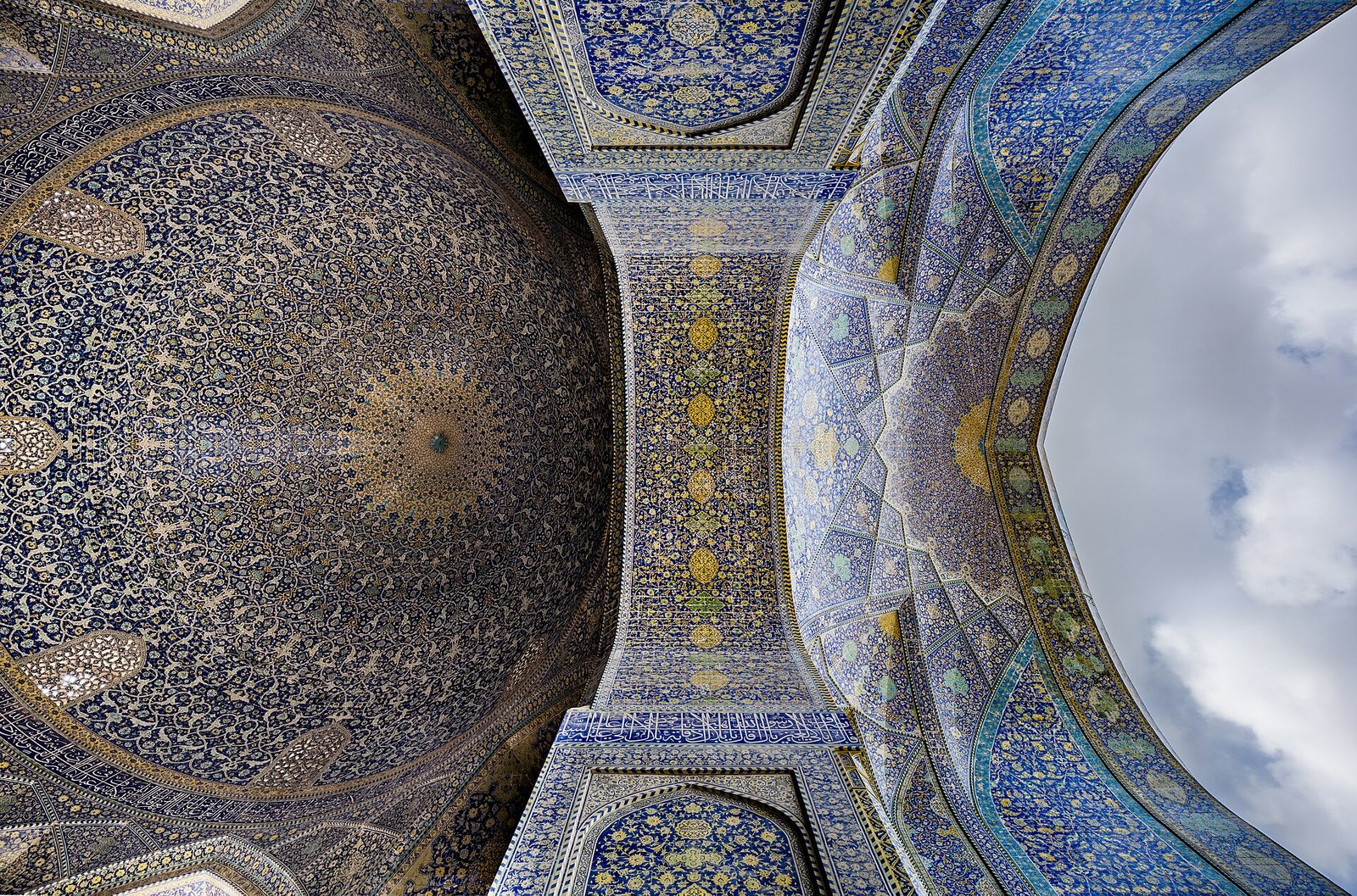
Image: Shah Mosque (Isfahan).jpg — Amir Pashaei, CC BY-SA 4.0