Ottoman Interregnum meaning: what the term says
The Ottoman Interregnum is known in Turkish as Fetret Devri. Fetret is an Arabic-origin word. It means the span of time between two events. Ottoman history also calls this period Fasıla-i Saltanat, roughly “the gap in the sultanate”.
The term covers the years 1402-1413. During them, the sons of Sultan Bayezid I, called Yıldırım (“Thunderbolt”), fought each other for the throne. The war is often described as lasting 11 years. By the exact dates it ran from 28 July 1402 to 5 July 1413, about 10 years and 11 months.
The Ottoman Interregnum period: how it began
The trigger was the Battle of Ankara in 1402. Bayezid faced Timur on the Çubuk Plain near Ankara and lost. Timur took him prisoner.
The capture shook the central authority of the Ottoman ruler. That opened the way for the princes to fight over power.
There was also a structural problem. According to the historian Halil İnalcık, no binding law in 1402 regulated succession. Every son of a ruler was seen as having a claim to the throne. Think of a family business whose founder is taken away without naming an heir. Every child believes they inherit the shop. That is roughly where the Ottomans stood.
The four brothers
Four sons of Bayezid stood at the center of the struggle:
- Süleyman Çelebi ruled Rumeli (the Ottoman lands in Europe) from Edirne from 1402 to 1411.
- İsa Çelebi declared himself ruler in Bursa in 1402.
- Mehmed Çelebi held Tokat and Amasya in Anatolia as his base.
- Musa Çelebi ruled Rumeli from Edirne from 1411 to 1413.
Bursa changed hands again and again over the course of the war. Mehmed’s firm base stayed in the Tokat and Amasya region.
Ottoman Interregnum map: who held which land
You can picture the map in two halves.
In Europe, Edirne was the capital of the Rumeli lands. Süleyman held it first. Musa took it in 1411.
In Anatolia, Bursa was the prize. İsa took it in late 1402 with Timur’s backing. Mehmed held the north-central region around Tokat and Amasya.
Anatolia was also splitting apart. Under Timur’s protection, the Candaroğulları, Karaman, Germiyan, Saruhan and Aydın rulers regained strength. This broke up Ottoman unity in the region.
Byzantium, Wallachia and Serbia also took part through alliances with the princes. They are covered below.
Ottoman Interregnum battles, one by one
Ulubat, 1403
İsa Çelebi had settled south of the Marmara Sea by November 1402. He announced his rule in Bursa with Timur’s support. In spring 1403, Mehmed beat him in the struggle at Ulubat and took Bursa and İzmit.
İsa’s end is unclear. The Spanish envoy Clavijo wrote that İsa was no longer alive by September 1403. Sources disagree on who killed him. One account blames Mehmed’s men. Enverî and İbn Hacer say Süleyman had him killed.
Bursa, 1404
In March 1404, Süleyman took Bursa. This gave him the upper hand over Mehmed in Anatolia.
Yanbolu, 1410
Musa Çelebi came into the story as Mehmed’s candidate against Süleyman. He sailed from Sinop to Wallachia, where Voivode Mircea helped him. On 13 February 1410, Musa defeated Süleyman’s Rumeli governor at Yanbolu.
Kosmidion, 1410
Süleyman hit back. On 15 June 1410, he defeated Musa at Kosmidion near Istanbul, in what is now the Hasköy area.
Edirne, 1411
The tide turned again. On 17 February 1411, Musa proclaimed his rule in Edirne. Süleyman tried to flee to Istanbul and was killed on the way.
Istanbul, autumn 1411
Musa besieged Istanbul in the autumn of 1411. He could not take the city.
Çamurlu, 1413
For the final fight, Mehmed gained the support of the Serbian Despot Stefan Lazarević. On 5 July 1413, Mehmed won the Battle of Çamurlu. That victory ended the Interregnum and reunited Ottoman rule.
Timeline
- 28 July 1402: Bayezid loses at Ankara and is captured. The Interregnum begins.
- Spring 1403: Mehmed defeats İsa at Ulubat and takes Bursa.
- 1403: Süleyman’s treaty hands Thessaloniki (Selânik) to Byzantium.
- September 1403: According to Clavijo, İsa is no longer alive.
- March 1404: Süleyman takes Bursa.
- 13 February 1410: Musa defeats Süleyman’s forces at Yanbolu.
- 15 June 1410: Süleyman defeats Musa at Kosmidion.
- 17 February 1411: Musa declares his rule in Edirne. Süleyman is killed.
- Autumn 1411: Musa besieges Istanbul without success.
- 5 July 1413: Mehmed wins at Çamurlu. The Interregnum ends.
- 1414: The Edirne Old Mosque, begun by Süleyman, is finished under Mehmed.
Foreign powers in the war
The brothers looked abroad for help.
In the 1403 treaty, Süleyman gave Thessaloniki and the lands around it to Byzantium. He also lifted Byzantium’s duty to pay tribute to the Ottomans.
Musa found his ally in Wallachia, where Mircea backed him. Mehmed won Serbia’s support in the last fight.
Details you won’t find in guidebooks
- A treaty with strings. In the 1403 agreement, Süleyman also agreed to lift a ban on grain exports. He promised not to move his fleet through the Dardanelles without the permission of the Western alliance.
- Hostages from his own family. To protect his position in Anatolia, Süleyman left his younger brother Kasım and his sister Fatma with the Byzantine emperor.
- A famous scholar as judge. After Musa took power in Rumeli, he appointed Şeyh Bedreddin as kazasker, a senior military judge.
- Coins tell the rank. Mehmed’s coins use the title sultan. Süleyman’s use emir. Musa’s carry the name Musa bin Bayezid. No coin of İsa has survived.
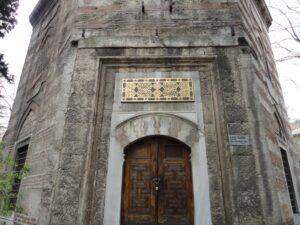
- A mosque built across the war. Emir Süleyman began the Old Mosque (Eski Cami) in Edirne in 1403. The building was completed in 1414, under Çelebi Mehmed, the winner of the war.
If you visit Edirne, the Old Mosque is a place where you can stand inside a building that was started by one brother and finished by another.
Was Süleyman a sultan?
Some Western sources call Süleyman Çelebi “Süleyman I”. Modern scholarship does not count him among the Ottoman sultans.
Questions people ask that this history does not cover
This article deals with the succession war itself. It does not cover the empire’s legal system or the question of whether the state was secular. One legal point is clear from the period, though: in 1402 there was no binding succession law, and that gap fed the war.
FAQ
How long did the Ottoman Interregnum last?
It is usually called an 11-year period. By the dates, it ran from 28 July 1402 to 5 July 1413, about 10 years and 11 months.
Who won the Ottoman Interregnum?
Mehmed Çelebi won. His victory at the Battle of Çamurlu on 5 July 1413 ended the war and reunited Ottoman rule.
Is Süleyman Çelebi counted as an Ottoman sultan?
No. Some Western sources call him Süleyman I, but modern scholarship does not count him among the Ottoman sultans.
Which brother’s coins have not survived?
No coin of İsa Çelebi has survived. Mehmed’s coins use the title sultan, Süleyman’s use emir, and Musa’s carry the name Musa bin Bayezid.
Can you still see something from this period in Edirne?
Yes. The Old Mosque (Eski Cami) in Edirne was begun by Emir Süleyman in 1403 and finished in 1414 under Mehmed.
Sources
- Vikipedi — Fetret Devri tr.wikipedia.org
- Wikipedia — Ottoman Interregnum en.wikipedia.org
- TDV İslâm Ansiklopedisi — Ankara Savaşı islamansiklopedisi.org.tr
- TDV İslâm Ansiklopedisi — Mehmed I islamansiklopedisi.org.tr
- TDV İslâm Ansiklopedisi — Îsâ Çelebi islamansiklopedisi.org.tr
- TDV İslâm Ansiklopedisi — Süleyman Çelebi, Emîr islamansiklopedisi.org.tr
- TDV İslâm Ansiklopedisi — Mûsâ Çelebi islamansiklopedisi.org.tr
- Kültür ve Turizm Bakanlığı — Eski Cami kulturportali.gov.tr
Image: Ottoman Interregnum in 1405.png — Joyfulmapper, CC0