The Khmer Rouge were a radical communist movement led by Pol Pot. They ruled Cambodia from 1975 to 1979. In those four years, executions, forced labor, hunger and disease killed about 1.7 million people. This article follows how it happened, step by step.
Timeline
- February 1963: Saloth Sar, later known as Pol Pot, becomes party secretary.
- March 1970: A coup led by Lon Nol overthrows Prince Norodom Sihanouk. The Khmer Rouge ally with the deposed prince.
- 17 April 1975: The Khmer Rouge take Phnom Penh and begin driving its people into the countryside.
- 1975–1979: Forced labor, mass executions and policies aimed at destroying minorities are carried out in Democratic Kampuchea.
- April 1976: Pol Pot becomes prime minister of Democratic Kampuchea.
- 27 September 1977: Pol Pot publicly announces the existence of the Communist Party of Kampuchea.
- December 1978: Vietnam launches a large-scale attack on Cambodia.
- 7 January 1979: Vietnamese forces enter Phnom Penh. Khmer Rouge central rule ends.
- 15 April 1998: Pol Pot dies in a camp on the Thai-Cambodian border.
- 16 November 2018: The ECCC issues genocide convictions against Nuon Chea and Khieu Samphan.
- 11 July 2025: Three Khmer Rouge sites are added to the UNESCO World Heritage List.
Who were the Khmer Rouge?
The movement grew out of Cambodia’s communist party. Pol Pot became its secretary in February 1963, with Nuon Chea as his deputy.
Their ideology was influenced by Mao Zedong. It combined one-party rule, collective farming, the abolition of private property and intense Khmer nationalism.
In March 1970, the Lon Nol coup overthrew Prince Sihanouk. The Khmer Rouge then allied with the prince’s government in exile. A civil war of about five years followed.
How do you pronounce “Khmer Rouge”?
Collins gives the American English pronunciation as /ˈkmɛər ˈruːʒ/. Roughly, that is “kmair roozh”. The first word starts with a hard “k” sound that runs straight into the “m”. The second word is French for “red”.
The fall of Phnom Penh and the great trick
On the morning of 17 April 1975, Khmer Rouge forces captured the capital, Phnom Penh. The civil war had lasted about five years.
Then came the trick. The people of Phnom Penh were told that American bombing was coming. They were ordered to leave their homes. They were falsely assured that they could return within three days.
They never went back. At least 2 million people were driven into the countryside. There was too little food, water, medicine and shelter. Thousands died during the evacuation.
Life in Democratic Kampuchea
The regime banned money and markets. Think about your own day: you buy a coffee, pay for a bus ticket, shop for dinner. None of that was possible. People were forced to work in farming, on irrigation projects and in state workplaces.
The regime also sorted people into two groups. Those from areas it had controlled earlier were “base people”. Those who arrived from the cities in April 1975 were “new people”. The new people faced harsher discrimination.
Buddhist monks were targeted. Temples were used for other purposes. Many children were taken from their families and placed in mobile work units.
Pol Pot became prime minister in April 1976. On 27 September 1977, he revealed that the Communist Party of Kampuchea existed.
What did the Khmer Rouge wear? Outfit, uniform and scarf
Between 1975 and 1979, both men and women were dressed in plain black peasant clothing. It became a shared dress code imposed by the regime.
Khmer Rouge clothing included the red krama, black pajama-style outfits and sandals made from vehicle tires. The krama is a scarf. In its red-and-white checked form, the Khmer Rouge used it as a mark of recognition.
The cloth itself was not their invention. Read more below.
The Khmer Rouge flag
Article 16 of the 1976 Constitution of Democratic Kampuchea described the national flag. It was a red field with a yellow three-towered monument on it. If you see this design in a museum, it belongs to this period.
S-21, Tuol Sleng and the killing fields
Phnom Penh’s S-21 prison was created from the buildings of Tuol Svay Prey High School and Tuol Sleng Primary School. Classrooms were turned into cells and torture rooms.
The Tuol Sleng Genocide Museum estimates that 15,000 to 20,000 people were imprisoned there between 1975 and 1979. They included members of the regime itself who were branded traitors.
Choeung Ek, documented by UNESCO, was an execution site used to kill S-21 prisoners.
The 1984 film The Killing Fields told the story of journalist Sydney Schanberg and his Cambodian colleague Dith Pran.
Genocide against minorities
The ECCC’s 2018 judgement found that Muslim Chams were forced in some areas to eat pork. They were also forbidden to practice their religion or use their own language.
The same court convicted Nuon Chea of genocide against Vietnamese and Cham people. It convicted Khieu Samphan of genocide against Vietnamese people. Both verdicts were issued on 16 November 2018.
How many died?
The Yale Cambodian Genocide Program estimates about 1.7 million deaths between 1975 and 1979. That is 21 percent of Cambodia’s population.
No single number is settled. A study called The boundaries of genocide notes that earlier estimates ran from under 1 million to over 3 million. Its own model gives a median of 1.9 million, with a 95 percent range of 1.2 to 2.8 million.
The deaths did not come from executions alone. Forced labor, starvation and disease also caused mass death.
The Khmer Rouge vs. Vietnam
In 1977, the Khmer Rouge launched armed raids on neighboring countries. In late December 1978, Vietnam responded with a large-scale attack on Cambodia.
On 7 January 1979, Vietnamese forces entered Phnom Penh. That ended the Khmer Rouge’s central power.
For the people of Cambodia, this meant the end of the regime’s rule over the capital. The ECCC later also convicted Khmer Rouge leaders of genocide against Vietnamese people.
What happened to Pol Pot?
Pol Pot died on 15 April 1998 in a Khmer Rouge camp on the Thai-Cambodian border. The ECCC, set up later, never tried him.
Details you won’t find in guidebooks
- The name was not theirs. Prince Sihanouk made the French term “Khmers Rouges” popular in the late 1950s. Cambodian communists did not describe themselves that way.
- The three-day promise. The order to leave Phnom Penh came with a false assurance that people could return in three days.
- Rice targets. The regime first set a goal of 3 tons of rice per hectare, then raised it to 6 tons. Workers received no wages.
- An old scarf. The red-and-white checked krama was an adapted form of a traditional garment that goes back to before Angkor, according to UC Davis.
- Child survivors. When S-21 was opened in January 1979, 12 former prisoners were found alive. According to the museum, four of them were children.
Visiting the memorial sites today
The former M-13 prison, the Tuol Sleng Genocide Museum and the Choeung Ek Genocide Center were added together to the UNESCO World Heritage List on 11 July 2025. If you travel to Cambodia, these are the places where the history is documented.
If you want to read further, Ben Kiernan’s The Pol Pot Regime: Race, Power, and Genocide in Cambodia under the Khmer Rouge covers the 1975–1979 period. Yale University Press published its third edition on 19 August 2008, at 544 pages.
FAQ
How do you pronounce Khmer Rouge?
Collins gives the American English pronunciation as /ˈkmɛər ˈruːʒ/. Say the first word as one syllable starting with a clear “k”, then the second word like the French “rouge”.
Who led the Khmer Rouge?
Pol Pot, born Saloth Sar, led the movement. He became party secretary in February 1963, and Nuon Chea served as his deputy. In April 1976 he became prime minister of Democratic Kampuchea.
How many people died under the Khmer Rouge?
The Yale Cambodian Genocide Program estimates about 1.7 million deaths in 1975–1979, or 21 percent of the population. Other studies give wider ranges, so no single figure is certain.
How did Khmer Rouge rule end?
Vietnamese forces entered Phnom Penh on 7 January 1979. This ended the Khmer Rouge’s central power.
Sources
- Wikipedia (Turkish) — Kızıl Kmerler tr.wikipedia.org
- ECCC — Historical Context: Who Were the Khmer Rouge? timeline.eccc.gov.kh
- ECCC — Historical Context: The Democratic Kampuchea Regime timeline.eccc.gov.kh
- Collins English Dictionary — Khmer Rouge collinsdictionary.com
- USHMM — Origins of the Khmer Rouge ushmm.org
- USHMM — Khmer Rouge Revolution ushmm.org
- University of California, Davis — Weaving Krama into the Tapestry of Khmer Identity camodelcurricula.ucdavis.edu
- Wikipedia — Khmer Rouge en.wikipedia.org
- Constitution of Democratic Kampuchea (Wikisource) en.wikisource.org
- ECCC — Pol Pot eccc.gov.kh
- Tuol Sleng Genocide Museum — History of the Museum tuolsleng.gov.kh
- UNESCO World Heritage Centre — Cambodian Memorial Sites whc.unesco.org
- ECCC — Case 002/02 Summary of Judgement eccc.gov.kh
- Yale University — Cambodian Genocide Program macmillan.yale.edu
- University of California eScholarship — The boundaries of genocide escholarship.org
- USHMM — Cambodia 1975–1979 ushmm.org
- USHMM — S-21, Tuol Sleng ushmm.org
- USHMM — International Response to Khmer Rouge Rule ushmm.org
- Yale University Press — The Pol Pot Regime yalebooks.yale.edu
- UNESCO — Inscription of Cambodia’s Memorial Sites unesco.org
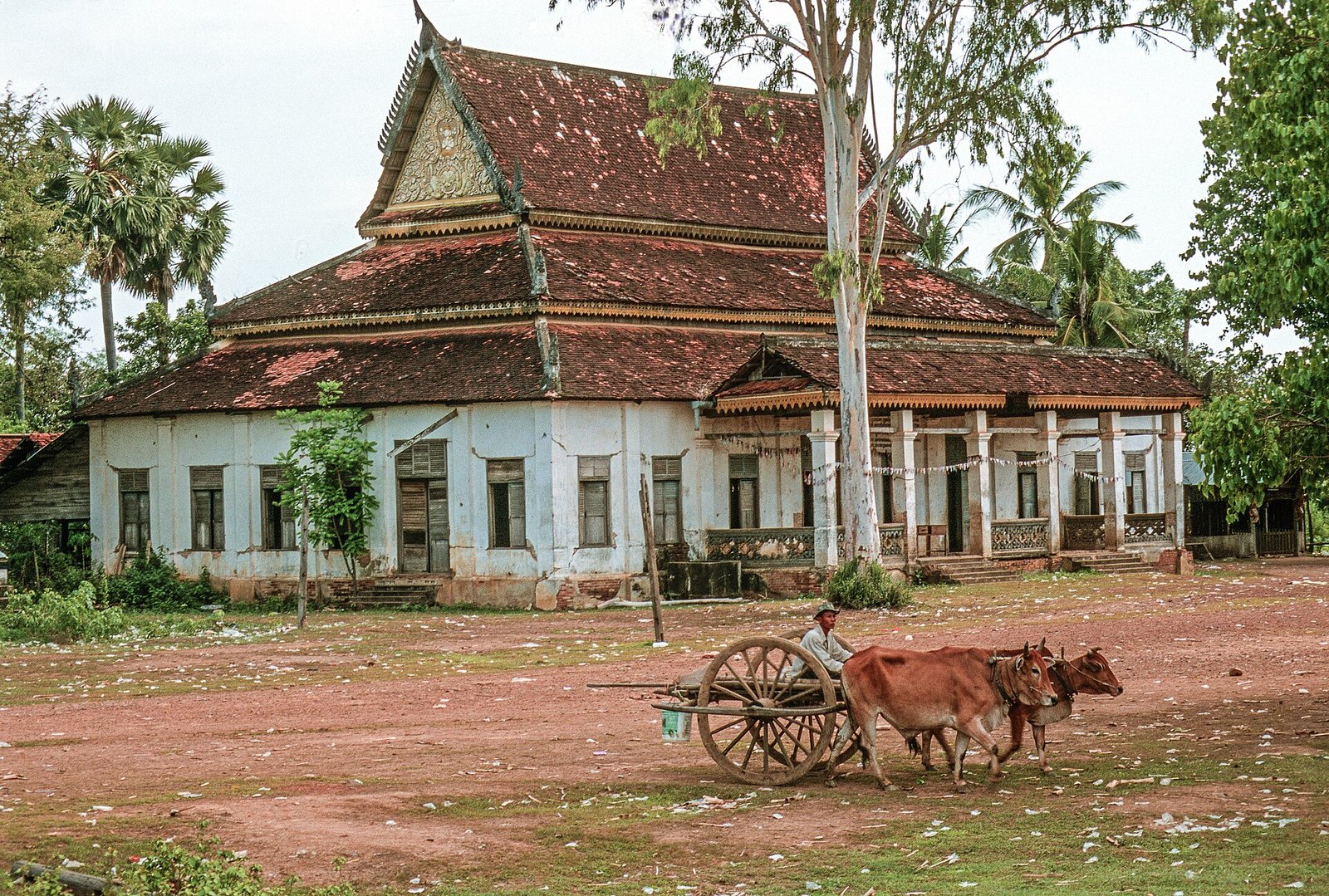
Image: Wat Ek killing yard at Arn Chorn-Pond’s child labor camp during Khmer Rouge in 1970s, 1999-04.jpg — Acme66, CC BY-SA 4.0