French Revolution summary: what happened and why
The French Revolution began in France in 1789. It was a chain of political and social changes that brought down an absolute monarchy and set up a republic. Historians usually date it from 5 May 1789, when the Estates-General opened, to 9 November 1799, when the coup of 18 Brumaire ended the Directory.
Before 1789, French society was split into three orders: the clergy, the nobility and the Third Estate. Tax burdens and privileges were unequal across these groups. In 1788 a food crisis pushed bread prices up while the state sank into a financial dead end. Think about your own grocery bill. If the price of your daily bread kept rising while the government demanded more tax, you would be angry too. By 1789 that anger was aimed at the monarchy.
French Revolution dates and year: when did it happen?
If you search ‘french revolution kab hua tha’ or ‘french revolution year’, the short answer is 1789. Louis XVI opened the Estates-General on 5 May 1789 in the Menus-Plaisirs building at Versailles. That assembly had not met since 1614. The full process stretched over ten years, to the coup of 9 November 1799.
The end date is debated. The 1799 ending is the common view. Some historians argue the Revolution kept going because its practices and ideas spread during the Napoleonic Wars of 1803–1815. Keep both views in mind when you read a textbook or a museum label.
Where did the French Revolution happen?
Two places matter most: Versailles and Paris. Versailles was the royal seat where the Estates-General met and where the National Assembly was born. Paris was the city that stormed the Bastille and later became the seat of the revolutionary tribunal.
The Revolution was not only a Paris story. In the spring of 1793, civil war in the Vendée and uprisings inside the country ran alongside a foreign war. That combination formed the backdrop for the emergency measures of 1793–1794.
French Revolution 1789: from a tennis court to the Bastille
On 17 June 1789 the deputies of the Third Estate, joined by some clergy and nobles, declared themselves the National Assembly at Versailles. Three days later, on 20 June 1789, they swore the Tennis Court Oath. They promised not to disband until the kingdom had a constitution.
On 14 July 1789 Parisians seized the Bastille, a prison that stood for royal arbitrary power. On 4 August 1789 the National Assembly adopted decrees abolishing privileges. On 26 August 1789 it adopted the Declaration of the Rights of Man and of the Citizen. That text was later placed at the head of the French Constitution of 1791.
The court did not stay at Versailles for long. On 5 October 1789 a crowd led by women marched to Versailles. Under their pressure the royal family left the palace on 6 October and moved to Paris.
From the king’s flight to the fall of the monarchy (1791–1792)
On the night of 20 June 1791 Louis XVI fled Paris. He was recognised and stopped at Varennes the next day. The failed escape shook public trust in the monarchy.
War followed. On 20 April 1792 France declared war on the Habsburg ruler in his capacity as King of Hungary and Bohemia. Five days later, on 25 April 1792, the guillotine was used for the first time. On 10 August 1792 crowds stormed the Tuileries Palace. The king’s powers were suspended, and on 13 August the royal family was locked in the Temple prison.
Between 2 and 5 September 1792 prisoners held as counter-revolutionaries were massacred in Paris jails. On 22 September 1792 the republican era began.
From the Bastille to the guillotine: the Terror (1793–1794)
Louis XVI was guillotined on 21 January 1793. On 10 March 1793 the Paris Revolutionary Tribunal was created to try counter-revolutionary activity. On 6 April 1793 the National Convention set up the Committee of Public Safety, which at first had nine members.
The Law of Suspects of 17 September 1793 gave surveillance committees the job of listing, questioning and arresting people seen as enemies of the Revolution. Marie-Antoinette was guillotined on 16 October 1793.
The machine then turned on revolutionaries themselves. Danton was executed on 5 April 1794 during the purge of the moderate revolutionary opposition. The Law of 22 Prairial, dated 10 June 1794, made death the only penalty for those judged enemies of the people. Repression grew heavier. Robespierre was arrested on 27 July 1794, 9 Thermidor in the revolutionary calendar, and executed the next day.
How the Revolution ended: 18 Brumaire
Napoleon Bonaparte’s coup of 18 Brumaire, on 9 November 1799, ended the Directory. That date is the widely accepted close of the Revolution. As noted above, some historians push the end later, into the Napoleonic Wars of 1803–1815, because revolutionary ideas and practices kept spreading in those years.
French Revolution timeline
- 5 May 1789 The Estates-General opens at Versailles.
- 17 June 1789 The National Assembly is formed.
- 20 June 1789 The Tennis Court Oath is sworn.
- 14 July 1789 The Bastille is taken.
- 4 August 1789 Decrees abolishing privileges are adopted.
- 26 August 1789 The Declaration of the Rights of Man and of the Citizen is adopted.
- 5–6 October 1789 After the march on Versailles, the royal family moves to Paris.
- 20–21 June 1791 The royal family’s flight is stopped at Varennes.
- 20 April 1792 War is declared on the Habsburg ruler.
- 25 April 1792 The first guillotine execution takes place.
- 10 August 1792 The Tuileries is stormed and the king’s powers are suspended.
- 2–5 September 1792 Massacres in Paris prisons.
- 22 September 1792 The republican era begins.
- 21 January 1793 Louis XVI is executed.
- 10 March 1793 The Paris Revolutionary Tribunal is created.
- 6 April 1793 The Committee of Public Safety is created.
- 17 September 1793 The Law of Suspects is adopted.
- 16 October 1793 Marie-Antoinette is executed.
- 5 April 1794 Danton is executed.
- 10 June 1794 The Law of 22 Prairial is adopted.
- 27–28 July 1794 Robespierre is arrested and executed.
- 9 November 1799 The coup of 18 Brumaire ends the Directory.
Details you won’t find in guidebooks
- The man who suggested the tennis court. On 20 June 1789 the deputy who proposed meeting in the nearby tennis hall was Joseph-Ignace Guillotin, a Paris deputy whose name later became attached to the guillotine.
- The near-empty Bastille. On 14 July 1789 the fortress held only seven prisoners. Four of them were in for forgery.
- The guillotine came before the Terror. Its first use was on 25 April 1792, before the king’s execution and before the Terror of 1793–1794.
- A constitution that never ran. The Convention adopted a constitution on 24 June 1793 and voters approved it in a July referendum. It was never applied.
- The nine-man committee. The Committee of Public Safety started on 6 April 1793 with nine members.
French Revolution painting: the Delacroix mix-up
Ask most people to name a French Revolution painting and they picture Eugène Delacroix’s Liberty Leading the People. The canvas shows the three-day Paris uprising of July 1830, not the Revolution of 1789. Check the date before you post the photo with the wrong caption.
French Revolution movies and books
The 1989 film La Révolution française is a two-part work directed by Robert Enrico and Richard Heffron.
Readers in Turkey have a local option. Emrah Safa Gürkan’s book Fransız Devrimi, published by Mabbels & Teras in 2022, appears in the Gebze Technical University library collection list.
French Revolution 1848: a different event
The February 1848 Revolution is separate from 1789. It forced King Louis-Philippe to abdicate and led to the proclamation of the Second Republic in France. When a search result says ‘French Revolution 1848’, it is talking about this later uprising, not the fall of the Bastille.
French Revolution for class 9: what to remember
Students need a clear skeleton. Start with the three orders and the unequal taxes. Add the 1788 food crisis and the state’s money problems. Then follow the dates: 5 May 1789 Estates-General, 17 June National Assembly, 20 June Tennis Court Oath, 14 July Bastille, 26 August Declaration of Rights.
Next learn the turn to the republic: Varennes in June 1791, war in April 1792, the Tuileries on 10 August 1792, the republic on 22 September 1792. Finish with the Terror: the king’s execution on 21 January 1793, the Law of Suspects, Danton, 22 Prairial and Robespierre’s fall on 27–28 July 1794. Close with 18 Brumaire in 1799.
FAQ
When did the French Revolution happen?
The commonly used range is 5 May 1789, when the Estates-General opened at Versailles, to 9 November 1799, when the coup of 18 Brumaire ended the Directory. Some historians argue the process continued through the Napoleonic Wars of 1803–1815.
Where did the French Revolution happen?
It began at Versailles, where the Estates-General met and the Tennis Court Oath was sworn, and moved to Paris after the storming of the Bastille on 14 July 1789 and the royal family’s forced move on 6 October 1789. The Vendée civil war in 1793 shows it also reached the provinces.
Who was executed by guillotine during the French Revolution?
Louis XVI on 21 January 1793, Marie-Antoinette on 16 October 1793, Danton on 5 April 1794 and Robespierre on 28 July 1794 are the best-known cases. The first guillotine execution, however, took place on 25 April 1792, before any of them.
Is the French Revolution of 1848 the same event?
No. The February 1848 Revolution was a separate event. It forced King Louis-Philippe to abdicate and led to the Second Republic in France.
Sources
- Wikipedia — French Revolution en.wikipedia.org
- TÜBİTAK Sosyal Bilimler Ansiklopedisi — Fransız Devrimi ansiklopedi.tubitak.gov.tr
- PBS American Experience — The French Revolution pbs.org
- Palace of Versailles — Versailles at the heart of the French Revolution en.chateauversailles.fr
- Palace of Versailles — Royal Tennis Court restoration press kit en.chateauversailles.fr
- City of Paris — Parcours Révolution, The Bastille parcoursrevolution.paris.fr
- French Presidency — Bastille Day, 14 July elysee.fr
- City of Paris — Parcours Révolution, Chronologie parcoursrevolution.paris.fr
- Vikipedi — Fransız Devrimi tr.wikipedia.org
- Criminocorpus / Archives nationales — Les tribunaux criminels à Paris criminocorpus.org
- French National Assembly — La Terreur assemblee-nationale.fr
- Seine-et-Marne Departmental Archives — Définitions conférence en ligne archives.seine-et-marne.fr
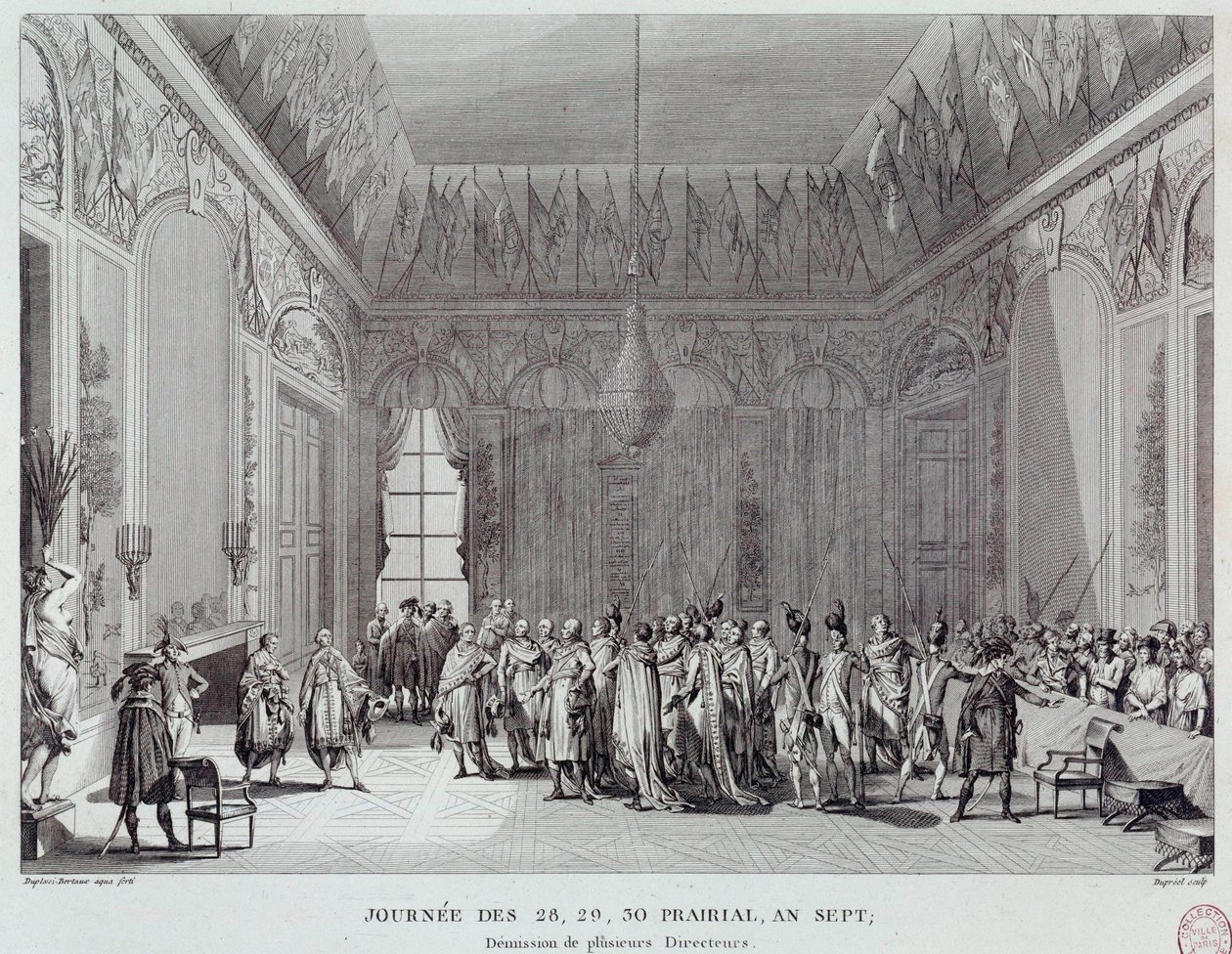
Image: French Revolution the days of 28 29 and 30 Prairial of the year VII.jpg — Jean Baptiste Michel Dupréel, Public domain