Kastamonu sits in northern Anatolia, and its story is older than its name. People left tools here in the Paleolithic age. Romans, Byzantines, Turkish principalities and the Ottomans all ruled the city in turn. If you plan to visit, or you are simply curious, this guide walks you through Kastamonu’s history and the debate over how it got its name.
How old is Kastamonu?
Start with an honest answer: the founding date of the city is not known. That is why Kastamonu’s age cannot be given as one year. What we do have is evidence of people in the wider area.
In the villages of Tahta and Malak, researchers found tools from the Lower Paleolithic. Near the Gölköy Institute, tools from the Middle Paleolithic turned up. These are among the earliest traces of human life around Kastamonu.
A later chapter comes from Araç district. The Governorship of Kastamonu announced on 23 October 2020 that excavations at Kahin Tepe had uncovered grinding stones and ornaments from the Aceramic Neolithic. In other words, people there were grinding food and wearing decorations before pottery was in use.
Where does the name Kastamonu come from?
This is the question most readers search for, and the answer is: nobody is sure. Three explanations circulate. Only the first two are scholarly theories.
The Gastumanna theory. It says the name comes from Gastumanna, supposedly a blend of the names Kaşkalar and Tumanna. The TDV Encyclopaedia of Islam does not accept this as a documented etymology.
The Kastra-Komneni theory. It reads the name as “fortress of the Komnenoi”. The same encyclopaedia says this explanation also remains an assumption.
The legend. A popular story says a fortress commander spoke to his daughter and asked, “Kastın neydi Moni?” (“What was your intent, Moni?”). The city’s name is said to come from that sentence. The Kastamonu Provincial Directorate of National Education calls it a folk legend with no basis in a historical document.
The spelling also changed with the language of each source. Byzantine sources write Kastamon. Islamic geographers write Kestamûniyâ and Kastamûnî. Ottoman sources usually write Kastamoni. So the name has travelled through Greek, Arabic and Ottoman Turkish writing, even if its origin stays unclear.
Kastamonu history from Rome to the Ottomans
The region came under Roman influence from 64 BCE. When the Roman Empire split in 395, the area stayed under Eastern Roman rule.
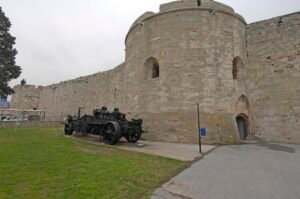
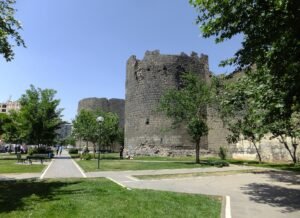
The Culture Portal of the Ministry of Culture and Tourism describes Kastamonu Castle as a 12th-century work built by the Komnenoi. It stands on a rock mass west of the city centre.
The Turkish era follows. The provincial education directorate links the years 1211–1212 to Hüsameddin Çoban Bey, who brought the region under Turkish rule. It ties this to the founding of the Çobanoğulları Principality.
The next local dynasty was the Candaroğulları. One of its rulers, Kemâleddin İsmail Bey, governed Kastamonu from 1443 to 1461. In 1461 Mehmed the Conqueror added the Candaroğulları Principality to Ottoman territory. From then on, Kastamonu was an Ottoman city.
Buildings that carry the story
You can read Kastamonu’s past in its stone and timber. A few places are worth a stop.
Mahmut Bey Mosque, Kasabaköy. UNESCO dates its construction to 1366–1367. In 2023 it joined the World Heritage List as part of a group of five wooden-pillared medieval mosques in Anatolia.
İsmail Bey Complex. This is a foundation complex of mosque, soup kitchen, madrasa, school, tomb, inn and bath. Kemâleddin İsmail Bey had it built during his rule of 1443–1461.
Nasrullah Mosque. Yakub’s son Nasrullah el-Kadı had it built in 1506 in the Hepkebirler district. Its prayer hall is a square of 23 × 23 metres. Six stone piers carry arches, and nine domes sit on top.
Araba Pazarı Bath. The same Nasrullah Kadı had this bath built in 1515. It is recorded under the address Akmescit District, Araba Pazarı Street.
Münire Sultan Madrasa. It stands behind the Nasrullah Mosque. Hacı Mustafa Efendi of Kastamonu had it built in 1746.
The mansions. The historic Kastamonu mansions promoted by GoTürkiye mostly show civil architecture from the late 19th century and the first half of the 20th century. You reach the old mansion area through narrow streets on sloping ground, sometimes by steps. Among towns in the province, İnebolu and Taşköprü come next in the number of mansions.
A link to your daily life
The Münire Sultan Madrasa has been a handicrafts market since 2002. So if you want a souvenir, you can shop inside a building from 1746. A student once studied there. Today you might be choosing a gift.
Kastamonu in the National Struggle and the Republic
During the National Struggle, the Independence Road ran from İnebolu through Kastamonu to Ankara. Weapons, ammunition, food and clothing moved along it. That put the city on a supply line that mattered to the whole country.
On 19 November 1920, Mehmet Âkif Ersoy gave a sermon at the Nasrullah Mosque. According to the Turkish Academy of Sciences, it echoed beyond Kastamonu and its surroundings, across the country.
Then came 1925. Atatürk toured Kastamonu between 23 and 31 August. During that trip he made his statement on the Hat Revolution in İnebolu. If you ever wonder why a hat law is tied to this province, this is the reason.
Timeline
- Lower Paleolithic: tools found in the villages of Tahta and Malak show human presence.
- Aceramic Neolithic: grinding stones and ornaments found at Kahin Tepe in Araç.
- 64 BCE: the region enters the Roman sphere of influence.
- 395: the region stays under Eastern Roman rule after the empire splits.
- 12th century: Kastamonu Castle, as dated by the Culture Portal.
- 1211–1212: Hüsameddin Çoban Bey brings the region under Turkish rule.
- 1366–1367: Mahmut Bey Mosque is built.
- 1443–1461: İsmail Bey rules in Kastamonu.
- 1461: the Candaroğulları Principality joins the Ottoman state.
- 1506: Nasrullah Mosque is built.
- 1515: Araba Pazarı Bath is built.
- 1746: Münire Sultan Madrasa is built.
- 19 November 1920: Mehmet Âkif Ersoy preaches at the Nasrullah Mosque.
- 23–31 August 1925: Atatürk’s visit to Kastamonu.
- 1997: Liva Paşa Mansion opens as an ethnography museum.
- 2000: the Küre Mountains become a national park.
- 2002: Münire Sultan Madrasa starts to serve as a handicrafts market.
- 2023: Mahmut Bey Mosque is listed by UNESCO.
Details you won’t find in guidebooks
The castle lost its outer walls. The outer walls of Kastamonu Castle disappeared in the late 18th century. Of the original defensive whole, only the inner castle has survived to our day.
A tomb for a ruler who is buried elsewhere. İsmail Bey had a tomb built in his own complex so that he could rest there. Yet he died in Plovdiv and was buried there.
The bath’s hidden plan. The undressing room of the Araba Pazarı Bath is about 100 square metres and has a dome. The cool room measures 7 × 9 metres and has three small domes. The washing hall follows a cross plan.
A mosque door in a mansion. The original carved wooden door of the Mahmut Bey Mosque is not at the mosque. You can see it in the woodwork section of the Liva Paşa Mansion Ethnography Museum. The museum opened in 1997 at Sakarya Street No. 5 in the Hepkebirler district.
Beyond the old city
Nature is part of the visit too. The Küre Mountains, on the border of Bartın and Kastamonu, were declared a national park in 2000. The Valla and Horma canyons and the Ilıca Waterfall are among the park’s main natural sites.
FAQ
When was Kastamonu founded?
Nobody knows. The founding date of the city is not firmly known, so its age cannot be given as a single year. Stone tools from the Lower and Middle Paleolithic show people lived in the area very early.
What does the name Kastamonu mean?
The meaning is not settled. One theory links it to Gastumanna, another to Kastra-Komneni, “fortress of the Komnenoi”. The Encyclopaedia of Islam of the Turkish Religious Foundation (TDV) accepts neither as a documented etymology.
When did Kastamonu become Ottoman?
In 1461. Mehmed the Conqueror added the Candaroğulları Principality to Ottoman lands that year, and Kastamonu came under Ottoman rule.
Is Kastamonu on the UNESCO World Heritage List?
Yes, in part. The Mahmut Bey Mosque in Kasabaköy was added in 2023 as one of five buildings in the Wooden Hypostyle Mosques of Medieval Anatolia.
What was Kastamonu’s role in the National Struggle?
The Independence Road ran from İnebolu through Kastamonu to Ankara. Weapons, ammunition, food and clothing travelled along it.
Sources
- TDV İslâm Ansiklopedisi — Kastamonu islamansiklopedisi.org.tr
- Kastamonu Valiliği — Kahin Tepe kazı alanı incelemesi kastamonu.gov.tr
- Kastamonu İl Millî Eğitim Müdürlüğü — Şehrimiz Kastamonu kastamonu.meb.gov.tr
- Kastamonu İl Millî Eğitim Müdürlüğü — Tarihi ile Kastamonu kastamonu.meb.gov.tr
- Kültür ve Turizm Bakanlığı Kültür Portalı — Kastamonu Kalesi kulturportali.gov.tr
- UNESCO World Heritage Centre — Wooden Hypostyle Mosques of Medieval Anatolia whc.unesco.org
- TDV İslâm Ansiklopedisi — İsmâil Bey Külliyesi islamansiklopedisi.org.tr
- Kastamonu Belediyesi — İsmail Bey Külliyesi kastamonu.bel.tr
- Kültür Portalı — Nasrullah Cami ve Haziresi kulturportali.gov.tr
- Türkiye Bilimler Akademisi — Millî Mücadele Döneminde Kastamonu tuba.gov.tr
- Kültür Portalı — Araba Pazarı Hamamı kulturportali.gov.tr
- Kastamonu Belediyesi — Münire Sultan Medresesi kastamonu.bel.tr
- GoTürkiye — Kastamonu goturkiye.com
- Kültür ve Turizm Bakanlığı — Livapaşa Konağı Etnografya Müzesi muze.gov.tr
- Kültür ve Turizm Bakanlığı DÖSİMM — Kastamonu dosim.ktb.gov.tr
- Türkçe Vikipedi — Kastamonu tr.wikipedia.org
Image: Kastamonu Castle, Turkey.jpg — Nedim Ardoğa, CC BY-SA 4.0