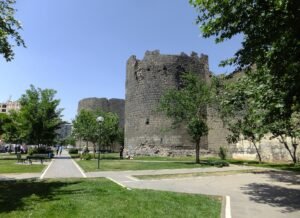
Gaziantep history in short
Gaziantep sits in southeastern Türkiye, and its past is layered. The province has seen Yamhad, Hittite and Assyrian rule. That regional story is not the same as the founding of today’s city centre, so it helps to read each site on its own.
This article follows three threads. The first is the castle mound. The second is the name of the city. The third is the 1920–21 defense that gave the city its official title.
Gaziantep ancient history: mound, shrine and river crossing
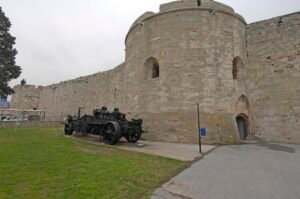
One of the oldest settled spots you can visit is the castle hill. According to Turkish Museums, Gaziantep Castle rises over a Chalcolithic mound with about 6,000 years of history. You are standing on a very old settlement site, not just a medieval fortress.
North of the city, on Dülük Baba Hill, researchers have studied the sanctuary of Iupiter Dolichenus. Its cult traditions reach back to the 6th–5th centuries BC. This is a separate site from the castle, with its own story.
Then there is Zeugma, in the Nizip district. It is tied to Seleukeia and Apameia, settlements that Seleucus I Nikator founded on opposite banks of the Euphrates around 300 BC. In 256 AD the Sasanian ruler Shapur I captured Zeugma and destroyed it.
Gaziantep Castle history
The castle has been rebuilt many times. Its first Roman-era lookout structure dates to the 2nd–4th centuries AD. It reached its present form under Emperor Justinian I, between 527 and 565.
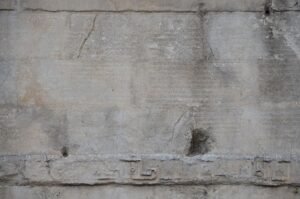
Inscriptions on the walls record later repairs. One names the Mamluk Sultan Qaitbay and the year 1481. Another names Suleiman the Magnificent and the year 1557.
The castle was damaged in the earthquakes of 6 February 2023. Anadolu Agency reported on 3 December 2025 that a restoration of about two and a half years had been completed.
The origin of the name: Ayintap, Antep, Gaziantep
The name has no single agreed explanation. The Turkish Culture Portal reports several views side by side:
- A theory that Ayıntap means ‘beautiful water source’.
- An account linking it to ‘Hantab’, read as ‘khan’s land’.
- A story tying it to a judge called Aynî.
No one can say with confidence when the name Ayıntab first came into use. The Islamic Encyclopedia of the Turkish Religious Foundation records other spellings in medieval sources. Crusader chronicles give Hamtap. Armenian sources give Anthaph.
The long form is much easier to date. By a decision of 8 February 1921, the Grand National Assembly officially changed the name of the town of Ayıntap to Gaziayıntap. The next day, 9 February 1921, the defenders had to surrender. Hunger, a lack of ammunition and no relief force forced their hand.
So the name is not an old one. It comes from the final days of the siege.
From Turkmen conquest to Ottoman rule
In 1067, Afşin’s Turkmen forces took Antep and Ra‘bân, which is today’s Araban. In 1400, Timur captured Antep and besieged its castle. The campaign historian Nizâmeddîn-i Şâmî recorded killings and the destruction of buildings in the city.
The Ottoman chapter began in 1516. The Mamluk deputy Yunus Bey entered Ottoman service. Selim I arrived on 20 August 1516 and stayed three days.
Antep was placed inside the borders of the Dulkadir Province in 1531. In 1818 it was attached again to Aleppo as a district.
Gaziantep, Turkey: the years 1918–1921
British troops entered Antep on 17 December 1918. French troops followed on 5 November 1919. The defense that followed ended with the surrender of 9 February 1921.
The story did not end there. Under the Ankara Agreement, French forces left Antep on 25 December 1921.
Gaziantep historical places you can visit
Ömeriye Mosque. It stands in the Düğmeci quarter. A repair in 1210 is on record. Its first builder is not known.
Boyacı Mosque. An inscription says it was completed under the Mamluks in 1357. A second inscription records a repair in 1575.
Kurtuluş Mosque. Look closely in Tepebaşı. The building went up in 1892 as the Church of the Virgin Mary. Later it served as a prison and then as a mosque.
Coppersmiths’ Bazaar. The one-storey shops date to the 19th century, though exact build dates are unknown. They are made of hard limestone called keymıh.
Gümrük Han. According to foundation records, Hacı Ömer Efendi had it built between 1873 and 1878. The ground floor held storage and stables. The upper floor had rooms for travellers.
Bey Quarter. Its stone houses, narrow streets and dead-end lanes keep the Ottoman-era look of the city.
Houses and water: everyday life in old Antep
A traditional Antep house is usually two storeys high. It has tall walls and faces an inner courtyard called the hayat. The street shows you walls. The life of the house happens inside.
Old Gaziantep got its water another way. The city’s underground water tunnels are called livas. The public water structures linked to them are called kastels. Their UNESCO tentative-list submission was made on 2 May 2018.
One example is the Pişirici Kastel. The UNESCO nomination dates it to 1282–1283. It is an underground building with a pool, washing and seating areas, and a small prayer room.
Timeline
- Chalcolithic Age: settlement on the mound beneath Gaziantep Castle.
- 6th–5th centuries BC: early cult traditions at the Dülük Baba Hill sanctuary.
- About 300 BC: Seleucus I Nikator founds the paired settlements behind Zeugma.
- 2nd–4th centuries AD: the castle’s Roman-era lookout is built.
- 256: Shapur I destroys Zeugma.
- 527–565: the castle takes its present form under Justinian I.
- 1067: Afşin takes Antep and Ra‘bân.
- 1210: a recorded repair of the Ömeriye Mosque.
- 1357: the Boyacı Mosque is completed, according to its inscription.
- 1400: Timur captures Antep.
- 1481: Qaitbay has the castle repaired.
- 1516: Antep joins the Ottoman state.
- 1557: the castle is repaired under Suleiman the Magnificent.
- 1873–1878: Gümrük Han is built.
- 1892: the church that is now the Kurtuluş Mosque is built.
- 17 December 1918: British troops enter Antep.
- 5 November 1919: French troops enter Antep.
- 8 February 1921: the name Gaziayıntap is adopted.
- 9 February 1921: the defenders surrender.
- 25 December 1921: French forces leave the city.
- 2018: the livas and kastels are submitted to UNESCO, and the Zeugma mosaic pieces are returned.
- 6 February 2023: the castle is damaged in the earthquakes.
- 3 December 2025: completion of the restoration is reported.
Details you won’t find in guidebooks
- The minaret of the Ömeriye Mosque still carries bullet and shrapnel marks from the Antep defense.
- The pulpit of the Boyacı Mosque was built so it could be pushed along rails into a compartment in the wall.
- The Pancarlı water line brought water from about 14 kilometres northwest of the city. In the kastels, clean water and waste water ran in separate systems.
- ‘Zeugma’ is an Ancient Greek word for ‘bridge’ or ‘crossing’. At first it meant the twin settlements on the two banks of the Euphrates.
- Twelve mosaic pieces taken from Zeugma were bought by Bowling Green State University in 1965 for 35,000 dollars. They were returned to Türkiye in 2018.
FAQ
How old is Gaziantep Castle?
The castle stands on a Chalcolithic mound with a history of about 6,000 years. Its first Roman-era lookout dates to the 2nd–4th centuries AD, and it took its present form under Emperor Justinian I between 527 and 565.
Sources
- Wikipedia — Gaziantep Province en.wikipedia.org
- Turkish Museums — Gaziantep Kalesi turkishmuseums.com
- Türkiye Kültür Portalı — Gaziantep Genel Bilgiler kulturportali.gov.tr
- TDV İslâm Ansiklopedisi — Gaziantep islamansiklopedisi.org.tr
- Vikipedi — Gaziantep tr.wikipedia.org
- Türkiye Kültür Portalı — Gaziantep Kalesi kulturportali.gov.tr
- Türkiye Kültür Portalı — Ömeriye Cami kulturportali.gov.tr
- Türkiye Kültür Portalı — Boyacı Camii kulturportali.gov.tr
- Türkiye Kültür Portalı — Kurtuluş Camii kulturportali.gov.tr
- Türkiye Kültür Portalı — Gaziantep Bakırcılar Çarşısı kulturportali.gov.tr
- Türkiye Kültür Portalı — Gaziantep Tarihi Gümrük Han kulturportali.gov.tr
- Gaziantep Büyükşehir Belediyesi — Tarihî Bey Mahallesi gaziantep.bel.tr
- Türkiye Kültür Portalı — Tarihi Antep Evleri kulturportali.gov.tr
- UNESCO World Heritage Centre — Gaziantep Livas and Kastels whc.unesco.org
- UNESCO World Heritage Centre — Zeugma Archaeological Site whc.unesco.org
- Türkiye Kültür Portalı — Zeugma Antik Kenti kulturportali.gov.tr
- Anadolu Ajansı — Gaziantep Kalesi’nin Restorasyonu Tamamlandı aa.com.tr
Image: Antep 1250575b.jpg — Antep_1250575.jpg: Nevit Dilmen (talk)
derivative work: Duro, CC BY-SA 3.0