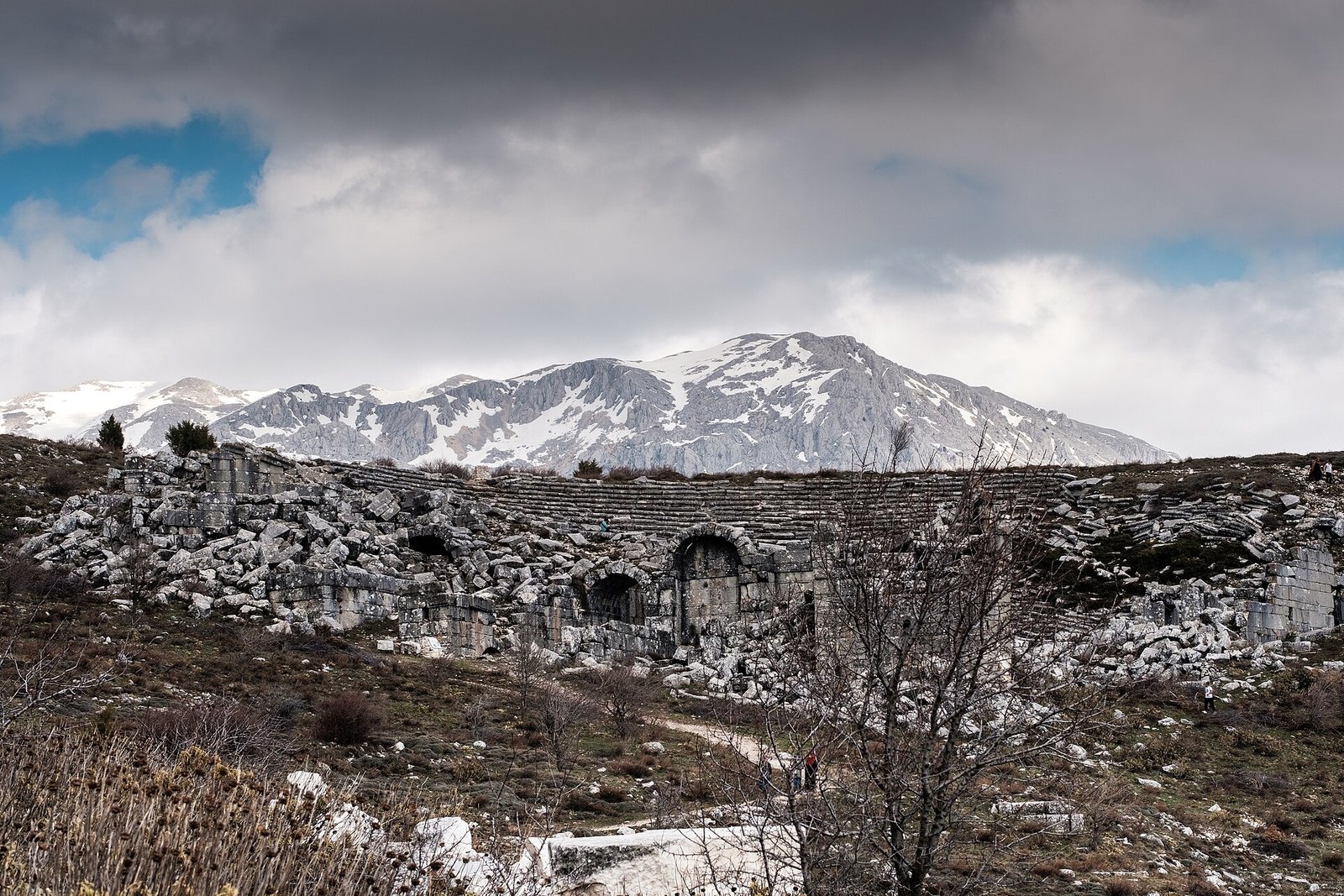
Where does Burdur’s history begin?
Burdur is a city in southwestern Turkey and the capital of the province bearing its name. Its history reaches beyond the present streets. Settlement evidence at nearby Kuruçay Höyüğü extends to 6500 BCE. Within today’s city, a mound around the railway station preserves traces of Early Bronze Age settlement.
If you are exploring the history of Burdur and the origin of its name, these are separate starting points. Kuruçay documents settlement in the surrounding area. The station mound provides evidence within the present urban area. The proposed origins of the name concern a later part of the story.
Kuruçay lies about 15 kilometres south of Burdur. That distance matters when reading claims about the city’s age. Evidence from this mound establishes a prehistoric past for the area. The Early Bronze Age traces near the railway station bring the account into the footprint of modern Burdur.
What is the origin of the name Burdur?
One explanation connects Burdur with Polydorion. Metin Tuncel presents this connection in the TDV İslâm Ansiklopedisi. The Kültür Portalı also includes Polydorion among the proposed explanations.
Other suggestions connect Burdur with Limobrama or Limobria. The Kültür Portalı records these alternatives alongside a folk account involving the Kınalı Oymağı. In that story, the name comes from “Burada dur,” meaning “Stop here.” The phrase offers a memorable explanation through familiar Turkish words.
These accounts have different foundations. Polydorion is a proposed connection with a Byzantine place-name. “Burada dur” belongs to a folk narrative. The Kültür Portalı treats them as alternatives and notes uncertainty about when the older names were used. You can therefore encounter several explanations without treating any one as a settled derivation.
How did the historic city take shape?
Turkish settlers initially established themselves around Hamam Bendi. Malaria and flooding later prompted a move to the higher slopes of Alanpazarı. This movement connects the city’s development with practical concerns about health and water. The location of settlement changed in response to those pressures.
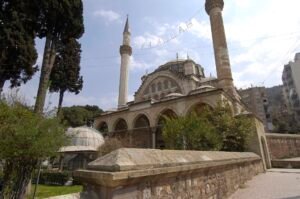
Ulu Camii provides a dated landmark in Burdur’s architectural history. Hamidoğlu Dündar Bey commissioned it in 1300. It stands in Pazar Mahallesi. Its subsequent repairs and reconstruction make the building a record of several periods rather than a structure associated with a single date.
Çelik Mehmet Paşa repaired the mosque in 1749. After the earthquake, it was rebuilt with a timber frame in 1919. When you consider Ulu Camii, keep these stages together: its foundation in 1300, its repair in 1749 and its reconstruction in 1919.
What do Burdur’s fountains reveal about everyday life?
The Pazaryeri Çeşmesi is also known as Sebilhane. The provincial culture and tourism directorate dates it to 1723. Its two recorded names identify the same fountain, so references to Pazaryeri and Sebilhane should be read together.
Other fountains add later dates to the city’s built history. Cümbüşlü Çeşme, in Özgür Mahallesi, dates to 1839. Kahvehane Çeşmesi, in Uzun Çarşı, dates to 1921. Together with Sebilhane, they place water structures within Burdur’s historical streets and neighbourhoods.
These fountains offer a direct link to everyday life: obtaining water. A mosque records worship and patronage; a fountain connects the historical city with an ordinary daily need. The dated examples in Burdur allow you to follow that connection through structures from 1723, 1839 and 1921.
How did the 1914 earthquake change Burdur?
On 3 October 1914, an earthquake completely destroyed about two-thirds of Burdur’s houses. This scale of destruction makes the earthquake central to the city’s modern history. The rebuilding of Ulu Camii in 1919 belongs within that wider account of damage and reconstruction.
A new urban plan was prepared in 1915 by urban planning specialists brought from Austria. Reconstruction therefore involved the arrangement of the city as well as individual buildings. The plan followed the earthquake by a year.
Burdur experienced Italian occupation from 1919 to 1921. During the Republican period, the conversion of the sanjak into a province made Burdur a provincial capital. Earthquake recovery, occupation and administrative change all belong to this part of the city’s history.
What do Sagalassos and Kibyra add to Burdur’s history?
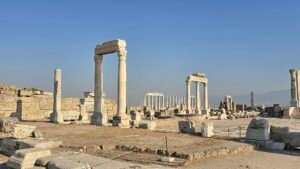
Sagalassos, near Ağlasun, extends the historical picture beyond the provincial capital. Settlement continued there in small fortified communities until the 13th century, after urban life had declined. Its history therefore includes continued habitation beyond the decline of the larger city.
The Archaeological Site of Sagalassos was submitted to the UNESCO World Heritage Tentative List on 6 February 2009. Its inclusion concerns the archaeological site near Ağlasun. It should be distinguished from the history of settlement within present-day Burdur itself.
Kibyra stands in Gölhisar district. It was submitted to the UNESCO World Heritage Tentative List on 13 April 2016. Its stadion measures about 195 metres in length and could accommodate approximately 10,000 spectators. Those dimensions give a concrete sense of the scale of its public architecture.
Burdur Natural History Museum
Burdur Natural History Museum is at Zafer Sokak No:27 in Zafer Mahallesi, in the city centre. It opened in 2016 following the restoration of Kavaklı Greek Church. The church is thought to date from the late 19th century. The museum thus brings a historic building and fossil collections into the same setting.
Its fossil collection came from four seasons of scientific excavation at the vertebrate fossil beds of Elmacık village in Kemer district. These finds document animal life around Burdur long before the settlement evidence at Kuruçay. The collection’s local origin connects the museum directly with the surrounding landscape.
The Elmacık fossils show that the southern mammoth, Mammuthus meridionalis, lived around Burdur approximately 2.5–2 million years ago. If you visit the museum, that timescale belongs to the area’s natural history. The church building belongs to a much later architectural history.
Burdur Museum has a separate institutional history. Its collection began in 1956, when antiquities gathered locally were protected in the surviving library of the Bulguroğlu, or Pirkulzade, Medresesi. Its exhibition halls opened on 12 June 1969.
Details you won’t find in guidebooks
At Sagalassos, geophysical investigations in 2004 identified more than 50 pottery kilns and workshops. These findings add production spaces to the account of the site. They provide a different perspective from the public structures represented by Kibyra’s large stadion.
The Medusa image in the orchestra of Kibyra’s Odeion uses opus sectile. Its makers cut and fitted coloured marble slabs together. The image was therefore assembled from shaped marble pieces rather than small mosaic stones. The distinction concerns the material and construction of the image itself.
Dengere Camii, in Bölmepınar village in Çavdır, has wooden supports and painted decoration on wood. Its first construction date remains uncertain. Inventories discussed in an academic study place it between the 15th and 17th centuries. The date 1771 on the wall and minaret is associated with the minaret’s construction.
İnsuyu Cave adds a documented chapter in the protection and presentation of the natural landscape. On the Burdur–Antalya road, it measures 597 metres according to the Kültür Portalı. It opened to tourism in 1965 and received first-degree natural site designation in 1976.
Timeline
- Approximately 2.5–2 million years ago: Southern mammoths lived around Burdur, as represented by the Elmacık fossils.
- 6500 BCE: Settlement evidence at Kuruçay Höyüğü reaches this date.
- Early Bronze Age: Settlement traces occur around the present railway station.
- Byzantine period: Metin Tuncel proposes a connection between the name Burdur and Byzantine Polydorion.
- 1300: Dündar Bey commissioned Ulu Camii.
- 1723: The date assigned to Pazaryeri, or Sebilhane, Fountain.
- 1749: Çelik Mehmet Paşa repaired Ulu Camii.
- 3 October 1914: An earthquake completely destroyed about two-thirds of the city’s houses.
- 1915: Specialists from Austria prepared a new urban plan.
- 1919: Ulu Camii was rebuilt with a timber frame.
- 1919–1921: Burdur experienced Italian occupation.
- 1956: Burdur Museum’s initial collection was gathered in the surviving medrese library.
- 1965: İnsuyu Cave opened to tourism.
- 12 June 1969: Burdur Museum’s exhibition halls opened.
- 1976: İnsuyu Cave received first-degree natural site designation.
- 6 February 2009: Sagalassos was submitted to the UNESCO World Heritage Tentative List.
- 2016: Burdur Natural History Museum opened.
- 13 April 2016: Kibyra was submitted to the UNESCO World Heritage Tentative List.
FAQ
Where does the name Burdur come from?
Metin Tuncel connects Burdur with the Byzantine name Polydorion. Other explanations include a connection with Limobrama or Limobria and a folk story based on the words “Burada dur,” meaning “Stop here.”
How far back does settlement around Burdur go?
Kuruçay Höyüğü, about 15 kilometres south of Burdur, has settlement evidence reaching back to 6500 BCE. Early Bronze Age settlement traces also exist around the railway station in the present city.
Where is Burdur Natural History Museum?
It is at Zafer Sokak No:27 in Zafer Mahallesi, in central Burdur. It opened in 2016 inside the restored Kavaklı Greek Church.
What happened to Burdur in the 1914 earthquake?
The earthquake of 3 October 1914 completely destroyed about two-thirds of Burdur’s houses. A new urban plan followed in 1915, and Ulu Camii was rebuilt with a timber frame in 1919.
Sources
- Vikipedi — Burdur tr.wikipedia.org
- TDV İslâm Ansiklopedisi — Burdur, Metin Tuncel islamansiklopedisi.org.tr
- Kültür Portalı — Burdur kulturportali.gov.tr
- Kültür Portalı — Ulu Cami kulturportali.gov.tr
- Burdur Provincial Directorate of Culture and Tourism — Çeşmeler burdur.ktb.gov.tr
- Süreyya Eroğlu — Burdur Dengere Köyü Camisi’nin Ahşap Üzerine Kalem İşi Bezemeleri sosyalarastirmalar.com
- UNESCO World Heritage Centre — Archaeological Site of Sagalassos whc.unesco.org
- UNESCO World Heritage Centre — Ancient City of Kibyra whc.unesco.org
- General Directorate of Cultural Heritage and Museums — Burdur Müze Müdürlüğü kvmgm.ktb.gov.tr
- General Directorate of Cultural Heritage and Museums — Burdur Doğa Tarihi Müzesi brochure burdur.ktb.gov.tr
- General Directorate of Cultural Heritage and Museums — Burdur Natural History Museum brochure turkishmuseums.com
- Kültür Portalı — Doğa Tarihi Müzesi kulturportali.gov.tr
- Kültür Portalı — İnsuyu Mağarası kulturportali.gov.tr
Image: Sagalassos Ancient City.jpg — LeoniKalkis, CC BY-SA 4.0