How was the smallpox vaccine discovered?
The discovery of the smallpox vaccine connects Istanbul, Lady Mary Wortley Montagu and Edward Jenner. Montagu helped popularize an Ottoman practice called variolation in England. Jenner later tested protection using cowpox. His crucial experiment took place in 1796, and he published his findings in 1798.
If you want to understand their roles, start with the material each method used. Variolation involved material from human smallpox sores. Jenner’s vaccination used cowpox material. Both aimed to protect against smallpox, but they were different procedures. WHO: History of smallpox vaccination
What did Lady Montagu learn in Istanbul?
Before Jenner’s work, people in parts of Asia and Africa practised variolation. Material taken from smallpox sores was introduced into healthy people to try to protect them. The method carried serious risks. Historic England gives a historical death risk of about 2 percent. People who became ill after treatment could also start outbreaks.
Knowledge of the practice reached the Royal Society before Montagu’s campaign. Emanuel Timonius, a physician living in Istanbul, described variolation in a letter dated December 1713. John Woodward presented it to the Royal Society on 27 May 1714. Royal Society: Timonius letter
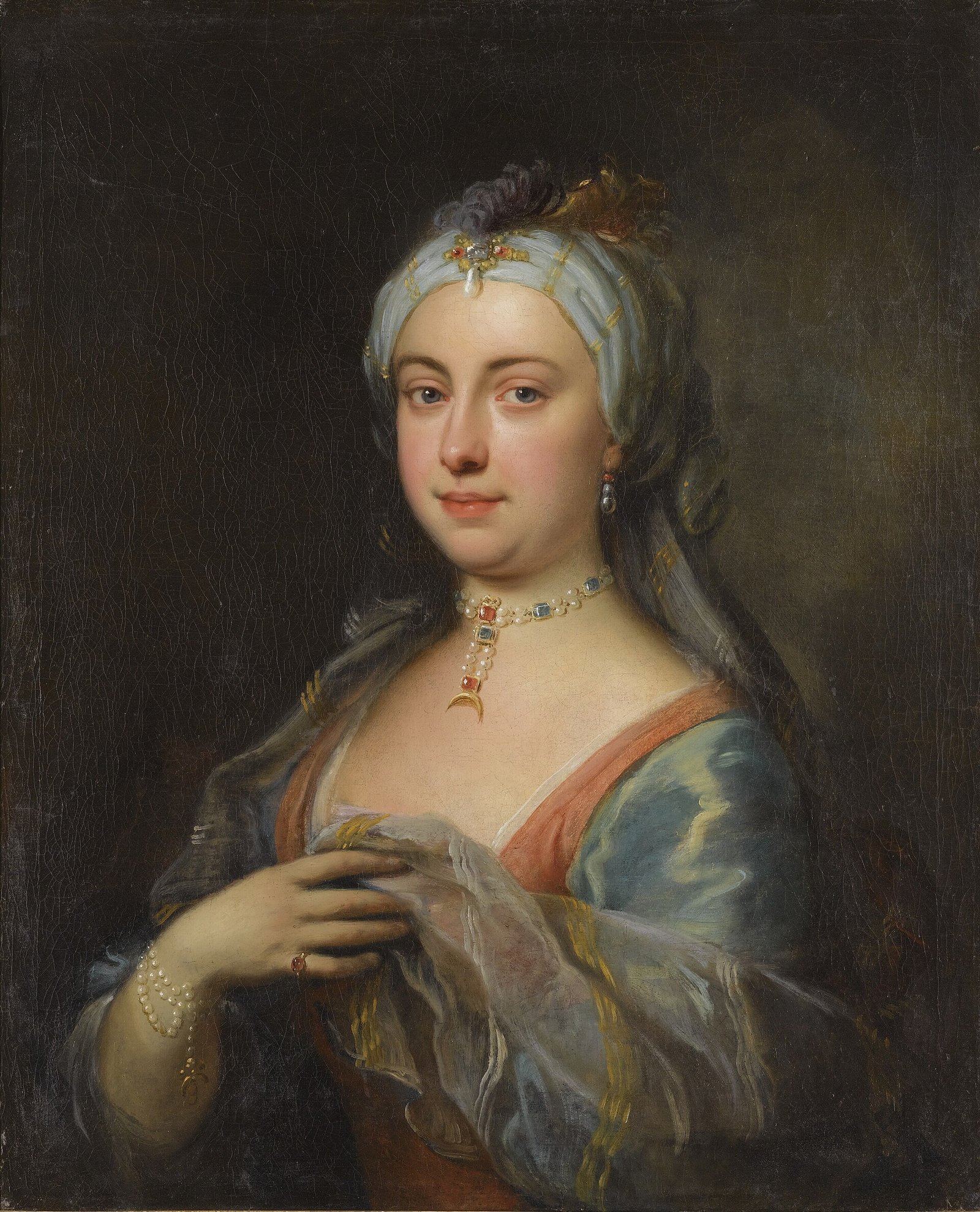
Montagu had a personal reason to take smallpox seriously. She survived the disease in 1715, with permanent facial scars. Between 1716 and 1718, she lived in Istanbul with her husband, Edward Wortley Montagu. He was the British ambassador to the Ottoman Empire.
In 1717, she described Ottoman variolation in a letter written from Edirne. She also expressed her wish to spread the practice in England. If you are visiting Turkey, keep both places in this story: Montagu lived in Istanbul, but wrote this account from Edirne. Montagu’s account
How did Montagu help spread variolation in England?
Montagu put her support into practice through her children. At her request, embassy surgeon Charles Maitland variolated her son Edward in Istanbul in March 1718. During a smallpox outbreak in England in April 1721, she asked Maitland to treat her daughter Mary too.
The everyday connection is a parent’s decision about a child’s protection. Montagu had survived smallpox herself. She then arranged variolation for both children, first in Istanbul and later in England. Her advocacy included decisions within her own household.
She did not single-handedly bring the idea to England. Historian Diana Barnes argues that Montagu’s main contribution was promoting and popularizing it. Timonius’s earlier letter helps explain why the distinction matters: information about Ottoman variolation had already reached the Royal Society. Diana Barnes: The public life of a woman of wit and quality
Maitland also conducted a variolation trial at Newgate Prison in London on 9 August 1721. All six prisoners involved survived. That result belongs to the history of human smallpox variolation, decades before Jenner’s cowpox experiment. Baylor University Medical Center Proceedings
Where was Edward Jenner from, and where did he live?
Edward Jenner was born on 17 May 1749 in Berkeley, Gloucestershire, England. In 1770, he began training in surgery and anatomy under John Hunter at St George’s Hospital in London. He returned to Berkeley in 1772, aged 23, to work as a local physician and surgeon.
Berkeley remained central to his life and vaccination work. He vaccinated poor local people free of charge in a garden hut he called the Temple of Vaccinia. He died in Berkeley on 26 January 1823, aged 73. Historic England: Jenner’s Hut
Edward Jenner discovered the vaccine in which year?
The key year is 1796. Jenner’s research began from an observation already familiar in rural communities: people who had contracted cowpox appeared protected against human smallpox. His investigation tested that connection through the cases of Sarah Nelmes and James Phipps.
In May 1796, Nelmes, a milkmaid, consulted Jenner about a rash on her hand. She reported that her cow, Blossom, had recently suffered cowpox. On 14 May, Jenner applied material from Nelmes’s cowpox sore to the arm of Phipps, the eight-year-old son of his gardener.
Phipps felt unwell for a few days, then recovered completely. On 1 July 1796, Jenner tested his protection by variolating him with human smallpox material. Phipps did not develop smallpox. These separate steps explain what the experiment demonstrated. Oxford Jenner Institute: About Edward Jenner
If you need a date for an assignment, distinguish the experiment from its publication. Jenner performed the experiment in 1796. He published An Inquiry into the Causes and Effects of the Variolae Vaccinae in 1798. Jenner’s original publications
What was Edward Jenner’s contribution to microbiology?
Jenner’s contribution centred on demonstrating protection against smallpox using cowpox material and publishing his research. The word vaccination reflects that connection. It derives from vacca, the Latin word for cow, through Jenner’s cowpox method.
Calling the method simply Jenner’s invention leaves out an earlier example. In 1774, Benjamin Jesty applied cowpox material to his wife and two children for protection. Jenner’s later work helped the method become widely understood. The distinction is between earlier use and the research that brought broader recognition. Edward Jenner
Cowpox vaccination gradually replaced variolation. England banned variolation using human smallpox material in 1840. Much later, on 8 May 1980, the 33rd World Health Assembly declared the world free of smallpox, almost two centuries after Jenner’s experiment. CDC: History of Smallpox
Timeline
- 1714: Timonius’s letter describing Istanbul variolation was presented to the Royal Society.
- 1715: Montagu contracted smallpox and survived with facial scars.
- 1717: Montagu described Ottoman variolation in a letter from Edirne.
- March 1718: Maitland variolated Montagu’s son Edward in Istanbul.
- April 1721: Montagu asked Maitland to variolate her daughter Mary in England.
- 9 August 1721: All six participants survived Maitland’s Newgate Prison trial.
- 17 May 1749: Jenner was born in Berkeley.
- 1770: Jenner began training under John Hunter in London.
- 1774: Jesty used cowpox material on his wife and two children.
- 14 May 1796: Jenner applied Nelmes’s cowpox material to Phipps.
- 1 July 1796: Phipps did not develop smallpox following Jenner’s variolation test.
- 1798: Jenner published his cowpox research.
- 26 January 1823: Jenner died in Berkeley.
- 1840: England banned variolation.
- 8 May 1980: The World Health Assembly declared global smallpox eradication.
Details you won’t find in guidebooks
Montagu’s 1717 account described variolation in groups of about 15 or 16 people. An older woman performing the procedure brought the disease material in a nutshell. Those details place the practice in a social setting, with a group gathered for treatment.
Jenner recorded a precise physical detail in Case XVII of his 1798 publication. For the procedure on 14 May 1796, he made two shallow cuts in Phipps’s arm. Each was about half an inch, or 1.27 centimetres, long.
Phipps’s connection with Jenner continued beyond the experiment. In recognition of his contribution, Jenner gave him and his family tenancy of a house in Berkeley. It is now known as Phipps’ Cottage. Dr Jenner’s House: James Phipps’ Cottage
Jenner also received financial recognition from the British government. It awarded him £10,000 in 1802 and another £20,000 in 1807. His work included free vaccination for poor people at the Temple of Vaccinia.
FAQ
Edward Jenner discovered the vaccine in which year?
The key experiment took place in 1796. Jenner applied cowpox material to James Phipps on 14 May, tested his protection on 1 July, and published his research in 1798.
Did Lady Montagu introduce Jenner’s vaccine to England?
Montagu promoted variolation, which used material from human smallpox sores. Jenner’s later vaccination method used cowpox material.
Where was Edward Jenner from?
Jenner was born in Berkeley, Gloucestershire, England, on 17 May 1749. He returned there in 1772 to work as a local physician and surgeon.
Was Jenner the first person to use cowpox for protection?
Benjamin Jesty applied cowpox material to his wife and two children in 1774. Jenner’s later research helped make the method widely understood.
Sources
- World Health Organization — History of smallpox vaccination who.int
- Royal Society — Emanuel Timonius, CLP/22ii/1 catalogues.royalsociety.org
- Children and Youth in History — Lady Mary Wortley Montagu on Small Pox in Turkey cyh.rrchnm.org
- Diana Barnes, University of New England — The public life of a woman of wit and quality rune.une.edu.au
- Baylor University Medical Center Proceedings — Edward Jenner and the history of smallpox and vaccination pmc.ncbi.nlm.nih.gov
- Oxford University Jenner Institute — About Edward Jenner jenner.ac.uk
- Louisiana State University — Edward Jenner’s original vaccination publications biotech.law.lsu.edu
- Historic England — Jenner’s Hut historicengland.org.uk
- Dr Jenner’s House — James Phipps’ Cottage jennermuseum.com
- Wikipedia — Edward Jenner en.wikipedia.org
- CDC — History of Smallpox cdc.gov
Image: Portrait of Lady Mary Wortley Montagu (by Joseph Highmore).jpg — Joseph Highmore, Public domain