The woman buried at Çemka Höyük may have held a special ritual role, but the evidence does not establish that she was a shaman. Her burial with animal remains and a limestone covering supports that possibility, while a funerary feast and other symbolic practices remain plausible explanations.
An aurochs skull lay over her body, while its detached jaw rested near her feet. If you want to assess the shaman claim, that arrangement is a useful starting point. The burial’s date, its position beneath a building and the competing explanations help separate what archaeologists found from what those finds might mean.
Was the Çemka Höyük woman a shaman?
Ergül Kodaş and his colleagues associate the burial’s combination of human and animal remains with a possible special ritual role. Their interpretation includes shamanism. Yet their paper also allows another possibility: the woman could have been buried by someone who performed practices associated with animism or shamanism. Those are different claims about who carried out the rituals.
The skeletal examination suggests that the deceased was a woman aged approximately 25–30. Excavators discovered her grave in 2019. The scientific study identifies it as ÇH 2019/05, inside the round building ÇH 12 in excavation trench D16. These details anchor the discussion in a particular burial, rather than a general claim about Neolithic women.
The body lay on its right side, with the legs bent, beneath the building’s floor. A long, flat limestone block covered the grave. Burial beneath residential floors was a known practice during the period. That position alone therefore does not identify the woman as a shaman.
Where was she buried, and when?
Çemka Höyük lies within the boundaries of Ilısu village, in the Dargeçit district of Mardin. It is approximately 1,100 metres southwest of the Ilısu Dam. For you as a traveler interested in Turkey’s archaeology, this places the burial in a specific landscape rather than leaving it under the broad label of southeastern Turkey.
The scientific paper dates ÇH 12, the building containing the grave, to approximately 9300 calibrated BCE. Mardin Artuklu University’s announcement describes the discovery as a possible female shaman burial about 12,000 years old. The latter is an approximate public presentation. The building date is the more precise reference supplied by the study.
The burial belongs to the context of PPNA, short for Pre-Pottery Neolithic A. This phase is generally dated to approximately 10000–8800 BCE. At Çemka Höyük, at least 15 graves were identified in building levels 2, 3 and 4, which date to PPNA. The 2024 paper reports 12 adults and three children among the burials.
Çemka Höyük burial animal bones: what was found?
An aurochs, or wild cattle, skull was found over the woman’s body. Its jaw had been separated and placed near her feet. That distinction matters: the evidence concerns both the presence of an animal and the distribution of its parts around the deceased.
Other reported remains include partridge wing bones and marten leg bones. The grave pit also contained bones identified as sheep or goat. Archaeology’s account adds a canid bone to its list, alongside the aurochs, small ruminant, partridge and marten remains.
The resulting assemblage brings together several animals and selected body parts. Kodaş and his colleagues connect the deposition of these remains with a possible ritual role. The bones are the physical evidence. Identifying the woman’s position within her community is the interpretation built from them.
Think of clearing your own dining table: leftover food and a deliberately arranged object can occupy the same space, yet invite different explanations. At Çemka Höyük, the detached aurochs jaw and the bones around the woman create a comparable interpretive problem. You have to consider placement as well as presence, while keeping the funerary-meal explanation in view.
Evidence for a Neolithic female shaman
The argument for a shaman centres on the woman and animal remains sharing the grave, together with the arrangement of those remains. Kodaş and his colleagues read this combination as potentially reflecting a special ritual role. Their conclusion is a possibility, rather than a confirmed identification.
The limestone covering has also received a ritual interpretation. One proposed explanation holds that it prevented the woman from returning as an evil spirit. Another interprets the aurochs skull as protecting her remains. These explanations concern the intentions of the people who buried her; neither intention can simply be treated as an observed feature of the grave.
The distinction in the paper’s abstract is especially useful. A woman who practised rituals and a woman buried by a ritual practitioner could leave a burial open to similar interpretations. The authors explicitly allow both possibilities. The presence of practices associated with shamanism would therefore not automatically identify the deceased herself as a shaman.
Bill Finlayson, an Oxford University archaeologist who was not involved in the study, also questions the label. He argues that “shaman,” a term used to describe Siberian practices, may not accurately represent this Neolithic woman’s role. He considers someone familiar with the community’s rituals a possibility, while treating the word as a convenient modern shorthand.
Shaman burial or funerary feast at Çemka Höyük?
A funerary feast is one alternative explanation for the animal remains. Kodaş acknowledges that the bones could relate to a funeral meal. He also notes the difficulty of conclusively verifying the shamanistic explanation. This caution comes from a researcher advancing the ritual interpretation itself.
Other alternatives include animal worship and the attribution of symbolic qualities to animal parts. These possibilities keep attention on the animals without requiring the woman to have occupied a particular religious role. A symbolic aurochs skull, for example, would still require interpretation even if the deceased were not called a shaman.
The detached jaw near the feet is relevant to that discussion because it records a particular arrangement. Yet arrangement does not settle whether the burial expressed the woman’s own role, the mourners’ beliefs or practices surrounding a funeral meal. The published debate includes all these routes through the evidence.
If you are weighing the explanations, keep the underfloor burial separate from the animal assemblage. Underfloor burial was already known in PPNA communities. The proposed shaman identification rests on the wider combination of features, especially the associated animal remains, rather than that burial position by itself.
Timeline
- Approximately 10000–8800 BCE: General date range of PPNA, the phase associated with the burial.
- Approximately 9300 calibrated BCE: Date assigned in the paper to ÇH 12, the building containing grave ÇH 2019/05.
- 2008: A flood deposit prevented the site from being identified during surface surveys.
- 2019: The woman’s burial with animal remains was discovered.
- 2024: The study appeared in volume 128, issue 3 of L’Anthropologie.
Details you won’t find in guidebooks
Road construction partly disturbed the southern portion of the grave. Nevertheless, most human and animal remains survived in their original positions. Both facts matter when assessing the arrangement: the burial suffered damage, but much of its spatial evidence remained available for study.
The excavators screened the grave sediment through sieves with openings of 7–8 millimetres and 3.5 millimetres. This produced no additional animal bones or burial objects such as beads. It is a concrete detail about how the grave’s contents were checked.
Çemka Höyük measures approximately 65 × 135 metres and lies only about 900 metres southeast of Boncuklu Tarla. Its proximity to that settlement contrasts with its absence from the 2008 surface survey, when the flood layer concealed it.
FAQ
Was the Çemka Höyük woman a shaman?
Possibly, but the burial does not establish that identification. Researchers connect the animal remains with a possible ritual role, while a funerary feast and other symbolic practices remain alternative explanations.
What animal bones were found in the burial?
Reported remains include an aurochs skull and detached jaw, partridge wing bones, marten leg bones, and sheep or goat bones. Archaeology also lists a canid bone.
How old is the Çemka Höyük burial?
The scientific paper dates the building containing the burial to approximately 9300 calibrated BCE. Public announcements describe the discovery more broadly as about 12,000 years old.
Why is the word shaman disputed?
Archaeologist Bill Finlayson questions whether a term used to describe Siberian practices accurately represents this Neolithic woman’s role. He considers a practitioner familiar with community rituals a possible interpretation.
Sources
- Ergül Kodaş and colleagues, L’Anthropologie, 2024, volume 128, issue 3 sciencedirect.com
- Phys.org, report on the possible shaman burial phys.org
- Archaeology, “Possible Neolithic Shaman Burial” archaeology.org
- National Geographic, discussion of the female shaman interpretation nationalgeographic.com
- Mardin Artuklu University, Faculty of Letters, burial announcement artuklu.edu.tr
- Ergül Kodaş and Yunus Çiftçi, Aktüel Arkeoloji, “Çemka Höyük” aktuelarkeoloji.com.tr
- Neo-Lithics, Çemka Höyük field report exoriente.org
- English Wikipedia, “Pre-Pottery Neolithic A” en.wikipedia.org
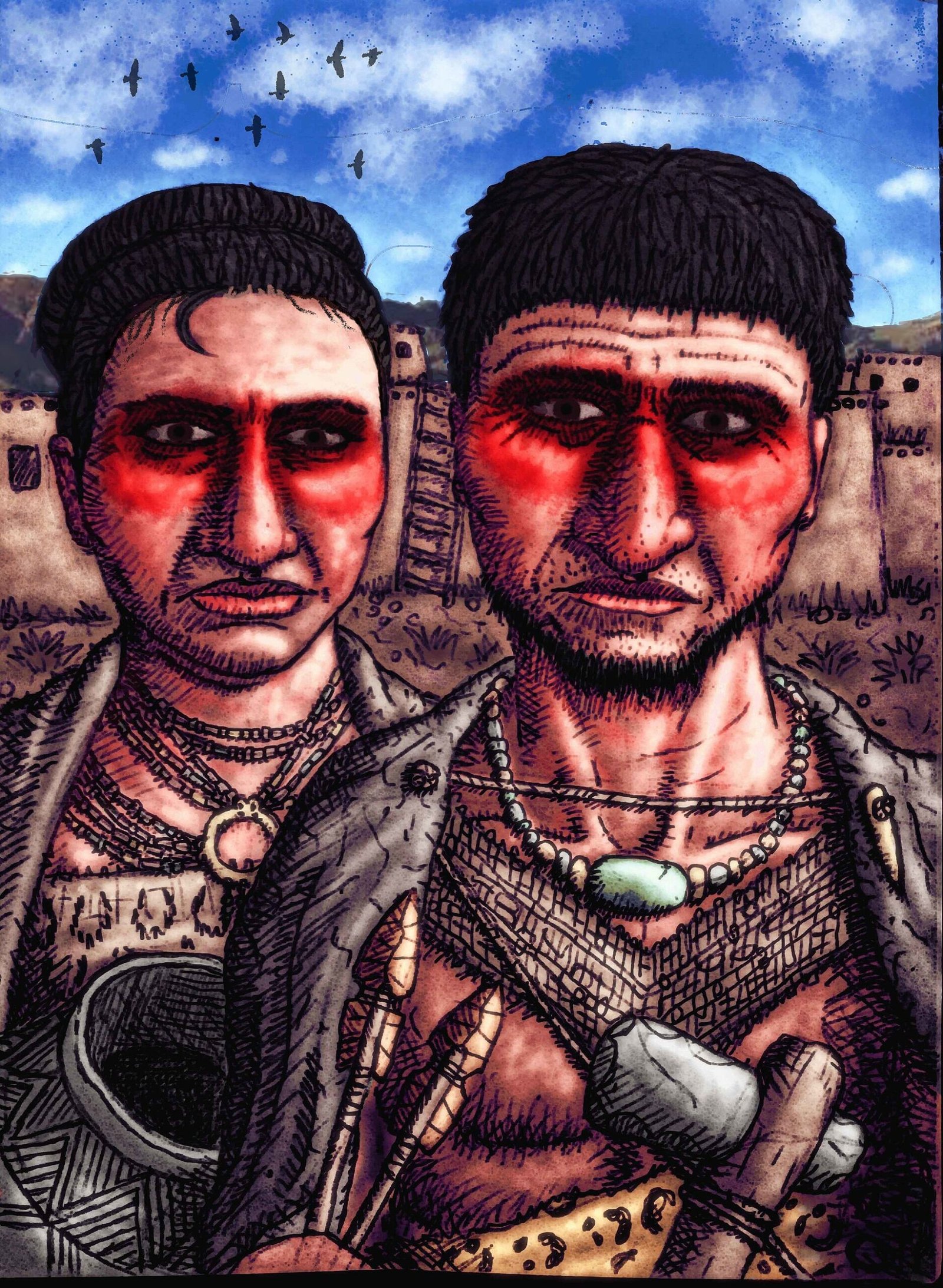
Image: Pre-pottery neolithic people upper Mesopotamian, levantine, anatolian.jpg — Rowyn flowerdew, CC0