Who was Sultan Abdulmejid I?
Sultan Abdulmejid I was the 31st Ottoman sultan. He ruled from 1839 to 1861. His reign brought the Tanzimat and Islahat edicts, the Crimean War and the empire’s first foreign loan. He also commissioned Dolmabahçe Palace and several Istanbul mosques. If you want to understand his place in Ottoman history, these reforms and buildings provide a starting point.
His name also appears as Abdülmecid. He was born in Istanbul on 25 April 1823. His life ended in the same city on 25 June 1861, after a reign that combined legal change, warfare and palace construction.
Who was Abdulmejid I’s father?
Abdulmejid’s father was Sultan Mahmud II. His mother was Bezmiâlem Valide Sultan. He came to the throne in July 1839. The precise accession date differs between accounts: the TDV İslâm Ansiklopedisi gives 1 July, while Turkish Wikipedia gives 2 July.
His family’s connection to the throne extended beyond his own reign. Four of his sons later became Ottoman sultans: Murad V, Abdulhamid II, Mehmed V Reşad and Mehmed VI Vahdeddin. His immediate successor, however, was his brother Abdulaziz.
What changed during his reign?
The Tanzimat Edict was read at Gülhane on 3 November 1839, early in Abdulmejid’s reign. Mustafa Reşid Pasha prepared it. The edict aimed to establish laws protecting personal safety and property. It also sought to limit arbitrary government. These aims placed the relationship between government and its subjects at the centre of reform.
Military service changed in 1843. Recruitment adopted a lottery system, and regular army service was set at five years. You can connect this reform to everyday life by thinking about what five years away would mean for a household. The measure concerned a substantial period of a recruit’s life, alongside the method used to select him.
Legal reform continued through the reign. A Commercial Code was prepared in 1850, followed by a Land Code in 1858. These measures concerned trade and land, while the 1839 edict addressed personal safety and property. Together, they show how reform reached several areas of Ottoman government.
Scholarship also received an institutional framework. The Encümen-i Dâniş was established in 1851 to prepare original and translated works. Abdulmejid himself could speak and read French. He followed European publications, giving his interest in European writing a personal dimension alongside this institution’s work.
On 18 February 1856, he proclaimed the Islahat Edict. It granted new rights to non-Muslim subjects. The Tanzimat and Islahat edicts were separate measures, issued more than sixteen years apart. Both belong to an account of his reign, but their dates and stated purposes deserve individual attention.
How did the Crimean War shape his reign?
During the Crimean War of 1853–1856, the Ottoman Empire fought Russia alongside Britain and France. The conflict placed Abdulmejid’s government in a wartime alliance with these powers. Its financial demands also brought a major change: the empire took its first foreign loan on 24 August 1854 to meet war expenses.
The Treaty of Paris was signed on 30 March 1856. Through the treaty, the Ottoman Empire formally entered the European state system. That same year also brought the Islahat Edict and Abdulmejid’s move into Dolmabahçe Palace. Military, diplomatic and architectural milestones therefore converged in 1856.
His later reign faced a challenge from within. The unsuccessful Kuleli Incident of 1859 aimed to remove him and place his brother Abdulaziz on the throne. Abdulaziz eventually succeeded him after his death in 1861.
Sultan Abdulmejid I and Ireland: what happened?
Abdulmejid gave financial assistance during Ireland’s Great Famine in 1847. British sources recorded his donation as £1,000. This monetary contribution is the central fact behind his association with Ireland. It should be distinguished from the separate account of ships carrying relief.
According to that account, he secretly sent three aid ships to Drogheda in 1847. Historian Christine Kinealy has expressed doubt about the story. Local historian Brendan Matthews considers that grain ships arriving at the port could be explained by trade. You can acknowledge the recorded donation while treating the secret shipment story as disputed.
What is Abdulmejid I’s architectural legacy?
Dolmabahçe Palace is a major part of Abdulmejid’s architectural legacy. He commissioned it on the site of the former Beşiktaş waterfront palace. Construction ran from 1843 to 1856. He moved into the newly completed building on 7 June 1856, shortly after the Treaty of Paris.
The palace contains 285 rooms, 68 toilets and six baths. Those figures give you a practical sense of its scale. Alongside rooms associated with palace life, its facilities also bring attention to the everyday needs accommodated within the building.
Abdulmejid commissioned two pavilions at Ihlamur during the 1850s. They were known as Merasim and Maiyet. Ihlamur also belongs to the story of his final days: he died at Ihlamur Pavilion in 1861. The location therefore connects his building activity with his personal biography.
Küçüksu Pavilion was another commission. Designed by Nikoğos Balyan, it replaced an earlier wooden building and was completed in 1857. Its construction followed the completion of Dolmabahçe. The two projects help establish the sequence of palace and pavilion building during his reign.
His mosque commissions served several settings and purposes. Construction of Hırka-i Şerif Mosque in Istanbul began in 1847 and finished in 1851. Abdulmejid had it built for the preservation and visitation of the Hırka-i Şerif. This purpose gives the building a specific place within his architectural patronage.
The Büyük Mecidiye Mosque at Ortaköy was built by Abdulmejid in 1854, according to its entrance inscription. He also rebuilt Teşvikiye Mosque in 1854. That project occupied the site of an earlier mosque commissioned by Selim III. His architectural legacy thus includes both new commissions and the replacement of earlier structures.
Abdulmejid I photo and photograph searches: the 1840 portrait
A dated likeness of Abdulmejid is the portrait painted by Scottish artist David Wilkie in 1840. This is a painted portrait. Its date places it near the beginning of his reign, after his accession in 1839 and before construction began on Dolmabahçe Palace in 1843.
Details you won’t find in guidebooks
Abdulmejid contributed calligraphy to one of his mosque commissions. The declaration of faith on the pulpit door at Hırka-i Şerif Mosque is his work. It bears the date 1851, the year the mosque was completed. His connection to the building therefore includes a surviving inscription as well as its commission.
His ability to read French adds another detail to the reform-era ruler’s biography. He followed European publications himself. In 1851, the founding of the Encümen-i Dâniş also gave original writing and translation an institutional setting during his reign.
What was Abdulmejid I’s cause of death?
Abdulmejid died of tuberculosis at Ihlamur Pavilion in Istanbul on 25 June 1861. He was 38. His brother Abdulaziz then took the throne. His tomb stands in his own mausoleum within the burial grounds of Yavuz Selim Mosque, in Istanbul’s Fatih district.
Timeline
- 25 April 1823: Born in Istanbul.
- July 1839: Came to the throne.
- 3 November 1839: The Tanzimat Edict was read at Gülhane.
- 1843: Dolmabahçe construction began; military recruitment adopted a lottery system.
- 1847: Gave financial assistance during Ireland’s famine.
- 1851: Hırka-i Şerif Mosque was completed; the Encümen-i Dâniş was founded.
- 1853–1856: The Ottoman Empire fought in the Crimean War.
- 1854: The empire took its first foreign loan; Abdulmejid had Büyük Mecidiye Mosque built and Teşvikiye Mosque rebuilt.
- 18 February 1856: Proclaimed the Islahat Edict.
- 30 March 1856: The Treaty of Paris was signed.
- 7 June 1856: Moved into Dolmabahçe Palace.
- 1857: Küçüksu Pavilion was completed.
- 1859: The Kuleli attempt to depose him failed.
- 25 June 1861: Died at Ihlamur Pavilion; Abdulaziz succeeded him.
FAQ
Who was Sultan Abdulmejid I’s father?
His father was Sultan Mahmud II. His mother was Bezmiâlem Valide Sultan.
Did Sultan Abdulmejid I help Ireland?
Yes. In 1847, he gave financial assistance during Ireland’s Great Famine. British sources recorded the donation as £1,000. The separate story about three secret relief ships reaching Drogheda is disputed.
What was Abdulmejid I’s cause of death?
He died of tuberculosis at Ihlamur Pavilion in Istanbul on 25 June 1861, aged 38.
Which palace did Abdulmejid I commission?
He commissioned Dolmabahçe Palace, built between 1843 and 1856 on the site of the former Beşiktaş waterfront palace. He moved into it on 7 June 1856.
Sources
- TDV İslâm Ansiklopedisi — Abdülmecid islamansiklopedisi.org.tr
- Vikipedi — Abdülmecid tr.wikipedia.org
- Wikipedia — Abdulmejid I en.wikipedia.org
- Türk Maarif Ansiklopedisi — Abdülmecid turkmaarifansiklopedisi.org.tr
- TBMM — Millî Saraylar tbmm.gov.tr
- Anadolu Ajansı — Osmanlı’nın görkemli mirası Dolmabahçe Sarayı 170 yaşında aa.com.tr
- Millî Saraylar — Dolmabahçe Sarayı millisaraylar.gov.tr
- Ministry of Culture and Tourism — Küçüksu Palace ktb.gov.tr
- TDV İslâm Ansiklopedisi — Hırka-i Şerif Camii islamansiklopedisi.org.tr
- TDV İslâm Ansiklopedisi — Ortaköy Camii islamansiklopedisi.org.tr
- TDV İslâm Ansiklopedisi — Teşvikiye Camii islamansiklopedisi.org.tr
- AramcoWorld — An Irish Tale of Hunger and the Sultan archive.aramcoworld.com
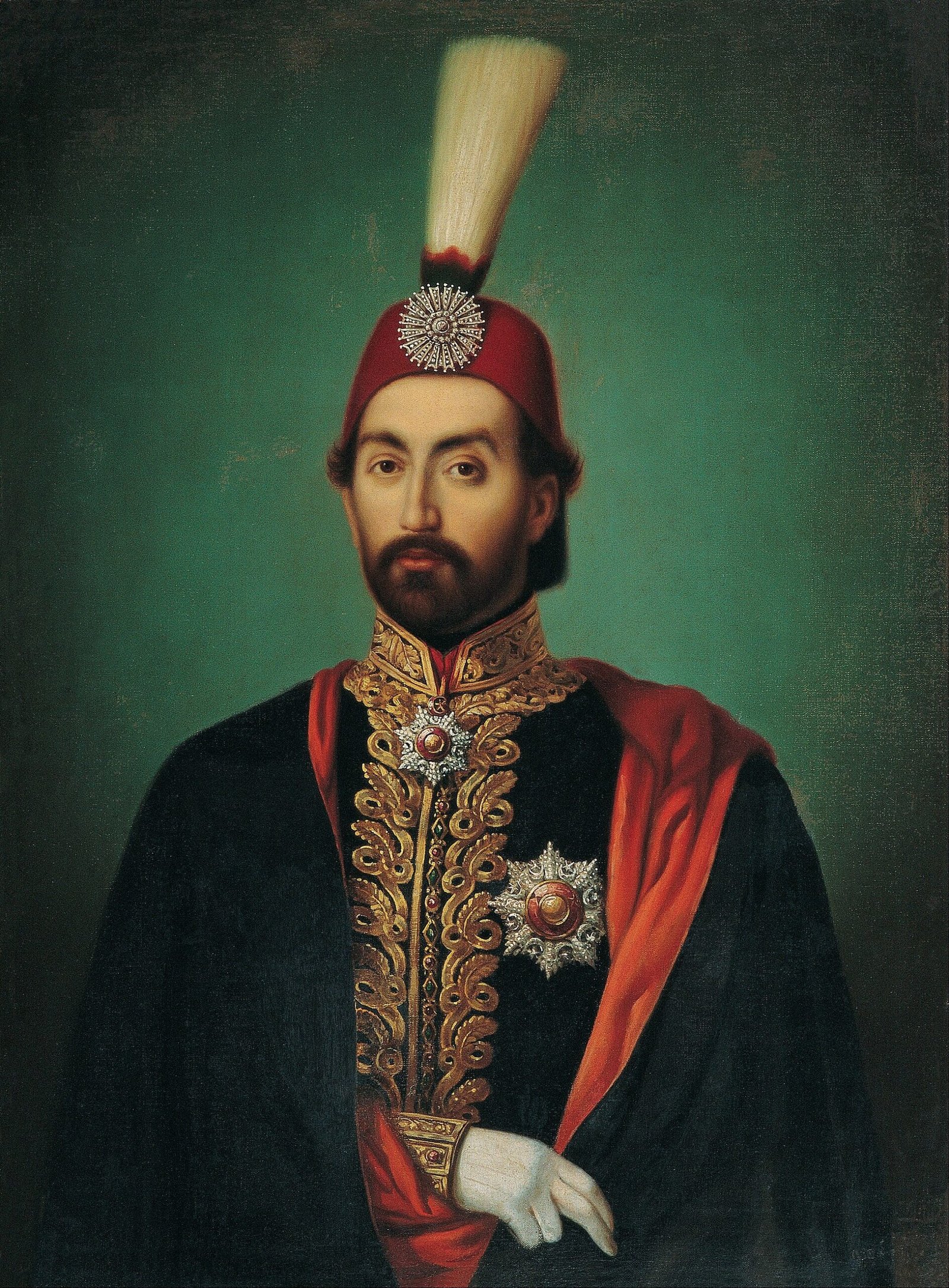
Image: Sultan Abdülmecid – Google Art Project.jpg — Unknown authorUnknown author, Public domain