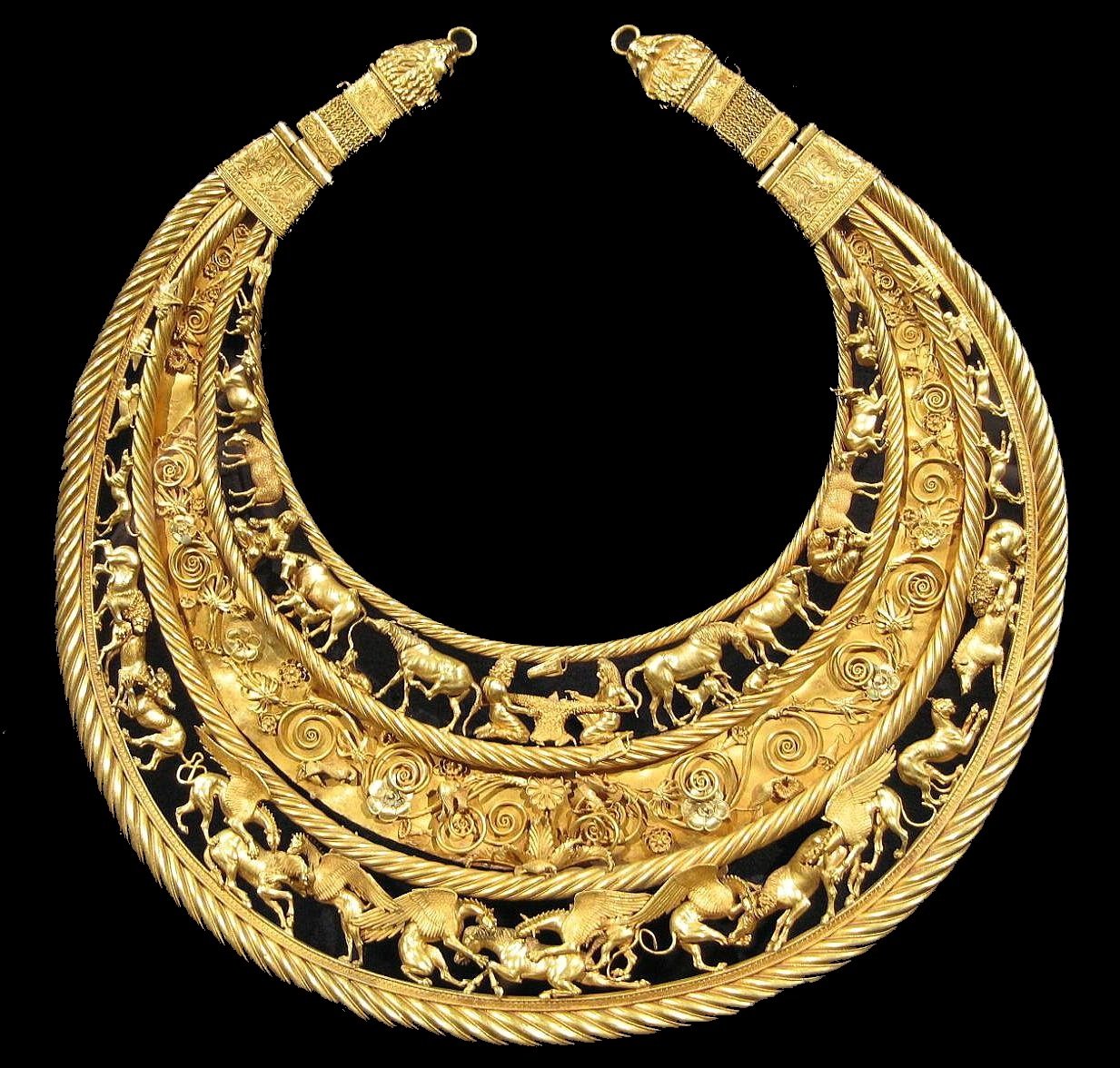
If you search for the Scythians, you will find two stories. One is about gold: deer, panthers and griffins hammered into jewelry. The other is a question that matters a great deal to readers in Turkey: were these steppe riders Turkic? This article takes both in turn and keeps to what the evidence supports.
Who were the Scythians?
The Scythians were people of the first millennium BC who lived on the Eurasian steppes. Scholars link them with mounted nomadism and with Iranian languages. They appear in the records of their neighbors: Assyrians, Persians and Greeks.
That is why their story is told mostly from outside. The strongest evidence of how they lived comes from their burial mounds, called kurgans.
Scythians meaning: what does the name say?
One theory reconstructs the name as skuda and reads it as “archer.” It is an attractive idea, but Rüdiger Schmitt, writing in the Encyclopaedia Iranica, notes that this etymology has not been firmly proven. Treat “archer” as a possibility, not a settled fact.
The Persians used the name Saka in a wide sense for steppe nomads. In modern research, Saka mostly refers to the Iranian nomads of Central Asia and Eastern Turkestan.
Scythians pronunciation
English gives two versions: /ˈsɪθiən/ or /ˈsɪðiən/. Both start with a clear “s” and a short “i.” Say it like “SITH-ee-un” or “SIDH-ee-un.”
Scythians origin: where did they come from?
The English Wikipedia article dates their move from Central Asia to the Black Sea steppes to the 9th–8th centuries BC. Archaeology points in the same direction. A kurgan called Tunnug 1 in Tuva is dated to 833–800 BC. It holds weapons, horse gear and animal-style art, an early form of what researchers call the “Scythian triad.”
So the roots of the Scythian world reach deep into Inner Asia. The later Scythians of the Black Sea steppes grew out of that wider steppe culture.
Scythians where did they live: a map in words
Picture a long green belt. In the narrow sense, the historical Scythia was the North Pontic steppe of today’s Ukraine and southern Russia, between the Danube and the Don. Further east, in Central Asia and Eastern Turkestan, lived the Saka. The Pazyryk burials, which belong to the Scythian-Saka cultural circle, add another point on your mental map.
A late Scythian center survived in Crimea. Scythian Neapolis, near today’s Simferopol, existed from the late 3rd century BC until the second half of the 3rd century AD.
Were the Scythians Turkic?
This is the question behind most searches from Turkey, so here is a direct answer.
- Language. Scythian is traditionally classified in the Northeastern Iranian group of languages.
- Evidence problem. No original, continuous Scythian texts survive. Scholars rely mainly on personal and tribal names preserved by Assyrian, Persian and Greek sources.
- The Turkic claim. Some researchers do argue for a Turkic origin. The Turkish Wikipedia article on the Scythians, however, presents this view among the origin claims set against the majority’s Iranian classification.
- Genetics. A 2025 study, “Genetic history of Scythia,” found genetic diversity among European Scythians across periods and regions. Its conclusion is that a shared steppe culture did not mean a single ethnic origin.
The honest summary: the mainstream scholarly label is Iranian, the Turkic idea is a contested minority position, and “Scythian” was likely a culture shared by varied groups.
Scythians and Sarmatians
The Cambridge History of Iran counts both the Scythians and the Sarmatians among the main Iranian-speaking peoples of ancient South-Eastern Europe.
In the 3rd–2nd centuries BC the spread of the Sarmatians became one of the main developments that ended Scythian dominance on the North Pontic steppes.
Scythians in the Bible
The name Scythian appears in the New Testament in Colossians 3:11. It comes in a list of divisions that are said to be overcome in Christ: Greek and Jew, slave and free.
Scythians in India
Saka groups reached the Indian subcontinent, where modern scholars call them Indo-Scythians. The coins of Maues, regarded as the first Indo-Scythian ruler there, are among the main evidence for a Saka presence around Kashmir, Hazara and Taxila.
Scythians in the ancient record
Their written trail begins in Assyria. Esarhaddon’s annals mention troops led by İšpakāia in events dated to 680/679–678/677 BC. Around 672 BC the Scythian king Partatua proposed an alliance by asking to marry Esarhaddon’s daughter.
The Persians met them later. For Darius I’s Scythian campaign, dates between 520 and 507 BC have been proposed. The Encyclopaedia Iranica gives 513 BC as the most likely and judges the campaign a failure.
The Scythian king Ateas died fighting Philip II of Macedon in 339 BC.
Scythians today
No Scythian state or nation exists now. The clearest living link is linguistic: modern Ossetic is treated in the Encyclopaedia Iranica as a living Iranian language connected with Scythian-Sarmatian-Alan language material.
For travelers, the finds are in museums. The Hermitage in St. Petersburg and the Metropolitan Museum of Art both hold Scythian-circle objects.
Golden craft: the animal style
In the Scythian animal style, deer, panthers, wild boars and birds of prey decorated jewelry, vessels and horse harness. These were objects worn and used by riders, not only displayed.
One caution from the Met: a gold scabbard cover dated 340–320 BC was probably made in a Greek workshop. So not every piece of gold from a Scythian grave was necessarily made by a Scythian craftsperson.
The Tovsta Mohyla pectoral, a 4th-century BC gold chest ornament, was found on 21 June 1971 in an excavation directed by Boris Mozolevsky.
Details you won’t find in guidebooks
- Weight and size of a pectoral. The Tovsta Mohyla pectoral weighs about 1,150 grams and is 30.5 centimeters across. It has three bands of decoration between four concentric arcs.
- Gold was sewn on. Holes in 5th-century BC gold ornaments from Maykop show that they were stitched onto clothing and pointed caps.
- A tattoo with griffins. The shoulder tattoo of the 5th-century BC “Ice Princess” of the Pazyryk culture shows a deer with stylized antlers and griffin heads, the same motifs seen in gold ornaments.
- A knotted carpet. A wool carpet from the fifth Pazyryk kurgan, found in 1949 and dated to the 5th–4th century BC, measures 183 × 200 centimeters according to the Hermitage record. The next time you step on a knotted wool rug at home, remember that the technique appears in a nomad’s grave over two thousand years ago.
- Cannabis evidence is thin. A 2019 academic review found cannabis finds linked to the Scythians at only eight archaeological settlements or cemeteries. The popular image is bigger than the evidence.
Timeline
- 9th–8th centuries BC: Scythians move from Central Asia to the North Pontic steppes.
- 833–800 BC: Date of the Tunnug 1 kurgan in Tuva.
- 680/679–678/677 BC: Esarhaddon’s annals mention troops led by İšpakāia.
- About 672 BC: Partatua proposes an alliance with the Assyrian dynasty through marriage.
- Probably 513 BC: Darius I’s unsuccessful Scythian campaign.
- 5th–4th centuries BC: Date of the Pazyryk knotted carpet in the Hermitage.
- 339 BC: Ateas dies fighting Philip II of Macedon.
- 3rd–2nd centuries BC: The spread of the Sarmatians ends Scythian dominance on the North Pontic steppes.
- Late 3rd century BC: Scythian Neapolis develops as a late Scythian center.
- Second half of 3rd century AD: Scythian Neapolis ends.
- 1949: The knotted carpet is found in the fifth Pazyryk kurgan.
- 21 June 1971: The Tovsta Mohyla pectoral is discovered.
FAQ
Were the Scythians Turkic?
Some researchers argue for a Turkic origin, but the majority view classifies the Scythians as Iranian. Their language is traditionally placed in the Northeastern Iranian group. The Turkish-language Wikipedia also lists the Turkic idea among the origin claims set against that Iranian classification.
How do you pronounce Scythian?
Dictionaries give /ˈsɪθiən/ or /ˈsɪðiən/. The first sound is an “s”, and the “th” can be voiceless or voiced.
Where did the Scythians live?
In the narrow sense, they lived on the North Pontic steppes of today’s Ukraine and southern Russia, between the Danube and the Don. Related Saka groups lived in Central Asia and Eastern Turkestan.
Do Scythians exist today?
There is no Scythian nation today. Modern Ossetic, however, is treated as a living Iranian language linked to Scythian-Sarmatian-Alan language material.
Sources
- Encyclopaedia Iranica, “Scythians” iranicaonline.org
- Encyclopaedia Iranica, “Scythian Language” iranicaonline.org
- Encyclopaedia Iranica, “Indo-Scythian Dynasty” iranicaonline.org
- Wikipedia, “Scythians” en.wikipedia.org
- Wikipedia, “Scythian Neapolis” en.wikipedia.org
- Vikipedi, “İskitler” tr.wikipedia.org
- Science Advances, “Genetic history of Scythia” pmc.ncbi.nlm.nih.gov
- Cambridge University Press, “The Scyths” resolve.cambridge.org
- Metropolitan Museum of Art, “Gold, Griffins, and Greeks” metmuseum.org
- Metropolitan Museum of Art Bulletin, “Ancient Near Eastern Art” resources.metmuseum.org
- Antiquity, “Expanding the corpus of the earliest Scythian animal-style artefacts” cambridge.org
- Arts, “The Pectoral of Tovsta Mohyla” mdpi.com
Image: Pektoral111.JPG — Terminator, Public domain