Pyrrhus of Epirus was a Hellenistic king from northwestern Greece who lived around 319/318–272 BCE. He defeated Roman armies at Heraclea in 280 BCE and Asculum in 279 BCE, but suffered losses he struggled to replace. These costly successes became associated with a “Pyrrhic victory”: a win that damages the winner almost as severely as defeat.
How could a king defeat Rome twice and still fail to secure a lasting advantage? If you follow his campaign from Tarentum to Asculum, the answer lies in elephants, experienced commanders, and the ability to replace an army. His story also requires care: Plutarch’s account came roughly 380–400 years after the battles.
Who was Pyrrhus of Epirus?
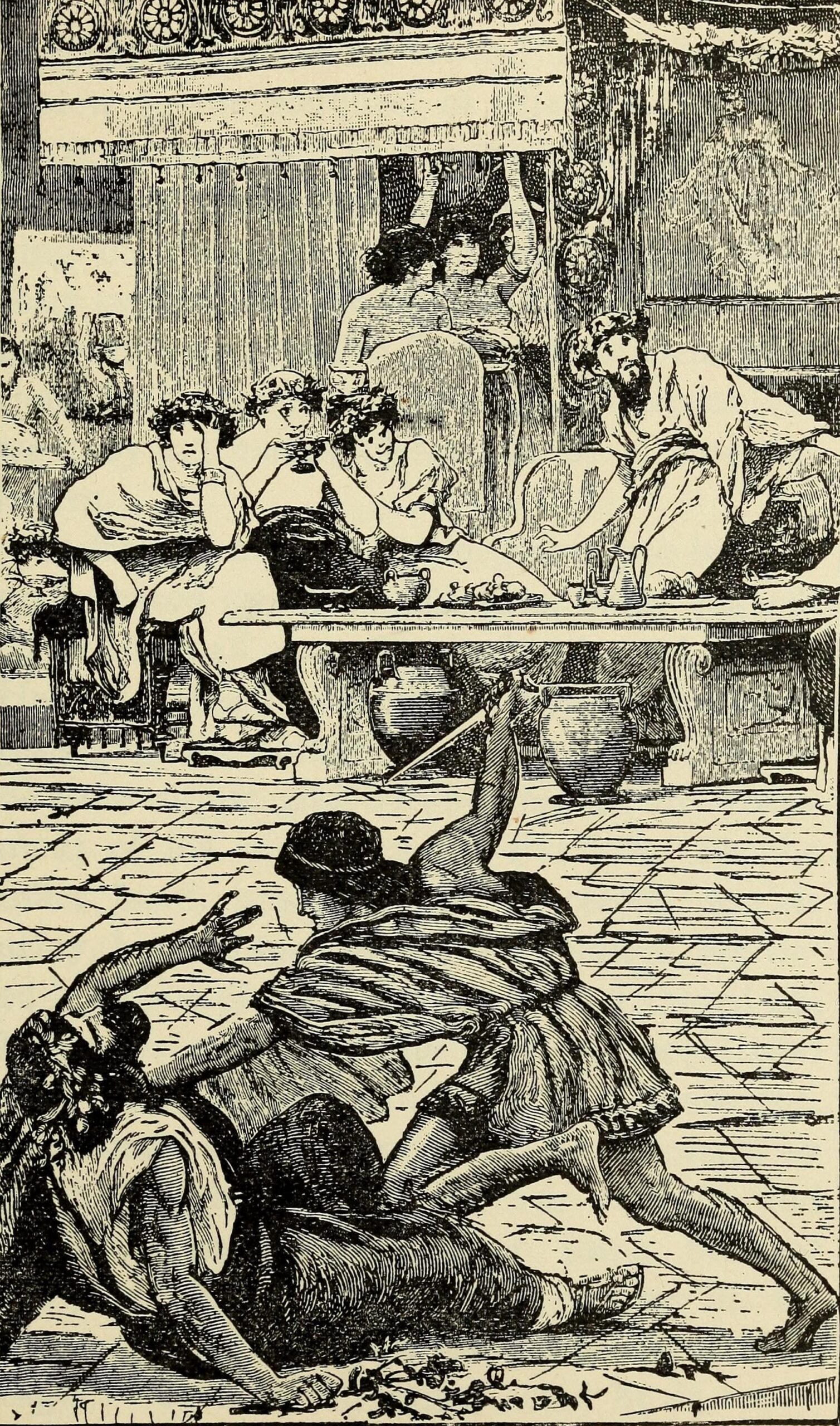
Pyrrhus ruled Epirus, in northwestern Greece. His father was Aeacides, and his mother was Phthia of Thessaly. In 297 BCE, support from the Egyptian ruler Ptolemy I helped him regain the Epirote throne. His career therefore involved struggles for power before he crossed to Italy.
His ambitions extended beyond Epirus. According to Plutarch’s biography of Demetrius, Macedonia was divided between Pyrrhus and Lysimachus after Demetrius was overthrown. Commanding armies and gaining territory were already central to his career when Tarentum requested his help.
His capital was Ambracia, where the Greek city of Arta stands today. For you as a traveler, that connection gives the story a present-day geographical anchor. The king remembered through an expression about costly success ruled from a place you can locate in modern Epirus.
Why did Pyrrhus of Epirus invade Italy?
Tarentum, a Greek city in southern Italy, invited Pyrrhus to command its forces against Rome. He accepted the invitation and crossed to Italy in 280 BCE. Helping Tarentum also offered him an opportunity to establish a sphere of power of his own on the peninsula.
The expedition brought several kinds of troops. The figures given are 20,000 infantry, 3,000 cavalry, 2,000 archers, 500 slingers, and 20 elephants. Those numbers matter because the campaign depended on more than the animals that later became its most memorable feature. Infantry, mounted troops, and missile troops all formed part of his army.
At Heraclea in 280 BCE, Pyrrhus defeated the Roman army commanded by the consul Publius Valerius Laevinus. The following year brought his second major victory over Rome, at Asculum in Apulia. These successes explain his reputation as a formidable opponent. Their aftermath explains the darker meaning attached to his name.
How were war elephants used at Heraclea and Asculum?
At Heraclea, Plutarch describes elephants frightening the Roman horses. Pyrrhus then exploited the confusion with his Thessalian cavalry. The animals’ effect therefore reached beyond their own immediate attacks: they disrupted the opposing mounted troops and created an opening for cavalry action.
Asculum shows why elephants could not provide the same advantage on every battlefield. In Plutarch’s account, a stream and wooded banks obstructed their charge on the first day. Terrain limited their usefulness. Possessing elephants did not mean that Pyrrhus could always bring them effectively into the fighting.
On the second day, according to the same account, Pyrrhus fought on level ground. He placed archers and slingers between the elephants. Here, the animals operated alongside missile troops in a deployment adapted to more favorable terrain. The contrast with the first day makes the ground itself part of the explanation.
If you picture the elephants alone deciding these battles, Heraclea and Asculum suggest a more complicated story. At Heraclea, their impact opened a chance for Thessalian cavalry. At Asculum, their use depended on access to suitable ground and their placement with archers and slingers.
Why did his victories fail to produce a lasting advantage?
Plutarch identifies a problem that battlefield success could not solve. Pyrrhus lost experienced commanders and could not bring replacements from his homeland. His Italian allies became less willing to support him. Rome, meanwhile, renewed its army quickly. The two sides faced different prospects after the fighting ended.
A victory could therefore leave Pyrrhus less able to fight the next battle. Lost commanders meant lost experience as well as fewer men. The difficulty of obtaining reinforcements made those losses harder to absorb. Rome’s capacity to rebuild its forces prevented his victories from settling the campaign.
After Asculum, Plutarch attributes to Pyrrhus a remark meaning that another victory over the Romans would leave his own army completely ruined. The point was the cost of success. His army had won, yet the losses threatened its ability to continue winning.
That is the idea preserved in the expression “Pyrrhic victory.” It describes an apparent success bought at a price comparable to defeat. The term does not simply mean a difficult win. Its force comes from the damage that winning inflicts on the winner’s remaining resources.
You can apply the same idea to an everyday dispute. Winning an argument may feel like success, but the effort and damage may outweigh what you gain. Pyrrhus’s military predicament gives the expression its historical substance: his victories consumed experienced people whom he could not readily replace.
How certain are the losses at Asculum?
Plutarch preserves conflicting casualty figures. Hieronymus reports 6,000 Roman dead and 3,505 dead from Pyrrhus’s army at Asculum. Dionysius gives a combined total of more than 15,000 dead. These figures belong to different accounts and should not be treated as a single agreed calculation.
The disagreement goes beyond numbers. Hieronymus describes a Roman defeat over two days. Dionysius describes a single day’s fighting without reporting a decisive Roman defeat. The duration and result of the encounter therefore vary with the account being followed.
Asculum remains associated with Pyrrhus’s costly second victory over Rome. Yet its detailed reconstruction requires those disagreements to remain visible. The precise casualty total is disputed, while Plutarch’s explanation centers on lost commanders, unavailable reinforcements, weakening allied support, and Rome’s ability to renew its forces.
What happened after his victories over Rome?
In 278 BCE, Pyrrhus accepted an appeal from Greek cities in Sicily for help against Carthage. He took his army to the island. His campaign thus moved away from the Italian battles that gave his name its lasting association with costly victory.
At Lilybaeum, two months of attacks failed to produce a successful siege. Pyrrhus could not establish a blockade from the sea. This episode presents another limit on military success: attacks on land did not overcome the absence of a naval blockade.
In 275 BCE, he encountered the army of Manius Curius Dentatus at Beneventum. Afterward, he ended his Italian expedition and returned to Epirus. He was killed in 272 BCE during fighting in the narrow streets of Argos. His victories over Rome had not secured the lasting Italian position he had sought.
Timeline
- Around 319/318 BCE Pyrrhus was born.
- 297 BCE He regained the Epirote throne with support from Ptolemy I.
- 280 BCE He crossed to Italy at Tarentum’s invitation and defeated Rome at Heraclea.
- 279 BCE He won at Asculum, a battle associated with heavy losses.
- 278 BCE He moved to Sicily to fight Carthage.
- 275 BCE He ended his Italian campaign after the encounter at Beneventum.
- 272 BCE He was killed during fighting at Argos.
- Early second century CE: The general dating of Plutarch’s Parallel Lives, which includes his biography of Pyrrhus.
Details you won’t find in guidebooks
Plutarch describes Pyrrhus personally fighting and wounding Pantauchus in battle. He also reports the capture of 5,000 enemy soldiers in that encounter. This account presents the king as a direct participant in combat as well as an army commander.
After the victory over Pantauchus, some Macedonians compared Pyrrhus’s courage in battle with that of Alexander the Great, according to Plutarch. That comparison belongs to the reputation described in the ancient narrative. It helps explain why Pyrrhus could attract admiration beyond Epirus.
His legacy also included buildings and monuments. The Oxford Classical Dictionary attributes the construction of the large theater at Dodona to him. Encyclopaedia Romana records that he erected a gilded bronze statue of Victory to commemorate his victory at Tarentum. Such a monument celebrated success, while the later expression attached to his name emphasized its cost.
How long after the events did Plutarch write his account?
Plutarch’s Parallel Lives, which contains the biography of Pyrrhus, is generally dated to the early second century CE. That places the account roughly 380–400 years after the battles of 280–279 BCE. Plutarch was therefore writing centuries after Heraclea and Asculum.
That distance matters when you read the remark attributed to Pyrrhus after Asculum. It comes through a later narrative that also preserves conflicting accounts of the battle. The king’s reported words express the campaign’s central problem clearly, but they should be presented as Plutarch’s attribution.
FAQ
What does a Pyrrhic victory mean?
A Pyrrhic victory is a success that costs the winner so much that its consequences resemble defeat. The expression is associated with Pyrrhus’s costly victories over Rome.
Which battles did Pyrrhus win against Rome?
Pyrrhus defeated Rome at Heraclea in 280 BCE and gained his second major victory at Asculum in 279 BCE. The surviving accounts of Asculum disagree about its duration, outcome, and losses.
Did Pyrrhus use war elephants?
Yes. His expedition to Italy included 20 elephants. Plutarch describes their role in frightening Roman horses at Heraclea and fighting alongside archers and slingers at Asculum.
Where was Pyrrhus’s capital?
His capital was Ambracia, on the site of modern Arta in the Epirus region of Greece.
Sources
- Turkish Wikipedia — Pirus tr.wikipedia.org
- Oxford Classical Dictionary — Pyrrhus academic.oup.com
- Plutarch — Life of Demetrius, sections 41 and 44 penelope.uchicago.edu
- English Wikipedia — Pyrrhus of Epirus en.wikipedia.org
- Plutarch — Life of Pyrrhus, section 17 penelope.uchicago.edu
- Plutarch — Life of Pyrrhus, section 21 penelope.uchicago.edu
- Encyclopaedia Romana — Altar of Victory penelope.uchicago.edu
- English Wikipedia — Arta, Greece: Antiquity en.wikipedia.org
- English Wikipedia — Parallel Lives en.wikipedia.org
Image: Young Pyrrhus slays Neoptolomeus, 297 BC (1854 engraving).jpg — Unknown authorUnknown author, Public domain