Where is the Severan Bridge?
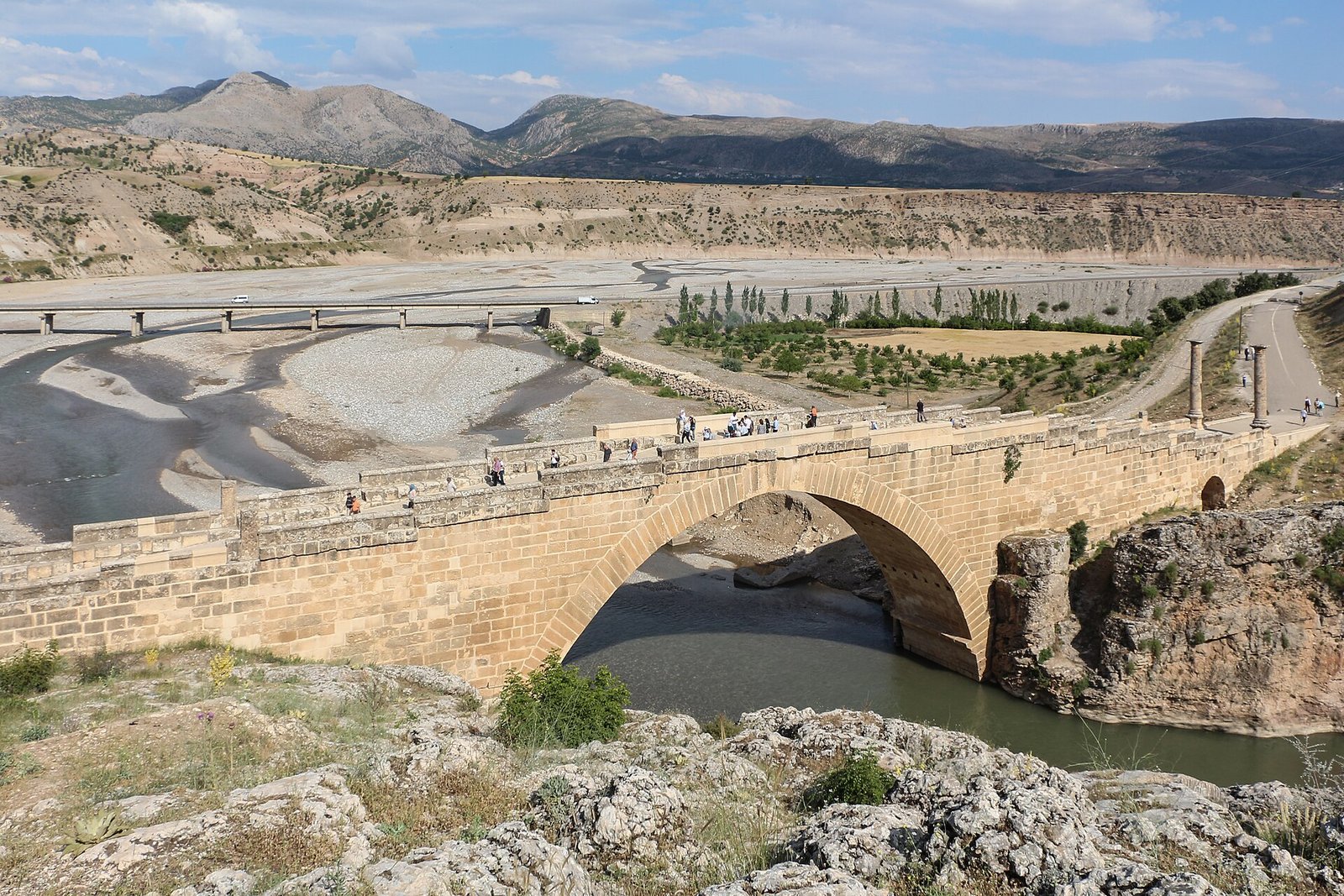
The Severan Bridge stands in Adıyaman, Turkey, between Kâhta and Sincik. It crosses the Cendere Stream, known in antiquity as the Cabinas. The bridge lies about 55 kilometres northeast of Adıyaman city centre, near ancient Arsameia. Its location places a Roman crossing on the route toward Mount Nemrut.
If you search for the bridge locally, look for Cendere Köprüsü. It is also called the Roman Bridge and the Septimius Severus Bridge. These names refer to the same structure. The Adıyaman Municipality record places it at 37.932914 north latitude and 38.608489 east longitude.
Approaching from Kâhta toward Mount Nemrut, you reach the bridge about 10 kilometres after Karakuş Tumulus. It stands at the Sincik–Kocahisar road junction. That sequence gives you a practical way to place the crossing within a journey: Kâhta, Karakuş Tumulus, then the bridge.
Its most striking historical detail is a missing column. Four columns originally honoured members of the imperial family. Three survive. The empty position belongs to Geta, whose brother Caracalla had him killed. The bridge therefore preserves both a Roman building project and the visible result of an attack on someone’s memory.
Who built the Severan Bridge?
The bridge was built on the orders of the Roman emperor Septimius Severus. The force responsible was the XVI Legion, stationed at Samsat. The GAP Southeastern Anatolia Guide gives the unit’s full name as XVI Flavia Firma. This identifies the military formation behind the construction.
A symposium paper published by the Chamber of Civil Engineers dates the bridge to AD 198–200. Using that date range, it is approximately 1,826–1,828 years old in 2026. The date provides a clear answer to its age without assigning construction to a single year.
The original columns made the imperial connection explicit. They honoured Septimius Severus, Julia Domna, Caracalla and Geta. The columns linked the crossing to the emperor and his family. Its entrances therefore presented the crossing through the identity of the ruling family.
Why is the Severan Bridge missing a column?
The two columns at the southern entrance were dedicated to Septimius Severus and his wife, Julia Domna. At the northern entrance, the surviving column honours Caracalla. The missing column opposite it honoured Geta. Knowing this arrangement turns an uneven group of columns into a readable family monument.
According to the Ministry of Culture, Geta’s column was removed after Caracalla had him killed. Its destruction formed part of the removal of monuments dedicated to Geta. The absent column is therefore linked to a deliberate act against his commemoration, rather than simply described as a lost piece of architecture.
The English Wikipedia account connects the missing column with the condemnation of Geta’s memory. That process also involved erasing his name from inscriptions. At Cendere, the result is especially direct: a monument originally organised around four family members now presents only three columns.
Think of the everyday act of removing someone’s name from a family photograph. The remaining people stay visible, but the deletion changes the story the photograph tells. Geta’s removed column offers a physical version of that idea. Here, the deleted place remains identifiable because the original dedication is known.
When you examine the northern entrance, the surviving column belongs to Caracalla. The absent counterpart belonged to the brother he had killed. That relationship explains why counting the columns matters. Three standing columns are the visible outcome of a monument first designed with four.
How long is the Severan Bridge?
The Culture Portal gives the bridge’s length as 120 metres and its width as 7 metres. The Chamber of Civil Engineers paper records a different length: 116.80 metres. These published measurements should remain distinct. A general description can use the Culture Portal’s figure while acknowledging the engineering paper’s measurement.
The engineering paper measures the main arch span at 34.20 metres. That figure describes the opening of the large arch, rather than the full length of the bridge. Keeping the two measurements separate helps you understand its shape: the crossing extends beyond the opening beneath its principal arch.
The approaches rise from both ends and meet at the middle. The bridge therefore has an elevated central section rather than a level profile. There is also a smaller arch beside the main one. Its purpose is water drainage, adding a second opening to the structure.
Severan Bridge photos: what should you look for?
The Culture Portal’s Cendere Bridge page includes photographs credited to TGA and the Adıyaman Provincial Directorate of Culture and Tourism. These provide a reference for the surviving structure. As you examine them, begin with the entrances and the three columns before following the outline of the main arch.
A photograph showing the southern entrance can be read through its two dedications: Septimius Severus and Julia Domna. At the northern entrance, the surviving dedication belongs to Caracalla. Geta’s missing counterpart gives photographs of that end a historical significance beyond the bridge’s outline.
Images can also direct your attention to the rising approaches and the smaller drainage arch. These features help explain the structure’s form. The large arch, the raised middle and the columns each carry different information: how the crossing was shaped, how it handled water and whom it commemorated.
Details you won’t find in guidebooks
The smaller arch has a specific function. It provides an opening for water drainage beside the main arch. Looking only at the largest opening leaves out this part of the design. The bridge combines a principal crossing arch with a smaller passage for water.
The Culture Portal states that the bridge was built from dressed stone without mortar. This construction detail deserves attention alongside the imperial columns. The stonework is part of the bridge’s engineering story, while the dedications explain its connection to Septimius Severus and his family.
Inscriptions on the parapets indicate that the bridge was repaired at different times during the Roman period. Those inscriptions add maintenance to the construction story. The bridge’s Roman history includes later repairs as well as its original building phase.
The name Cendere has also attracted explanations. The Culture Portal connects it with the bridge joining the banks of the stream flowing through the canyon. The GAP guide also uses “cendere” for the compression technique associated with joining stones without mortar. That usage alone does not establish the name’s origin.
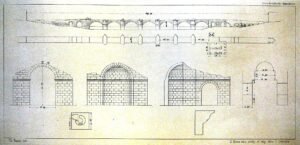
The bridge was documented by Osman Hamdi Bey and Osgan Efendi in 1883. David George Hogarth visited in 1894. His book, A Wandering Scholar in the Levant, appeared in 1896 and included an account and photograph of the crossing. Its visual record therefore extends beyond modern travel photography.
Timeline
- AD 198–200: The XVI Flavia Firma legion, stationed at Samsat, builds the bridge during the reign of Septimius Severus.
- After Geta’s death: Geta’s column is removed after Caracalla has him killed.
- 1883: Osman Hamdi Bey and Osgan Efendi document the bridge.
- 1894: David George Hogarth visits the crossing.
- 1896: Hogarth publishes A Wandering Scholar in the Levant, including his account and a photograph.
- 1997–1998: The bridge undergoes restoration.
- 2005: A new bridge opens, and the historic crossing closes to vehicle traffic.
What changed for the bridge in modern times?
Kâhta District Governorate records restoration work in 1997–1998. It also states that the historic bridge was closed to vehicle traffic when a new bridge entered service in 2005. The restoration and the traffic change are separate stages in the structure’s recent history.
Turkish Wikipedia places the new road bridge approximately 500 metres east of the historic crossing. If you are locating Cendere on the Kâhta–Sincik route, that distinction matters. The Roman bridge with the imperial columns is the historic structure that ceased carrying vehicle traffic in 2005.
FAQ
Where is the Severan Bridge?
The Severan Bridge crosses the Cendere Stream between Kâhta and Sincik in Adıyaman, Turkey. It stands about 55 kilometres northeast of Adıyaman city centre, near ancient Arsameia.
Why is a column missing from the Severan Bridge?
The missing column honoured Geta. According to the Culture Portal, it was removed during the destruction of monuments dedicated to him after his brother Caracalla had him killed.
Who built the Severan Bridge, and how old is it?
The XVI Flavia Firma legion, stationed at Samsat, built it on the orders of Septimius Severus. A construction date of AD 198–200 makes it approximately 1,826–1,828 years old in 2026.
How long is the Severan Bridge?
The Culture Portal gives its length as 120 metres and its width as 7 metres. A Chamber of Civil Engineers symposium paper records a length of 116.80 metres and a main arch span of 34.20 metres.
Where can I find Severan Bridge photos?
The Culture Portal’s Cendere Bridge page includes photographs credited to TGA and the Adıyaman Provincial Directorate of Culture and Tourism.
Sources
- Adıyaman Provincial Directorate of Culture and Tourism — Bridges adiyaman.ktb.gov.tr
- Culture Portal — Cendere Bridge kulturportali.gov.tr
- Adıyaman Municipality — Cendere Bridge sanaltur.adiyaman.bel.tr
- Chamber of Civil Engineers — Symposium on Strengthening Historical Structures and Safely Passing Them to the Future, p. 323 imo.org.tr
- GAP — Southeastern Anatolia Guide, Adıyaman, p. 83 gap.gov.tr
- Kâhta District Governorate — Cendere Bridge kahta.gov.tr
- Wikipedia — Severan Bridge en.wikipedia.org
- Turkish Wikipedia — Cendere Bridge tr.wikipedia.org
Image: Severan Bridge, Turkey 01.jpg — Bernard Gagnon, CC BY-SA 3.0