Spartacus was a gladiator who made Rome send army after army against him. The revolt he led lasted from 73 to 71 BC. Historians call it the Third Servile War. Many details are still argued over. This article separates what the ancient writers report from what is only guessed.
Who was Spartacus?
Spartacus was a Thracian. His origin is linked to Thrace, a region in the Balkans. No source tells us which city he came from.
You may see 103 BC given as his birth year. That date is not recorded anywhere. It is a modern estimate that assumes he was about 30 when the revolt began. Treat it as a guess.
The historian Appian says he once served with the Romans. He was later captured and sold as a gladiator. Plutarch places him in a gladiator school in Capua, owned by Lentulus Batiatus. Capua lies in Campania, in southern Italy.
The escape from Capua
In 73 BC, a group broke out of the Capua school. The number is disputed. Plutarch says 78 escaped. Livy says 74. Appian says about 70.
They did not have proper weapons at first. Plutarch says they grabbed cleavers and spits from a kitchen. Think of walking out of your own kitchen with a knife and a skewer. That is how this army began.
They soon upgraded. On the road, they met wagons carrying gladiator weapons and took them.
Three men led the escapees at first: Spartacus, Crixus and Oenomaus. Plutarch also mentions a woman. She was a seer from Spartacus’s own tribe, and she fled with him.
Vesuvius and a growing army
Appian says the runaways took refuge on Mount Vesuvius. Escaped slaves from the surrounding area joined them, and so did free people from the countryside. This was not only a slave revolt.
Rome sent forces against them. Plutarch describes one famous moment on Vesuvius. The rebels were besieged on a steep slope. They wove ladders from vine branches and climbed down. Then they hit the Roman camp from an unexpected side.
How big was the army?
Nobody knows. The Oxford Classical Dictionary notes that the sources give estimates from 70,000 to 120,000 people. That is a huge range. The ancient writers also wrote long after the events.
Crixus dies, Spartacus reaches the north
The rebels did not stay united. In 72 BC, Crixus’s forces were defeated near Mount Garganus. Crixus was killed.
Spartacus kept winning. In 72 BC he beat the forces of both Roman consuls. He then reached Cisalpine Gaul, in northern Italy.
He was now far from Capua and close to the Alps. What he did next is the biggest puzzle of the story.
What did Spartacus want?
The sources disagree.
- Plutarch says he wanted to cross the Alps so his people could go home.
- Appian and Florus say he intended to march on Rome.
A popular idea says he planned to abolish slavery in Rome. The ancient accounts do not clearly back that up. That claim comes from later readers, not from the sources.
The rebels turned south again. We do not know exactly why.
Rome sends Crassus
Rome gave the job of crushing the revolt to Marcus Licinius Crassus. Appian says six new legions were raised. The two legions of the consuls were added to them.
Crassus was harsh with his own men. Plutarch says he picked 500 soldiers who had run away. He split them into groups of ten. In each group, one man was chosen by lot and put to death.
The Sicily plan and the trap at Rhegium
Spartacus looked for a way out by sea. Plutarch says he made a deal with Cilician pirates. They were to ship 2,000 of his men to Sicily, where he hoped to start a new slave uprising there. The pirates took the payment and sailed away.
Crassus then trapped the rebels at the Rhegium peninsula in southern Italy. He closed it off with ditches and walls.
Spartacus had also been preparing for war on the ground. Appian says that near Thurii he banned trade in gold and silver. His people bought iron and a copper alloy to make weapons. That is a practical decision, not a wild one. It shows a leader trying to arm a large army.
The last battle
In 71 BC, Crassus defeated the rebel army in Lucania, and Spartacus died in the fighting. Plutarch describes him cut down among enemy soldiers before he could get to Crassus.
We do not know who killed him. His body was never found. That means no verified grave exists. If you hear about a “tomb of Spartacus” on a tour, ask what the evidence is.
The aftermath
Appian says 6,000 captured rebels were crucified along the road between Capua and Rome. The road ran from the school where the revolt began to the capital the rebels had threatened. The message to every slave was plain.
Pompey, returning from Spain, destroyed rebel groups that were fleeing. He then claimed a share of the credit for ending the war.
Timeline
- Before 73 BC: Spartacus, a Thracian, is brought to Lentulus Batiatus’s gladiator school in Capua.
- 73 BC: The gladiators escape from the school and take refuge on Vesuvius.
- 72 BC: Crixus is killed. Spartacus beats the consuls’ armies and reaches Cisalpine Gaul.
- After 72 BC: The rebels turn south. The Sicily crossing fails, and Crassus walls them in.
- 71 BC: Crassus defeats the rebel army and Spartacus dies in battle.
- 71 BC: According to Appian, 6,000 prisoners are crucified along the Capua–Rome road.
Details you won’t find in guidebooks
- The first weapons were kitchen tools. Plutarch says the escapees used cleavers and spits from a kitchen. They captured real gladiator gear later, from wagons on the road.
- Vine ladders saved the rebels on Vesuvius. They climbed down a steep slope and surprised the Roman camp.
- Spartacus controlled trade. Near Thurii, Appian says, he banned gold and silver and bought iron and a copper alloy for weapons.
- A seer fled with him. Plutarch says Spartacus’s wife was a seer from his own tribe.
- Our two main storytellers came late. Plutarch and Appian wrote more than a hundred years after Spartacus died. That is why so many details are uncertain.
The Spartacus movie
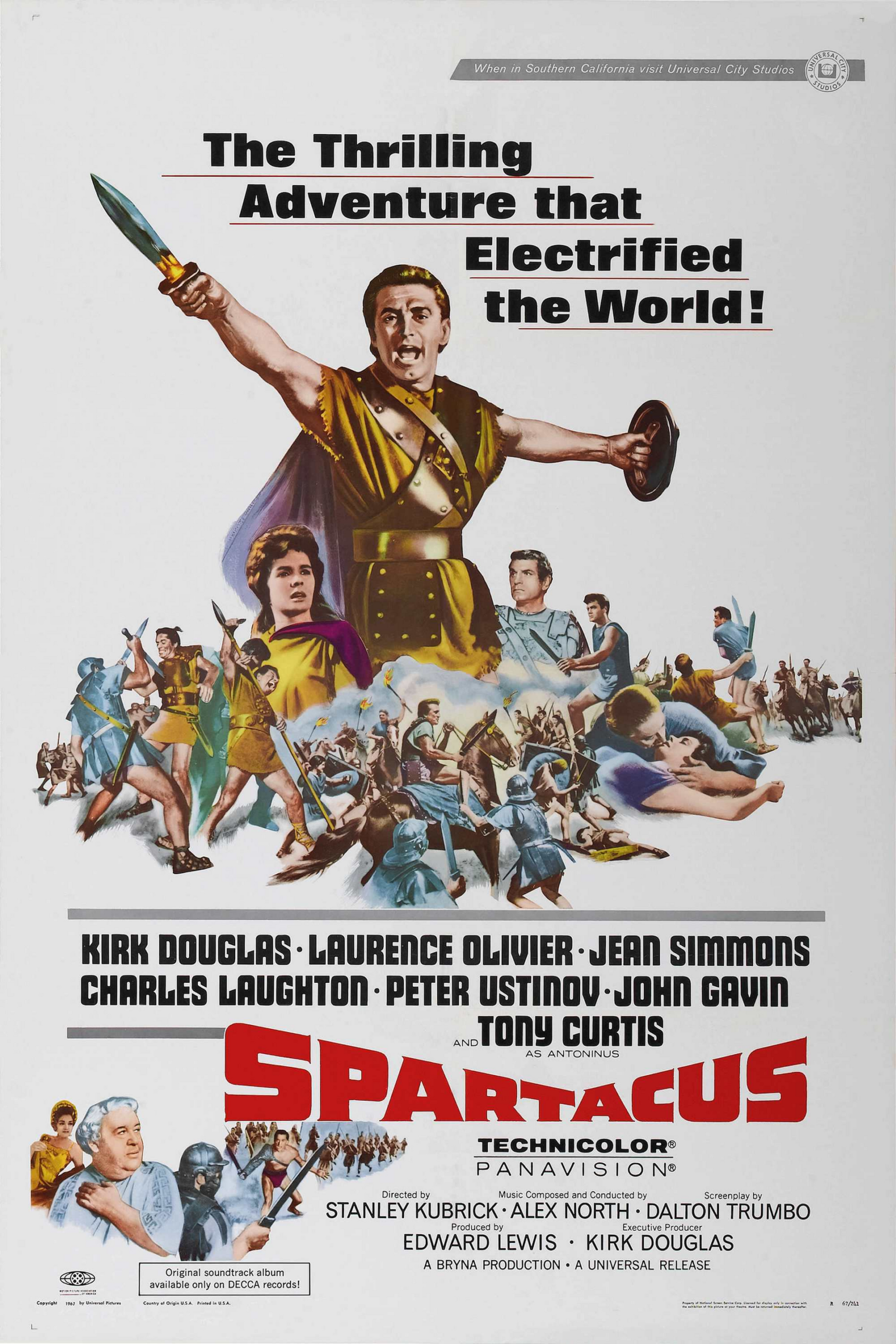
If you want a screen version, Stanley Kubrick’s 1960 film Spartacus starred Kirk Douglas.
Where to see the story today
Ancient Capua stood where Santa Maria Capua Vetere is now, in Italy’s Campania region. That is where the revolt began. Rhegium, where Crassus trapped the rebels, is in southern Italy too.
FAQ
Who was Spartacus?
Spartacus was a Thracian gladiator who led the Third Servile War against the Roman Republic between 73 and 71 BC. His origin is tied to Thrace in the Balkans, but no source fixes his birth city.
Sources
- Wikipedia (Turkish) — Spartaküs tr.wikipedia.org
- Wikipedia — Spartacus en.wikipedia.org
- Royal Armouries — Spartacus royalarmouries.org
- Oxford Classical Dictionary — Spartacus academic.oup.com
- Appian — Civil Wars, I.116–120 penelope.uchicago.edu
- Plutarch — Life of Crassus, 8–11 penelope.uchicago.edu
Image: Spartacus – 1960 – poster.png — Reynold Brown, Public domain