You may know Hua Mulan as a girl who takes her father’s place in the army. The question is whether she ever lived. The short answer is that nobody has verified it. The longer answer is a trail of songs, plays and retellings that stretches across more than a thousand years. This article follows that trail so you can see what is firm and what is added later.
Was Hua Mulan a real person?
Hua Mulan is a legendary woman warrior linked to China’s Southern and Northern Dynasties period. That link is about the setting of the story. It is not proof of a life.
The claim that she lived is not verified. Turkish Wikipedia notes that academics generally regard her as a fictional character. David K. Jordan of UC San Diego also treats her historical existence, and her tie to northern communities, as uncertain.
So if you are asking “hua mulan real person”, the careful answer is this: there is a very old poem about her, and there is no confirmed record of a woman by that name.
The real story starts with a poem
The oldest layer of the story is the Ballad of Mulan. Columbia University dates its composition to the 5th or 6th century CE. This poem is the strongest evidence anyone has, and it is a work of literature.
The ballad was taken into a collection called Old and New Music Records. The monk Zhijiang compiled it in the 6th century. That anthology is now lost.
The oldest surviving text of the ballad comes from a later collection. It is Guo Maoqian’s Yuefu Shiji, dated to the 11th or 12th century. Think of it like an old family recipe. The original card is gone, and you are cooking from a copy made centuries later.
What the ballad actually says
The ballad opens with Mulan at her loom. Then the call-up arrives. Her father’s name appears on each of twelve conscription rolls.
Mulan has no elder brother, and her father has no grown son. So she offers to go to war in his place.
The poem then follows her journey. She camps first beside the Yellow River. Then she reaches Black Mountain.
After the fighting, she is offered a state post. She refuses it and asks for a swift mount so she can go home. Her comrades, who have served beside her for twelve years, learn only on her return that she is a woman.
There is no love story here. Jordan points out that the old ballad gives Mulan no romantic relationship. If you have seen later versions with a romance, that part was added afterward.
Which dynasty? The ballad does not say
Many writers place the ballad in the Northern Wei dynasty. This dynasty ruled much of northern China from 386 to 534. The date range fits the 5th and 6th century dating of the poem.
But the Northern Wei link is a historical interpretation. The ballad itself does not state which dynasty its events belong to.
There is a second warning sign. Northern Wei women have a biography section called Exemplary Women. Mulan’s name does not appear in it. A real heroine of that kind might have been recorded there, but she is not.
The Tuoba theory
Some scholars argue the ballad did not begin in Chinese. One theory says it was translated into Chinese from a folk song in the language of the Tuoba, an Inner Asian people.
This theory is not a settled finding about anyone’s ethnic identity. Jordan treats both Mulan’s existence and her link to northern communities as uncertain.
Still, the idea helps explain the setting. A song from the northern frontier could easily travel into Chinese and settle into an anthology.
How the legend grew after the ballad
The ballad is short. Later writers filled in the gaps, and each age gave Mulan what it wanted.
- 8th century: A Mulan Song attributed to Wei Yuanfu, dated to the mid-8th century, retells her as a model of civic virtue.
- Ming era: Xu Wei turned the father-replacement story into a two-act play.
- Qing era (1644–1911): Retellings added supernatural powers and secret fighting methods. Some versions also add suicide.
This is why “hua mulan real story” searches lead to so many different answers. There is not one story. There is a poem and a chain of rewrites, each with its own purpose.
The hometown claim: Huangpi in Wuhan
Several places like to claim a famous figure. Wuhan’s city government is one of them. A 2023 page on its official site presents Huangpi district as the place regarded as Mulan’s hometown.
That is a local tradition. It is not a birth record. If you visit and see her name on signs, treat it as local pride and heritage, not as proof.
Timeline
- 386–534: The Northern Wei dynasty, the period the ballad is usually linked to.
- 5th–6th century: Columbia University’s dating for the composition of the Ballad of Mulan.
- 6th century: The ballad enters Zhijiang’s Old and New Music Records, an anthology now lost.
- Mid-8th century: The period of the Mulan Song attributed to Wei Yuanfu.
- 11th–12th century: Guo Maoqian’s Yuefu Shiji, which holds the oldest surviving text of the ballad.
- Ming era: Xu Wei turns the story into a two-act play and uses the Hua surname.
- 1644–1911: Qing-era retellings add supernatural and dramatic elements.
Details you won’t find in guidebooks
- Four markets, four purchases. In the ballad, Mulan buys her horse in the east market, her saddle in the west, her bridle in the south and her whip in the north. If you have ever hunted through several shops to pack for one trip, you know the feeling.
- Two titles for one ruler. The same ruler in the ballad is called both Khan, a steppe title, and Son of Heaven, a Chinese title for a sovereign. The mix of titles hints at a world where two cultures overlapped.
- Two hares at the end. The poem closes with two hares running side by side. The image says it is hard to tell male from female when they are in motion.
- The surname is a later addition. Hua means flower. Xu Wei added it to the Mulan story. The old ballad does not use it.
- Unbound feet. In Xu Wei’s play, Mulan unbinds her feet before she joins the fighting. That detail belongs to the play, not to the early poem.
FAQ
Was Hua Mulan a real person?
Her existence is not verified. Turkish Wikipedia says scholars generally treat her as a fictional character, and David K. Jordan of UC San Diego regards her historical existence as uncertain.
What is the oldest source for the Mulan story?
The Ballad of Mulan. Columbia University dates its composition to the 5th or 6th century. The oldest surviving text is in Guo Maoqian’s Yuefu Shiji, from the 11th or 12th century.
Where did the surname Hua come from?
Xu Wei, a Ming-era writer, added it to the Mulan story. The word means flower. The old ballad gives no such surname.
Does the old ballad include a love story?
No. According to David K. Jordan, the old ballad includes no romantic relationship for Mulan.
Is Huangpi in Wuhan really her birthplace?
Wuhan’s 2023 official page presents Huangpi district as Mulan’s hometown. That is a local tradition, not a verified birth record.
Sources
- Vikipedi — Hua Mulan tr.wikipedia.org
- Columbia University — The Ballad of Mulan afe.easia.columbia.edu
- Columbia University — Text of the Ballad of Mulan afe.easia.columbia.edu
- Wikipedia — Hua Mulan en.wikipedia.org
- Stanford Humanities Center — The Story of Mulan shc.stanford.edu
- UC San Diego (David K. Jordan) — The Ballad of Mùlán pages.ucsd.edu
- Journal of Folklore Research Reviews — Mulan: Five Versions scholarworks.iu.edu
- Wuhan Municipal Government — Mulan’s hometown in Wuhan english.wuhan.gov.cn
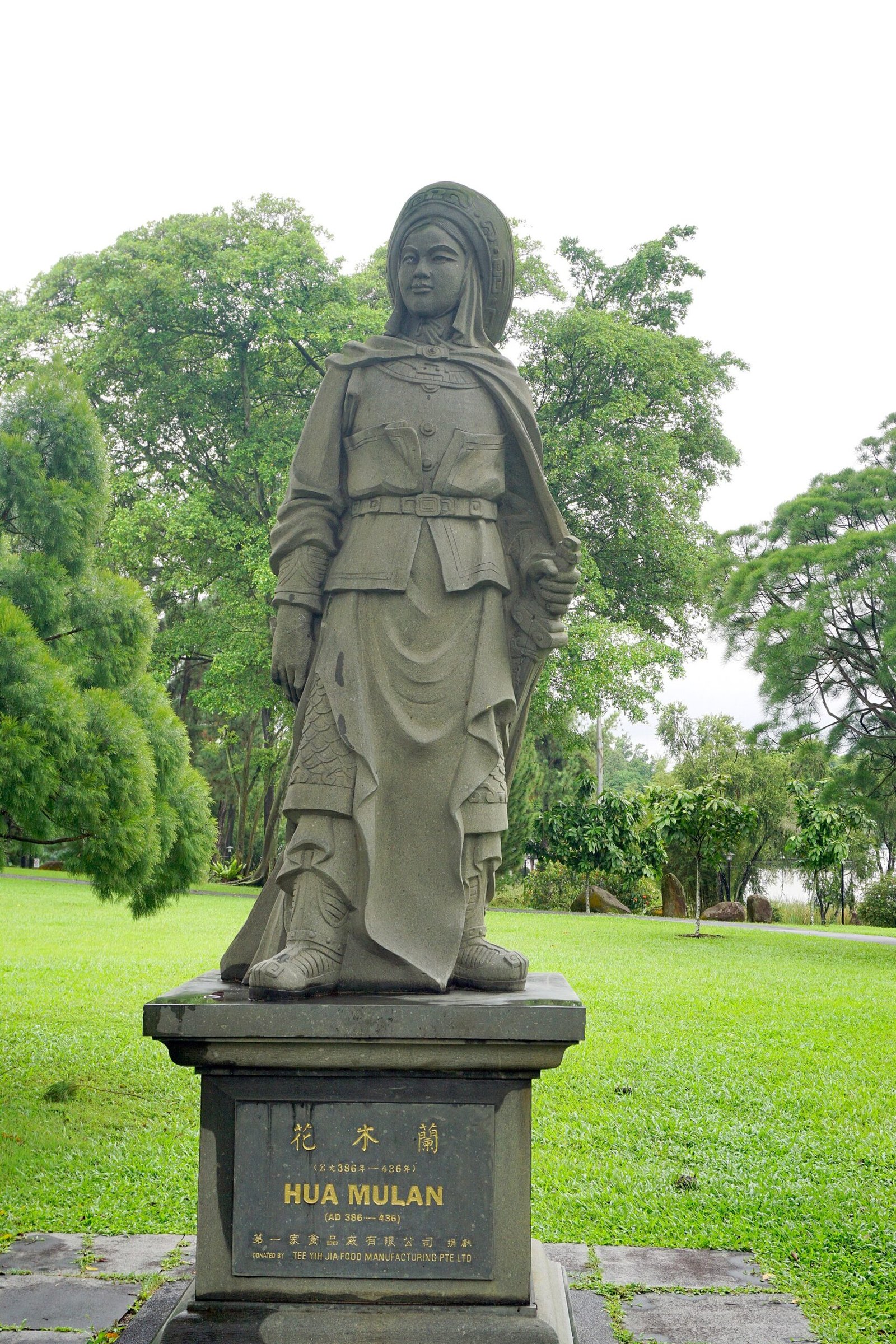
Image: 019 Hua Mulan (25596209557).jpg — Anandajoti Bhikkhu from Sadao, Thailand, CC BY 2.0