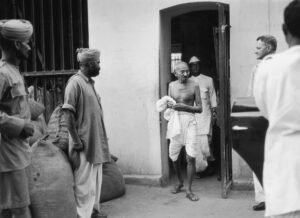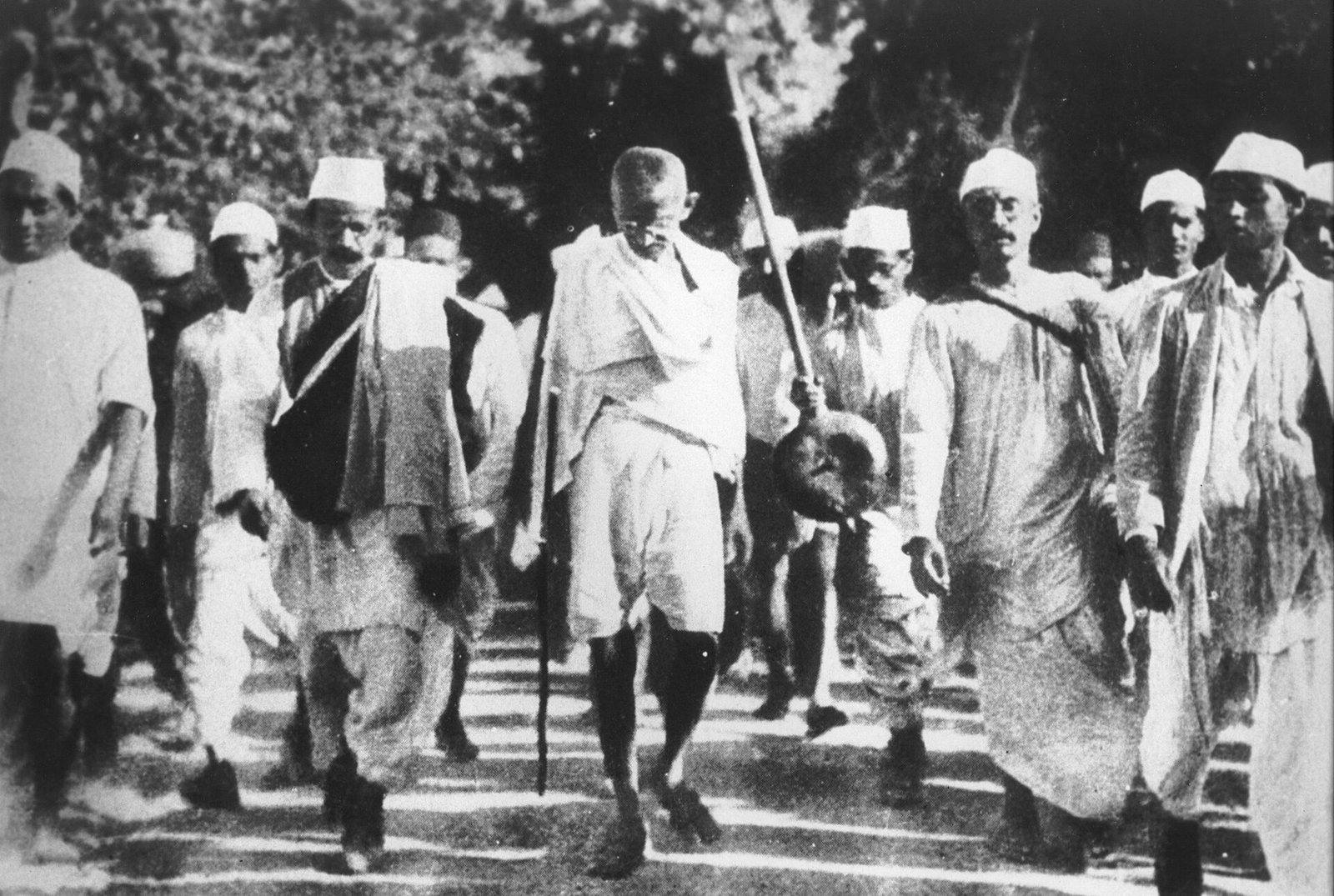
On 12 March 1930, a man set out on foot from an ashram in western India. He had 78 volunteers with him and one clear target: a tax on salt. The Salt March, also called the Dandi March and the Salt Satyagraha, was a nonviolent act of civil disobedience led by Mohandas Karamchand Gandhi against the British salt monopoly in British-ruled India.
This guide covers the date, the route, the people involved and what happened afterwards. It also answers the questions students and readers search for most: when it happened, where it started and why it matters.
Salt March date: when did it happen?
Gandhi began the march on 12 March 1930. He and his companions reached the coast at Dandi on 5 April 1930. On the morning of 6 April, Gandhi picked up salty mud from the shore and openly broke the British salt law.
That is the short answer for anyone asking “salt march kab hua tha” (when did the salt march happen). The walk began on 12 March 1930, and the law was broken on 6 April 1930.
Where did the Salt March start?
Gandhi started from the Sabarmati Ashram in Ahmedabad. He was accompanied by 78 volunteers at the start.
The destination was Dandi. Dandi is a village in the Navsari district of Gujarat, India. It lies on the Arabian Sea coast. A coastal village mattered because the aim was to take salt directly from the sea shore.
How far did they walk?
The Sabarmati–Dandi route is given in sources as about 240–241 miles. That equals 387–388 kilometres. So “390 kilometres” is a rounded figure, and it is accurate enough for most purposes.
Try the distance against your own routine. A walk of that length is far more than a daily commute. The marchers covered it village by village, not in a single push.
Why salt? The law behind the protest
The 1882 Salt Act gave Britain a monopoly over the collection and manufacture of salt. It also allowed a tax to be placed on salt.
Gandhi chose salt on purpose. Every community needs it as a basic food. That made it a shared protest issue that could cut across religion and caste. Look at the salt shaker on your own table. Now imagine that making your own salt from the sea was a crime. That was the daily reality the march challenged.
The choice was not obvious to everyone. Gandhi’s focus on the salt tax was first met with doubt inside the Congress. Vallabhbhai Patel suggested a boycott of the land tax instead.
Salt March Gandhi: the letter to Lord Irwin
Before leaving, Gandhi wrote to the Governor-General, Lord Irwin. The letter is dated 2 March 1930. In it he explained his reasons for breaking the salt law.
The letter opened with the words “Dear Friend”. A challenge to an empire began with a polite greeting.
Preparing the world to watch
The walk was planned with an audience in mind. Before the march began, the Congress Working Committee contacted American, European and Indian newspapers. Its aim was to spread word of the action to wide audiences.
Along the route, Gandhi spoke in villages. He urged local officials to resign. He also called on people to boycott foreign cloth. The march was therefore more than a walk to the sea. It was a travelling campaign.
Dandi, 6 April 1930
The marchers reached the Dandi shore on 5 April. The next morning, Gandhi took salty mud from the coast. By doing so he openly violated the British salt law.
The Gandhi Heritage Portal photo archive holds a dated photograph for this moment. It records that Gandhi broke the law at Dandi at 8.30 on 6 April 1930, by picking up a piece of natural salt. If you search for “salt march pictures”, that archive is a good place to start.
Salt March and the Civil Disobedience Movement
The Salt March was the opening act of the Civil Disobedience Movement. That movement spread across the country in 1930. Once Gandhi had broken the law at Dandi, others could follow him in their own towns and coastal villages.
This point often appears in school lessons. If you are studying the Salt March for Class 10, remember the chain of events. The salt law was the target, Dandi was the act, and the Civil Disobedience Movement was the result.
Arrest and Dharasana
Gandhi planned a new action against the Dharasana salt works. He was arrested on the night linking 4 May and 5 May 1930.
The action went ahead without him. On 21 May 1930, the poet and politician Sarojini Naidu led about 2,500 protesters towards the Dharasana salt works. The unarmed demonstrators were beaten by police.
The American journalist Webb Miller reported the beatings. His account caused an international reaction against British rule.
During the actions of the Salt Satyagraha, more than 60,000 Indians were jailed.
What came after: the Gandhi–Irwin Pact
Gandhi was released from Yeravda Prison on 26 January 1931. On 5 March 1931, he and Lord Irwin signed a temporary agreement in Delhi. It paused the civil disobedience campaign.
The settlement largely kept the salt monopoly in place. But it gave Indians living on the coast the right to make salt from the sea.
Did the Salt March succeed?
Assessments differ. The Swarthmore database says the campaign did not reach its concrete goals. It also points to the other side of the ledger. The campaign eroded the legitimacy of British rule and strengthened the organisational power of the Congress.
India gained independence from Britain in August 1947. So the march did not bring freedom at once. It came 17 years before the end of British rule, and it made the independence movement more visible.
Recognition came quickly abroad. TIME magazine named Gandhi its Man of the Year for 1930, the year of the march.
Timeline
- 1882: The Salt Act sets up the British monopoly over salt collection and manufacture.
- 2 March 1930: Gandhi writes to Lord Irwin explaining why he will break the salt law.
- 12 March 1930: Gandhi and 78 volunteers leave the Sabarmati Ashram.
- 5 April 1930: The marchers reach Dandi.
- 6 April 1930: Gandhi takes salt from the shore and breaks the law.
- 4–5 May 1930: Gandhi is arrested.
- 21 May 1930: Police attack demonstrators at the Dharasana salt works.
- 26 January 1931: Gandhi is released from Yeravda Prison.
- 5 March 1931: The Gandhi–Irwin Pact is signed.
- August 1947: India gains independence from Britain.
Details you won’t find in guidebooks
- A polite opening. Gandhi began his 2 March 1930 challenge to Lord Irwin with the words “Dear Friend”.
- Doubts at home. The choice of the salt tax was met with suspicion inside the Congress. Vallabhbhai Patel proposed boycotting the land tax.
- Press work before the first step. The Congress Working Committee contacted American, European and Indian papers before the march began.
- A compromise on salt. The 1931 settlement largely left the monopoly alone. It did give coastal Indians the right to make salt from the sea.
- A magazine verdict. TIME chose Gandhi as Man of the Year for 1930.
FAQ
When did the Salt March happen?
Gandhi began the march on 12 March 1930. He reached the coast at Dandi on 5 April and broke the salt law on the morning of 6 April 1930.
Where did the Salt March start and end?
It started at Sabarmati Ashram in Ahmedabad and ended at Dandi, a village on the Arabian Sea coast in the Navsari district of Gujarat, India.
How long was the Salt March?
Sources give the Sabarmati–Dandi route as about 240–241 miles, or 387–388 kilometres. The figure of 390 kilometres is a rounded value.
Why did Gandhi choose salt?
Salt is a basic food need for every community. Gandhi saw it as a shared protest issue that could cross lines of religion and caste.
Did the Salt March bring independence?
No. India gained independence from Britain in August 1947. The march did, however, start the Civil Disobedience Movement and raised the political weight of the independence movement.
Sources
- Wikipedia — Salt March en.wikipedia.org
- Wikipedia — Dandi, Navsari en.wikipedia.org
- HISTORY — When Gandhi’s Salt March Rattled British Colonial Rule history.com
- HISTORY — Salt March history.com
- Swarthmore College — Global Nonviolent Action Database nvdatabase.swarthmore.edu
- Gandhi Heritage Portal — Background to the Salt Satyagraha gandhiheritageportal.org
- Gandhi Heritage Portal — Gandhi Irwin Pact gandhiheritageportal.org
- Gandhi Heritage Portal — Photo archive gandhiheritageportal.org
Image: Marche sel.jpg — Yann (talk), Public domain