Imagine a home so large that the ruler had to choose which bedroom to sleep in. That was daily life for Qing emperors in Beijing. This article follows them from the early-morning study hour to the separate dinner table, and it also checks the famous 9,999-room claim.
Forbidden City, China: where is it?
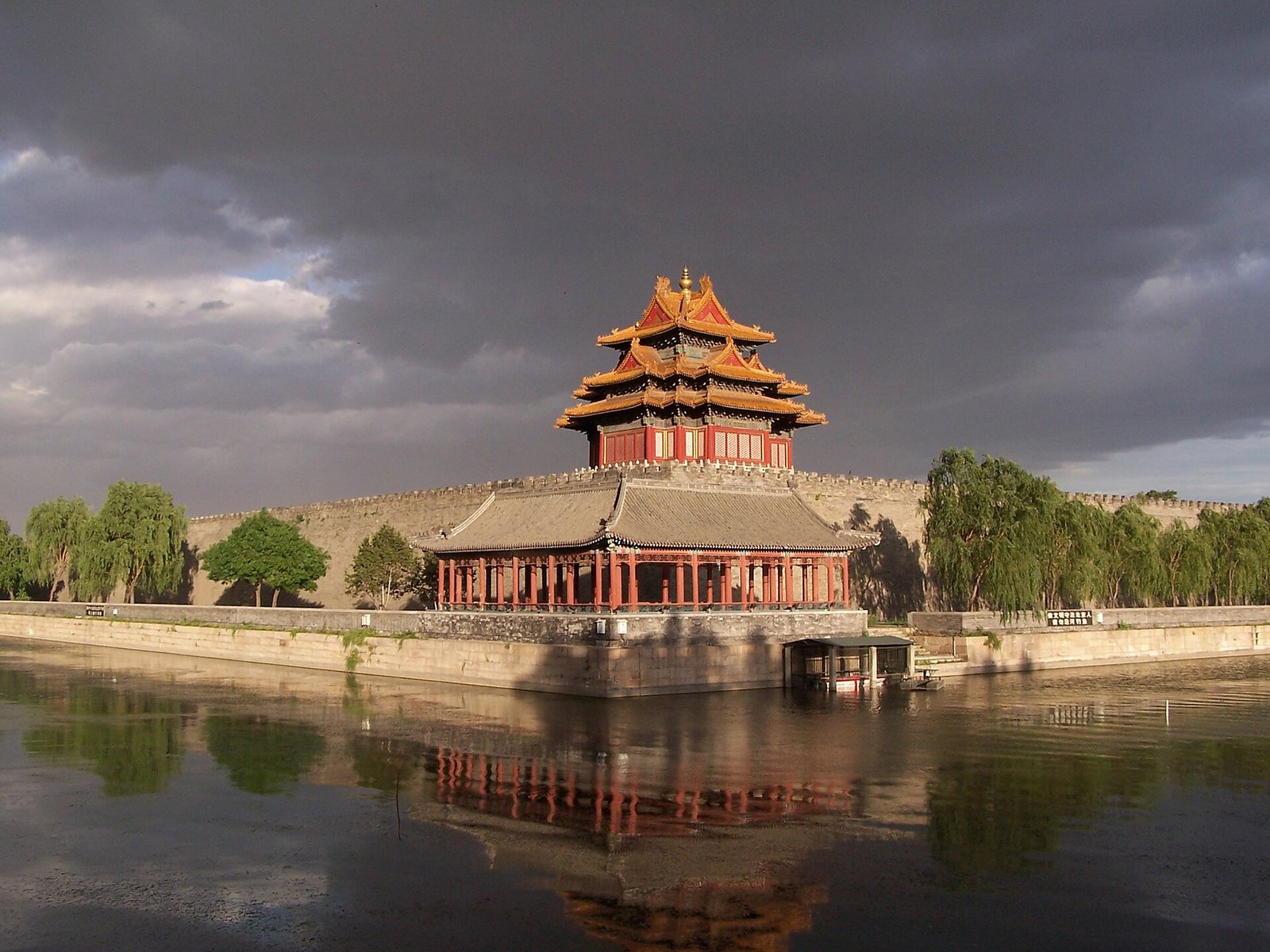
The Forbidden City is in the middle of Beijing, the capital of China. It lies north of Tiananmen. The Palace Museum describes it as the imperial palace of the Ming and Qing dynasties.
It is a rectangle of about 72 hectares. It measures 961 metres from north to south and 753 metres from east to west. If you walk its long side, you cover almost a kilometre before you reach the far wall.
What does the name mean? The Forbidden City in Chinese
The historical Chinese name is 紫禁城, written Zǐjìnchéng in pinyin. Word for word, it means ‘Purple Forbidden City’.
The ‘Forbidden’ part has a practical origin. Entry to the imperial compound was tightly restricted, and ordinary people could not approach it freely. The ‘Purple’ part has a sky connection. In the palace’s cosmic design, the emperor’s earthly home matched the Ziwei zone around the Pole Star, which was seen as the centre of the heavens.
Who built the Forbidden City?
The Ming emperor Zhu Di, known by his reign name Yongle, ordered the palace built. Construction ran from 1406 to 1420. That is fourteen years of work.
The Ming did not keep it forever. The Qing dynasty settled in Beijing in 1644 and took over the Ming palace as its own imperial centre. In all, 24 emperors lived in the palace: 14 Ming and 10 Qing.
The 9,999-room claim
The number in the title is a story, not a survey. It rests on oral tradition. English Wikipedia reports a count of 8,886 architectural bays in 980 buildings and says the legend has not been verified by measurement.
There is also a problem of units. The traditional unit in these counts is the bay, the space defined by four supporting columns. It does not match what you would call a room today. So the exact number depends on what you decide to count.
Two courts: ceremony in the south, family in the north
The palace plan is symmetrical. The Outer Court in the south was set aside for state ceremonies. The Inner Court in the north was for the imperial family’s life.
The Inner Court was not only a residence. The Palace Museum notes that it held the homes of the emperor and his consorts, but also places for religious ceremony and for government.
Where the emperor worked and slept: Yangxin Dian
One building shows the mix of home and office well. Yangxin Dian, the Hall of Mental Cultivation, was the residence and workplace of eight Qing emperors, starting with Yongzheng.
The Palace Museum describes several rooms inside it:
- Qinqin Qinxian, in the western part, was where the emperor read petitions and held secret talks with his ministers.
- The rear hall has five bays. Bedrooms sit at the eastern and western ends, and the emperor could choose between them.
- The Eastern Warm Chamber is where the dowager empresses Cixi and Ci’an ran state affairs from behind a curtain.
Think of a modern home office where the kitchen table and the boardroom are the same room. Here the bedroom, the study and the government shared one building complex.
A Qing emperor’s day
The Palace Museum gives a general picture of a Qing day. Early emperors in particular rose at about 5:00 a.m. and spent time reading and studying. If you have ever started work before sunrise, you would recognise the schedule.
After breakfast, from about 9:00 to 11:00, the emperor received officials and discussed state business. The rest of the day was shaped by meals, documents and ritual.
Meals: everyone ate apart
Here is a detail you can compare with your own table. In the Qing palace, the emperor, the empress and the other consorts usually ate their daily meals separately, each in their own quarters. There was no family dinner in the modern sense.
The Palace Museum gives two main meals, at 8:00 and 14:00. Snacks were added in the afternoon or evening. Even a meal had a schedule.
School for princes
Qing princes began school at the age of six, in a place called Shangshufang. They studied Chinese, Manchu and Mongolian. They also learned the classical texts and poetry, and trained in riding and archery.
Three languages and a sport at age six makes for a full timetable. You can see why a day off mattered, and the next sections show how rarely one came.
The end of the imperial household
The last emperor, Puyi, was set to abdicate on 12 February 1912. Even so, the imperial family kept living in the Inner Court until 1924. For twelve years, then, an emperor-less family stayed in the palace.
The Palace Museum was founded in the former palace in 1925. In 1987 UNESCO added the Forbidden City in Beijing to the World Heritage List.
Timeline
- 1406: Construction of the Forbidden City begins under Yongle.
- 1420: The palace complex is completed.
- 1644: The Qing dynasty settles in Beijing and takes over the palace.
- 12 February 1912: The abdication of the last emperor, Puyi, is decided.
- 1924: The imperial family’s residence in the Inner Court comes to an end.
- 1925: The Palace Museum is founded.
- 1987: UNESCO lists the Forbidden City as a World Heritage site.
Details you won’t find in guidebooks
These points come from Palace Museum descriptions of court life.
- Almost no holidays for princes. A prince could take a single day off only for the New Year, the emperor’s birthday, the Dragon Boat Festival, the Mid-Autumn Festival and his own birthday.
- Cooks were on record. Before the emperor’s food was served, a written record showed which cook had made which dish.
- Food was tasted first. For security, eunuch attendants in the emperor’s service tasted the dishes before he ate.
- Special water. The water used to cook the emperor’s meals was brought to the palace from Yuquan Mountain, west of Beijing.
- Western tutors. The missionaries Tomás Pereira, Jean-François Gerbillon and Joachim Bouvet were among those who taught the Kangxi emperor in Yangxin Dian.
FAQ
Where is the Forbidden City?
It stands in the centre of Beijing, the capital of China, just north of Tiananmen. It was the imperial palace of the Ming and Qing dynasties.
What does the Forbidden City’s name mean in Chinese?
The historical Chinese name is 紫禁城, Zǐjìnchéng in pinyin. Word for word, it means ‘Purple Forbidden City’.
Does the Forbidden City really have 9,999 rooms?
No measurement confirms it. The figure comes from oral tradition. One count in English Wikipedia gives 8,886 architectural bays in 980 buildings. The traditional unit is a bay set by four supporting columns, which is not the same as a modern room.
How many emperors lived in the Forbidden City?
Twenty-four: 14 Ming and 10 Qing rulers, according to UNESCO.
When did the Forbidden City become a museum?
The Palace Museum was founded in the former imperial palace in 1925. UNESCO added the site to the World Heritage List in 1987.
Sources
- Palace Museum, About the Palace Museum intl.dpm.org.cn
- UNESCO, Imperial Palaces of the Ming and Qing Dynasties whc.unesco.org
- Wikipedia, Forbidden City en.wikipedia.org
- Palace Museum, 养心殿 (Hall of Mental Cultivation) dpm.org.cn
- Palace Museum, 清代皇帝一天的生活 (A Qing emperor’s day) dpm.org.cn
- Palace Museum, 上书房 (Shangshufang) dpm.org.cn
- Palace Museum, 清代宫廷饮食 (Qing court food) dpm.org.cn
- ChinaCulture, Forbidden City en.chinaculture.org
Image: Sunset of the Forbidden City 2006.JPG — User:kallgan, CC BY-SA 3.0