Saint Basil’s Cathedral is located in Moscow
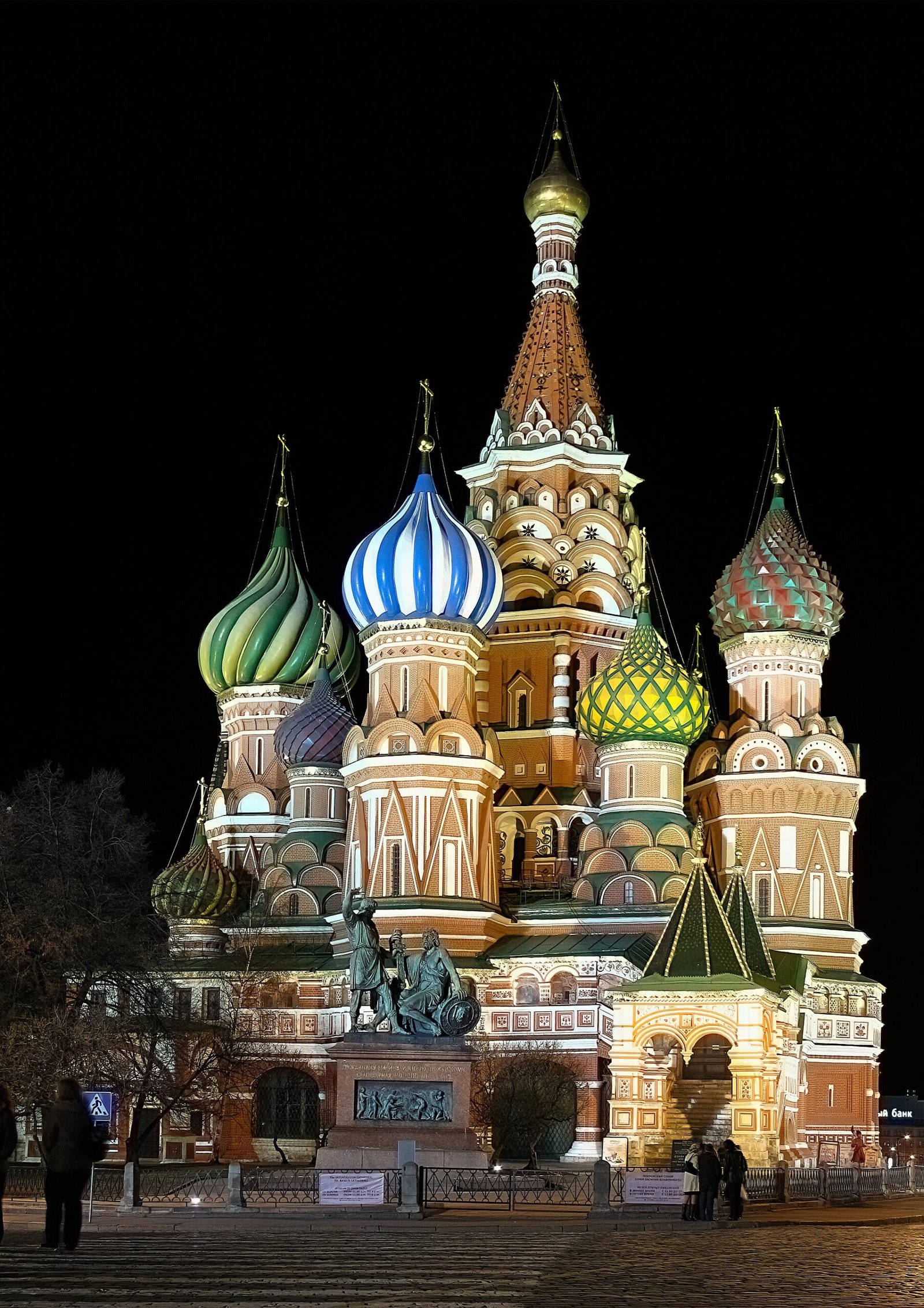
Saint Basil’s Cathedral is a Russian Orthodox building on Red Square in Moscow, the capital of Russia. If you search “where is it” or “St Basil’s Cathedral where is it located”, the answer is simple: Red Square, next to the Kremlin.
The square and the Kremlin form one ensemble. UNESCO placed it on the World Heritage List in 1990, and the cathedral is part of it.
The building has a longer official name. It is the Cathedral of the Intercession of the Most Holy Theotokos on the Moat. People also call it the Pokrovsky Cathedral. “Saint Basil’s” is the name most visitors know, and it comes from a later addition to the complex, described below.
Saint Basil’s Cathedral history: why it was built
Ivan IV ordered the cathedral to be built. He wanted to commemorate the capture of the Khanate of Kazan. Work ran from 1555 to 1561, according to the State Historical Museum.
The building inscription in the central church gives the completion date. It reads 29 June in the old calendar. In the new calendar that is 12 July 1561.
The first version was not one big church. It was a central church dedicated to the Intercession of the Virgin, with eight chapels placed around it. That plan explains why the skyline looks like a cluster rather than a single tower.
Timeline
- 1555 Construction of the stone cathedral begins on Ivan IV’s order.
- 1561 According to the building inscription, the cathedral is finished on 29 June (12 July in the new calendar).
- 1588 A church is added over the grave of Saint Basil.
- 1672 The lower church now named for Saint John of Moscow is added.
- 1681–1684 The outer gallery is covered with brick vaults and small tent-roofed entrances are added over the open staircases.
- 1780–1784 During a major repair under Catherine II, the domes become multicoloured.
- 1812 Napoleon’s troops use the building’s lower spaces as stables.
- 1923 The museum inside the cathedral opens on 21 May.
- 1928 The museum becomes a branch of the State Historical Museum.
- 1990 The cathedral enters the World Heritage List together with the Kremlin and Red Square.
Why it is called Saint Basil’s
Basil the Blessed was declared a saint in 1588. After that, a church was added next to the cathedral over his grave. That addition gave the whole complex the name many people use today.
Another church came in 1672. It now bears the name of Saint John of Moscow. With it, the museum complex contains 11 churches.
Saint Basil’s Cathedral architect: Postnik, Barma and a puzzle
The question of who designed the cathedral has no tidy answer. The chronicle that describes the foundation does not name the builders. The names Postnik and Barma appear only in later sources.
The Getty Research Institute lists the architects as Postnik Yakovlev and Barma. The traditional view treats them as two separate men. One theory argues that Barma and Postnik were a single person.
Scholars have also asked where the design came from. A 1976 study by Frank Kämpfer is summarised with two options. One is the Church of St John the Baptist at Dyakovo as a possible predecessor. The other is the influence of Italian architects.
The legend of the blinded architect
The famous story says Ivan IV had the architect blinded so that nobody could build anything like it again. It is a legend, not a documented event.
The main counter-argument is simple. Postnik Yakovlev continued to work in the 1560s. A man blinded in 1561 could not have done that.
That fact makes the story hard to defend. It also shows how a good tale can outlast the evidence against it.
Saint Basil’s Cathedral height
The central Pokrov church is 47.50 metres tall, according to the museum’s own measurement. Other figures may appear online, so this is the one to trust when you want a number from the institution that runs the building.
The colourful domes
The domes were not always colourful. The cathedral’s early domes were helmet-shaped. Towards the end of the 16th century they were replaced with more shapely domes.
The multicoloured look came later. The museum’s chronology says the domes became multicoloured during the major repair of 1780–1784, in the reign of Catherine II. The State Historical Museum dates today’s appearance to the end of the 18th century. It says the colour scheme has been kept since then.
So the bright patterns you see in photographs are about 240 years old, not 460.
Saint Basil’s Cathedral inside
Inside, you will not find one large hall. The building is a group of separate churches, and narrow passages link them. The inner gallery is decorated with plant ornament from the second half of the 17th century.
The outer gallery changed too. In 1681–1684 it was covered with brick vaults. Small tent-roofed entrances were added over the open staircases.
A museum of history and architecture has worked in the cathedral since 21 May 1923. It became a branch of the State Historical Museum in 1928.
Details you won’t find in guidebooks
- Processional lanterns. The inner gallery displays 17th-century mica lanterns. They were once carried in religious processions and now serve as lighting.
- A beam from the building site. The architecture exhibition includes a piece of a wooden beam. Such timber frames did the job of drawings when the brick walls were built.
- A borrowed iconostasis. The baroque iconostasis of the central church came in 1770. It was brought from the Chernigov Cathedral in the Moscow Kremlin, which was being taken down.
- Napoleon’s stables. In 1812 Napoleon’s troops used the spaces on the lower level as stables.
- Wartime camouflage. During the Second World War, camouflage paint was applied to the domes.
Visiting: tickets and practical points
On 25 October 2026, the official adult price was 700 rubles for citizens of Russia and the Eurasian Economic Union. For citizens of other countries it was 2,000 rubles. Children under seven enter free, whatever their citizenship.
You can buy tickets at the box office or on the museum’s website. An electronic ticket is enough. You only need to show it on your phone screen, just as you would with a cinema or train ticket. Check the museum’s ticket page before you go, since prices can change.
FAQ
Where is Saint Basil’s Cathedral located?
It stands on Red Square in Moscow, the capital of Russia. It belongs to the Kremlin and Red Square ensemble, which UNESCO listed in 1990.
Who was the architect of Saint Basil’s Cathedral?
Later sources name Postnik and Barma. The Getty record lists Postnik Yakovlev and Barma. The chronicle of the foundation names no architects, and one theory says Barma and Postnik were the same man.
Was the architect really blinded?
The claim is considered a legend. Postnik Yakovlev kept working in the 1560s, which is the main evidence against it.
How tall is the cathedral?
The central Pokrov church is 47.50 metres tall, according to the figure the museum gives.
How much is a ticket for foreign visitors?
On 25 October 2026 the official price for an adult citizen of a country other than Russia or the Eurasian Economic Union was 2,000 rubles. Children under seven enter free, whatever their nationality.
Sources
- State Historical Museum — Pokrovsky Cathedral shm.ru
- State Historical Museum — History of the Cathedral shm.ru
- State Historical Museum Media Portal — Colourful domes mediashm.ru
- English Wikipedia — Saint Basil’s Cathedral en.wikipedia.org
- Turkish Wikipedia — Aziz Vasil Katedrali tr.wikipedia.org
- Getty Research Institute — Cathedral of Saint Basil getty.edu
- UNESCO — Kremlin and Red Square, Moscow whc.unesco.org
- OpenBibArt / Getty Research Institute — Kämpfer abstract openbibart.fr
Image: Sant Vasily cathedral in Moscow.JPG — Petar Milošević, CC BY-SA 4.0