Who were the Karamanids?
The Karamanids were an Anatolian beylik. In Turkish they are called Karamanoğulları, “the sons of Karaman.” An Oğuz Turkmen dynasty ruled them.
The beylik grew out of a political structure formed by Turkmen communities around Ermenek and Mut in the mid-13th century. It took its name from Karaman Bey, who became a clear political figure around 1256.
If you visit the city of Karaman today, you are standing in a place that carries the dynasty’s name. That is the simplest link between the past and the present here.
The Karamanid dynasty: where did it come from?
Historians do not agree on the family’s tribe. TDV İslâm Ansiklopedisi bases an Afşar origin on the account of Yazıcıoğlu Ali. The English Wikipedia article reports another view. It links the Karamanlı tribe of the dynasty to the Salur branch of the Oğuz.
There is also a migration story told by Şikârî. In it, the dynasty’s ancestors fled the Mongol invasion. They moved from the Azerbaijan-Arrân region to Sivas, then to the Ermenek-Mut area.
A few rulers are worth knowing by name:
- Karaman Bey
- Mehmed I
- Güneri
- Mahmud I
- Halil
- Alâeddin Ali
- Mehmed II
- İbrahim II
- Pîr Ahmed
- Kasım
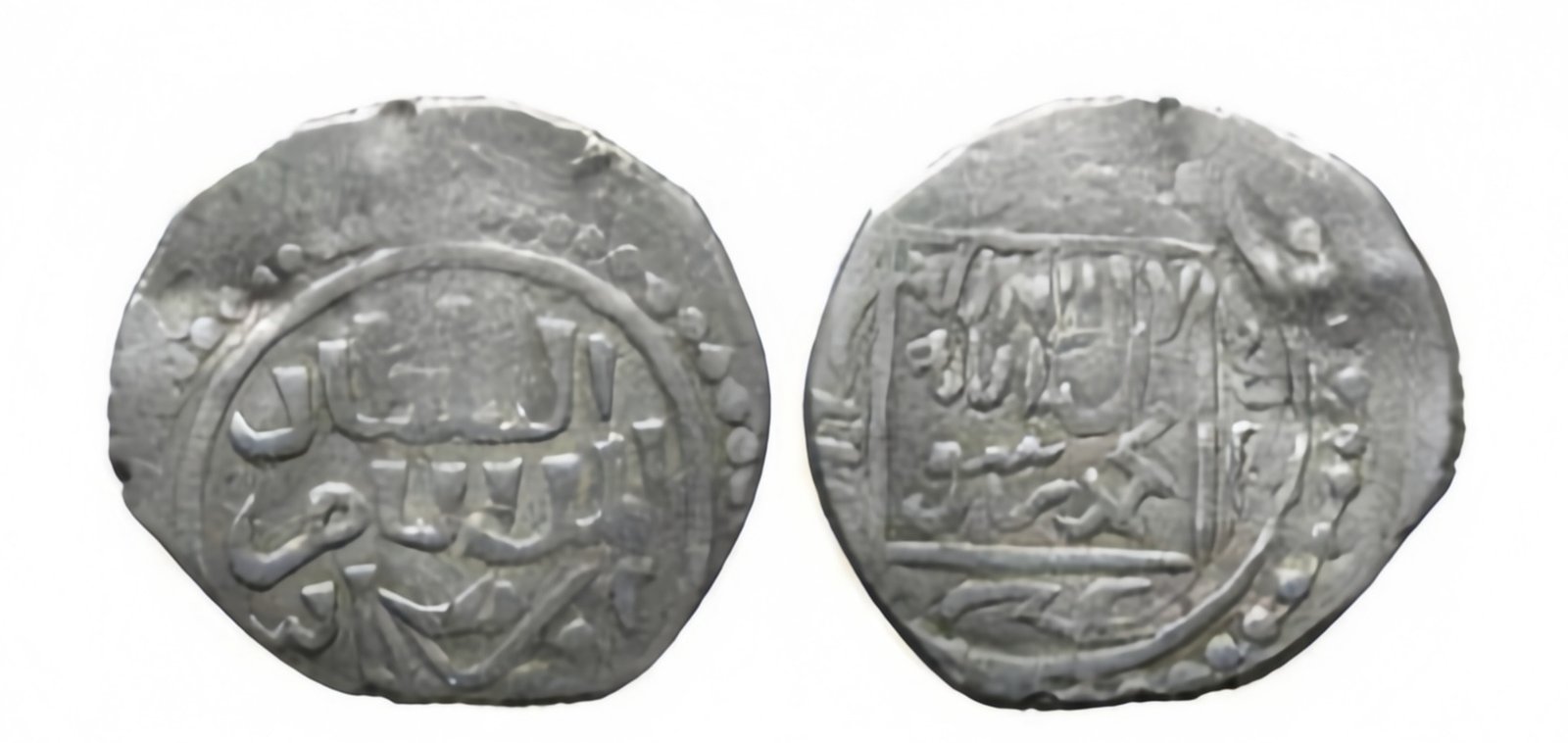
The rulers were called “bey.” Even so, inscriptions, coins and documents also used sultan titles for them.
Karamanid map and empire: how big was it?
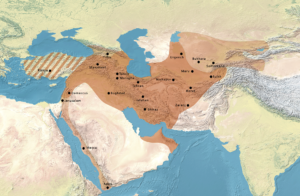
The Karamanids did not build an empire in the usual sense. They ruled a beylik, a principality. But the territory moved over time.
The centers of government included Ermenek, Lârende, Konya, Mut and Silifke. At different times the beylik’s area of control covered the regions of Konya, Karaman, Niğde, İç İl, Taş-ili and Alanya.
So if you look for a Karamanid map, expect several versions. A map from one decade will not match a map from another. The dynasty held Konya for some periods and lost it in others.
Karamanid religion
The English Wikipedia article on the Karamanids gives the religion of the beylik as Sunni Islam. That is the whole religious label the record gives us here.
The 1277 decision: Turkish as the official language
This is the reason most people search for the Karamanids.
Mehmed Bey was the eldest son of Karaman Bey and a grandson of Nûre Sûfî. In May 1277 he took Konya. He placed Siyavuş on the throne. Siyavuş claimed to be a Seljuk prince.
At that moment a decision on the use of Turkish was taken. The widespread account calls it a firman of Mehmed Bey. Karamanoğlu Mehmetbey University, which tells this version, gives the date as 13 May 1277.
It helps to picture what this meant for you as a person at the time. The decision was not only about poetry or books. It covered government offices and the palace. Imagine walking into a state office and being able to speak your own language to the clerk. That was the practical point.
Was it really Mehmed Bey’s firman?
Not everyone accepts that story. Erdoğan Merçil published research in 2000. He notes that Ibn Bībī presents the decision not as a personal firman of Mehmed Bey. He presents it as a joint decision of the Seljuk divan.
The exact day is also unsettled. The university account says 13 May 1277. The TDV article on Mehmed Bey puts the enthronement of Siyavuş on 15 May. It places Mehmed Bey’s appointment as vizier four days after that.
So the safest summary is this. A decision about Turkish was taken in Konya in May 1277. Who owns the decision is argued.
Did Turkish stay official?
Not completely. Despite the 1277 decision, Persian came back into use in the beylik’s official language over time.
Karamanids flag, flag meaning and the star of David question
People often ask about a Karamanid flag. They also ask about a six-pointed star and about Judaism or Israel. Here is what the sources let us say.
The oldest description comes from the Libro del Conosçimiento, a work of the second half of the 14th century. It describes the banner of the ruler of Konya with wavy lines of white and red.
A six-pointed star is a separate claim. Ahmet Çetinkaya’s symposium paper accepts that the star was the Karamanid flag. It studies the motif under the names Seal of Solomon (Mühr-ü Süleyman) and Star of David.
Ahmet Deniz Altunbaş disagrees. In his 2019 article he notes that the flag with the Seal of Solomon on the Catalan Atlas belongs to Antalya. It does not belong to Konya.
So there is no settled answer. The record we can lean on says the beylik was Sunni Islam, and the star attribution is contested. Treat any “Karamanid star flag” image online with caution.
Karamanids vs Ottomans
The contest with the Ottomans lasted for generations. It did not end in one battle.
- 1398. Yıldırım Bayezid defeated Alâeddin Ali Bey and had him executed. Much of the Karamanid land passed to Ottoman rule.
- 1402. After the Battle of Ankara, the Karamanid dynasty re-established control over its old lands with Timur’s support.
- August 1444. A treaty made İbrahim Bey an Ottoman vassal. He had to send troops to Murad II and give his son as a hostage.
- April 1468. In the reign of Mehmed the Conqueror, Ottoman forces took Gevele and Konya.
- 1474. TDV treats this campaign as the moment the beylik was fully brought under control.
- 1487. Mahmud Bey of İç İl fled to Aleppo under pressure from Ottoman forces. This fell in the reign of Bayezid II, after Mehmed the Conqueror. The Wikipedia articles date the end of the remaining dynastic rule here.
Notice the two end dates, 1474 and 1487. Sources count different things. One counts the loss of control. The other counts the end of the last dynastic hold.
Timeline
- Around 1256: Karaman Bey emerges as a political figure around Ermenek and Mut, and the beylik takes his name.
- May 1277: Mehmed Bey takes Konya. A divan decision on the use of Turkish is taken during Siyavuş’s attempt at the sultanate.
- 1382: The Hatuniye Medresesi is built in Karaman.
- 1398: Yıldırım Bayezid takes a large part of Karamanid land.
- 1402: Karamanid rule is re-established after the Battle of Ankara.
- 1444: İbrahim Bey accepts Ottoman vassalage by treaty.
- 1468: Konya passes to Ottoman rule in the reign of Mehmed the Conqueror.
- 1474: The remaining Karamanid regions come under Ottoman control.
- 1487: Mahmud Bey flees to Aleppo. Remaining dynastic rule ends.
Details you won’t find in guidebooks
A decision that reached the playground. In the TDV article on Mehmed Bey, the ruling on speaking Turkish was not limited to government. It also covered entertainment gatherings and the polo-like spectacle called çevgân.
A book that changed language. Alâeddin Ali Bey had Yârcânî write the Karamannâme in Persian. In the early 16th century Şikârî turned it into Turkish prose.
A Karamanid-Ottoman marriage. The Hatuniye Medresesi in Karaman dates to 1382. Nefise Sultan had it built. She was the daughter of the Ottoman ruler Murad I and the wife of Karamanoğlu Alâeddin Bey. So the two houses that fought each other were also tied by marriage.
A tiled niche in Istanbul. The tiled mihrab of the İbrahim Bey İmareti in Karaman is displayed in the Çinili Köşk in Istanbul. If you are in Istanbul, you can see a piece of Karamanid work without travelling to Karaman.
FAQ
What religion were the Karamanids?
The English-language Wikipedia article on the Karamanids records the religion of the beylik as Sunni Islam.
Did the Karamanids really make Turkish the official language?
The popular account credits Mehmed Bey and dates the decision to 13 May 1277. Erdoğan Merçil, in a 2000 study, argues that the Seljuk divan took the decision jointly. Persian also returned to the beylik’s official use over time.
Was a six-pointed star the Karamanid flag?
One symposium paper by Ahmet Çetinkaya says yes. Ahmet Deniz Altunbaş answers that the flag with the Seal of Solomon on the Catalan Atlas belongs to Antalya, not Konya. The claim is disputed.
When did the Karamanid dynasty end?
Sources differ. TDV İslâm Ansiklopedisi treats the 1474 campaign as the point where the beylik came fully under control. The Wikipedia articles put the end of the remaining dynastic rule in 1487.
Sources
- TDV İslâm Ansiklopedisi, “Karamanoğulları” islamansiklopedisi.org.tr
- TDV İslâm Ansiklopedisi, “Mehmed Bey, Karamanoğlu” islamansiklopedisi.org.tr
- Vikipedi, “Karamanoğulları Beyliği” tr.wikipedia.org
- Wikipedia, “Karamanids” en.wikipedia.org
- Karamanoğlu Mehmetbey Üniversitesi, “Karamanoğlu Mehmet Bey Kimdir?” kmu.edu.tr
- Belleten, “Türkiye Selçukluları Devrinde Türkçe’nin Resmî Dil Olmasını Kim Kabul Etti?” belleten.gov.tr
- MESOS, Ahmet Deniz Altunbaş, “Libro del Conosçimiento’da XIV. Yüzyıl Türkiyesi” dergipark.org.tr
- Karamanoğlu Mehmetbey Üniversitesi, Karaman Sempozyumu Bildiri Özetleri Kitabı karamansempozyumu.kmu.edu.tr
- Karaman İl Kültür ve Turizm Müdürlüğü, “Hatuniye Medresesi” karaman.ktb.gov.tr
Image: Dirham seyfeddin suleyman.jpg — Unknown authorUnknown author, CC0