If you search for the history of Şanlıurfa, you find a city that has carried several names and many rulers. It sits in southeastern Türkiye. Its story begins long before writing, and its current name is only a few decades old.
This guide walks through that story in order. It also explains why the origin of the word “Urfa” is still an open question.
Şanlıurfa history in short
The oldest layer is not in the city itself. It is at Göbeklitepe, near Şanlıurfa. According to UNESCO, hunter-gatherer communities built its round, oval and rectangular monumental structures between 9600 and 8200 BCE.
Some of the T-shaped limestone pillars there reach 5.5 meters in height. UNESCO listed the site as a World Heritage Site in 2018.
The site is often called a temple. UNESCO’s record is more careful than that. The remains of residential structures at the site limit the reading that it consisted only of temples. The monumental buildings are linked to ritual and communal gatherings, but people may also have lived there.
Later periods are easier to follow. The city was a Hellenistic center, then an Islamic one, then a Crusader capital, then an Ottoman town. In the twentieth century it fought for its freedom and earned a new name.
Where does the name Urfa come from?
This is the hardest question, and the honest answer is that nobody is sure.
One theory says Urfa derives from the Syriac Orhai or Urhay. Another links it to Osrhoëne or Orrpei. The TDV Encyclopedia of Islam notes that there are objections to these explanations and calls the origin disputed.
The record is clearer for the other names. The Hellenistic name Edessa came from the Seleucid period. The Seleucids took it from a royal center of the same name in Macedonia.
Ottoman sources used the name Ruha. It comes from the Arabic Ruhâ. The form Urfa probably spread when spoken Turkish was put into writing.
So one city has been known as Edessa, Ruha and Urfa. Each name belongs to a different era and a different language.
Edessa and the ancient city
Edessa is the name you meet in the ancient period. It is tied to the Seleucids, who ruled after the Hellenistic expansion.
The city’s art from this world survives. A mosaic dated to 194 CE, the Orpheus Mosaic, carries Syriac writing. It also bears the name of the artist, Bar Saged.
Another find comes from Haleplibahçe. The Amazons Villa was uncovered in excavations led by the Şanlıurfa Museum. Academic assessment dates it to the 5th and 6th centuries CE.
The Orpheus Mosaic has a modern story as well. It was pulled from its place by illegal digging in Şanlıurfa in 1998. It was later received back from the Dallas Museum of Art and brought to Türkiye on 6 December 2012.
Şanlıurfa Islamic history
The Islamic period began with a conquest. İyâz bin Ganm took Urfa in 639, during the caliphate of Umar.
Faith and legend also shape the city’s center. Balıklıgöl is a visiting place linked to a belief about Abraham. In that belief, the fire into which Nimrod threw him turned into water.
Southwest of Balıklıgöl stands the Halilürrahman Mosque. An inscription on its square-bodied minaret dates the building to 1211. It names the Ayyubid ruler al-Malik al-Ashraf Muzaffaruddin Musa as the one who ordered it.
The Islamic story was not a straight line. Crusaders and Zengids both held the city in the following decades.
The Crusader county and the Zengid return
On 10 March 1098, Baudouin de Boulogne took control of the city’s government. With that, he founded the Crusader County of Edessa. Urfa became the capital of a Crusader state.
The county did not last forever. Forces of Imâdüddin Zengî entered Urfa on 24 December 1144. They did so after a siege of about four weeks.
Two dates, 1098 and 1144, mark the start and the end of Crusader rule here.
Şanlıurfa Turkey history: the Ottoman centuries
The Şanlıurfa Culture Atlas states that the city came under Ottoman rule in 1517. The traditional Urfa houses that survive today date from the Ottoman period.
The Ottoman era left a clear mark on the old center. In 1736, the governor of Raqqa, Rıdvan Ahmet Pasha, had the three-domed Rızvaniye Mosque built. It stands on the northern shore of Halilürrahman Lake.
The Customs Inn (Gümrük Hanı) belongs to the same world. Halhallı Behram Pasha, the governor of Urfa, had this two-story building made. Its two-colored cut-stone facades give it a second name, Alaca Han.
Trade had its own building too. The Kazaz Bazaar Bedesten is built of cut stone. It has four gates. They open to the Han Önü Bazaar, the Sipahi Bazaar, the Pamukçu Bazaar and the Customs Inn.
Traditional houses show how families lived. They are usually split into two parts, the haremlik and the selamlık. The selamlık holds a room and an iwan for male guests. It also has a camel shed, where animals were sheltered.
Non-Muslim communities left their buildings as well. The Church of Saint Peter and Saint Paul near Ellisekiz Square was built in 1861. After 1924 the state tobacco monopoly, Tekel, used it. That is why people began calling it the Reji Church.
From occupation to freedom
The twentieth century brought war to the city. Urfa was occupied by British forces on 24 March 1919. In October of the same year, French forces replaced the British.
The liberation of Urfa from French occupation is commemorated on 11 April 1920. The Turkish parliament marked the hundredth anniversary of that day with an official statement.
Why the city became Şanlıurfa
The resistance in the National Struggle is the reason behind the new name. “Şanlı” means glorious.
The law that changed the name from Urfa to Şanlıurfa was adopted by the Turkish parliament on 12 June 1984. It was published in the Official Gazette on 22 June 1984.
So the modern name is a title of honor added to an old one. It is not an ancient word with a lost meaning.
Timeline
- 9600–8200 BCE: The monumental structures at Göbeklitepe are built.
- Hellenistic period: The name Edessa is used under the Seleucids.
- 194 CE: The Orpheus Mosaic, bearing the name of the artist Bar Saged, is made.
- 639: İyâz bin Ganm conquers Urfa.
- 10 March 1098: Baudouin de Boulogne founds the Crusader County of Edessa.
- 24 December 1144: Forces of Imâdüddin Zengî take Urfa.
- 1211: Date of construction given in the inscription on the Halilürrahman Mosque minaret.
- 1517: Urfa comes under Ottoman rule.
- 1736: The Rızvaniye Mosque is built.
- 1861: The Church of Saint Peter and Saint Paul is built.
- 1919: Urfa is occupied first by the British, then by the French.
- 11 April 1920: Commemorated liberation day from French occupation.
- 12 June 1984: The change of name to Şanlıurfa is adopted in parliament.
- 22 June 1984: The change is published in the Official Gazette.
- 6 December 2012: The Orpheus Mosaic returns from Dallas to Türkiye.
- 2018: Göbeklitepe joins the UNESCO World Heritage List.
Details you won’t find in guidebooks
Doors without nails. The wooden door leaves of the Rızvaniye Mosque carry plant and geometric decoration. Craftsmen made them with interlocking and inlay techniques, without using nails.
Water under the tea tables. The Customs Inn has tea houses in its courtyard. If you sit there with a glass of tea, remember that the water of Halilürrahman Lake flows through the building.
Bird boxes and bread crumbs. The courtyard walls of traditional Urfa houses have bird niches. The birds living in them fed from the flower beds where people shook out their bread crumbs.
Evidence from the smugglers’ own camera. In the return of the Orpheus Mosaic, photographs taken by the smugglers before they removed it were sent to the Dallas Museum of Art as evidence. Prosecutors had reached those photographs in their investigation.
Harran’s young domes. Harran’s cone-domed houses are not ancient. The Culture Portal dates what you see today to about 250 years ago. Builders used bricks collected from the archaeological site.
Seeing the layers yourself
You can read the city’s history on foot. In the old center, you can pass from the Halilürrahman Mosque to the lake, the Rızvaniye Mosque, the Customs Inn and the Bedesten without going far.
The Buluntu Hoca House is another stop. It stands on Sarayönü Street, opposite the Yusuf Pasha Mosque. ŞURKAV restored it in 2014 and kept its haremlik and selamlık layout.
The Şanlıurfa Museum and the Haleplibahçe Mosaic Museum hold the ancient pieces. Göbeklitepe lies near the city.
Another lasting effect of the changing names is on the map. Even one hundred years after liberation, the city has Ottoman houses, Ayyubid inscriptions and ancient mosaics side by side.
FAQ
Why is the city called Şanlıurfa?
“Şanlı” means glorious. A law adding the word to Urfa’s name, in recognition of the city’s resistance in the National Struggle, was adopted by the Turkish parliament on 12 June 1984. It was published in the Official Gazette on 22 June 1984.
Where does the name Urfa come from?
Nobody knows for sure. Some scholars link it to the Syriac Orhai/Urhay or to Osrhoëne/Orrpei, but the TDV Encyclopedia of Islam says these explanations have been challenged and the origin remains disputed.
When did Muslims take Urfa?
İyâz bin Ganm conquered Urfa in 639, during the caliphate of Umar.
When did Urfa become Ottoman?
According to the Şanlıurfa Culture Atlas, the city came under Ottoman rule in 1517.
What was Şanlıurfa called in ancient times?
Its Hellenistic name was Edessa, taken under the Seleucids from a royal center of the same name in Macedonia. Ottoman sources used the name Ruha.
Sources
- TDV İslâm Ansiklopedisi — Şanlıurfa islamansiklopedisi.org.tr
- Şanlıurfa Kültür Atlası — Geleneksel Evlerde Süsleme ve Kitabeler urfakulturatlasi.com.tr
- Şanlıurfa Büyükşehir Belediyesi — Şanlıurfa Tarihi sanliurfa.bel.tr
- TBMM — Urfa’nın Kurtuluşunun 100. Yılına İlişkin Açıklama cdn.tbmm.gov.tr
- Şanlıurfa Aile ve Sosyal Hizmetler İl Müdürlüğü — Şanlı Unvanı Mesajı aile.gov.tr
- UNESCO World Heritage Centre — Göbekli Tepe whc.unesco.org
- Wikipedia — Şanlıurfa Province en.wikipedia.org
- Şanlıurfa Büyükşehir Belediyesi — Şanlıurfa Kültür ve Turizmi sanliurfa.bel.tr
- Kültür Portalı — Rızvaniye Camii kulturportali.gov.tr
- ŞURKAV — Gümrük Hanı files.surkav.org.tr
- Kültür Portalı — Şanlıurfa Bedesteni kulturportali.gov.tr
- ŞURKAV — Geleneksel Şanlıurfa Evleri, Cihat Kürkçüoğlu files.surkav.org.tr
- Şanlıurfa Büyükşehir Belediyesi ve ŞURKAV — Şanlıurfa Kültür Varlıkları sanliurfa.bel.tr
- Kültür Portalı — Harran Kümbet Evleri kulturportali.gov.tr
- Arkeoloji Dergisi — Haleplibahçe’deki Amazonlar Villası’ndan Bir Mozaik, Seçil Çokoğullu dergipark.org.tr
- Kültür ve Turizm Bakanlığı — Haleplibahçe Mozaik Müzesi muze.gov.tr
- Kültür Varlıkları ve Müzeler Genel Müdürlüğü — Orpheus Mozaiği’nin İadesi kvmgm.ktb.gov.tr
- Kültür Portalı — Aziz Petrus ve Aziz Paulus Kilisesi kulturportali.gov.tr
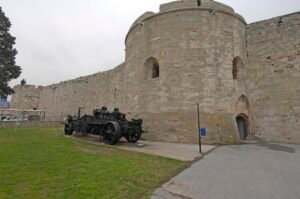
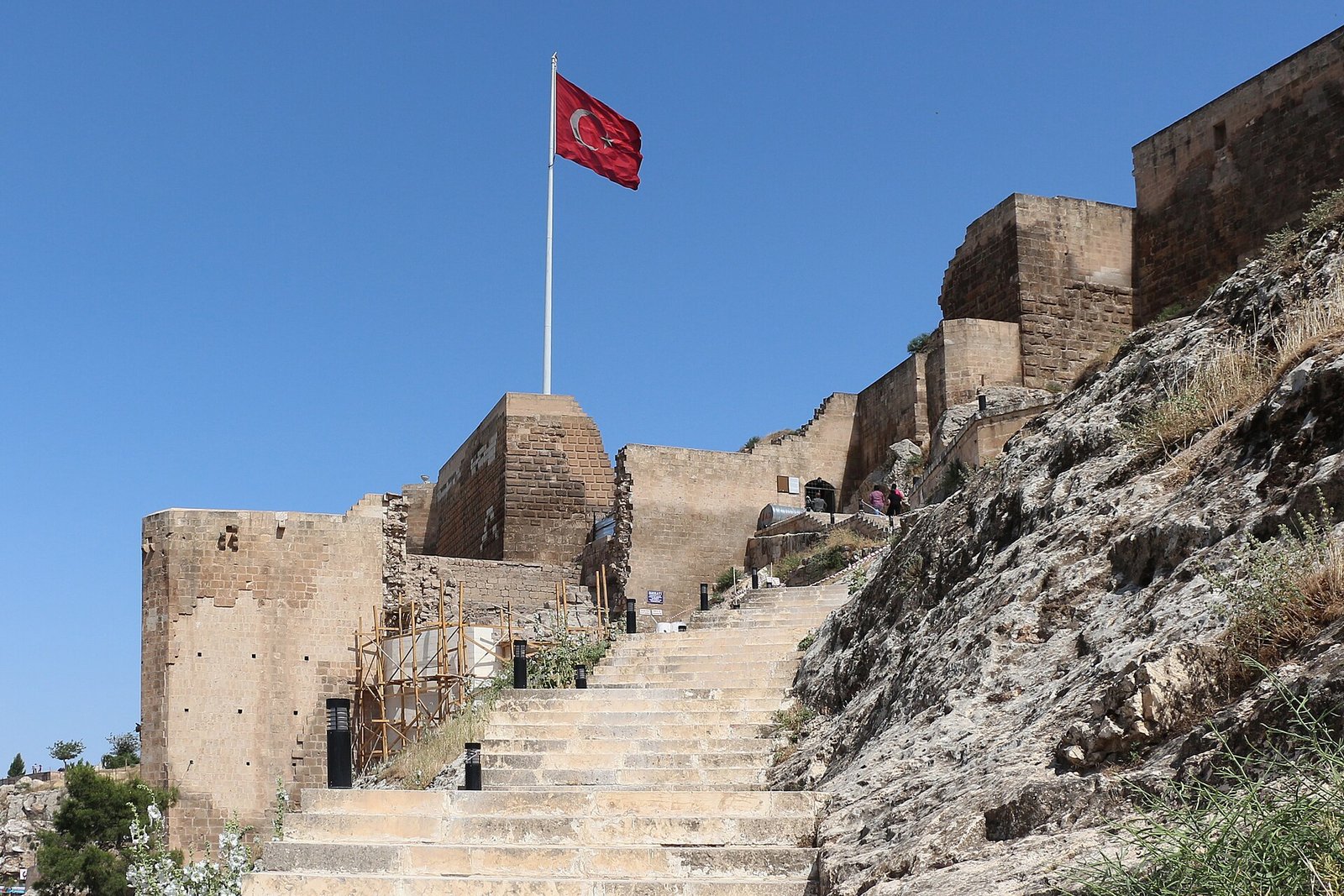
Image: Urfa Castle 03.jpg — Bernard Gagnon, CC BY-SA 3.0