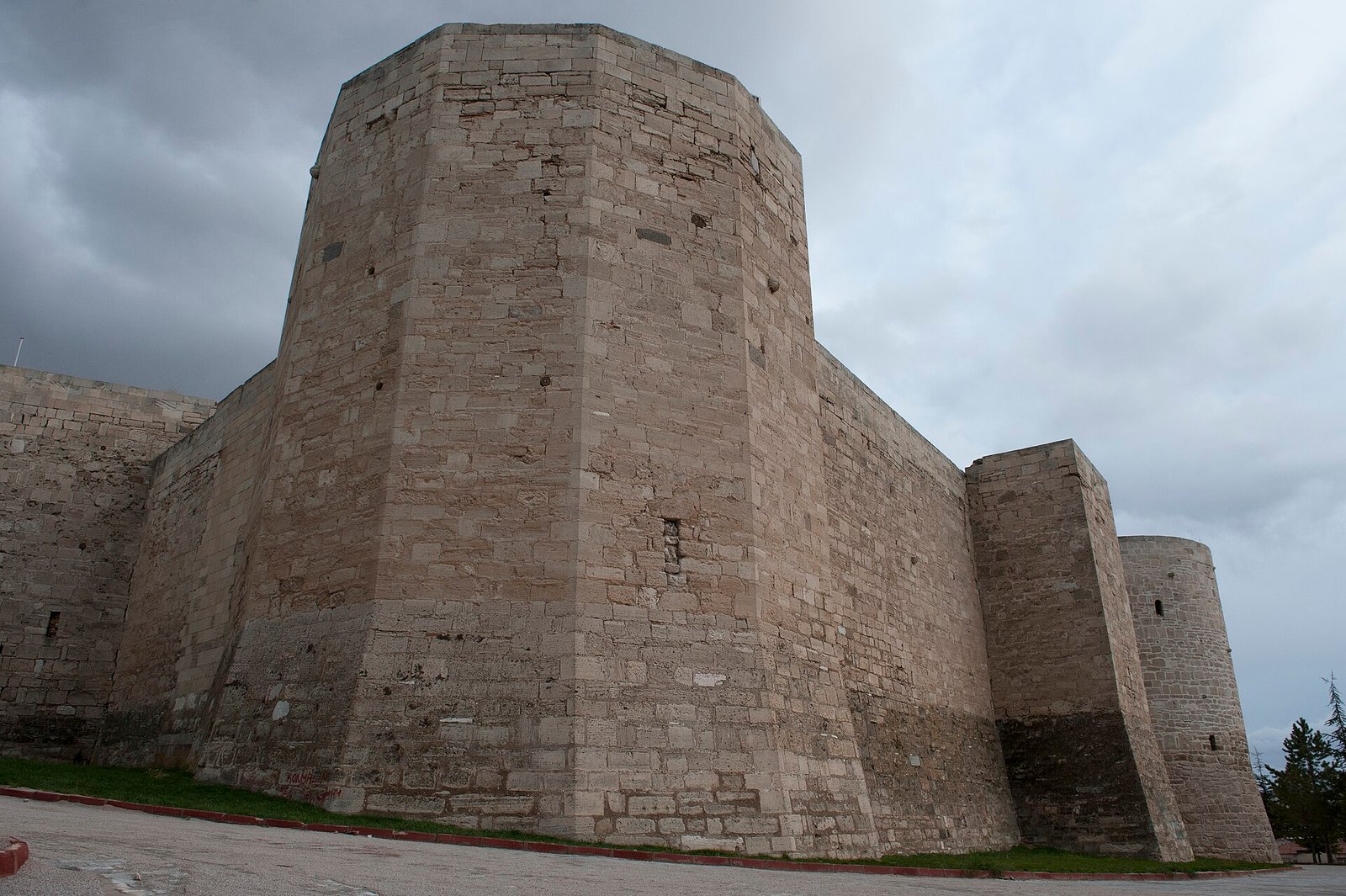
Karaman sits on one of Anatolia’s old road junctions. Its name comes from a medieval ruler. Its history reaches back thousands of years before him. This guide covers both: how the city got its name, and what happened here from the Chalcolithic period to the present day.
Karaman history in short
The city is known by three names across its past. In antiquity it was Laranda. In Turkish historical usage it was Lârende. Today it is Karaman. Each name belongs to a different layer of the story.
The broad outline is simple. People lived nearby by about 5500 BC. After 395 the city stayed in Byzantine territory. It joined Anatolian Seljuk lands in 1165. It passed to the Karamanoğulları in 1256. The Ottoman grip became firm in 1471. In 1989 Karaman became the centre of its own province.
Where the name Karaman comes from
The modern name is a personal name. The city is called after Karaman Bey, the founder of the Karamanoğulları principality (Karamanoğulları Beyliği).
The link between the name and the city came through the principality. Lârende fell to the Karamanoğulları in 1256. Later it became the principality’s centre.
The old name did not vanish overnight. In the Ottoman period, the sources use Lârende and Karaman together for the same city.
Laranda: the ancient name and the debate around it
The ancient name is Laranda. Scholars disagree about where it comes from.
One explanation traces it to the Luwian word Laravanda, which would mean “sandy place”. A different view links the name to Lalanda, a place name that appears on Hittite tablets. Both are theories about a very old word, and the debate is still open.
Karaman tribe history: who were the Karamanoğulları?
Many readers ask which tribe the Karamanoğulları came from. Several claims exist. Some name the Avşar, some the Salur, and some the Bayındır tribe.
Yahya Başkan examined these claims in a 2012 article on the dynasty’s origin. His conclusion is cautious. With the sources available, a firm tribal connection cannot be established. So if you see a confident tribal label in a book or on a sign, treat it as one proposal among several.
What is documented is the city’s path. Lârende came into Karamanoğulları hands in 1256. It later became the centre of the principality.
Before any dynasty: Canhasan and the first settlers
The city’s story starts long before written names. About 12 kilometres northeast of Karaman lies Canhasan. Excavations there began in October 1961 under David French.
His published study of Canhasan I reports Chalcolithic settlements on the mound. They date to roughly 5500–3000 BC. That spans about two and a half thousand years, in the countryside near where the modern city stands.
A town on the road to the sea
Geography explains much of Karaman’s importance. The city lies on the historic Silifke–Mut–Karaman–Konya trade route. This route links the Mediterranean coast with Central Anatolia through the Sertavul Pass.
You can picture the logic. Goods and travellers coming up from the coast had to cross the pass. Then they reached the plain where Karaman stands. A town at that spot always had visitors.
Byzantine, Seljuk and Crusader years
After the Roman Empire was divided, Laranda stayed in Byzantine territory from 395.
The Byzantine presence left marks in the countryside. North of the city, around Karadağ, lies Binbirkilise (“a thousand and one churches”). It is known for its Byzantine church ruins. At Madenşehri, the largest of the Binbir Kilise buildings is Basilica No. 1. It was built around 500 and repaired around 900.
In 1165, during the reign of Kılıçarslan II, Karaman was added to Anatolian Seljuk lands.
The Third Crusade then passed through. On 30 May 1190, Friedrich Barbarossa went through Karaman. He occupied the city for a short time.
The Karamanoğulları capital
Under the Karamanoğulları, Lârende became a city of mosques, schools and charitable foundations. Several buildings still stand.
- Aktekke Mosque was built in 1370 by Karamanoğlu Alaaddin Bey. It holds the tomb of Mümine Hatun, the mother of Mevlânâ. For that reason it is also called the Mader-i Mevlâna Mosque.
- Hatuniye Madrasa was built in 1381–1382 by Melek Hatun. She was the daughter of Murad I and the wife of Alaaddin Bey.
- İbrahim Bey İmareti has a foundation deed dated June 1432. It records a mosque, a kitchen that served food to travellers and guests, and a dârülkurrâ, a school that trained Quran reciters.
The İbrahim Bey complex is easy to compare with modern life. Think of a roadside stop that offers a meal, a quiet room and a school, all paid for by one endowment.
Baths worked the same way. The Süleyman Pasha Bath was built in the 14th century and endowed to bring income to the lodge of Mevlânâ’s mother. The Seki Bath was built in the Karamanoğulları period with two separate sections, one for women and one for men.
Ottoman Karaman
In the spring of 1471, Grand Vizier İshak Pasha took the city. That date marks the start of firm Ottoman rule in Lârende.
The city’s learning culture continued. By 1530, Karaman had seven madrasas. They included the Emîr Mûsâ, Halil Bey and Melek Hatun madrasas.
Civil architecture survives too. Tartanlar Mansion was built in 1810 by Hacı Ahmet Efendi of the Tartanzade family. It has two storeys and a central hall (sofa) plan.
Timeline
- c. 5500–3000 BC: Chalcolithic settlements at Canhasan I.
- 395: Laranda remains in Byzantine territory.
- c. 500: Basilica No. 1 built at Madenşehri.
- 1165: The city joins Anatolian Seljuk lands.
- 30 May 1190: Friedrich Barbarossa passes through and briefly occupies it.
- 1256: Lârende passes to the Karamanoğulları.
- 1370: Aktekke Mosque is built.
- 1381–1382: Hatuniye Madrasa is built.
- June 1432: İbrahim Bey İmareti foundation deed is drawn up.
- 1471: Firm Ottoman rule is established.
- 1810: Tartanlar Mansion is built.
- October 1961: David French’s excavations begin at Canhasan.
- 1980: Karaman Museum has displayed archaeological and ethnographic objects since this year.
- 1989: Karaman becomes the centre of its province.
What to see if you visit
Start at the Karaman Museum, next to the Hatuniye Madrasa. It has shown archaeological and ethnographic objects since 1980. Seeing the madrasa and the museum together is easy because they stand side by side.
Then move outward. Aktekke Mosque and the baths show the Karamanoğulları city. Taşkale and the Manazan Caves show the countryside. Manazan is a five-storey group of homes carved by hand into limestone rock, north of the Yeşildere Valley. Binbirkilise shows the Byzantine layer.
Details you won’t find in guidebooks
- Reused inscriptions. When the Ottomans repaired Karaman Castle in 1465, they set inscriptions and architectural pieces from collapsed buildings into the walls. The wall is partly a record of earlier buildings.
- A sower on an altar. At the Değle ruins, an old altar was turned into a rock tomb in the Byzantine period. On its east face is a relief of a man holding a bowl in one hand and scattering seed with the other.
- A seven-metre scroll. The foundation deeds of İbrahim Bey İmareti, kept in the Topkapı Palace Museum Library, form a joined scroll about seven metres long with their attachments.
- A woman in the museum. A woman’s body from the Byzantine period was taken from the upper level of Manazan, called the Field of the Dead. It is displayed in the Karaman Museum.
- Granaries with pulleys. At Taşkale there are more than 250 grain stores cut into clayey limestone. People climb to them through niches in the rock face, and goods are moved with a chain-and-pulley system.
FAQ
Why is the city called Karaman?
The city takes its name from Karaman Bey, the founder of the Karamanoğulları principality. Lârende came into the hands of the Karamanoğulları in 1256 and later became the capital of their principality.
What was Karaman called in ancient times?
In antiquity the city was called Laranda. In Turkish historical usage it was called Lârende, and under the Ottomans the names Lârende and Karaman were used together.
When did the Ottomans take Karaman for good?
Firm Ottoman rule in Lârende was established in the spring of 1471, when Grand Vizier İshak Pasha took the city.
Which tribe did the Karamanoğulları come from?
Some claims name the Avşar, Salur or Bayındır tribes. A 2012 article by Yahya Başkan examines them and concludes that the available sources cannot establish a firm tribal link.
When did Karaman become a province?
Karaman became the centre of the Karaman province, which was established in 1989.
Sources
- Vikipedi — Karaman tr.wikipedia.org
- TDV İslâm Ansiklopedisi — Karaman islamansiklopedisi.org.tr
- TDV İslâm Ansiklopedisi — İbrâhim Bey İmareti ve Kümbeti islamansiklopedisi.org.tr
- Yahya Başkan — Karamanoğullarının Kökeni Meselesi, Tarih İncelemeleri Dergisi dergipark.org.tr
- David French — Canhasan Sites 2: Canhasan I: The Pottery, British Institute at Ankara jstor.org
- David French — Canhasan, Karaman: 1961, Kültür ve Turizm Bakanlığı taed.ktb.gov.tr
- Wikipedia — Karaman Province en.wikipedia.org
- GoTürkiye — Karaman: Gör goturkiye.com
- Türkiye Kültür Portalı — Aktekke Camii kulturportali.gov.tr
- Hacettepe Üniversitesi — İçten Tansel, Karaman Hatuniye/Melek Hatun Medresesi openaccess.hacettepe.edu.tr
- Karaman Yatırım Destek Ofisi — Karaman’ın Turizmi karamandayatirim.gov.tr
- Karaman İl Kültür ve Turizm Müdürlüğü — Manazan Mağaraları karaman.ktb.gov.tr
- Karaman İl Kültür ve Turizm Müdürlüğü — Tahıl Ambarları karaman.ktb.gov.tr
- Kültür ve Turizm Bakanlığı — Karaman Müzesi muze.gov.tr
Image: Karaman castle 2240.jpg — Dosseman, CC BY-SA 4.0