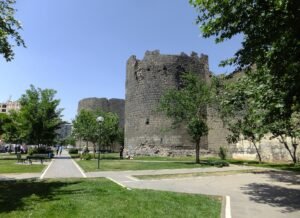
Eskişehir history in short
Eskişehir’s history begins with a city that had a different name. The ancient settlement was recorded in Greek as Dorylaion and in Latin as Dorylaeum. Arabic sources called it Darauliya, Adruliya and Drusilya.
The name is very old. According to the Anadolu University excavation page, the historian Diodoros used the name Dorylaion when he described events before the Battle of Ipsos. That places the name in the 4th century BCE.
The story then moves through Seljuk and Ottoman times. It continues into the railway age and the war years of 1921 and 1922. Each period left something you can still see or read about today.
Where was ancient Dorylaion?
The site is Şarhöyük. This mound is identified with ancient Dorylaion. It measures roughly 450 × 400 metres and stands 17 metres high.
Archaeological work started here in 1989. The Ministry of Culture and Anadolu University began the excavations, led by Muhibbe Darga. If you visit Eskişehir today, this is the oldest layer of the city’s story.
Who founded Dorylaion?
The ancient sources do not agree on one founder. An inscription found around Hamamyolu names Dorylaos of Eretria as the founder. A military diploma uses the phrase Acamantia Dorylaion. That phrase links the city with Akamas, which points to a second founding tradition.
So the city kept at least two origin stories. Ancient people explained its beginnings in more than one way, much as modern scholars now explain its name.
The origin of the name Eskişehir
The name Eskişehir means “old city” in Turkish. How the modern city got it is a matter of debate. Three explanations appear in the sources.
Theory 1: the ruins of Dorylaion
The first explanation is attributed to Ramsay. It connects the name with the ruins of Dorylaion. The old city, in this view, was the abandoned ancient settlement.
Theory 2: the move to Yenişehir
Selma Manaz’s doctoral thesis summary reports a second explanation. Sultaneyüğü may have received the name Eskişehir after Osman Gazi moved his centre from Karacahisar to Yenişehir. The “old” city would then be the one left behind. This differs from the view that derives the name from the ruins of Dorylaion.
Theory 3: old town versus abandoned fortress
Seçkin Evcim’s 2023 study gives a third account. The Turks called the abandoned fortress Şarhöyük. They called the centre with the market and baths the old city. As the settlement spread, the name Eskişehir passed to the whole town centre.
The sources do not choose between these theories.
From Byzantine Dorylaion to Sultan Eyüğü
By the Middle Ages the area sat on a contested frontier. In 1097 the Seljuk Sultan I. Kılıç Arslan met the Crusaders near Eskişehir. He was forced to fall back under their attack.
The region later returned to Seljuk control. This is linked to events after the Byzantine defeat at Myriokephalon in 1176. After that defeat, Emperor Manuel Komnenos is said to have demolished the fortifications at Dorylaion.
A document from 1272 gives the next name. The Cacoğlu Vakfiyesi, a charitable endowment deed, records the Seljuk town as Sultan Eyüğü. According to Selma Manaz’s thesis summary, this town formed the core of today’s Eskişehir.
Odunpazarı: the Ottoman heart of the city
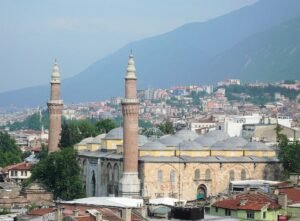
Odunpazarı is the historic quarter you will want to walk through. Its municipality explains the name this way. Villagers brought firewood down from the mountains and sold it in the square where Sebahattin Günday Park now stands.
The quarter’s Ottoman houses follow a clear pattern. They stand side by side along winding streets and dead ends. They have bay windows and carved wooden decoration.
The area was registered as a historic and urban site in 1981. It was registered as an urban site in 1986. On 13 April 2012, Türkiye submitted the Odunpazarı Historic Urban Site to the UNESCO World Heritage Tentative List.
Kurşunlu Külliyesi
The Kurşunlu complex is one of Odunpazarı’s main monuments. Its buildings, apart from the Great Caravanserai, were commissioned by Çoban Mustafa Paşa between 1517 and 1525. This comes from the foundation record.
The Odunpazarı Municipality says the architect was probably Acem Ali, who served as chief architect before Mimar Sinan.
The complex later became a museum. The Eskişehir Museum Directorate was officially established in the Kurşunlu Mosque and Complex in 1966. It opened with its first exhibition that year.
Phrygian traces: the Midas Monument
The province holds older monuments too. In Yazılıkaya, in the Han district, stands the Midas Monument. It is a rock façade 17 metres high and 16.5 metres wide, facing east.
The large niche in its centre was the sacred spot for a statue of the Mother Goddess Matar Kubileya during religious ceremonies.
Railway and war: the modern city
In 1892 the Cer Atölyesi was founded in Eskişehir. It maintained and repaired railway vehicles. This workshop tied the city to the railway age.
Then came the war. The Greek army occupied Eskişehir on 20 July 1921. The city was liberated on 2 September 1922.
Fires broke out as the Greek army withdrew in 1922. The Köprübaşı, İhsaniye and Hoşnudiye neighbourhoods burned down completely. Bombs wrecked the roof of the railway station.
The English-language Wikipedia article on Eskişehir Province gives the province’s 1927 population as 154,195. That figure covers the whole province, not just the city centre.
Timeline
- 4th century BCE: The name Dorylaion appears in Diodoros’s account of events before the Battle of Ipsos.
- 1097: I. Kılıç Arslan fights the Crusaders near Eskişehir.
- 1176: After the defeat at Myriokephalon, the Byzantine fortifications at Dorylaion are demolished.
- 1272: The Cacoğlu Vakfiyesi records the Seljuk town as Sultan Eyüğü.
- 1517–1525: Çoban Mustafa Paşa commissions the buildings of the Kurşunlu Complex, except the Great Caravanserai.
- 1892: The Eskişehir Cer Atölyesi is founded.
- 20 July 1921: The Greek army occupies Eskişehir.
- 2 September 1922: Eskişehir is liberated.
- 1944–1951: The Alaeddin Mosque is used as a museum.
- 1966: The Eskişehir Museum Directorate is officially established in the Kurşunlu Complex.
- 1981: Odunpazarı is registered as a historic and urban site.
- 1989: Excavations at Şarhöyük begin under Muhibbe Darga.
- 13 April 2012: The Odunpazarı Historic Urban Site is submitted to the UNESCO Tentative List.
Details you won’t find in guidebooks
- Two founders for one city. An inscription near Hamamyolu names Dorylaos of Eretria. A military diploma ties the city to Akamas through the phrase Acamantia Dorylaion.
- Watchmakers and the lodge. The UNESCO file says the Mevlevis of the area gave the income they earned from watchmaking and meerschaum work to their lodge.
- A mosque that was a museum. The Alaeddin Mosque in Odunpazarı served as a museum from 1944 to 1951. It was then repaired and reopened for worship.
- A misleading name. The Selçuklu Hamamı in Seyitgazi’s İkiçeşme neighbourhood is dated to the Ottoman period by the Culture Portal, despite its name.
- Famous baths, no Byzantine bath. Eskişehir is known for its natural hot-spring baths. Even so, Seçkin Evcim’s 2023 article says no Byzantine-era bath ruin has been found in the city.
- Two names on one monument. The Midas Monument takes its name from the word Midai in its Phrygian inscription. Local people named Yazılıkaya after the writing on the monument.
FAQ
What was the ancient name of Eskişehir?
The ancient city was called Dorylaion in Greek and Dorylaeum in Latin. Arabic sources used forms such as Darauliya, Adruliya and Drusilya.
Where is ancient Dorylaion?
Dorylaion is identified with Şarhöyük, a mound about 450 × 400 metres across and 17 metres high. Excavations there began in 1989 under Muhibbe Darga.
Why is the city called Eskişehir?
There is no single settled answer. One view ties the name to the ruins of Dorylaion. Another says Sultan Eyüğü took the name after Osman Gazi moved his centre from Karacahisar to Yenişehir. A third says the Turks called the old market-and-bath district the old city, and the name later spread to the whole centre.
When was Eskişehir occupied and freed in the Turkish War of Independence?
Greek forces occupied the city on 20 July 1921. It was liberated on 2 September 1922.
Is Odunpazarı a UNESCO World Heritage Site?
Not yet. Türkiye submitted the Odunpazarı Historic Urban Site to the UNESCO Tentative List on 13 April 2012.
Sources
- Vikipedi — Eskişehir tr.wikipedia.org
- Eskişehir Valiliği — Tarihçe eskisehir.gov.tr
- Anadolu Üniversitesi — Şarhöyük–Dorylaion Kazıları arkeoloji.anadolu.edu.tr
- Anadolu Üniversitesi AVESİS — Selma Manaz doktora tezi özeti avesis.anadolu.edu.tr
- Anadolu Üniversitesi Sosyal Bilimler Dergisi — Eskişehir ve Çevresindeki Bizans Dönemi Yapıları dergipark.org.tr
- Eskişehir Osmangazi Üniversitesi — Tarihte Eskişehir medya.ogu.edu.tr
- Odunpazarı Belediyesi — Historical Odunpazarı Houses odunpazari.bel.tr
- Eskişehir İl Kültür ve Turizm Müdürlüğü — Sivil Mimari Örnekleri eskisehir.ktb.gov.tr
- UNESCO Dünya Mirası Merkezi — Odunpazari Historical Urban Site whc.unesco.org
- Odunpazarı Belediyesi — Kurşunlu Külliyesi odunpazari.bel.tr
- Kültür ve Turizm Bakanlığı Kültür Portalı — Alaeddin Camii beta.kulturportali.gov.tr
- Kültür Varlıkları ve Müzeler Genel Müdürlüğü — Eskişehir Müze Müdürlüğü kvmgm.ktb.gov.tr
- Kültür ve Turizm Bakanlığı Kültür Portalı — Selçuklu Hamamı kulturportali.gov.tr
- Kültür ve Turizm Bakanlığı Kültür Portalı — Midas Anıtı kulturportali.gov.tr
- Atatürk Araştırma Merkezi Dergisi — XX. Yüzyılın Başlarında Eskişehir atamdergi.gov.tr
- Wikipedia — Eskişehir Province en.wikipedia.org
Image: Odunpazarı… – panoramio.jpg — Sinan Şahin, CC BY 3.0