Where Balıkesir Is and Why It Matters
Balıkesir lies in northwest Anatolia. The province has a coast on both the Marmara Sea and the Aegean Sea. It also takes in Mount Kaz (Kaz Dağı).
In ancient times this region was called Mysia. Persians, Romans and Turks all left traces here. If you travel through the area, you will pass layers of history.
Balıkesir History: From Mysia to the Karesi Beylik
The story starts long before the city had its Turkish name. Near Ergili, a settlement in Bandırma, stood Daskyleion. It was a Persian satrapy centre, southeast of Manyas Bird Lake (Kuş Gölü). In 1952 Kurt Bittel pinpointed its location at Hisartepe. Ekrem Akurgal began the first excavations in 1954.
On the Kapıdağ Peninsula, between the Erdek and Bandırma gulfs, lie the remains of the ancient city of Kyzikos. Further south, at Antandros, archaeologists have studied a Roman villa called Yamaç Ev. It was built in the late 3rd century AD. With changes, people used it until the 6th and 7th centuries.
The Turkish chapter begins around 1300. The exact founding date of Balıkesir is not known. Still, the city and its surroundings are accepted to have come under lasting Turkish rule at about that time.
Kalem Bey and his son Karesi Bey then made Balıkesir, in Mysia, the centre of their principality. A famous traveller visited it too. In 1333 Ibn Battuta came to Balıkesir. He wrote about Demir Han, Karesi Bey’s son, as the sultan of Balıkesir.
The beylik did not last. A large part of Karesi territory joined the Ottoman Beylik during the reign of Orhan Bey.
The Origin of the Name Balıkesir
This is the question most readers ask first. The honest answer is that nobody has settled it. The Balıkesir Provincial Directorate of Culture and Tourism lists the main explanations.
Paleo Kastro. One theory derives the name from the Greek phrase Paleo Kastro. It means ‘Old Fortress’. Over time, the argument goes, the Greek words were bent into a Turkish-sounding name.
Balık Hisar. The alternative theory starts from Old Turkic. In that language the word balık meant ‘city’. So Balık Hisar would simply be a ‘city fortress’. Under this reading, the name has nothing to do with fish, even though modern Turkish balık means ‘fish’.
The honey story. A popular tale explains the name through the abundance of honey: balı kesir, ‘honey is plentiful’. It is a folk etymology. It is a charming story, but the same official source also gives the Paleo Kastro and Balık Hisar explanations, and these are the two it treats as the main explanations.
Ottoman sources wrote the city’s name as Balıkesri, according to the Governorship of Balıkesir. So the spelling you see today is a later form.
Think of the way a nickname sticks to a neighbourhood in your own town. Nobody records the day it began, yet everyone uses it. City names often travel the same way, and that is why the origin of Balıkesir stays debated.
The Ottoman Centuries and the Zağnos Pasha Complex
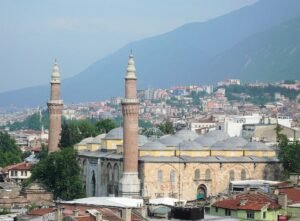
The best-known monument of the Ottoman period is the Zağnos Pasha Complex in the city centre. Zağnos Mehmed Pasha, a vizier of Sultan Mehmed the Conqueror (Fatih Sultan Mehmed), had it built in 1461.
The Zağnos Pasha Mosque stands inside the market area in the Mustafa Fakıh neighbourhood. If you shop in the bazaar, you walk right past it. That is a good example of history sitting in everyday life.
The mosque and its tomb did not survive unharmed. The earthquake of 1897 brought them down. In 1908 the Balıkesir district governor (mutasarrıf), Ömer Ali Bey, had them rebuilt.
Another Ottoman-era mosque worth a look is the Yıldırım Mosque in the Yıldırım neighbourhood. Two rows of five columns each divide its interior into three sections.
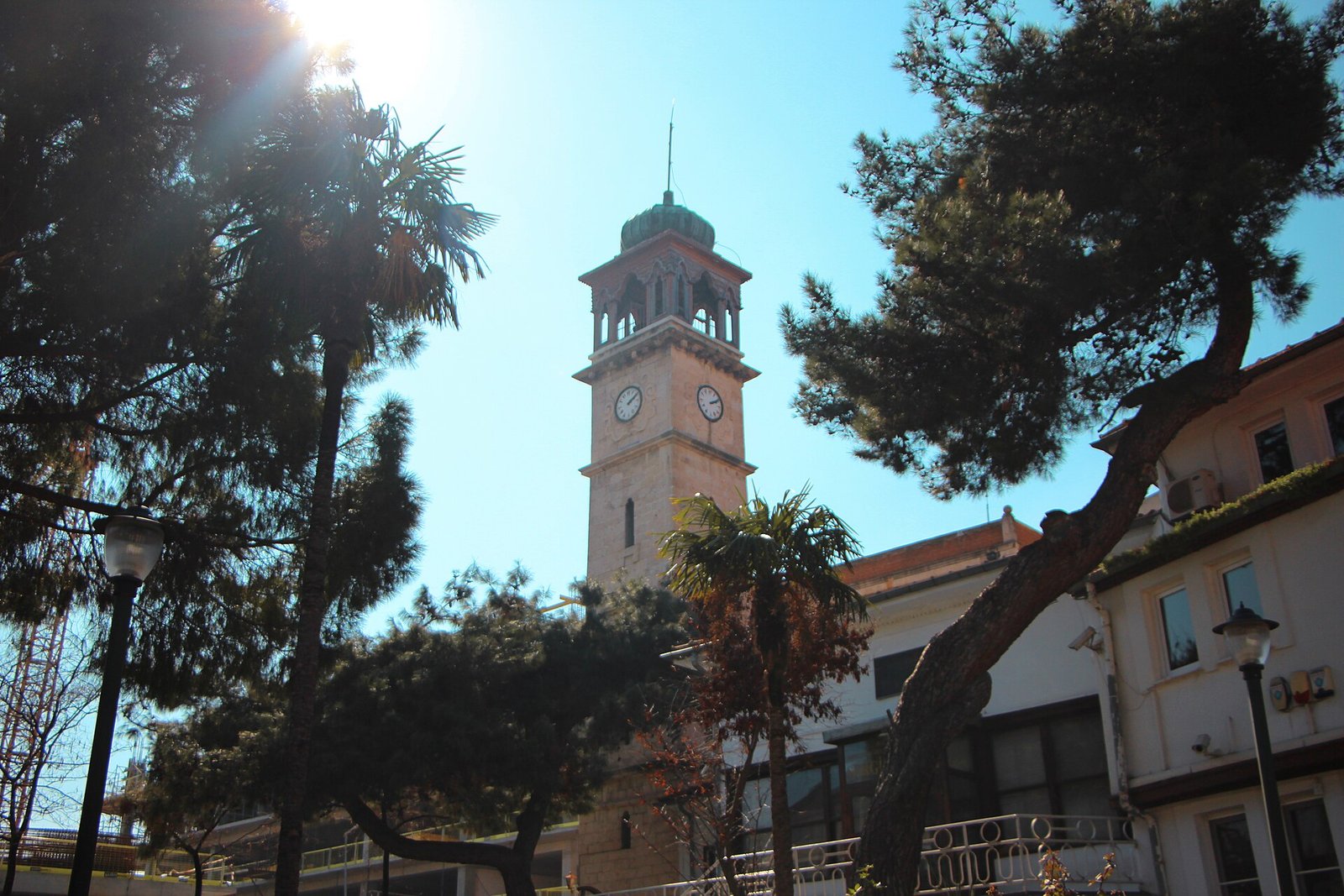
A newer landmark is the Balıkesir Clock Tower. Its present structure dates from 1901. Each of its four faces carries a clock.
Balıkesir in the National Struggle
On 16 May 1919 the people of Balıkesir gathered in a building that is today the Kuva-yi Milliye Museum. There they decided on armed resistance.
The Greek army occupied the city on 30 June 1920. The occupation ended on 6 September 1922, when Balıkesir was freed.
In 1926 the Karesi province took the name Balıkesir. The old beylik name gave way to the city’s own name.
The museum building has its own history. From 1947 to 1988 it served as a municipal service building. It opened as the Balıkesir Kuva-yi Milliye Museum on 6 September 1996. Notice the date: it is the same day, 6 September, on which the city was freed in 1922.
Timeline
- Late 3rd century AD: the Roman villa Yamaç Ev is built at Antandros.
- About 1300 Balıkesir and its surroundings come under lasting Turkish rule.
- 1333 Ibn Battuta visits Balıkesir.
- Reign of Orhan Bey: a large part of Karesi territory joins the Ottoman Beylik.
- 1461 the Zağnos Pasha Complex is built.
- 1897 an earthquake destroys the Zağnos Pasha Mosque and tomb.
- 1901 the Clock Tower is built in its present form.
- 1908 the mosque and tomb are rebuilt.
- 16 May 1919 a decision for armed resistance is taken in today’s Kuva-yi Milliye Museum building.
- 30 June 1920 the Greek army occupies Balıkesir.
- 6 September 1922 Balıkesir is freed.
- 1926 the Karesi province takes the name Balıkesir.
- 1954 Ekrem Akurgal starts the Daskyleion excavations.
- 10 June 1991 the Tahtakuşlar Ethnography Gallery opens.
- 6 September 1996 the Kuva-yi Milliye Museum opens.
- 15 April 2017 the Ayvalık Industrial Landscape enters UNESCO’s Tentative List.
Details You Won’t Find in Guidebooks
- Six rooms and a bath. The portico of Antandros’s Yamaç Ev is 32.90 metres long. Six rooms open side by side onto it. The villa also had a bath and a toilet.
- Builders from several communities. Greek and Armenian craftsmen worked on the 1908 rebuilding of the Zağnos Pasha Mosque.
- A village mosque with a story in its domes. The Şahinler Village Mosque in Burhaniye stands out for the paintings on its domes. They show the village cemetery, the Rezelli Mill, nature and fruit.
- Over twenty olive oil factories. The file Türkiye sent to UNESCO says that more than twenty large olive oil factory complexes in Ayvalık were renewed and kept working from the 19th century until the late 1970s.
Beyond the City Centre: Ayvalık, Tahtakuşlar and Erdek
The province offers more than the city of Balıkesir itself. In the İsmet Paşa neighbourhood of Ayvalık stands the Saatli Mosque. Greeks built it as a church. It was turned into a mosque after 1928.
Ayvalık also has an industrial heritage. The Ayvalık Industrial Landscape was placed on UNESCO’s World Heritage Tentative List by an application dated 15 April 2017.
In Tahtakuşlar Village, the teacher Alibey Kudar founded the Alibey Kudar Ethnography Gallery. It opened to visitors on 10 June 1991.
The past also reaches into the news. According to an Anadolu Agency report of 7 October 2023, a raid on a house in Erdek’s Atatürk neighbourhood found 3,882 coins in an operation against antiquities smuggling.
FAQ
What does the name Balıkesir mean?
No single origin is settled. One theory derives it from the Greek Paleo Kastro, ‘Old Fortress’. Another points to Balık Hisar, built on an Old Turkic word balık meaning ‘city’. A third story, about honey being plentiful, is a folk etymology.
When did Balıkesir become Turkish?
The exact founding date is unknown. The city and its surroundings are accepted to have come under lasting Turkish rule around 1300.
Who ruled Balıkesir before the Ottomans?
The Karesi beylik. Kalem Bey and his son Karesi Bey made Balıkesir the centre of their principality. Much of its land joined the Ottoman Beylik under Orhan Bey.
When did Balıkesir get its current name as a province?
In 1926, when the Karesi province took the name Balıkesir.
What can you see in Balıkesir today that shows its history?
The Zağnos Pasha complex of 1461, the Clock Tower of 1901 and the Kuva-yi Milliye Museum in the centre. In the wider province you can visit Daskyleion, Kyzikos and Antandros.
Sources
- Balıkesir İl Kültür ve Turizm Müdürlüğü, Balıkesir Adının Menşei balikesir.ktb.gov.tr
- TDV İslâm Ansiklopedisi, Balıkesir islamansiklopedisi.org.tr
- Balıkesir Valiliği, Altıeylül balikesir.gov.tr
- Vikipedi, Balıkesir tr.wikipedia.org
- Wikipedia, Balıkesir Province en.wikipedia.org
- Balıkesir İl Kültür ve Turizm Müdürlüğü, Müzeler ve Ören Yerleri balikesir.ktb.gov.tr
- Balıkesir İl Kültür ve Turizm Müdürlüğü, Kutsal Yerler ve Tarihi Yapılar balikesir.ktb.gov.tr
- Balıkesir İl Kültür ve Turizm Müdürlüğü, Tarihi Yapılar balikesir.ktb.gov.tr
- Antandros Antik Kenti Kazıları, Yamaç Ev antandros.org
- Türkiye Kültür Portalı, Balıkesir Saat Kulesi kulturportali.gov.tr
- Kültür ve Turizm Bakanlığı, Kuva-yi Milliye Müzesi muze.gov.tr
- Balıkesir İl Millî Eğitim Müdürlüğü, Tarihçe balikesir.meb.gov.tr
- Visit Edremit, Tahtakuşlar Etnografya Müzesi visitedremit.com
- UNESCO World Heritage Centre, Ayvalık Industrial Landscape whc.unesco.org
Image: BalıkesirSaatKulesi.jpg — Hustle77, CC BY-SA 4.0