What is the history of Batman?
Batman is a city in southeastern Türkiye. Its modern story is short, but the land around it is very old.
The city grew on the site of a village called İluh. Oil drove that growth. Over the twentieth century İluh went from village to district to province. This article follows that path, then looks at where the name comes from and what lies in the surrounding area.
Where does the name Batman come from?
The short answer: the city borrowed the name of a river. The Batman Çayı flows close to İluh, and its name was given to the settlement. A research study published by Batman University reaches this conclusion.
The same study adds a limit. It could not establish where the word Batman first came from, or why it was attached to this area.
What the study does show is an early date. The name was in use from the early 14th century. It referred to a region and to a village near Malabadi Bridge. So the name is much older than the oil town.
Think of your own commute. A river you cross to get to work often ends up as a border on the map. The Batman Çayı does this too. It forms a natural boundary between Batman and Diyarbakır.
The oil-derrick story
You may hear that the city got its name when the ground under an oil derrick sank. The Turkish Culture Portal rejects this. It says the explanation has no scientific proof. It also points out that the name appears in medieval sources, long before any derrick stood here.
How did a village become a city?
The old settlement, İluh, appears in historical sources as Eyluh or Eyluhi. It stood on and around a mound in the middle of a plain.
The key dates came quickly:
- In 1937, İluh became a bucak, a small administrative unit.
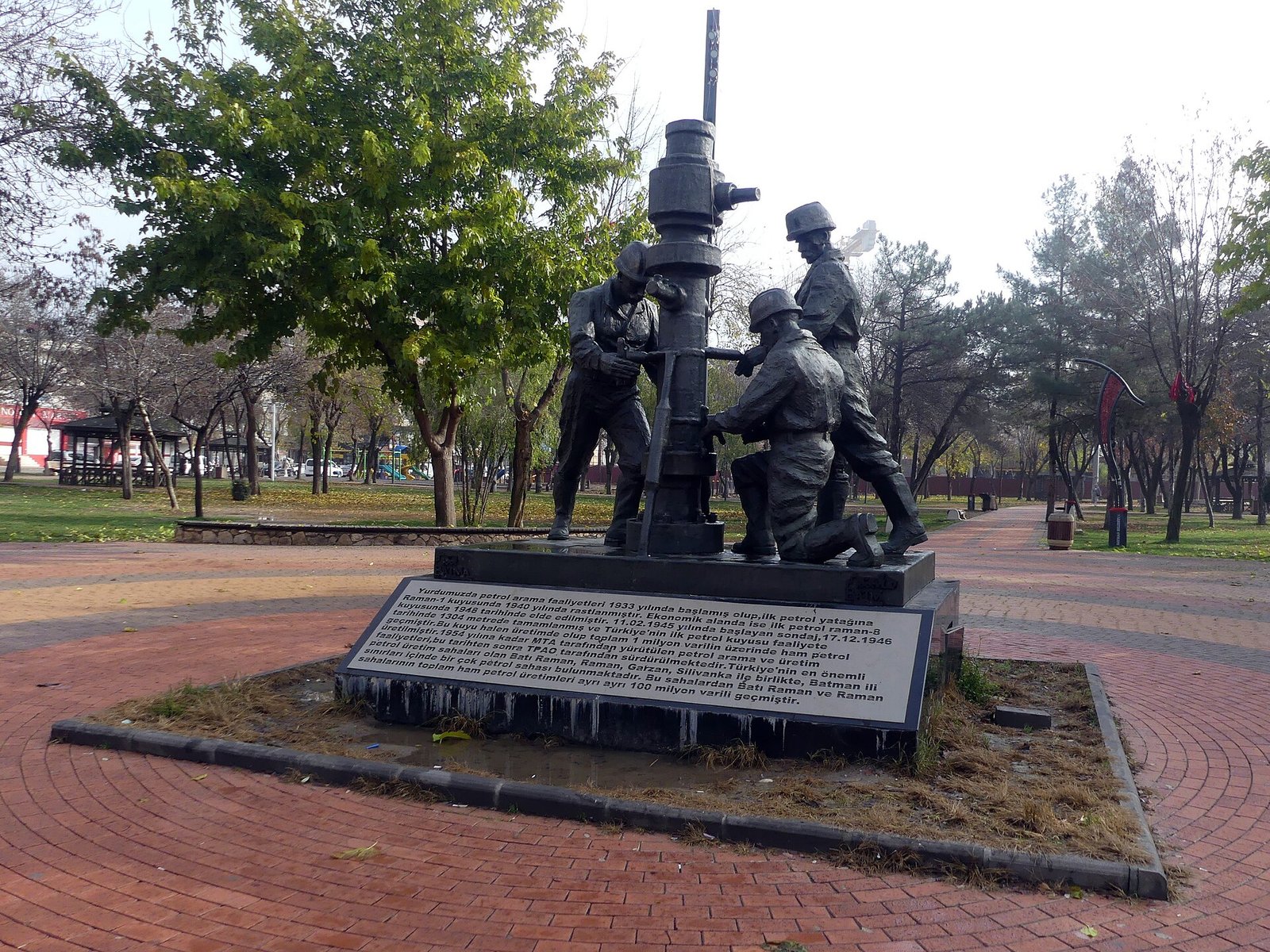
- On 20 April 1940, the Raman-1 well hit oil at 1,048 metres.
- In 1944, the Haydarpaşa–Kurtalan railway reached the town.
- On 2 November 1955, a municipality was founded. That year’s census recorded 4,713 people.
- On 2 September 1957, the settlement became a district.
- On 16 May 1990, Law No. 3647 made Batman Türkiye’s 72nd province.
When the province was created, districts were taken from Siirt and Mardin and attached to it. The Dicle (Tigris) River runs through the province from west to east.
Timeline
- Second half of the 10th millennium BC: The first settlement at Hasankeyf Höyük, in the Pre-Pottery Neolithic A period.
- 1101–1231: Hasankeyf serves as capital of the Artuklu dynasty.
- 1147: The date on the inscription of Malabadi Bridge.
- Early 14th century: The name Batman is used in historical sources, according to the Batman University study.
- 1473: Zeynel Bey dies at the Battle of Otlukbeli. A tomb is built in his name.
- 1937: İluh becomes a bucak.
- 20 April 1940: Oil is found at the Raman-1 well.
- 1944: The railway reaches Batman.
- 2 November 1955: The municipality of İluh is founded.
- 2 September 1957: Batman becomes a district.
- 16 May 1990: Batman becomes a province.
- 1991–1994: Michael Rosenberg excavates Hallan Çemi.
- 13 April 2016: Malabadi Bridge is submitted to the UNESCO Tentative List.
- 12 May 2017: The Zeynel Bey Tomb is moved to a new site.
- 2020: Most of historic Hasankeyf goes under water after the Ilısu Dam is completed.
What lies under the oil city? Neolithic settlements
People lived here long before oil. At Hasankeyf Höyük, the first settlement dates to the Pre-Pottery Neolithic A period, in the second half of the 10th millennium BC.
Another site is Hallan Çemi Mound. It lies within the village of Kaletepe in Kozluk district. Michael Rosenberg ran excavations there from 1991 to 1994.
You can see finds from this era in the Hasankeyf Museum. It displays Neolithic stone and bone objects from the excavations at Hasankeyf Höyük, Hallan Çemi and Sumaki.
Hasankeyf: the rock fortress
Hasankeyf was the Artuklu capital from 1101 to 1231. Its fortress name, Hısnıkeyfa, means rock fortress.
The town’s fate changed in 2020. After the Ilısu Dam was completed, most of the historic settlement was left under water. If you visit today, you will see a landscape shaped by that decision.
Malabadi Bridge on the Batman Çayı
This bridge ties the river and the name together. It crosses the Batman Çayı on the Diyarbakır–Batman border. Administratively it belongs to Diyarbakır’s Silvan district.
Its inscription is dated 1147. It says the Artuklu ruler Timurtaş had the bridge built. The main pointed arch spans 40.86 metres.
The bridge was submitted to the UNESCO World Heritage Tentative List on 13 April 2016. It also matters for this article for another reason. The name Batman was used in the early 14th century for a village near this bridge.
The Zeynel Bey Tomb
In Hasankeyf stands the tomb of Zeynel Bey. The Akkoyunlu ruler Uzun Hasan had it built for his son, who died at the Battle of Otlukbeli on 11 August 1473.
Details you won’t find in guidebooks
- A town on a mound. İluh was built on top of a mound and on its slope, in the middle of a plain. The oil city sits on an older settlement hill.
- Rooms inside a bridge. Malabadi Bridge has brick-vaulted chambers in its body. They were designed to lighten the load on the foundations and to give usable space.
- Tiles that spell names. The Zeynel Bey Tomb has three rows of tile lettering on its body, spelling Allah, Muhammad and Ali. Its architect was Pir Hasan, son of Abdurrahman.
- A tomb on the move. On 12 May 2017 the tomb was carried about two kilometres to the Hasankeyf New Cultural Park. Eight self-propelled modular transporters did the job.
- A monastery emptied. The Mor Kiryakus Monastery in Ayrancı village, Beşiri, covers about 2,500 square metres. It has three floors, one of them underground. After it was abandoned in the early 1940s, its bell of about 100 kilograms, its manuscripts and its Gospels went to the Mor Gabriel Monastery in Midyat.
- A modern echo. According to a DHA report of 25 October 2025, an operation in Batman’s Çamlıca neighbourhood seized 802 coins, 29 objects, two busts and a statue. Legal action began against one suspect. The history under the ground is still turning up.
FAQ
Where does the name Batman come from?
The city took the name of the Batman Çayı, a stream that flows close to the old village of İluh. The name was used for a region and a village near Malabadi Bridge from the early 14th century. Where the word itself first came from has not been settled.
Is it true that the name comes from an oil derrick sinking into the ground?
No evidence supports that story. The Turkish Culture Portal says it has no scientific proof and notes that the name already appears in medieval sources.
When did Batman become a province?
On 16 May 1990, under Law No. 3647. It became Türkiye’s 72nd province, and districts from Siirt and Mardin were attached to it.
When was oil found in Batman?
The Raman-1 well struck oil on 20 April 1940 at a depth of 1,048 metres.
What is there to see near Batman for a history fan?
Hasankeyf with its rock fortress and the Hasankeyf Museum, the 1147 Malabadi Bridge, the relocated Zeynel Bey Tomb and the Mor Kiryakus Monastery in Beşiri.
Sources
- TDV İslâm Ansiklopedisi — Batman islamansiklopedisi.org.tr
- Batman Üniversitesi — Geçmiş, Bugün ve Gelecekte Batman batman.edu.tr
- Türkiye Kültür Portalı — Batman Genel Bilgiler kulturportali.gov.tr
- Vikipedi — Batman tr.wikipedia.org
- Batman İl Kültür ve Turizm Müdürlüğü — Batman ve Petrol batman.ktb.gov.tr
- Batman İl Kültür ve Turizm Müdürlüğü — Tarihçe batman.ktb.gov.tr
- Wikipedia — Batman Province en.wikipedia.org
- Kültür ve Turizm Bakanlığı DÖSİMM — Batman dosim.ktb.gov.tr
- Batman İl Kültür ve Turizm Müdürlüğü — Genel Bilgiler batman.ktb.gov.tr
- Türkiye Kültür Portalı — Hasankeyf Kalesi kulturportali.gov.tr
- UNESCO Dünya Mirası Merkezi — The Malabadi Bridge whc.unesco.org
- Batman İl Kültür ve Turizm Müdürlüğü — Zeynel Bey Kümbeti batman.ktb.gov.tr
- Anadolu Ajansı — Tarihi Zeynel Bey Türbesi yeni yerine taşındı aa.com.tr
- Batman İl Kültür ve Turizm Müdürlüğü — Mor Kiryakus Manastırı batman.ktb.gov.tr
- Kültür ve Turizm Bakanlığı — Hasankeyf Müzesi ve Örenyeri muze.gov.tr
Image: Oil Well Workers Monument, Batman City (Türkiye).jpg — Zalasem1, CC BY 4.0