Greenland’s lost Norse church at Qinngua was identified when an east-facing human burial was uncovered in August 2026. The burial matched Christian funerary practice and confirmed that the stone building and its surrounding enclosure formed a church and cemetery. It reveals how the site served the Norse community’s religious life, while offering only provisional clues to its date.
Why could a burial settle a question that stone walls had left open for decades? At Qinngua, excavations in the 1970s and 2004 had already suggested a church. If you follow the evidence from the enclosure to the grave, you can see how mapping, excavation, and burial customs finally brought that interpretation together.
Where was Greenland’s lost Norse church found?
The ruins stand at Qinngua, near Narsarsuaq in southern Greenland. They lie within the Norse settlement area around Tunulliarfik fjord. Nearby Brattahlíð was the farm of Erik the Red, at the place now called Qassiarsuk.
The National Museum of Denmark and the University of Bergen announced the discovery on 24 September 2026. According to the museum, Qinngua is the first newly discovered Norse church in Greenland for more than 60 years. The announcement confirmed the function of ruins that archaeologists had investigated before.
The project brought together the National Museum of Denmark, Greenland National Museum and Archives, the University Museum of Bergen, and UNESCO Kujataa. Their work connected the excavation of a single grave with the investigation of the surrounding Norse settlement.
How did archaeologists identify the church?
The first clue was the arrangement of the stone remains. A rectangular stone wall surrounded a central stone building. That layout suggested a medieval church inside an enclosed cemetery, but the earlier excavations had not produced decisive evidence.
Researchers mapped the terrain and ruins using drone images and previous laser scans. These records helped direct the search for graves. The mapping therefore supported a targeted excavation of the suspected burial ground around the building.
The decisive discovery came in August 2026, when the team uncovered a human skeleton. Its east-facing burial was consistent with Christian funerary practice. Taken together with the central building and enclosing wall, it confirmed the interpretation of the site as a church and cemetery.
You can relate this to an everyday habit: recognizing a place through the activities around it. At Qinngua, the stone enclosure suggested a religious space, while the Christian burial supplied evidence of its use. The building’s setting and the treatment of the dead supported the same conclusion.
What does the burial reveal about Norse religious life?
The grave provides evidence for Christian burial beside a Norse church. Konrad Smiarowski distinguished this practice of burial in consecrated ground from Inuit stone-chamber graves beneath piles of stones. That distinction helped researchers interpret the burial within Greenland’s different funerary traditions.
Its orientation mattered because the skeleton faced east. Researchers treated that position as compatible with Christian custom and as decisive evidence for the cemetery. The grave strengthened an interpretation already suggested by the surrounding stone architecture.
The arms lay extended along the sides of the body. Researchers regard that position as a possible early medieval dating clue. It remains a clue rather than a firm date, so the burial’s strongest contribution is the identification of the religious site.
The grave also brings the church into the everyday setting of the settlement. Remains of two or three farms stand beside it. Researchers interpret this cluster as a possible beginning of a small village, linking the religious building with nearby farming households.
How old is the Qinngua church?
The church’s size and its many partly dressed stones suggest a date between 1100 and 1300. That architectural estimate remains provisional. Sample analyses were still under way when the discovery was announced.
The skeleton and the building offer different kinds of dating evidence. The position of the arms suggests a possible early medieval burial, while the architecture points toward 1100–1300. Neither observation establishes a precise construction date for the church.
If you encounter Qinngua described simply as a Viking Age church, the proposed architectural range deserves attention. The evidence presented for the building points to 1100–1300, with its exact date still unresolved. Keeping that distinction makes the discovery easier to place within Greenland’s longer Norse history.
Could it be the church beneath the Sun Mountains?
One proposed identification links Qinngua with Kirkja undir Sólarfjöllum, meaning the church beneath the Sun Mountains. The name occurs in medieval texts. The connection with these particular ruins remains a theory.
Researchers use Flateyjarbók and the descriptions of Ívar Bárðarson alongside field surveys to locate Greenland’s Norse churches. Written descriptions and physical remains therefore contribute to the same investigation. Confirming a church at Qinngua does not by itself confirm its medieval name.
Six churches are known in the small area around Brattahlíð. Researchers think only three continued in use throughout the medieval period. Qinngua belongs within this wider investigation of church locations, their use, and their relationships with nearby settlements.
One interpretation suggests that the concentration of churches reflected competition for power and status among elite families. The further suggestion that some churches were abandoned because their patrons lost that competition remains unproven. The number of churches is evidence; the proposed political explanation is an interpretation.
Timeline
- Around 986: Norse settlers arriving from Iceland began Greenland’s Norse settlement period.
- 1100–1300: The provisional date range suggested by the architecture of the Qinngua church.
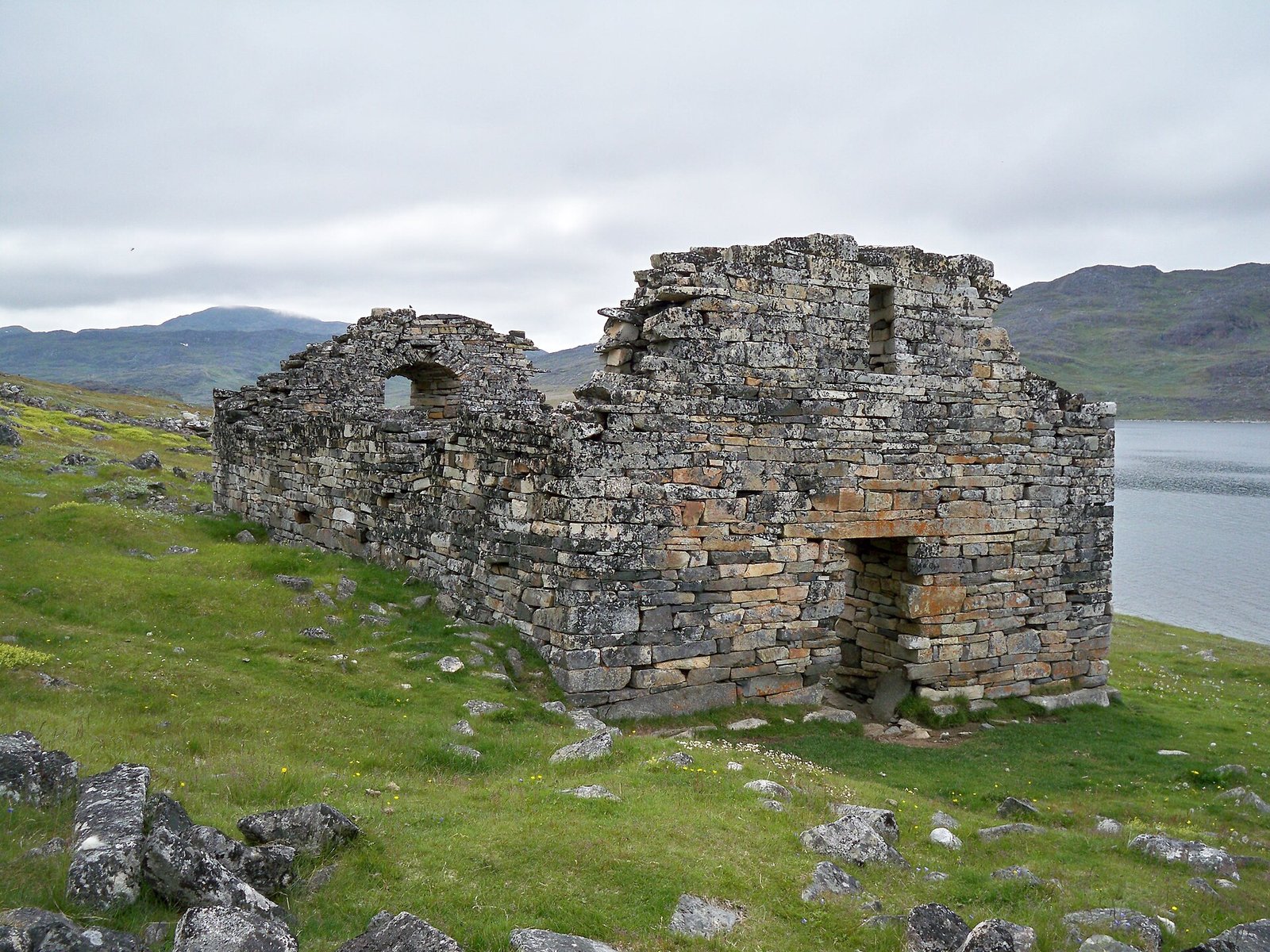
- 14 September 1408: A wedding at Hvalsey Church became the last known written record of an event within Greenland’s Norse community.
- 15th century: Greenland’s Norse settlements came to an end.
- 1970s: Excavations at Qinngua suggested a church and cemetery.
- 2004: Further excavation took place without securing decisive evidence for the cemetery.
- 2017: UNESCO inscribed the Kujataa cultural landscape on the World Heritage List.
- August 2026: An east-facing Christian burial confirmed the church and cemetery at Qinngua.
- 24 September 2026: The museum and university publicly announced the discovery.
Details you won’t find in guidebooks
The identification was settled near the end of the excavation. According to a museum photograph caption, the grave and church interpretation became certain on the excavation’s penultimate day. The decisive evidence emerged after decades of earlier interest in the site.
The team used excavation methods developed through 20 years of collaboration in Greenland. Greenlandic archaeology students also received field training during the work. The excavation combined the investigation of the ruins with practical archaeological education.
Residents around Qassiarsuk followed the research closely and contributed to the fieldwork. Their involvement formed part of a project whose institutional partners included museums, the university museum, and UNESCO Kujataa.
Although UNESCO Kujataa participated, the newly identified church lies outside the Kujataa World Heritage boundaries. For travelers, that is a useful geographical distinction. Participation in the excavation does not place Qinngua inside the listed landscape.
How does Qinngua fit Greenland’s wider Norse story?
Norse settlement in Greenland began around 986 with migrants from Iceland and lasted roughly five centuries. According to saga tradition, Erik the Red’s wife, Thjodhild, adopted Christianity and had a small church built near Brattahlíð. Qinngua adds another confirmed church site to this regional religious landscape.
The wedding held at Hvalsey Church on 14 September 1408 is the last known written record of a Norse Greenlandic event. The settlements ended during the 15th century. Proposed explanations include changes in climate, the economy, and connections with Europe, but the Qinngua burial does not decide between them.
The five-part Kujataa cultural landscape, listed by UNESCO in 2017, represents Norse farming from the 10th to the 15th centuries and Inuit farming from the 18th century onward. Qinngua’s nearby farms and church offer a more local view of the relationship between settlement and religious space.
FAQ
How was Greenland’s lost Norse church identified?
An east-facing human burial found at Qinngua in August 2026 confirmed the interpretation of the stone ruins as a church and cemetery. Researchers used drone images, earlier laser scans, and targeted excavation to investigate the site.
What does the burial reveal?
Its east-facing orientation fits Christian burial practice and supports the identification of consecrated ground beside a Norse church. The position of the arms may also offer an early medieval dating clue, although it does not establish a precise date.
How old is the Qinngua church?
The building’s size and numerous partly dressed stones suggest a date between 1100 and 1300. This remains provisional, and sample analyses were continuing when the discovery was announced.
Was it the church beneath the Sun Mountains?
The ruins may be Kirkja undir Sólarfjöllum, the church beneath the Sun Mountains mentioned in medieval texts. That identification has not been confirmed.
Sources
- National Museum of Denmark — Announcement and excavation photographs via.ritzau.dk
- University of Bergen — Norse church ruins found in Greenland api.kommunikasjon.ntb.no
- University of Bergen / forskning.no — Excavation methods and earlier investigations forskning.no
- Innovation South Greenland / Kujataa — New church ruins found at Qinngua isg.gl
- HeritageDaily — Skeleton confirms discovery of lost Viking Age church in Greenland heritagedaily.com
- Wikipedia — Norse settlements in Greenland en.wikipedia.org
- UNESCO World Heritage Centre — Kujataa Greenland whc.unesco.org
Image: Hvalsey Church.jpg — Number 57 at English Wikipedia, CC0