Fire helped the 5,000-year-old bread at Seyitömer survive by turning its organic material into charred remains more resistant to biological decay. Eight bread remains were recovered during rescue excavations at the mound in Kütahya, in a room containing an oven and shelf supports.
The most revealing detail is their position: the bread lay between the shelf supports, outside the oven. Wheat and lentil remains lay nearby. If you follow those objects through the room, you can understand both the excavation director’s reconstruction of the fire and why the discovery concerns food storage as well as bread.
How did fire preserve the bread?
HeritageDaily explains the preservation through charring. The fire transformed the bread’s organic material into charred remains that were more resistant to biological decay. Burning therefore helped preserve the material recovered by the excavators, even as the room suffered damage.
That explanation depends on the conditions of burning. In their 1990 experimental study, Boardman and Jones showed that temperature, heating duration and oxygen availability affect whether cereal material becomes charred or is destroyed. Fire does not produce the same result under every set of conditions.
Their experiments also found different levels of resistance among cereal grains, chaff and stems. These differences matter when you look at the Seyitömer discovery. Material surviving a fire may represent only part of the agricultural produce originally present.
The eight bread remains, wheat and lentils are therefore evidence of food in the room. The experimental work gives a reason to read that evidence carefully: the surviving plant material need not reproduce the original stores in full.
What did archaeologists find in the room?
The room contained an oven and the remains of shelving beside a wall. The eight bread remains were found between the shelf supports. Keeping those locations separate is essential to understanding the discovery: an oven belonged to the room, while the bread’s recorded findspot was among the shelving remains.
Excavation director Sevgi Gürdal interprets the arrangement as the aftermath of a collapse. In her reconstruction, the shelf fell during the fire. Bread and agricultural produce then became mixed together on the floor.
Gürdal also suggests that the bread and agricultural products had been kept in sacks or bags on the shelf. This is her interpretation of the finds and their arrangement. The physical evidence includes the shelf supports, the bread and the associated plant remains.
For an everyday connection, picture putting bread and bags of food on a kitchen shelf. Gürdal’s reconstruction concerns that familiar act of storing food together. At Seyitömer, the fallen shelf and mixed remains bring the storage arrangement into view through the aftermath of a fire.
How old are the Seyitömer bread remains?
Gürdal dates the bread to approximately 5,000 years ago, within the first quarter of the Early Bronze Age. That is the dating attached to the bread discovery. It places the food remains within an early phase of the mound’s Bronze Age occupation.
Dumlupınar University’s stratigraphic chart places Seyitömer’s Layer V in the Early Bronze Age, between 3000 and 2000 BCE. This broader settlement range provides context for Gürdal’s more specific description of the bread’s age. The two statements concern different scales: a settlement period and the context assigned to particular finds.
The mound also contains later settlement layers. Achaemenid, Hellenistic and Roman occupation was identified above its Bronze Age settlements. The bread belongs to the earlier Bronze Age story within a site that preserves evidence from several periods.
Where is Seyitömer, and why was it excavated?
Seyitömer Höyüğü lies approximately 26 kilometres northwest of Kütahya city centre. Dumlupınar University describes the mound’s horizontal dimensions as about 150 by 140 metres. Those measurements give you a sense of the archaeological site behind the small food remains.
The rescue excavations began in connection with coal beneath the mound. The Ministry of Culture and Tourism’s Culture Portal states that the work was initiated to make a reserve of 12 million tonnes of coal available for use. The bread discovery emerged from this longer programme of rescue archaeology.
The first rescue excavations began in 1989 under the Eskişehir Museum Directorate. Work continued under the Afyonkarahisar Museum Directorate between 1990 and 1995. These campaigns preceded the excavation period that eventually produced the bread remains.
Dumlupınar University restarted excavations in 2006 after a five-year protocol with Türkiye Kömür İşletmeleri. Its Archaeology Department’s excavation period continued until 2014. Since 2019, rescue work has been conducted by the Kütahya Museum Directorate. The 2026 reporting identifies museum director and archaeologist Dr. Sevgi Gürdal as the excavation director.
Timeline
- 3000–2000 BCE: Dumlupınar University’s stratigraphic chart places Seyitömer’s Early Bronze Age settlement within this range.
- Approximately 5,000 years ago: Gürdal dates the bread to this period, within the first quarter of the Early Bronze Age.
- 1989: The Eskişehir Museum Directorate begins rescue excavations.
- 1990–1995: The Afyonkarahisar Museum Directorate continues the excavations.
- 2006–2014: Dumlupınar University’s Archaeology Department conducts excavations.
- 2019: A new excavation period begins under the Kütahya Museum Directorate.
- 2025: The eight bread remains are found, as indicated by the reference to the previous year in Anadolu Agency’s November 2026 report.
- 5 November 2026: Anadolu Agency and HeritageDaily report the discovery.
Details you won’t find in guidebooks
The discovery year and the reporting year are different. Anadolu Agency’s report dated 5 November 2026 refers to the bread being found the previous year. That wording places the excavation discovery in 2025.
The bread’s location is another easily overlooked detail. Although the room had an oven, the remains were recovered between shelf supports. That position provides the basis for discussing storage and collapse alongside the presence of an oven.
Lentils accompanied the wheat around the bread remains. This association records different foods within the same find context. Their proximity should be understood alongside Gürdal’s interpretation that the collapsing shelf mixed the bread and agricultural produce on the floor.
The proposed sacks or bags belong to Gürdal’s reconstruction of the shelf’s contents. When you picture the room, keep that attribution attached to the storage containers. The reported arrangement supports an interpretation of stored food disturbed by fire and collapse.
Where can you see the bread remains?
The bread remains are displayed at the Kütahya Archaeology and Mining Museum. The wheat and lentil remains found with them are also exhibited there. For a traveler interested in the discovery, the museum connects the ancient food with the associated agricultural material.
Looking at those finds together brings attention back to the excavated room. The bread, wheat and lentils formed part of the same reported discovery, while the oven and shelf supports establish its setting. The display offers a way to connect the surviving food with that archaeological context.
Where does Seyitömer fit into the history of bread?
Seyitömer’s approximately 5,000-year-old bread is later than the charred flatbread-like remains recorded at Shubayqa 1 in Jordan. The History of bread account dates those remains to between 14,600 and 11,600 years ago. Seyitömer therefore belongs within a longer history of bread-like foods.
The strength of the Seyitömer discovery lies in its particular setting. Eight bread remains survived in a room with an oven and shelving, alongside wheat and lentils. Their arrangement allows the food to be considered together with storage, fire damage and the excavation director’s reconstruction of collapse.
FAQ
How did the bread survive for about 5,000 years?
Fire charred the bread, turning its organic material into remains more resistant to biological decay. This process preserved the eight bread remains found at Seyitömer.
Was the bread found inside an oven?
No. The room contained an oven, but the bread remains lay between shelf supports. Excavation director Sevgi Gürdal interprets the arrangement as the result of a shelf collapsing during the fire.
Where can you see the Seyitömer bread?
The bread remains are displayed with the associated wheat and lentil remains at the Kütahya Archaeology and Mining Museum.
Is this the oldest evidence of bread?
No. Charred flatbread-like remains from Shubayqa 1 in Jordan are dated to between 14,600 and 11,600 years ago, much earlier than the Seyitömer bread.
Sources
- TRT Haber / Anadolu Agency — Bread remains dating back 5,000 years uncovered at Seyitömer Höyük trthaber.com
- HeritageDaily — Archaeologists find 5,000-year-old bread preserved by fire heritagedaily.com
- Boardman and Jones, Journal of Archaeological Science — Experiments on the effects of charring on cereal plant components sciencedirect.com
- Kütahya Dumlupınar University — Seyitömer Höyük Excavation dpu.edu.tr
- Ministry of Culture and Tourism, Culture Portal — Seyitömer Höyük Archaeological Excavations kulturportali.gov.tr
- English Wikipedia — History of bread en.wikipedia.org
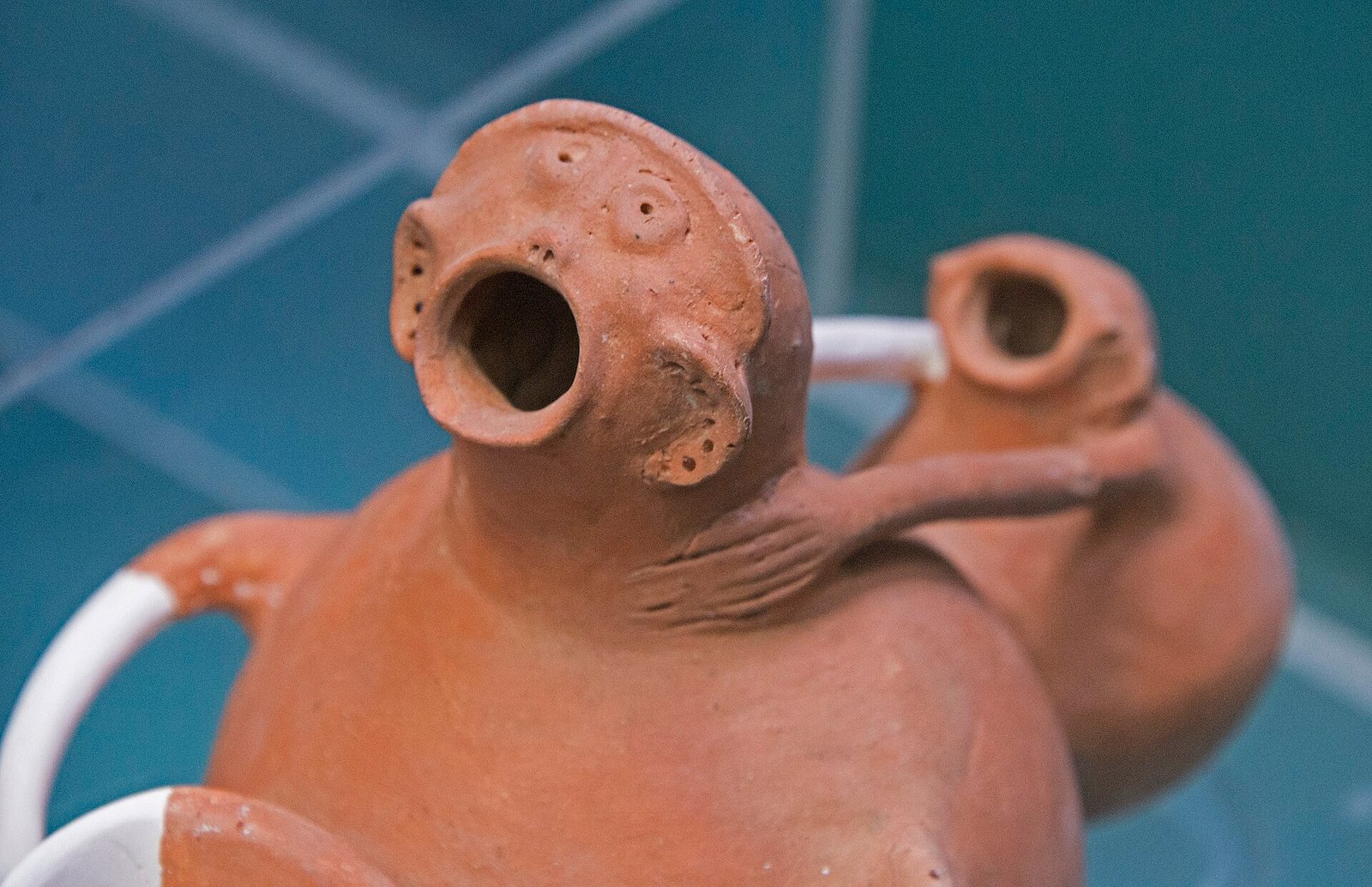
Image: Kütahya archaeological museum Seyitömer Höyüğü find 8885.jpg — Dosseman, CC BY-SA 4.0