Shah Jahan was the fifth Mughal emperor, ruling from 1628 to 1658, and the ruler who commissioned the Taj Mahal. His reign combined centralised government, military campaigns and monumental building. Aurangzeb deposed him in 1658 after a succession war triggered by his illness and imprisoned him in Agra Fort until his death in 1666.
How did the emperor who built a new capital end his life as a prisoner? If you follow his rise, court and family conflict together, the connection becomes clearer. His accession depended on support from Asaf Khan and the elimination of rivals; his removal followed the defeat of the son he supported.
How did Shah Jahan gain the Mughal throne?
Born in Lahore on 5 January 1592, Shah Jahan was originally named Khurram. He was Emperor Jahangir’s son and Akbar’s grandson. In 1612, he married Arjumand Banu Begum, later known as Mumtaz Mahal. The marriage made him the son-in-law of the powerful court statesman Asaf Khan.
Khurram rebelled against Jahangir in 1622. He was defeated but received a pardon. His eventual accession therefore followed an unsuccessful attempt to challenge his father’s authority.
Jahangir’s death in 1627 opened another struggle for the throne. Asaf Khan opposed his sister Nur Jahan’s attempt to install Shahryar. He instead supported Khurram, who became emperor as Shah Jahan in 1628.
The accession involved the destruction of rival family branches. Shahryar, Shah Jahan’s nephews Dawar Bakhsh and Garshasp, and his cousins Tahmuras and Hushang were killed. These deaths formed part of the consolidation of his position.
Asaf Khan received a substantial reward. A decree from 1628 appointed him wakil-us-saltanat, the highest office of state. It also granted him mansab ranks of 8,000 zat and 8,000 cavalry. His support for the new emperor translated into formal authority at court.
How did administration, military campaigns and court culture develop during his reign?
Shah Jahan centralised administration and placed court affairs on a more systematic footing. Revenue collection also changed. UNESCO’s historical study describes the widespread growth of ijara during his reign: the leasing of the right to collect taxes.
Government also faced a severe subsistence crisis. Famine affected the Deccan, Gujarat and Khandesh between 1630 and 1632. Shah Jahan established kitchens that distributed free meals to those affected. This relief belongs alongside military and architectural spending when you assess his government.
His armies achieved a decisive result in the Deccan. In 1636, they eliminated the Nizam Shahi state. Kandahar passed into Mughal control in 1638 when its Safavid governor, Ali Mardan Khan, changed sides.
Expansion farther north proved harder to sustain. Shah Jahan sought to recover lands associated with his Timurid ancestors. His forces occupied Balkh and Badakhshan in 1646 but withdrew in 1647. The campaign produced no lasting Mughal rule there.
Kandahar also exposed the limits of imperial power. The Safavids recovered it in 1649. Mughal sieges in 1649, 1652 and 1653 failed to take it back. Territorial gains during the reign could therefore be reversed despite repeated military efforts.
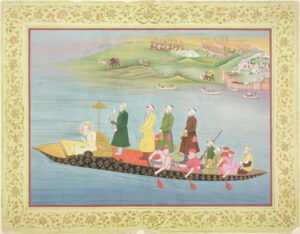
Court painting reflected a different kind of consolidation. Under Jahangir, painters had explored a wider range of personal subjects. During Shah Jahan’s reign, formal portraits and court ceremonies took their place. The emperor and the ordered presentation of his court became central subjects.
How did Shahjahanabad and other building projects express his ideas of kingship?
Mumtaz Mahal died in 1631. Shah Jahan subsequently commissioned the Taj Mahal. Its main mausoleum was built between 1632 and 1648, while the complex’s additional buildings were completed in 1653. Those dates distinguish the construction of the tomb from the completion of the wider project.
Ustad Ahmad Lahori was its chief architect. Craftspeople came from Mughal territories, Central Asia and Iran. The building brought their work together in a project that extended well beyond the main mausoleum’s construction period.
Shah Jahan also created a new imperial centre. Construction of the Red Fort began in April 1639 and finished in 1648. That year, the court, army and imperial household moved from Agra to Shahjahanabad, the new capital in Delhi.
Historian John F. Richards interprets Shahjahanabad’s plan and appearance as expressions of Shah Jahan’s more formal, imposing and magnificent monarchy. The move involved the institutions and people surrounding the emperor. His ideas of kingship acquired a setting built for their display.
Within the Red Fort, a continuous water channel connected the ruler’s private apartments. Its name was Nahr-i Bihisht, meaning River of Paradise. If you examine this detail alongside the capital’s overall plan, you can see how imperial imagery reached into the emperor’s living spaces.
The capital’s building programme continued with the Jama Masjid. Shah Jahan commissioned this great Friday mosque between 1650 and 1656. Together, the fort and mosque placed major imperial projects within Shahjahanabad.
Details you won’t find in guidebooks
Shah Jahan held meetings every morning to inspect the work of artists and craftspeople. There is an everyday connection here: if you have checked someone’s work before accepting it, you can recognise the practice of direct supervision. The emperor made inspection part of his daily routine.
His involvement also extended to the written account of his reign. Some early drafts of the Padshahnama contain corrections in his own hand. He participated in shaping the record through which his rule would be described.
On the night of 18 May 1637, before Aurangzeb’s wedding, Shah Jahan tied a veil of pearls, rubies and emeralds around his son’s head. This followed the Hindu-derived sihra-bandi tradition. The ceremony records a moment of paternal honour before their later struggle for power.
The wedding miniature also reveals choices about representation. Although the Padshahnama text includes high-status women, the picture does not portray them. Instead, it shows professional female musicians, probably belonging to the kanchani class.
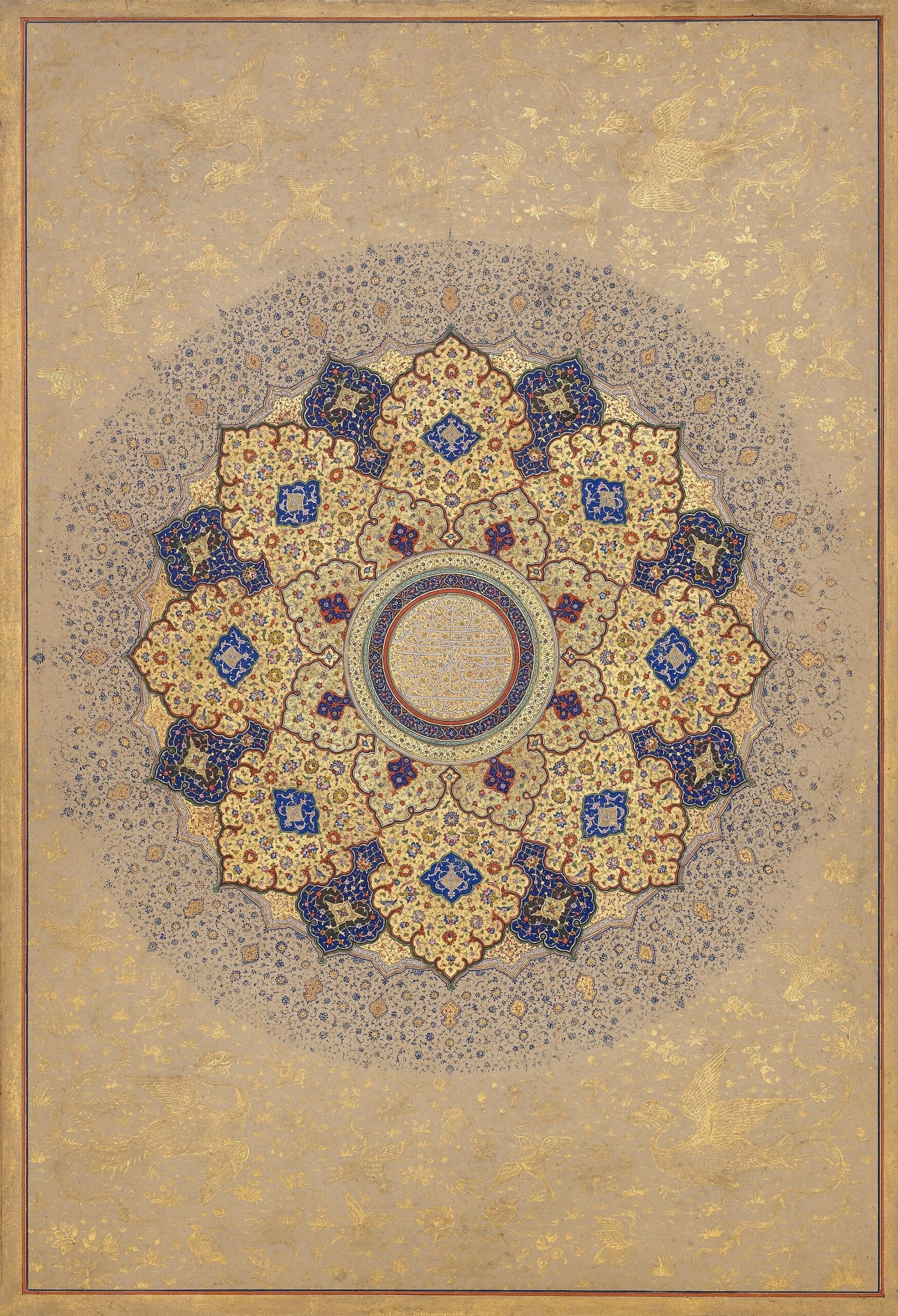
An ornamental heading on the opening page of the Royal Collection’s Padshahnama remains only sketched. The collection’s catalogue suggests that the political crisis of 1657–1658 may have interrupted production. That interpretation connects an unfinished decorative detail with the collapse of Shah Jahan’s authority.
How did Aurangzeb remove him from power during the succession struggle?
Shah Jahan favoured Dara Shukoh. By 1657, Dara held mansab ranks of 50,000 zat and 40,000 cavalry. His three brothers together held 55,000 zat and 42,000 cavalry. The comparison shows the scale of the position Dara had acquired under his father.
In 1657, Shah Jahan became too ill to govern. His illness triggered a succession war among his four adult sons: Dara Shukoh, Shah Shuja, Aurangzeb and Murad Bakhsh. The emperor’s preference for Dara did not prevent his brothers from contesting power.
Aurangzeb and Murad signed an agreement in autumn 1657. It envisaged dividing the empire between them after defeating Dara. Their alliance brought two rival princes together against the son supported by Shah Jahan.
The decisive military defeats followed in 1658. Aurangzeb and Murad’s forces defeated imperial armies at Dharmat in April and Samugarh in May. These victories deprived Shah Jahan’s side of military superiority.
Aurangzeb deposed his father in 1658 and imprisoned him in Agra Fort. Shah Jahan’s illness had opened the struggle, but the defeats of the forces supporting Dara made his removal possible. His preferred successor could no longer secure his position.
Shah Jahan remained confined until his death in Agra on 22 January 1666, aged 74. He was buried beside Mumtaz Mahal in the Taj Mahal. The mausoleum he had commissioned after her death became his burial place too.
Timeline
- 1592: Khurram was born in Lahore on 5 January.
- 1612: He married Arjumand Banu Begum.
- 1622: He rebelled against Jahangir and was later pardoned.
- 1628: He became emperor as Shah Jahan.
- 1631–1632: Mumtaz Mahal died; construction of the Taj Mahal began the following year.
- 1636–1638: Mughal forces eliminated the Nizam Shahi state; Kandahar subsequently entered Mughal control.
- 1646–1647: The occupation of Balkh and Badakhshan ended in withdrawal.
- 1648: The court moved to Shahjahanabad.
- 1649: The Safavids recovered Kandahar.
- 1650–1656: Shah Jahan built the Jama Masjid.
- 1657–1658: Illness triggered a succession war; Aurangzeb deposed and imprisoned him.
- 1666: He died on 22 January and was buried in the Taj Mahal.
FAQ
Who was Shah Jahan?
Shah Jahan was the fifth Mughal emperor and ruled from 1628 to 1658. Born as Prince Khurram in Lahore on 5 January 1592, he was Jahangir’s son and Akbar’s grandson.
Why did Shah Jahan build the Taj Mahal?
He commissioned the Taj Mahal after Mumtaz Mahal died in 1631. Its main mausoleum was built between 1632 and 1648, while the additional buildings were completed in 1653.
Why was Shah Jahan deposed?
His serious illness in 1657 triggered a succession war among his four adult sons. Aurangzeb and Murad Bakhsh defeated the imperial forces supporting Dara Shukoh, and Aurangzeb deposed Shah Jahan in 1658.
What happened to Shah Jahan after he lost power?
Aurangzeb imprisoned him in Agra Fort, where he remained until his death on 22 January 1666. He was buried beside Mumtaz Mahal in the Taj Mahal.
Sources
- Official Taj Mahal website — Emperor Shah Jahan tajmahal.gov.in
- Wikipedia — Shah Jahan en.wikipedia.org
- The Columbia Encyclopedia — Shah Jahan encyclopedia.com
- National Mission for Manuscripts — Exploring Medieval India namami.gov.in
- UNESCO — The Mughal Empire and Its Successors en.unesco.org
- UNESCO World Heritage Centre — Taj Mahal whc.unesco.org
- John F. Richards, Cambridge University Press — Shah Jahan 1628–1658 cambridge.org
- UNESCO / ICOMOS — Red Fort Evaluation whc.unesco.org
- UNESCO World Heritage Centre — Red Fort Complex whc.unesco.org
- The Metropolitan Museum of Art — The Art of the Mughals after 1600 metmuseum.org
- Royal Collection Trust — The Padshahnama rct.uk
- Royal Collection Trust — Shah-Jahan Honouring Prince Awrangzeb at His Wedding rct.uk
- Munis D. Faruqui, Cambridge University Press — The Princes of the Mughal Empire, Prologue cambridge.org
Image: Rosette, Titles of Shah Jahan.jpg — Unknown authorUnknown author, Public domain