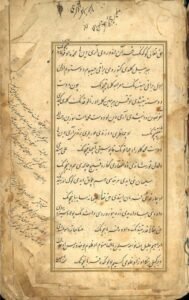
Who was Oghuz? A hero, not a documented ruler
Oghuz Khagan is the legendary ancestor from whom the Oghuz Turks take their name. English Wikipedia describes him in exactly those terms. His story survives in the Epic of Oghuz Khagan, which scholars classify in the Hun-Oghuz group of Turkic epics.
The epic tells his life. It is not a court record. That difference matters for everything below.
So when you ask “who was Oghuz?”, the honest answer has two layers. In the epic he is a conqueror, a father and a founder. In history, he is a figure whose identity scholars still argue about.
The Epic of Oghuz Khagan: what the story says
The epic is anonymous. It combines a miraculous birth, conquests, the naming of tribes and the sharing of a homeland among sons.
In the Uyghur-script version, Oghuz’s mother is called Ay Kağan. The story says he grew, walked and played forty days after birth. Early on he shows his courage by killing a creature called the kıyant with his spear. This creature harmed both people and animals.
He then meets two wives. One appears inside a beam of light that descends from the sky. The other sits in the hollow of a tree in the middle of a lake.
Think of it like a family legend told at a holiday table. Each retelling keeps the core and changes the details. The epic works the same way.
Oghuz Khagan’s father and family tree
In the Islamic version of the story, his father is Kara Han. Kara Han is loyal to the old religion. Oghuz believes in another God. That belief is the reason for the father-son conflict.
The family tree grows mostly downward. Oghuz has six sons:
- Gün (Sun)
- Ay (Moon)
- Yıldız (Star)
- Gök (Sky)
- Dağ (Mountain)
- Deniz (Sea)
The names are all natural forces. That fits a story in which a ruler organizes the world around him.
Oghuz Khagan’s religion
There is no single answer. Religion changes with the version you read.
The Uyghur-script text describes Oghuz praying to Tengri. The Islamic tradition puts his faith in Allah first. Both versions are retellings of the same figure, shaped by the readers they served.
If you read a modern summary that states one religion flatly, check which manuscript it follows.
Oghuz Khagan’s empire and conquests
The epic does not describe an empire in the modern sense. It describes a campaign map.
In the Uyghur-script epic, a male grey wolf with a sky-blue mane and coat guides him in his conquests. The places in the story include Urum, Çürçet, India, Tangut and Syria. These are conquest sites inside the narrative. They are not a verified list of lands that one historical ruler held.
Oghuz is presented there as the ruler of the Uyghurs. He gives names to the begs who served him: Kıpçak, Kanglı, Karluk and Kalaç.
The Persian Oğuznâme takes another route. Instead of a guiding wolf, the experience and knowledge of Poştı Koca solve the hardships of the campaigns.
The dream, the golden bow and the division of the homeland
The ending is where the epic explains the Oghuz world.
Uluğ Türük dreams of a golden bow and three silver arrows. After the dream, Oghuz sends his elder sons to the east and his younger sons to the west.
At the closing feast, the elder sons sit on the right as the Bozoks. The younger sons sit on the left as the Üçoks. Oghuz leaves his homeland to his sons.
In Reshīd al-Dīn’s epic-style history, the Oghuz people form 24 tribes split into two branches, Bozok and Üçok. The structure of the epic and the structure of the people mirror each other.
Is Oghuz Khagan the legendary Modu Chanyu?
This is the question behind your search. The answer is: it is a theory, not a settled identification.
The case for the link rests on comparisons. Scholars point to similarities in military organization, ruler traits and conquest geographies. This reading identifies Oghuz with Mete Han, the figure English readers know as Modu Chanyu. Fatih Şengül’s article on Oghuz Khagan’s identity argues against it.
The case against it looks earlier. Zeki Velidi Togan tied the epic’s origin to a time before Mete Han. He pointed to the Central Asian Saka of the 7th century BC and the Scythian communities after them.
Şengül’s article of 30 April 2026 also argues against the Mete identification and connects Oghuz Khagan with the Scythians. That is the article’s thesis. It is not a confirmed identity.
So you should not read the epic as a biography of Modu Chanyu. Treat it as a story that some scholars compare with him.
Oghuz Khagan’s date of birth and the dating debate
No birth date exists. The epic is a legend, and its dates concern the text, not the man.
Three separate questions get mixed up:
- The age of the story. Togan’s view points toward the 7th century BC.
- The age of the wording. A catalog entry based on BnF data places the redaction of the narrative in the Mongol era, the 13th and 14th centuries.
- The age of the physical copy. The same entry gives a question-marked 18th-century date for the Paris manuscript.
Ferruh Ağca adds a language-based date. He explains the text’s features through the Chagatay area of the late 14th and early 15th centuries, influenced by Oghuz and Kipchak dialects.
Keep these apart. An 18th-century copy can carry a much older story.
Timeline
- 7th century BC: The Saka period pointed to by Togan’s origin theory. It is not a date of writing.
- 13th–14th centuries: The period a BnF-based catalog description suggests for the redaction of the Uyghur-script narrative.
- Late 14th–early 15th century: The period Ferruh Ağca proposes from the text’s language features.
- 18th century (?): The question-marked date given for the existing physical manuscript.
- 1936: The Bang–Rahmeti edition is printed in Istanbul.
- 2016: Ferruh Ağca’s study, with text and facsimile, is published in Ankara.
- 30 April 2026: Fatih Şengül’s article, arguing for a Scythian link against the Mete identification, is published.
How the epic survives: manuscripts and editions
Osman Fikri Sertkaya says the complete original text is not known. The narrative reaches us through manuscript fragments and different versions.
In his description, the Uyghur-script text is in Eastern Turkic. It is prose with some verse passages. It has gaps at the beginning, in the middle and at the end.
Other witnesses exist as well:
- Reshīd al-Dīn’s Jāmiʿ al-tawārīkh, in its second volume, includes the section Tārīkh-i Oghuzān u Turkān. It is a Persian prose witness written in Arabic script.
- Abu’l-Ghazi Bahadur Khan’s Shajara-yi Tarākima and Yazıcızade Ali’s Tārīkh-i Āl-i Seljuk hold Turkish versions.
The Paris manuscript has the shelfmark Supplément turc 1001 in the Manuscripts Department of the National Library of France. Biblissima links its images to a digital copy on Gallica with the ID btv1b84150175.
For printed editions, the 1936 Bang–Rahmeti publication was issued by the Turkish Language Seminar of the Faculty of Letters at Istanbul University. It runs 69 pages. Ağca’s 2016 book runs 317 pages and includes text, transcription, notes, an index and a facsimile.
You can also read a Latin-letter text on Wikisource, based on the 1936 edition. The page is marked as a work in progress and has missing sections.
Details you won’t find in guidebooks
- A small manuscript. The Paris copy has 21 leaves. Each leaf measures 18.5 × 12 centimeters.
- A bigger frame. The small leaves are mounted on paper leaves in a larger binding measuring 26 × 18.5 centimeters.
- A collector’s trail. The Biblissima record, passing on BnF data, gives the previous owner as Schefer. It ties the Paris copy to that collection history.
- A different guide. The Persian Oğuznâme replaces the guiding wolf with Poştı Koca’s experience.
- A child who grows fast. In the Uyghur-script text, Oghuz walks and plays forty days after birth.
If you visit Paris and ask about the manuscript, remember it is a modest object. It is a small book, not a monument.
FAQ
Is Oghuz Khagan the same person as Modu Chanyu?
Not as an established fact. Identifying Oghuz Khagan with Mete Han (Modu Chanyu) is a scholarly theory based on similarities in military organization, ruler traits and conquest geography. Other scholars place the epic’s roots earlier, among the 7th-century BC Saka and later Scythian communities.
Who wrote the Epic of Oghuz Khagan?
It is anonymous. Names such as Bang and Rahmeti on book covers belong to researchers who prepared the text for publication, not to the epic’s authors.
Who were Oghuz Khagan’s sons?
Their names are Gün (Sun), Ay (Moon), Yıldız (Star), Gök (Sky), Dağ (Mountain) and Deniz (Sea).
Was Oghuz Khagan a Muslim?
It depends on the version. The Uyghur-script text has him pray to Tengri, while the Islamic tradition stresses his belief in Allah.
Where can you see the oldest manuscript?
The Uyghur-script manuscript is kept at the National Library of France in Paris as Supplément turc 1001. Its images are linked to a digital copy on Gallica.
Sources
- Wikipedia — Oghuz Khagan en.wikipedia.org
- Vikipedi — Oğuz Kağan Destanı tr.wikipedia.org
- Vikikaynak — Oğuz Kağan Destanı tr.wikisource.org
- Fatih Şengül — Yeni Deliller Işığında Oğuz Kağan’ın Kimliği dergipark.org.tr
- Osman Fikri Sertkaya — Oğuz Kağan Destanı Üzerine Bazı Mülahazalar tdkbelleten.gov.tr
- TDV İslâm Ansiklopedisi — Oğuzlar islamansiklopedisi.org.tr
- Türk Dünyası Ansiklopedisi — Oğuz Kağan turkdunyasiansiklopedisi.gov.tr
- Türk Tarih Kurumu Kütüphanesi — Bang–Rahmeti 1936 yayını kutuphane.ttk.gov.tr
- Türk Tarih Kurumu Kütüphanesi — Ferruh Ağca 2016 yayını kutuphane.ttk.gov.tr
Image: Oghuz’s departure from the dark land, 1314-15 Tabriz, Ilkhanate, folio 378b. Jami al-Tawarikh, TSMK, H.1653.jpg — Artist, 18 November 1425 CE, Public domain